What Is The Best Bakery In Seattle?
There is no single best bakery in Seattle. From Dahlia Bakery in Belltown to Top Pot and Pike Place favorites like Piroshky Piroshky and Daily Dozen, the answer depends on what you want.
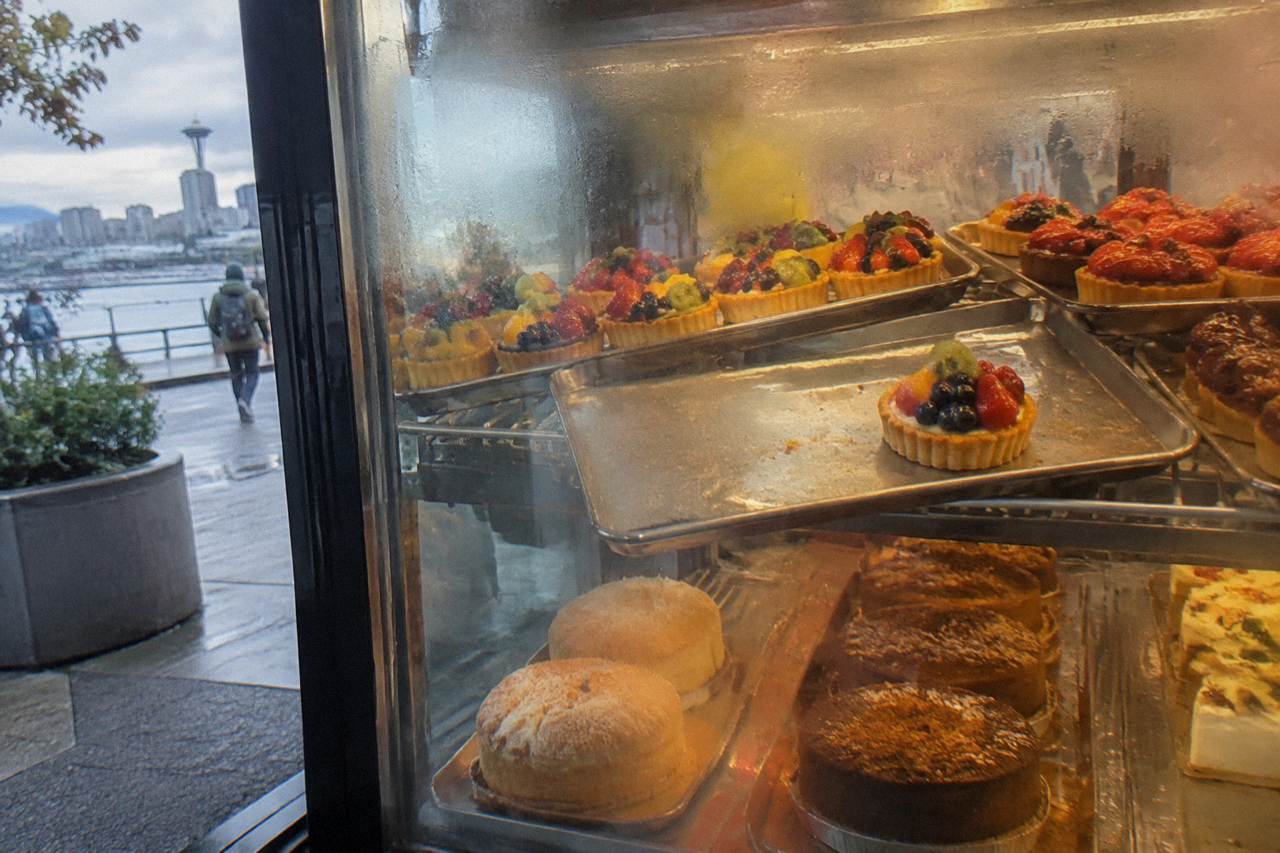
There is no single best bakery in Seattle, because the city's strongest bakers specialize: Dahlia Bakery is the name that comes up again and again for its coconut cream pie, Top Pot Doughnuts is the old-fashioned doughnut institution, and inside Pike Place Market the practical picks are Le Panier and Freya Bakery & Cafe. The right answer for a visitor is a route, not one address.
That answer surprises people who expect a single champion, and it is the more useful version of the truth. Seattle's bakery strength is spread across neighborhoods and categories rather than concentrated in one shop. Tom Douglas's Dahlia Bakery, which sits at the downtown edge near the Denny Triangle, is the one known for its coconut cream pie. Top Pot Doughnuts, founded in 2002 with its first cafe on Capitol Hill, owns the old-fashioned doughnut category. Inside Pike Place Market, the 1907 public market that runs 363 days a year, French-style pastry leans on Le Panier while Freya Bakery & Cafe, a start point for several Market food walks, sits on Western Ave.
For a visitor, the constraint is not quality, it is geography. Dahlia Bakery, Top Pot's downtown shops and the Market's bakeries sit close enough that a determined walker can hit several in a morning, which is exactly why the sweets-focused guided walk exists as a product.
For a visitor with limited time, that decision framework matters more than any single ranking. A pie person who books a doughnut counter will be disappointed, and a doughnut person who queues twenty minutes for viennoiserie will feel the same way. Sorting by craving first, then by neighborhood, turns a vague question into a plannable morning. It also protects the budget: bakery stops add up quickly when you are sampling blind, and a targeted list keeps the spending on the two or three pastries that actually answer the craving.
If the goal is to taste rather than to choose, the bookable option that covers this exact ground is Seattle's Sweetest Food Tour: Delicious Donuts, Beignets, & More, a 2 hour walk rated 4.9 across 1,018 reviews, from $65 per person, starting at Top Pot in the Denny Triangle and running down past the Amazon Spheres area toward Pike Place Market, with stops that include Dahlia Bakery and Daily Dozen. Check availability if that route appeals, or keep reading for the bakery-by-bakery case.
Which Seattle Bakery Wins For Pie And Cake?
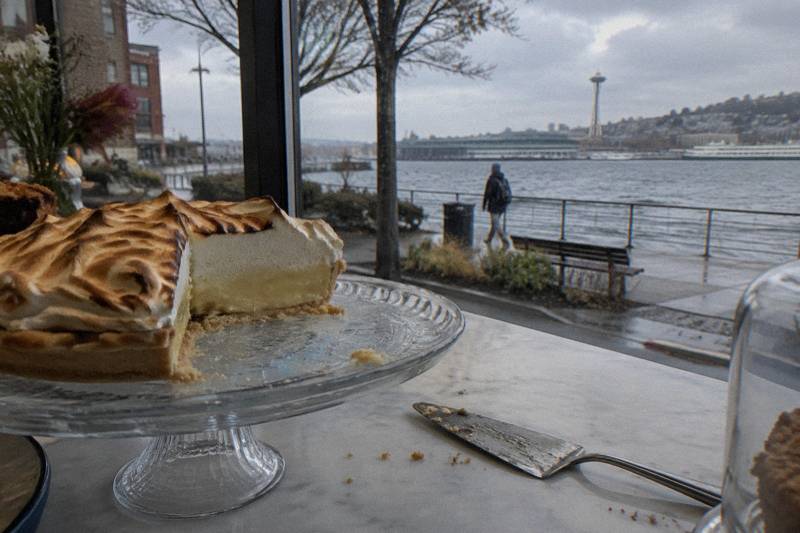
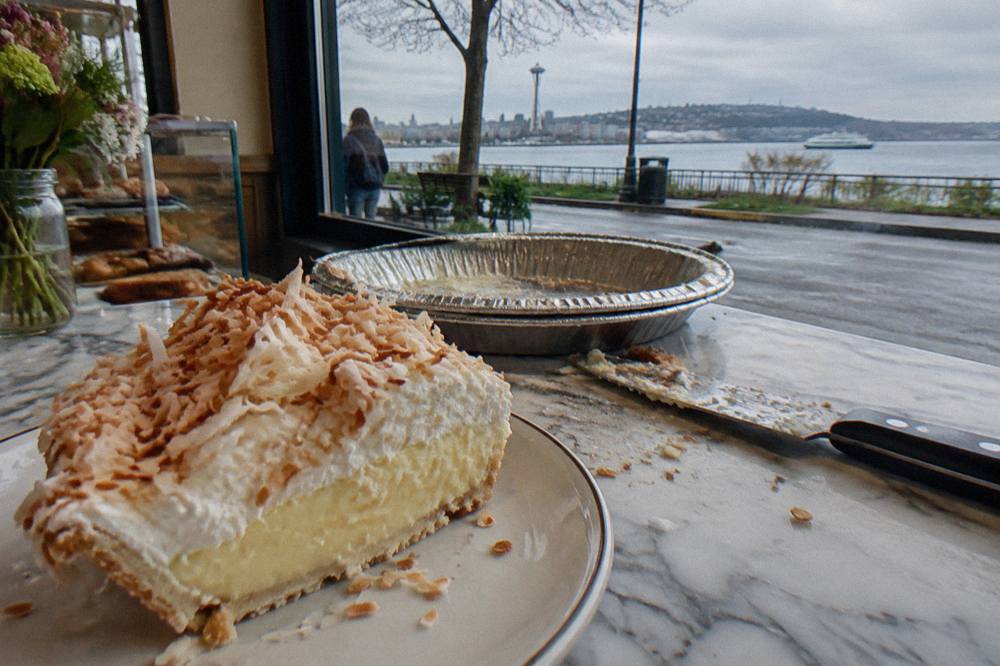
Dahlia Bakery takes the pie-and-cake category on reputation and staying power. Dahlia Bakery, known for its coconut cream pie, sits within walking distance of downtown hotels and the South Lake Union tech corridor.
The coconut cream pie at Dahlia anchors the case. The bakery is a Tom Douglas shop that opened in Belltown in 2001. Its position on the Denny Triangle and Belltown edge matters for visitors, because the same walk that reaches it also reaches Top Pot and, a few blocks south, the Market itself. That clustering is why the sweets tour starts where it starts.
Two honest caveats belong here. Lines at busy counters move slowly at peak hours, and the Market says its own mornings before noon are generally less crowded. The Visit Seattle site keeps neighborhood dining listings current if you want to cross-check before you walk.
Where Do You Find The Best Doughnuts In Seattle?
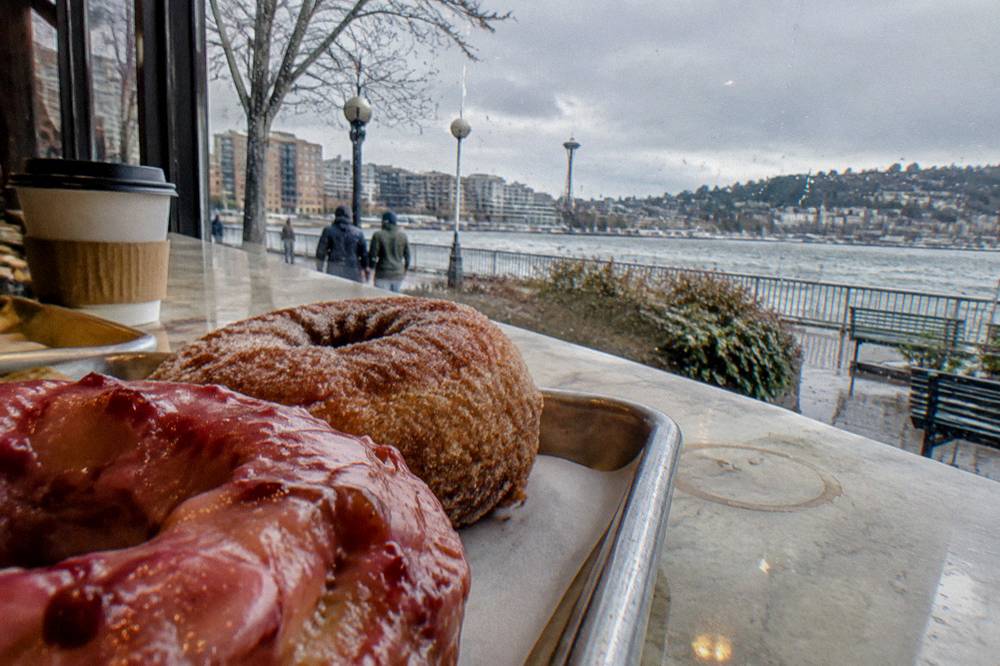
Top Pot Doughnuts is the city's doughnut institution, founded in 2002 with its first cafe on Capitol Hill. Daily Dozen Doughnut Company inside Pike Place Market serves small, warm doughnuts by the dozen at the market counter, and Doce Donut Co appears on the sweets walk's stop list as the newer-style entry. Together they cover the category.
Top Pot was founded in 2002, with its first cafe on Capitol Hill. Daily Dozen is the opposite experience: a compact Market counter where the doughnuts come out small and warm, the kind of stop you make because you are already inside the arcades. The distinction matters for planning. If doughnuts are the mission, Top Pot is a destination; if doughnuts are one stop among many inside the Market, Daily Dozen fits the flow.
The difference between the two is also a difference in pace. Top Pot invites you to sit with a cup of coffee, watching a downtown street wake up. Daily Dozen rewards momentum, a warm bag in hand while you keep moving toward the fish counters and produce rows. Neither is the wrong choice, but they answer different versions of the doughnut question, and knowing which one you are asking saves a detour.
The sweets walk sequences both worlds, which is part of its value: it starts at Top Pot, moves through the Amazon Spheres area with a stop at Doce Donut Co, and finishes among the Market counters including Daily Dozen. A 2 hour walk, from $65 per person, with a 4.9 rating across 1,018 reviews. For readers who would rather build the walk themselves, the Pike Place Market visitor FAQ covers current hours and how to find the doughnut counter once inside.
Is Pike Place Market The Best Place For Pastries?
For pure pastry density, yes. Pike Place Market concentrates Le Panier for French-style croissants and palmiers, Freya Bakery & Cafe on Western Ave, a start point for several Market walks, Piroshky Piroshky for Russian-style filled breads and Daily Dozen for warm doughnuts, all inside the historic market, open 363 days a year.
The Market's advantage is that you never commit to one bakery. Le Panier anchors the French end of the case; Freya, which also serves as a meeting point for several Market food walks, adds another bakery stop; Piroshky Piroshky handles the savory-and-sweet filled bread category from a compact storefront that often draws a line. The Market itself opened on August 17, 1907, after the City Council created it by ordinance on August 5 of that year, and it now holds more than 220 independently owned shops and restaurants. Pastries are a small slice of that, but the density per walking minute is unmatched in the city.
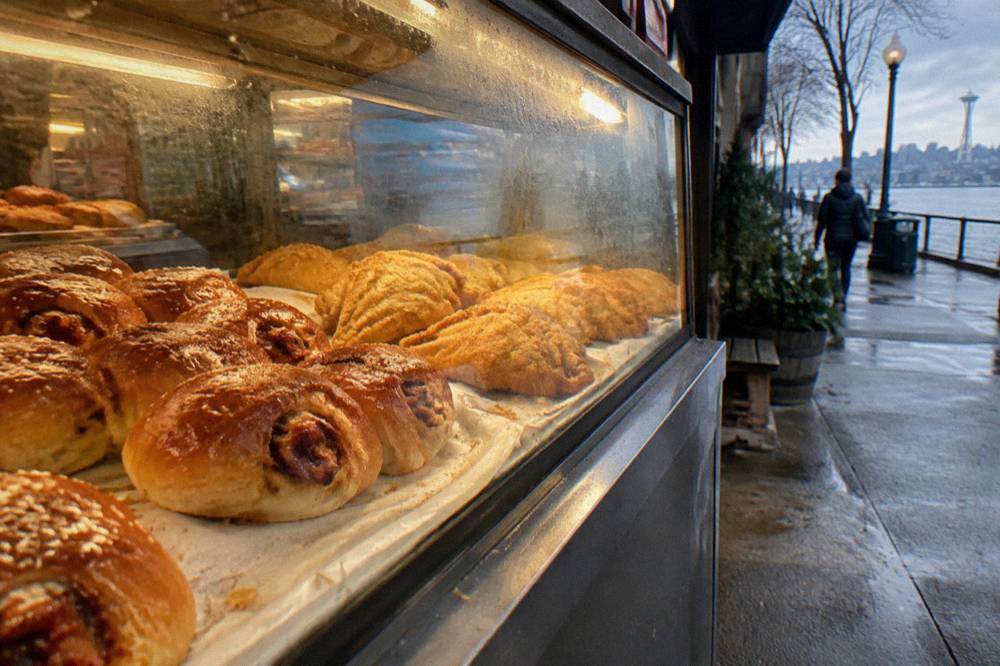
That density has a real planning consequence. A standalone bakery visit costs you a line, a counter decision and a walk between stops. Inside the Market, the walks between counters are measured in arcade lengths, not city blocks, so a pastry crawl of three or four stops fits comfortably inside a single morning. The Market's 70-plus farmers and 150-plus craftspeople share the same space, which means the pastry run doubles as the classic Seattle sightseeing loop without any extra effort.
Timing shapes the experience more than most visitors expect. Most of the Market is active from about 10 a.m. to 5 p.m., while breakfast counters and produce sellers start at 7 a.m., and the crafts market runs 11 a.m. to 4 p.m. A pastry mission works best in that 7 to 10 a.m. window, before the arcades fill. One current wrinkle: the Market's street access pilot Phase 3 runs October 1, 2026 to March 31, 2027, with Pike Place shared by vehicles and pedestrians Monday to Thursday and access limited Friday to Sunday between 11 a.m. and 4 p.m. at 1st Ave and Pike St, so arriving early helps twice over.
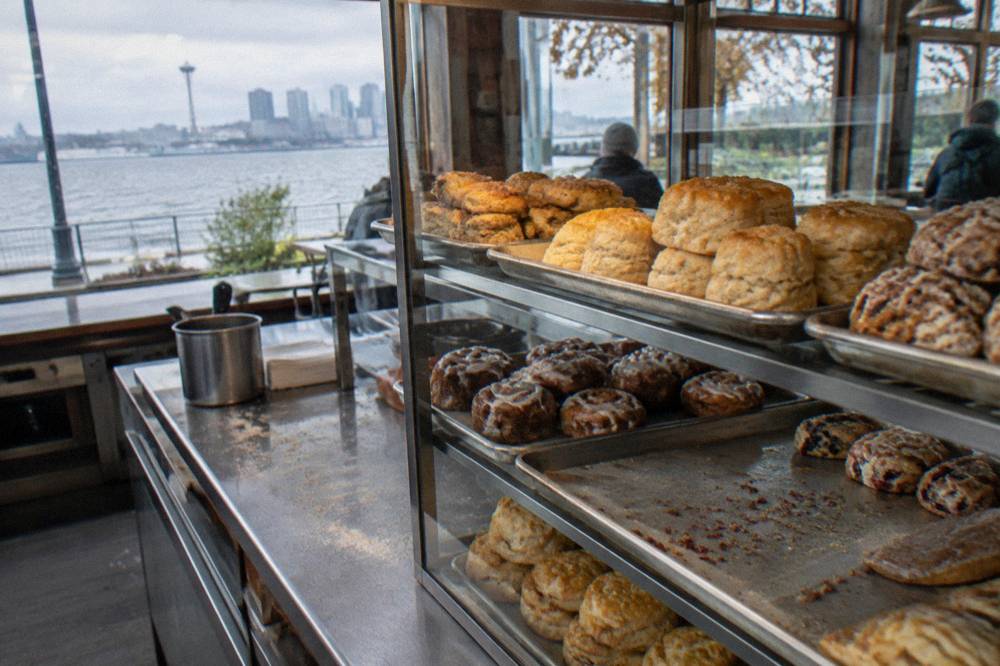
Guided walks inside the Market operate under a Market-issued permit that caps groups at 16 people per guide, with no amplified sound, so even the busiest tours stay small relative to the arcade crowds. The practical comparison of the Market's guided options lives in the dedicated Pike Place Market walk guide, which breaks down routes stop by stop.
Which Neighborhood Bakeries Are Worth The Detour?
Outside downtown, the detour-worthy picks are the neighborhood bakeries attached to Seattle's farmers markets and café strips: Capitol Hill's bakeries around its Sunday market, Ballard's bakery counters along Ballard Ave NW, and Sugar Bakery on the Seattle Center food walk's stop list. Each pairs a bakery stop with a neighborhood worth an hour on its own.
Ballard is the strongest single detour. Its Sunday farmers market runs 9 a.m. to 2 p.m. year-round along the cobblestone stretch of Ballard Ave NW, and the bakery counters around it give the morning a second act; the Ballard food walk guide maps the route. Capitol Hill's market runs Sundays 11 a.m. to 3 p.m. on E Barbara Bailey Way, and the neighborhood's café density makes it the natural place to pair a pastry with serious coffee, a combination the coffee walks exploit. The Seattle Farmers Markets organizer site lists current vendor lineups if you want to check which bakers are scheduled.
The University District adds a Saturday option, with its market running 9 a.m. to 2 p.m. on University Way NE, and West Seattle runs Sundays 10 a.m. to 2 p.m. at California Ave SW and SW Alaska for anyone staying south of downtown. These markets rarely produce a single famous pastry, but they reliably surface bakers who sell out by noon, which is its own kind of endorsement. Treat them as the locals' version of the question this page asks.
The table below sorts the practical choices by what each does best.
| Bakery stop | Area | What it is known for | Best fit |
|---|---|---|---|
| Dahlia Bakery | Denny Triangle / Belltown edge | Coconut cream pie, cakes, cookies | A seated slice and coffee |
| Top Pot Doughnuts | Multiple Seattle locations | Old-fashioned doughnuts | A doughnut-and-coffee morning |
| Le Panier | Pike Place Market | French-style viennoiserie | A croissant inside the Market |
| Freya Bakery & Cafe | Pike Place Market | Bakery on Western Ave, a start point for Market walks | A Market counter stop |
| Piroshky Piroshky | Pike Place Market | Russian-style filled breads | A savory-sweet hand pie |
| Daily Dozen | Pike Place Market | Small warm doughnuts by the dozen | A quick Market counter stop |
| Sugar Bakery | Seattle Center area | Sweets on the Center food walk's list | A stop near the Space Needle |
A second table puts the Sunday and Saturday options side by side, since market-bound pastry hunting depends entirely on the calendar.
| Market | Day and hours | Location | Bakery angle |
|---|---|---|---|
| Ballard Farmers Market | Sunday 9 a.m. to 2 p.m. | Ballard Ave NW, 20th to 22nd Ave NW | Bakery counters around a cobblestone strip |
| University District Farmers Market | Saturday 9 a.m. to 2 p.m. | University Way NE, NE 50th to 52nd | The weekend's only Saturday option |
| Capitol Hill Farmers Market | Sunday 11 a.m. to 3 p.m. | E Barbara Bailey Way | Pair pastries with the café strip |
| West Seattle Farmers Market | Sunday 10 a.m. to 2 p.m. | California Ave SW and SW Alaska | Worth it if staying southwest |
| Fremont Sunday Market | Sunday 10 a.m. to 4 p.m. | Fremont Bridge, covered and heated in winter | Artisan-focused, 200-plus vendors in season |
| Pike Place Market | Daily, 363 days a year | Downtown waterfront hillside | Full bakery density, breakfast from 7 a.m. |
Can You Walk Several Bakeries In One Morning?
Yes, and it is the most efficient way to answer this question for yourself. Downtown's sweet stops cluster inside a walkable rectangle from Top Pot in the Denny Triangle, past the Amazon Spheres area and Dahlia Bakery, down to Pike Place Market's counters, roughly the route the 2 hour sweets walk covers with a guide.
Doing it independently works well on a weekday morning. Start before 9 a.m., work south from Top Pot, and reach the Market before the 10 a.m. surge. King County Metro's adult single ride is $3.00 and the regional day pass $6.00, though the bakery rectangle is short enough that most people walk it end to end without a bus. The trade-off of going alone: you wait in each line separately, you learn less about what you are eating, and the Market's layout, several levels of arcades, eats time on a first visit.
The sequencing question matters more than the distance. Starting at the Market means fighting the biggest crowds first with an empty stomach and a full wallet; starting at Top Pot means easing in with coffee and arriving at the Market mid-morning, exactly when the arcades tighten. The guided version resolves this by starting at Top Pot on purpose, riding the doughnut-and-coffee opening, then descending into the Market as a group with a guide who knows which counter to hit before its line forms.
Going guided trades a fixed price for sequencing and commentary. The sweetest-food walk, from $65 per person for 2 hours, handles the order and the vendor introductions; its 4.9 rating across 1,018 reviews reflects a well-trodden route. Readers torn between the formats can weigh the arguments in self-guided or guided comparison, which lays out cost, pace and what a guide actually adds at each kind of stop.
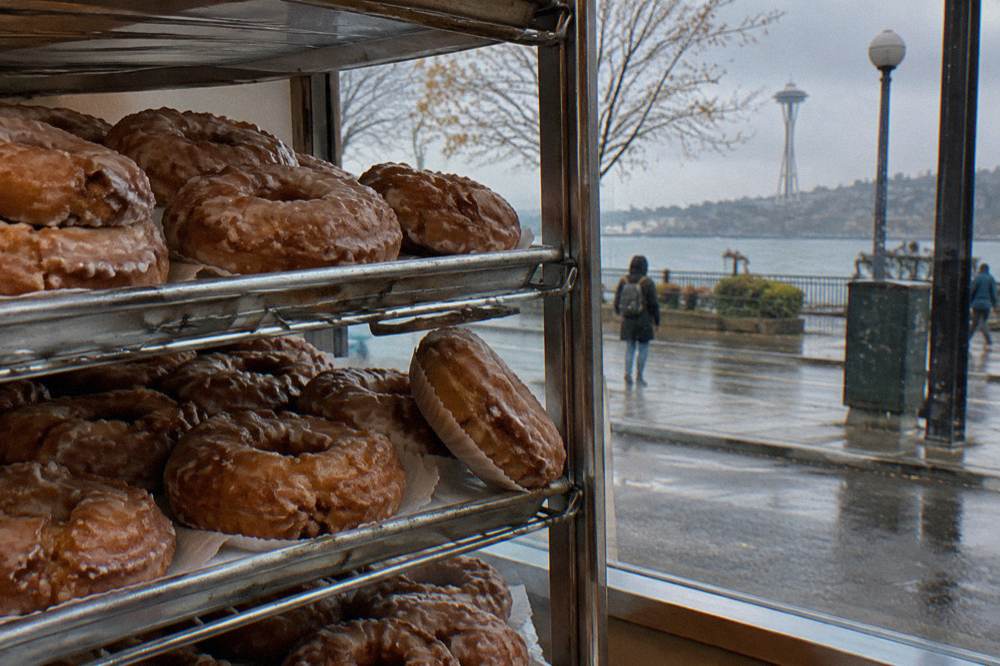
For coffee-first walkers, the Capitol Hill coffee walk covers a different craving: 2 hours, from $39.99 per person, rated 5.0 across 78 reviews, meeting at the Oddfellows Building on E Pine St, with tastings at specialty cafés and the neighborhood's stories between cups. Pastry and coffee cravings overlap enough that some readers will find that walk the better fit, and Capitol Hill's Sunday market gives it a bakery tail if you linger after.
How Do You Choose If You Only Have Time For One?
Pick by craving and by where you already are. If you are downtown or near the Market, go straight to Pike Place and split a stop between Le Panier and Piroshky Piroshky. If pie is the mission, Dahlia Bakery. If it is doughnuts and coffee, Top Pot. If you want all four categories in one morning, book the sweets walk instead of choosing.
The one-stop decision is really a location decision. The Market wins on density and atmosphere, and its bakeries sit inside a working public market with fish throwing, farm tables and 450 residents in affordable housing upstairs, context no standalone bakery can match. Dahlia wins on the singular pastry. Top Pot wins on the doughnut-and-coffee morning.
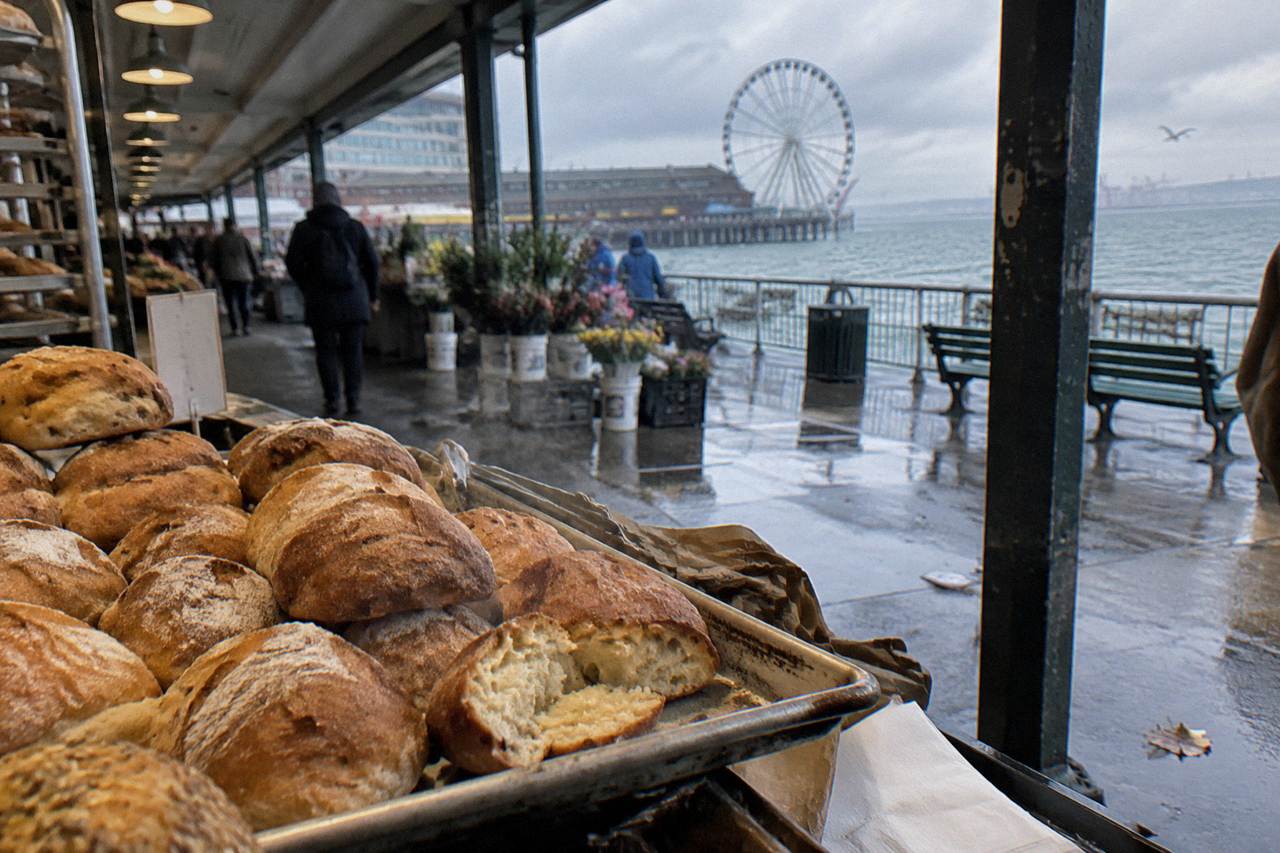
Weather quietly supports this ranking too. November is Seattle's wettest month at 6.31 inches of rain and December follows at 5.72, per the NOAA 1991 to 2020 climate normals at Sea-Tac, while July and August average highs around 77 to 78 degrees with under an inch of rain. A Market-based bakery plan keeps you under cover in the wet months, since the arcades shelter the walk between counters; a downtown walking route works gloriously in summer and asks for a rain jacket from October onward.
Common Questions About The Best Bakery In Seattle
What Is The Best Bakery In Seattle?
There is no single winner. Dahlia Bakery leads for pie and cake, Top Pot for doughnuts, and Le Panier and Freya for pastries inside Pike Place Market. The best practical answer for a visitor is a short walking route that links them, or the 2 hour sweets walk that does it with a guide.
What Bakery Is Seattle Famous For?
Dahlia Bakery is known for its coconut cream pie, and Top Pot Doughnuts is the best-known doughnut name. Inside Pike Place Market, Piroshky Piroshky and Le Panier carry the market's pastry reputation.
Can You Visit Multiple Bakeries In Pike Place Market?
Yes. Le Panier, Freya Bakery & Cafe, Daily Dozen and Piroshky Piroshky all sit within the Market's walkable arcades, which are active from about 10 a.m. to 5 p.m. with breakfast counters opening at 7 a.m. Arriving early keeps the walk between stops short.
Is There A Tour That Covers Seattle's Bakeries?
Seattle's Sweetest Food Tour: Delicious Donuts, Beignets, & More runs 2 hours from $65 per person, rated 4.9 across 1,018 reviews, from Top Pot in the Denny Triangle through the Amazon Spheres area via Dahlia Bakery to Daily Dozen in the Market.
When Is The Best Time To Go To A Seattle Bakery?
Weekday mornings before 10 a.m., when the Market says crowds are generally lighter and counters are freshly stocked. On weekends, arriving before the Market's 10 a.m. main opening window helps, and the street access pilot limits some vehicle access on Friday to Sunday afternoons through March 2027.