Ballard Farmers Market Sunday Guide: What To Eat
Ballard Avenue turns into an open-air pantry every Sunday of the year, rain or shine. Here is what to eat, when to arrive, and how to stretch the morning into a full afternoon in one of Seattle's best eating neighborhoods.
Short answer
The Ballard Farmers Market runs Sundays 9 a.m. to 2 p.m. year-round along Ballard Ave NW between 20th and 22nd Ave NW. Arrive before 10 for the shortest lines and best produce, eat your way down the block, then walk over to the brewery district, where a guided beer-and-food tasting tour starts from $99 per person.
Ballard Avenue NW closes to cars every Sunday of the year, and the cobblestones fill with farm tables, cheese counters, cider taps and ready-to-eat stalls from 9 in the morning until 2 in the afternoon. Rain or shine, January or July, the Ballard Farmers Market shows up, which is exactly why locals plan their Sundays around it. This guide covers what to eat, how early to arrive, how to get there without a car, and how to turn a market morning into a full food day in the neighborhood.
What Is The Ballard Farmers Market And When Is It Open?
The Ballard Farmers Market runs every Sunday from 9 a.m. to 2 p.m., year-round, rain or shine, along the cobblestone stretch of Ballard Ave NW between 20th and 22nd Ave NW. It is one of several neighborhood markets organized under the same Seattle farmers market umbrella, and it runs along a historic avenue rather than a plaza or parking lot.
The market's stubbornness is its signature. Where some markets shrink to a skeleton in winter, Ballard keeps its street-closure format all twelve months, so a rainy February Sunday looks much like a sunny August one, minus the crowds. Vendors line both sides of the avenue, and the blocks between 20th and 22nd hold everything from oyster shuckers to bakers to hot-food stalls selling lunch straight off the griddle. Because the market sits inside a walking neighborhood rather than a purpose-built lot, you can drift from a farm table straight into a cafe, a bakery or a taproom without ever moving your car.
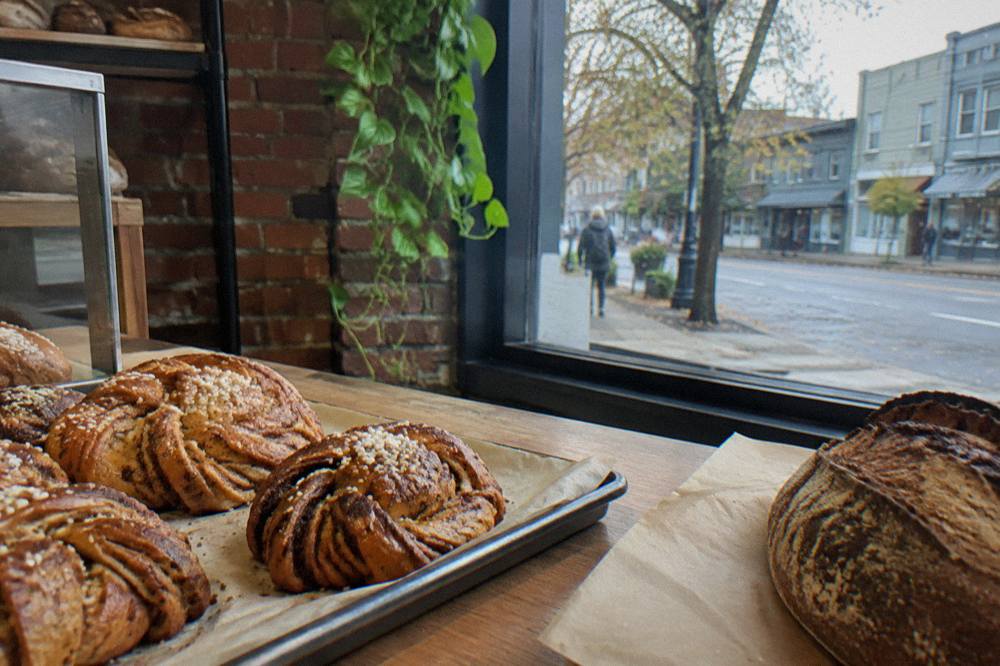
The setting matters here. Ballard Avenue is brick-fronted and narrow, and the market layout leans into that: stalls hug the sidewalks, farm trucks park nose-in at the block ends, and the whole thing reads as a working street that feeds the neighborhood before 2 p.m. There is no gate, no entry fee and no ticket. You simply walk in from either end and start eating.
The organizing body behind Ballard and the city's other neighborhood markets publishes season details and vendor news on the Seattle Farmers Markets site, which is the right place to check before a visit for special events or schedule notes. The market's 2 p.m. close is not the end of the neighborhood's food day; it is the handoff point, and later sections of this guide pick up exactly there.
| Market | Day | Hours | Location |
|---|---|---|---|
| Ballard | Sunday | 9 a.m. to 2 p.m. | Ballard Ave NW, 20th to 22nd |
| University District | Saturday | 9 a.m. to 2 p.m. | University Way NE, NE 50th to 52nd |
| West Seattle | Sunday | 10 a.m. to 2 p.m. | California Ave SW and SW Alaska |
| Capitol Hill | Sunday | 11 a.m. to 3 p.m. | E Barbara Bailey Way, Broadway to 10th |
| Fremont Sunday Market | Sunday | 10 a.m. to 4 p.m. | Fremont Bridge, covered in winter |
Notice that four of the five markets land on Sunday. If you are city-hopping between them, early morning belongs to Ballard, midday can shift toward West Seattle or Capitol Hill, and Fremont runs latest at 4. Most visitors, though, do better staying in one neighborhood, and Ballard rewards that with plenty of food per block.
What Should You Eat At The Ballard Farmers Market On A Sunday?
Eat in two passes: breakfast first from the ready-to-eat stalls near 20th Ave, then a walking lunch built from oysters, cheese, bread and whatever fruit is in season. Arrive between 9 and 10 for first pick, before the midday rush builds. Everything is bought at the stall, standing or perched where you can find a spot.
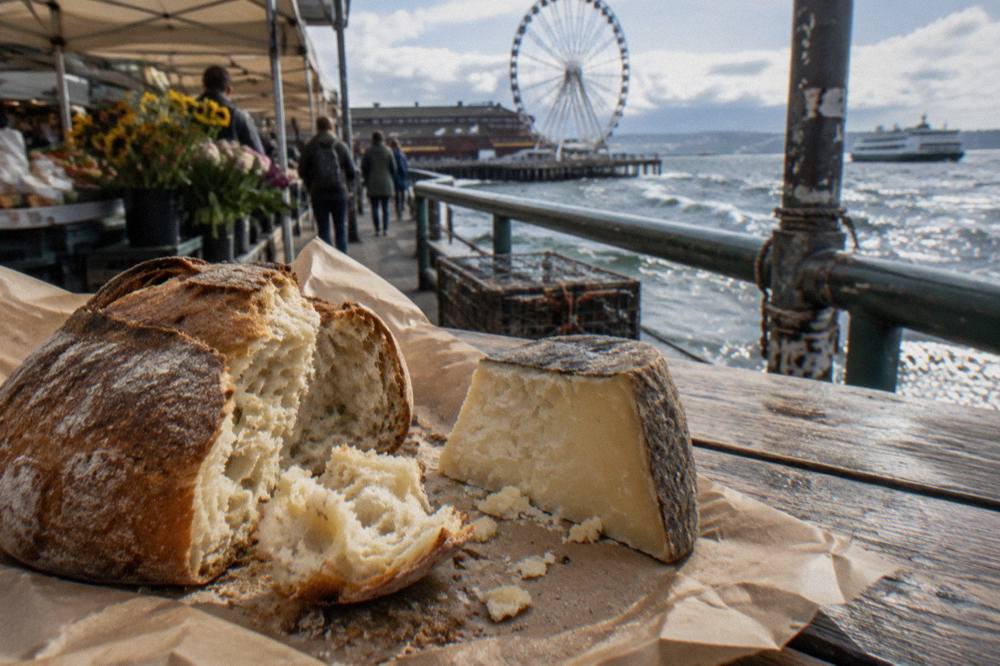
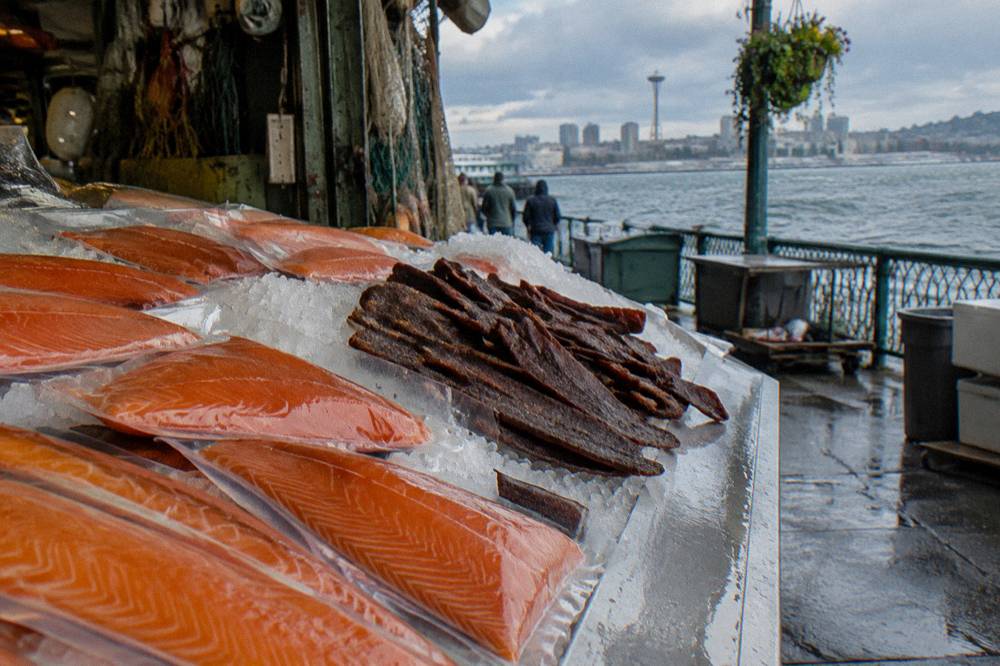
The market's food falls into three loose categories, and a good Sunday uses all of them. The first is breakfast: hot stalls and bakers set up early, and the first hour is the calmest window to eat something warm while the avenue is still quiet. The second is the tasting lunch: raw oysters on ice, wedges of cheese, a loaf torn open, stone fruit in summer or apples in fall, assembled stall by stall as you walk. The third is the take-home layer: smoked fish, jars, bread and produce that travel, which is what the regulars are actually doing with their wagons.
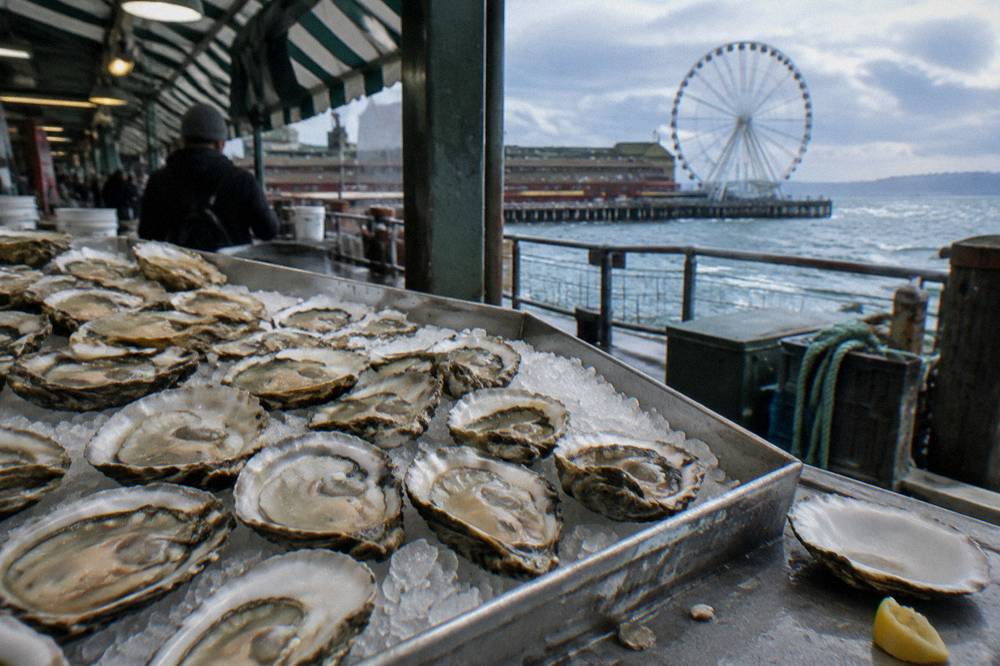
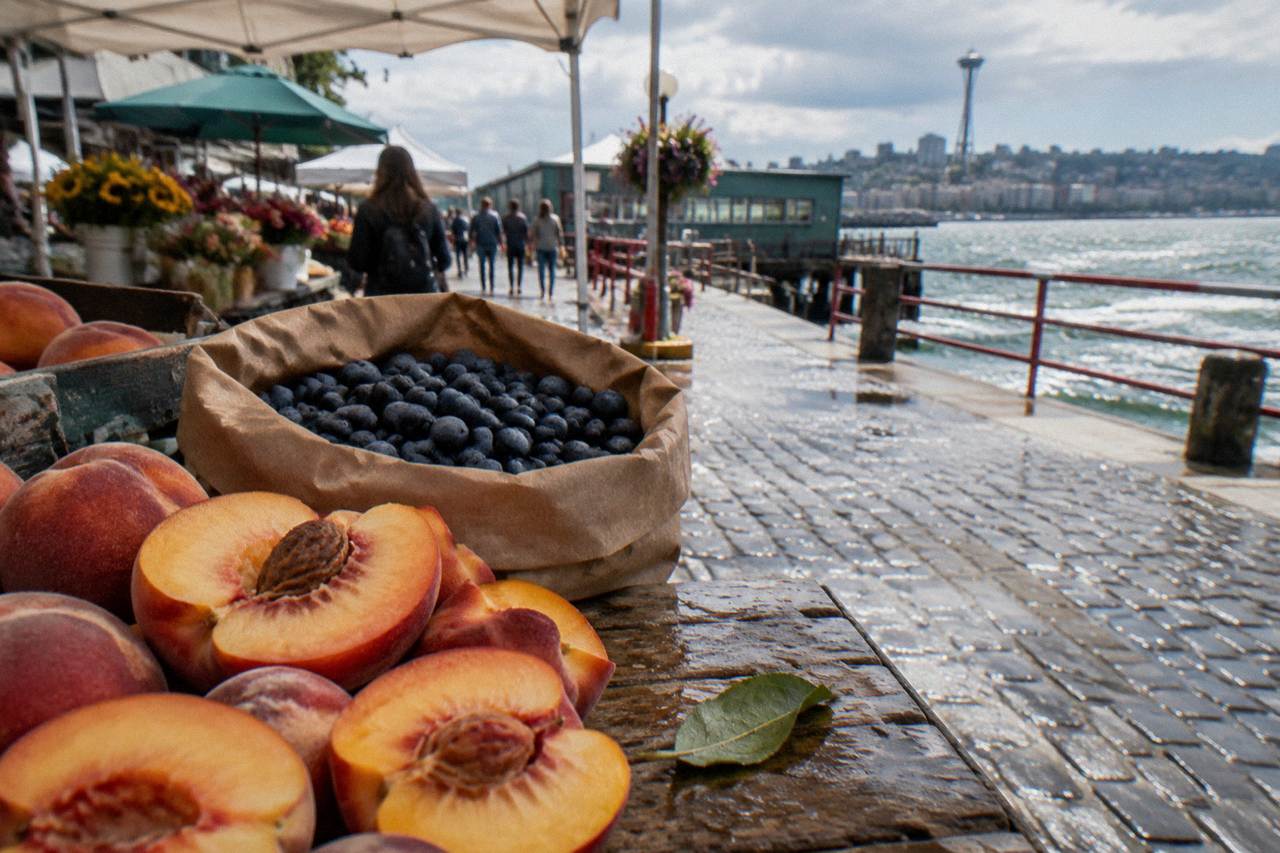
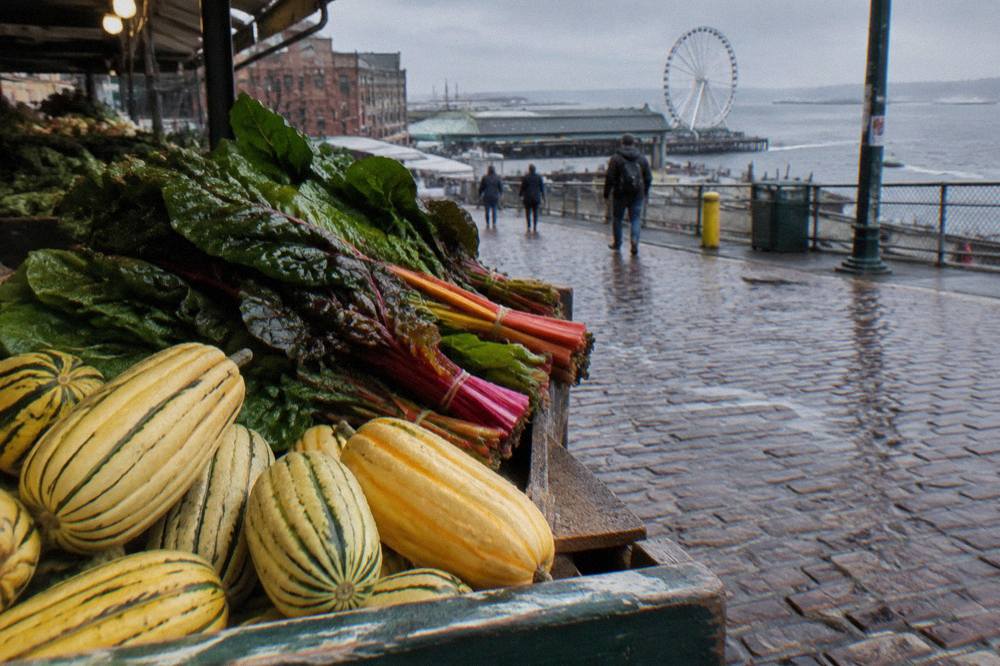
Seasons drive the produce at this market. Spring brings rhubarb, asparagus and the first greens; July and August are berry weeks, with Washington grown raspberries and blueberries stacked in flat after flat; fall means apples, pears, squash and mushrooms; and winter is roots, storage fruit, greens and the cheese-and-bread portion of the market doing the heavy lifting. Washington's shellfish runs the other way: farmed oysters are available at market stalls year-round, and the cold-water months, roughly September to April, are the traditional peak for firm, briny flavor, so a winter Sunday is arguably the better oyster day.
The salmon calendar is worth knowing too, because the market's fishmongers follow it closely. The 2026 Copper River season opened on May 22, with the first fresh fish reaching Seattle around May 27 and the first restaurant plates following about June 1, so late spring and early summer bring the celebrated sockeye and king runs into local stalls. Wild Alaska offers five Pacific salmon species in all, Chinook, sockeye, coho, pink and chum, and smoked versions of several appear at market tables no matter the month. If salmon is your reason for visiting, the run timing, not the market schedule, decides when to come.
For planning purposes, tasting portions at market stalls are a decision you make on the spot; per-item prices are set by each vendor at the table, so check the chalkboards as you walk. Bring cash or a card, either works at nearly every stall, and bring a bag, since the market is deliberately light on packaging. For neighborhood events that sometimes overlap with market Sundays, Seattle's official visitor site is the place to check.
A reasonable question is whether a market visit replaces a food walk. It does not really: the market is self-guided grazing, while a guided walk adds a route, a narrator and stops you would not find alone. If your trip includes downtown, the chef guided food tour of Pike Place Market, rated 4.9 across 4,806 reviews and from $75 per person for two hours, is the most reviewed walk on this site and makes a good counterweight to a self-directed Ballard morning.
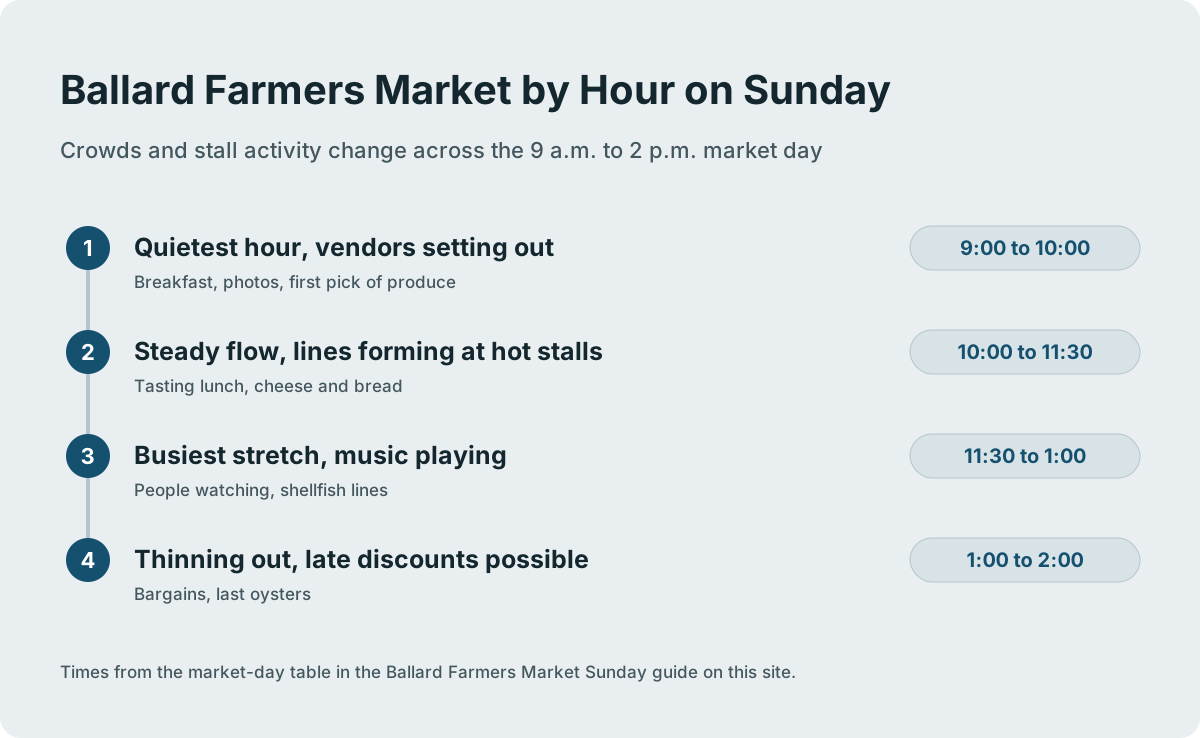
| Time | What the market looks like | Best for |
|---|---|---|
| 9:00 to 10:00 | Quietest hour, vendors still setting out | Breakfast, photos, first pick of produce |
| 10:00 to 11:30 | Steady flow, lines forming at hot stalls | Tasting lunch, cheese and bread |
| 11:30 to 1:00 | Busiest stretch, music playing | People watching, shellfish lines |
| 1:00 to 2:00 | Thinning out | Last oysters |
How Does The Market Pair With A Ballard Brewery Walk?
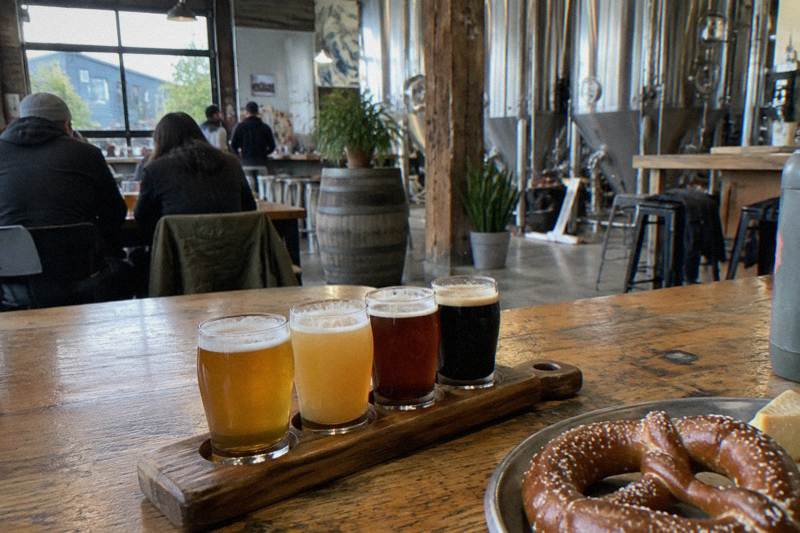
The market closes at 2 p.m., and Ballard's brewery district is a short walk from the market blocks, which makes Sunday the natural day to pair the two: graze the stalls in the morning, then move to taprooms for the afternoon. The neighborhood holds more than a dozen breweries and cideries within about a mile, and guided options exist for visitors who want the route handled.
This is the combination the neighborhood was practically built for. Ballard Avenue's market blocks sit minutes from NW Ballard Way and the surrounding streets where the breweries cluster, so the 2 p.m. market close is less an ending than a doorway. Stoup, Fair Isle and Jolly Roger are all names that appear on the guided itineraries, and each sits within easy walking distance of the market's stalls. You do not need a plan so much as a direction: walk toward the breweries hungry-ish, because the pours go down easier after a morning of walking, not on an empty stomach.
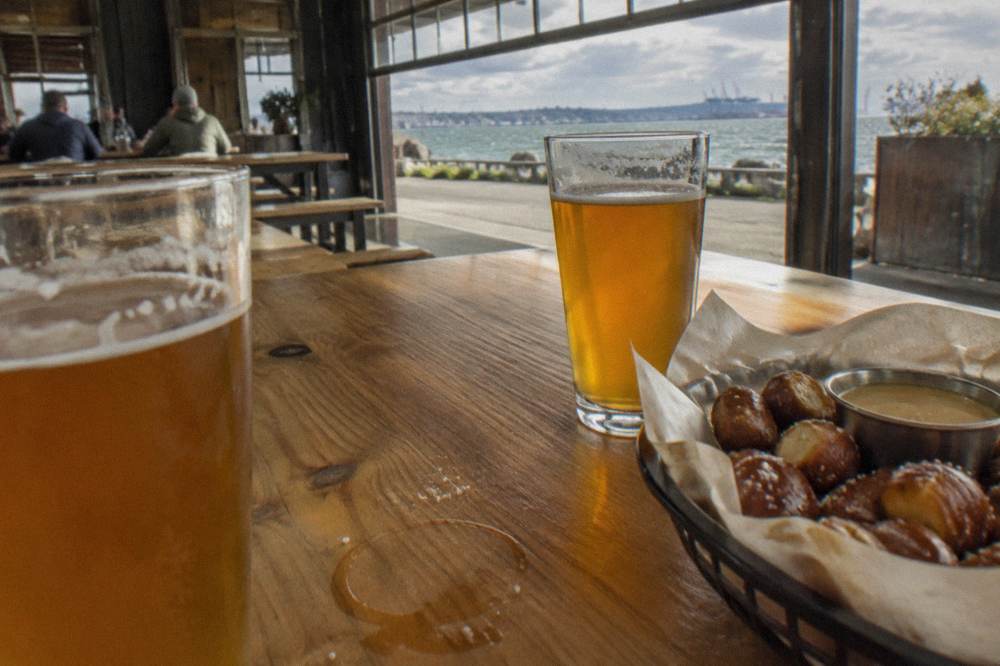
For visitors who would rather not build their own route, the craft beer tasting tour in the Ballard brewery district pairs beer tastings with food, chicken and empanadas among the stops, runs 2 hours 30 minutes, is rated 4.9 across 29 reviews, and starts from $99 per person. The booking page describes the full stop list, which includes Stoup Brewing, Fair Isle Brewing and the Jolly Roger Taproom alongside the food vendors. A companion option, the Seattle Beer Wander through the same district, is 2 hours, from $65 per person, with 10 reviews so far and no star rating claimed on the page; it covers beer only, with food not provided. Between the two, the tasting tour with food suits a market day better, since it turns the afternoon into a second meal.
One honest caveat: Washington's drinking age is 21, and alcohol sales and service stop from 2 a.m. to 6 a.m. statewide, though that last part will not affect a Sunday afternoon. What might affect families is that brewery patios vary in how welcoming they are to kids and dogs; patios are generally the easier ask than indoor bars, and the taprooms nearest the market are used to a mixed Sunday crowd. For a deeper look at the district, the walkable taproom guide on Ballard's brewery crawl routes maps the stops in order.
A mixed group can also split the afternoon cleanly. The beer drinkers take the guided tasting tour while everyone else walks the Locks, the shops along Ballard Ave or the waterfront path, and the two halves reconvene for dinner. Because the guided options run two to two and a half hours, the timing works itself out: a 2:30 or 3 p.m. tour start lands everyone back on Ballard Ave by early evening, which is exactly when the sit-down kitchens hit their stride.
Where Is The Ballard Farmers Market And How Do You Get There?
The market sits on Ballard Ave NW between 20th and 22nd Ave NW, about five miles northwest of downtown Seattle. The car-free options are a Metro bus or rideshare; a King County Metro adult ride is $3.00, a regional day pass is $6.00, and buses run from downtown toward Ballard through the day.
Ballard is not on the light rail spine, so the honest transit answer is bus or car. King County Metro buses run from downtown toward Ballard throughout the day, and the fare math favors transit: an adult single ride is $3.00 with a day pass at $6.00, paid by tapping an ORCA card or a contactless bank card, details on King County Metro's fare page. A rideshare from downtown takes longer on a busy Sunday afternoon. If you drive, the side streets off Ballard Ave are the usual hunt, and arriving early makes the parking search easier.
| Option | Approximate time from downtown | Cost |
|---|---|---|
| Metro bus | Varies by route | $3.00 adult single ride |
| Regional day pass | Same trip, both directions | $6.00 |
| Rideshare | Varies with traffic | Set by the app |
| Drive and park | Varies with traffic | Street parking, availability varies |
The return trip deserves a thought too. Sunday afternoons coming back from Ballard toward downtown fill up, so if you have a dinner reservation or a ferry to catch, leave buffer. Visitors pairing the market with an evening elsewhere will find the neighborhood-by-neighborhood eating guide useful for deciding where to land next.
One more orientation note: Ballard pairs geographically with Fremont, since both sit along the same northern waterway. If you are building a whole weekend, Saturday can cover Fremont's regular attractions or the University District's Saturday market, leaving Sunday free for the Ballard loop described here. Sound Transit's regional system, at the Sound Transit site, is the reference for anything involving light rail legs into or out of downtown.
What Else Should You Do In Ballard On A Sunday Afternoon?
After the market, Ballard offers a walkable mix of bakeries, seafood counters, the ship canal waterfront at the Ballard Locks, and the brewery district described above. The neighborhood is compact enough that a full food day, market at 9, late lunch at 1, taprooms by 3, needs no car and no plan more elaborate than walking.
The Locks are the non-food anchor. The Hiram M. Chittenden Locks sit at the west end of the neighborhood, connecting saltwater Puget Sound to the freshwater ship canal, and watching boats rise and fall in the chambers is free. Salmon run through the fish ladder in late summer and fall, which pairs neatly with a market morning that has been selling that same fish, in smoked and fresh form, all year. From the Locks it is a straightforward walk back east along the water or through the residential blocks to Ballard Ave for a coffee reset.
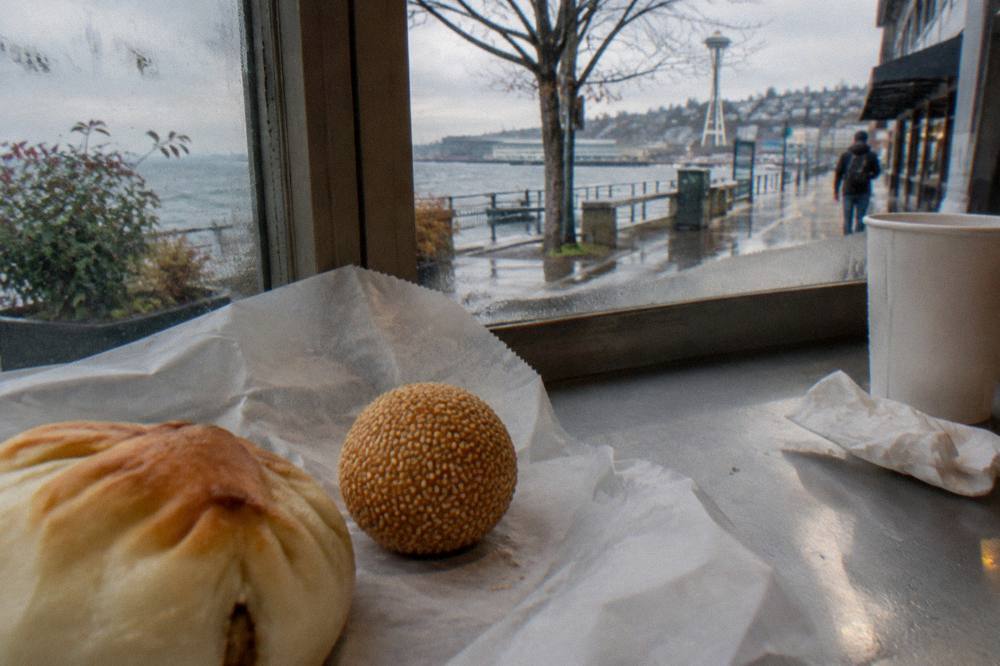
The neighborhood's bakery and seafood layer between market and breweries is worth naming as a category, since the market close at 2 leaves a gap before most taproom kitchens hit their stride. The broader Ballard food walk guide covers bakeries, seafood counters and taprooms in one route, and it is the right companion page if your group splits between the oyster line and the brewery patio. What this site does not sell is a Ballard bakery walk or a Ballard seafood walk; the two guided options in the neighborhood are both beer tours, the tasting tour with food and the beer wander, and everything else you build yourself.
If a rainy Sunday kills the Locks plan, the taprooms absorb the afternoon easily, and the guided afternoon options keep you under cover for most of their runtime.
Shoppers should also budget a little time for the avenue itself. Ballard Ave's permanent storefronts, bookshops, kitchen stores, clothing and record shops among them, are open on Sundays and make the wait between the market's close and a brewery visit feel short. None of it requires a plan; the whole point of the neighborhood on a Sunday is that the plan writes itself as you walk.
What Should You Budget And Bring To The Market?
Bring a bag, layers for weather, cash or card, and an appetite with no strict schedule; the market itself has no entry fee and no ticket, so your spend is entirely what you choose to eat. A comfortable range for grazing is a breakfast item, a tasting lunch of three or four items, and something to take home, plus transit at $3.00 each way or $6.00 for a day pass.
The market's economics are simple because nothing is bundled. You pay per item, per stall, as you go. Prepared-food stall prices are set by each vendor on the day, so treat them as chalkboard decisions rather than something to research in advance; the figures that are firm on any Sunday plan are the transit ones, the $3.00 Metro ride and the $6.00 day pass, and the 10.55 percent Seattle sales tax that gets added at registers when you sit down for a proper meal afterward. Tax applies to restaurant meals.
| Budget line | Planning range |
|---|---|
| Metro fare | $3.00 each way, $6.00 day pass |
| Breakfast at the market | One item, per-vendor chalkboard price |
| Tasting lunch | Three or four stall items, priced per stall |
| Guided brewery afternoon | From $99 per person with food, from $65 without |
| Sit-down dinner after | Menu prices plus 10.55 percent sales tax at register |
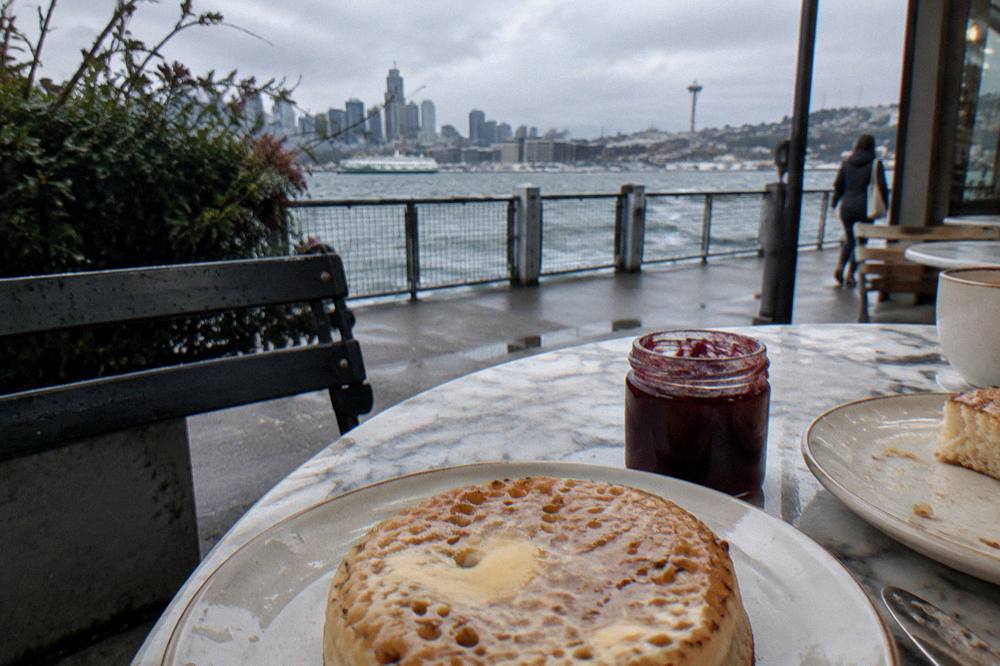
Weather planning matters here. November is Seattle's wettest month at 6.31 inches of rain on average, December follows at 5.72 and January at 5.78, per the NOAA 1991 to 2020 normals at Sea-Tac, while July and August average highs around 77 to 78 degrees with under an inch of rain. The market runs in all of it, so the difference between months is your clothing, not the stall count. Layers and a real rain shell beat an umbrella on a crowded street; there is nowhere to put a wet umbrella while you eat an oyster.
What to carry comes down to three items beyond your wallet. A tote or backpack, because vendor packaging is minimal and a loose handful of plums is nobody's friend. A water bottle, since the walking adds up and the stalls sell food, not hydration. And a small plan for what you will actually cook or eat later; the take-home layer is where regulars spend their money, and a jar, a loaf and a fillet of smoked fish will still be feeding you on Tuesday when the market memory has faded.
Is The Ballard Farmers Market Worth The Trip From Downtown Seattle?
Yes, if you have a Sunday in the city and want the neighborhood-Sunday experience rather than another downtown attraction; the market's year-round street format, shellfish and bakery density, and short walk to breweries make it distinct from Pike Place Market. It is less worth it if you only have one day total, in which case downtown's guided walks cover more ground per hour.
The comparison visitors actually weigh is Ballard versus Pike Place. Pike Place is bigger, older, open seven days a week, 363 days a year, and packed with 220-plus independent shops and restaurants, but it is also a global tourist landmark at peak density. Ballard is the locals' version: fewer visitors and a pace set by neighbors filling tote bags rather than tour groups photographing fish. If your Seattle trip already includes a downtown food walk, Ballard Sunday is the perfect contrast day. If it does not, and you must choose one, Pike Place's scale usually wins for a first visit.
A sensible split trip looks like this: Saturday downtown, with the chef guided Pike Place walk or a self-guided market morning, then Sunday in Ballard for the farmers market and a brewery afternoon. The morning-versus-evening timing question gets a fuller treatment in the morning or evening food walk guide, but for Ballard the answer is fixed by the market clock: morning is the market, afternoon is the taprooms, and evening is a sit-down dinner back on Ballard Ave.
The last practical word is about the calendar. Because the market runs every single Sunday, there is no bad weekend to do this, only better and worse weather, and the brewery afternoon exists precisely for the wet weekends. November through January, arrive at 9 sharp, eat the warm things first, and let the rain decide how long the Locks stay on the itinerary.
Common Questions About The Ballard Farmers Market
What Time Does The Ballard Farmers Market Open And Close?
Every Sunday, 9 a.m. to 2 p.m., year-round, rain or shine, along Ballard Ave NW between 20th and 22nd Ave NW.
How Do I Get To The Ballard Farmers Market Without A Car?
King County Metro buses run from downtown toward Ballard through the day; an adult ride is $3.00 and a regional day pass is $6.00, paid with an ORCA card or contactless bank card.
What Should I Eat At The Ballard Farmers Market?
Plan a breakfast from the hot stalls in the first hour, then a walking lunch of oysters, cheese, bread and seasonal produce. Farmed oysters are sold year-round, with the cold-water months of roughly September to April the traditional peak for flavor.
Can I Pair The Market With A Brewery Tour The Same Day?
Yes. The market closes at 2 p.m. and the brewery district is a short walk away. A guided craft beer tasting tour with food runs 2 hours 30 minutes from $99 per person, and a beer-only wander runs 2 hours from $65 per person.
Is The Ballard Farmers Market Open In Winter?
Yes, it runs every Sunday of the year, rain or shine. Winter brings roots, storage fruit, greens and cheese.