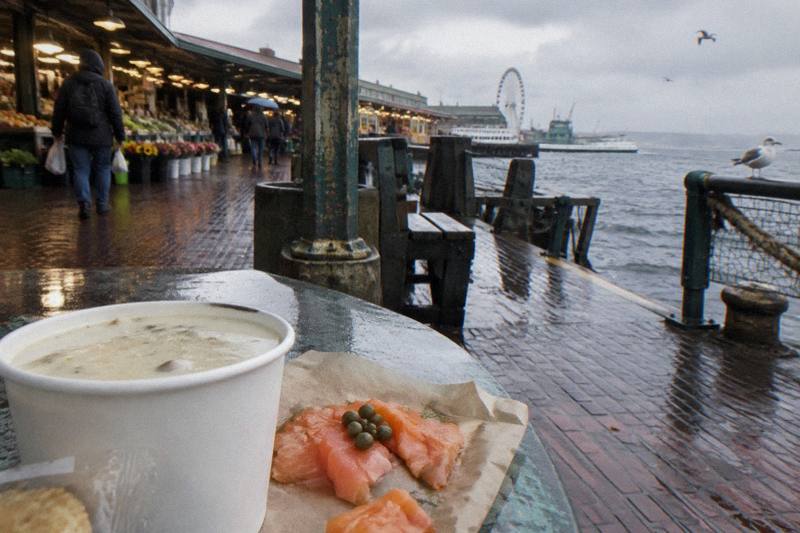
Is Pike Place A Tourist Trap?
A straight answer on whether Pike Place Market is a tourist trap, what the Market actually holds, and when a guided tasting walk earns its price.
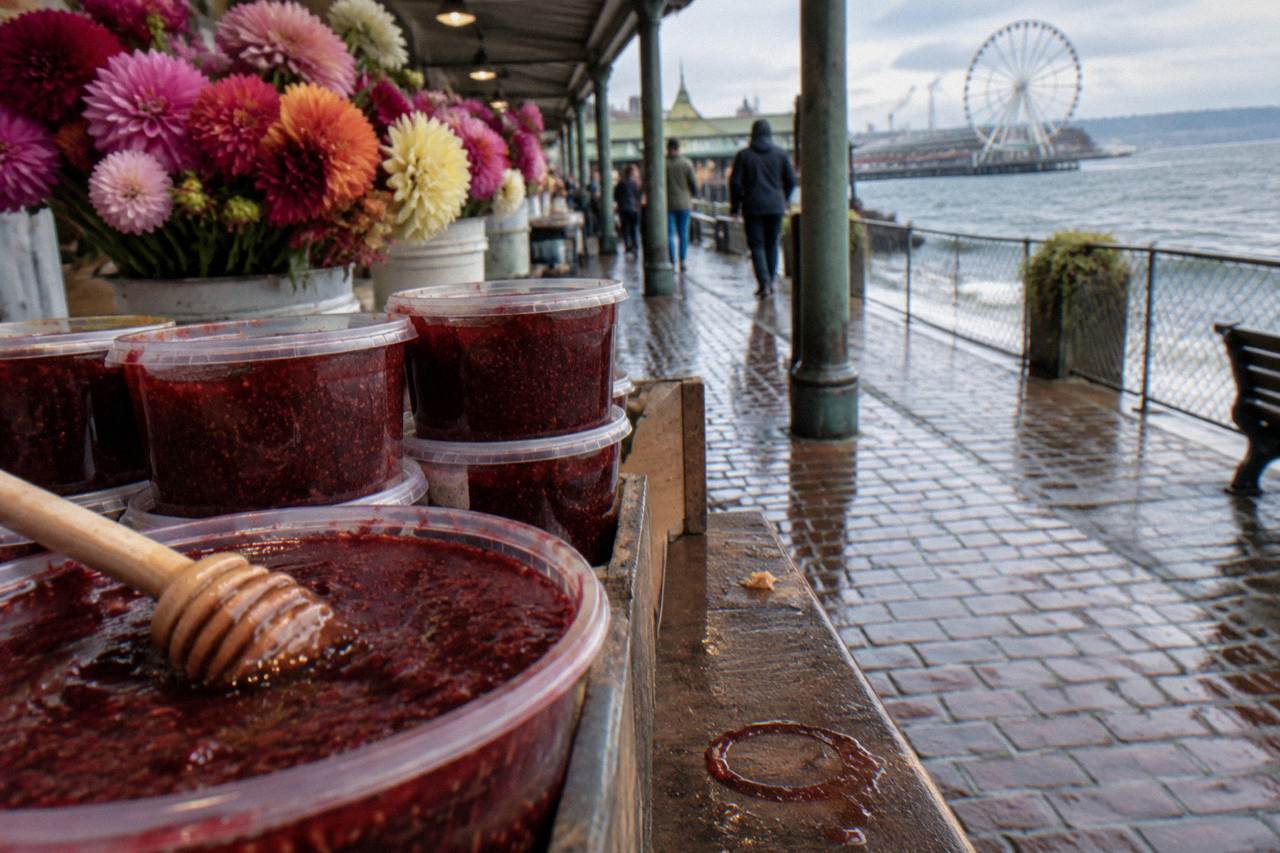
No, Pike Place Market is not a tourist trap in the hollow, overpriced-souvenir sense, but it is one of Seattle's busiest blocks and parts of it are staged for exactly that audience. The Market itself is a real, working institution: more than 220 independently owned shops and restaurants, 70-plus farmers, and 450-plus residents living in affordable housing above the stalls, open 363 days a year.
The trap feeling comes from three specific things, and all three are avoidable. The first is timing: the Market's own guidance says mornings before noon are generally less crowded, and the difference between a 9 a.m. arcade and a 2 p.m. Saturday arcade is the difference between two different places. The second is geography: the corner at 1st Avenue and Pike Street, where the clock, Rachel the Piggy Bank and the fish throwers live, absorbs the bulk of the camera traffic while the lower floors and north end stay comparatively calm. The third is shopping blind: visitors who buy the first thing at the first stall they see have a worse trip than visitors who know which counter to walk toward.
It helps to define terms before going further, because the phrase "tourist trap" does a lot of sloppy work in online arguments. A trap, properly speaking, is a place whose business model depends on one-time visitors paying inflated prices for goods with no local function: the shop that sells nothing a resident would buy, the restaurant that would close within a season if the tour buses stopped. By that definition, a public market with a 1907 charter, working farm tables and residents living upstairs fails every test of a trap. What Pike Place actually is, is a working market with a famous corner, and the two coexist more comfortably than the debate suggests.
A guided tasting walk solves the shopping-blind problem outright, and often the geography one too. A chef-guided option like the Chef Guided Food Tour of Pike Place Market moves through nine vendor stops in about two hours, rated 4.9 across 4,806 reviews and priced from $75 per person, with standing tastings rather than a sit-down meal. For a fuller comparison of the formats, the guide to which Pike Place walk fits you breaks down the choices by budget and appetite.
Why Does Pike Place Feel So Crowded?
Crowding at Pike Place is a function of layout and fame, not failure: a multi-level historic district with narrow, sloped arcades funnels most visitors through a single covered stretch, and the Market's own pages describe mornings before noon as generally the quieter window. Crafts run 11 a.m. to 4 p.m., farm tables 9 a.m. to 4 p.m., and breakfast counters open as early as 7 a.m.
The arcade was built for produce wagons in 1907, not for the volume of foot traffic it now carries. The City Council passed the ordinance creating the public market on August 5, 1907, and six to twelve farmers showed up with wagons on August 17 of that year. That origin still shapes the bones of the place: Pike Place is a street, originally shared by vehicles and pedestrians, and the current street access pilot keeps it that way, with vehicles and pedestrians sharing the roadway Monday to Thursday and access limited at 1st and Pike from 11 a.m. to 4 p.m. Friday to Sunday under the pilot's third phase, which runs October 1, 2026 to March 31, 2027. Visitors arriving midday on a weekend should expect the access restrictions at the main corner and plan to enter from a different block.
What that means practically is that the crowd you have heard about is real but unevenly distributed. The corner with the Public Market Center sign and Rachel, the bronze piggy bank installed in 1986 by sculptor Georgia Gerber, is the densest spot, and the fish throwing at Pike Place Fish happens when a customer buys a fish, so it clusters around purchase moments during the 7 a.m. to 5 p.m. business day. Walk one block north, or down a level, and the density drops off fast. The Market's planning resources are the honest source on this: the official plan-your-visit page publishes current hours by section and guidance on quieter times, and it is worth a look before any first trip.
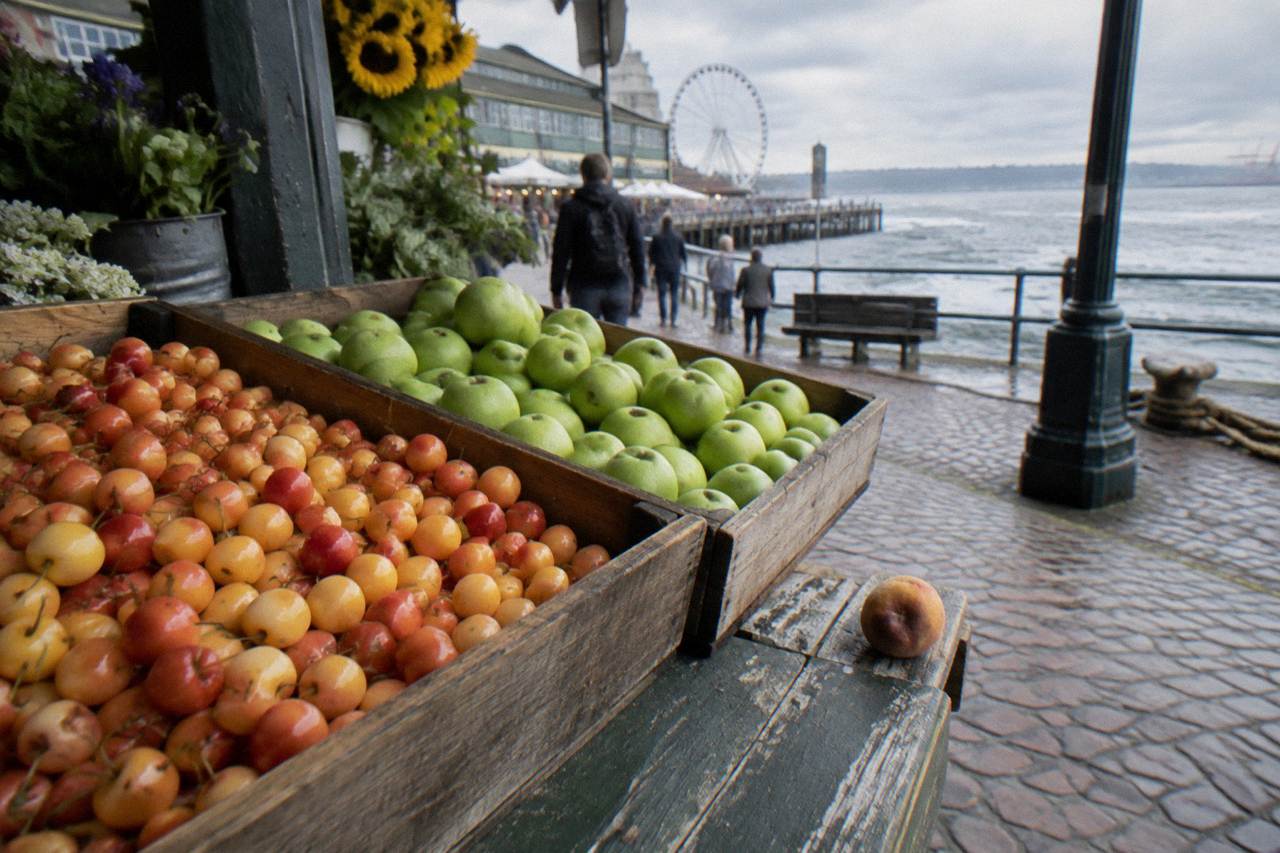
Getting there shapes the experience too. The Market sits at the top of a steep hill from the waterfront, and the Overlook Walk now connects the two, so arriving by light rail and walking up from downtown is a common route. Link light rail costs $3.00 for an adult one-way ride, a King County Metro bus ride is $3.00, and a regional day pass is $6.00, per Sound Transit and King County Metro's fare page. Visitors driving should note the Market runs its own parking garage, which removes the worst of the downtown-parking problem, though the street access pilot changes how cars reach the 1st Avenue curb during its Phase 3 window.
Is The Food At Pike Place Actually Good Or Just Famous?
The food at Pike Place is mostly good and mostly local, with a handful of famous counters that earn their lines and a long tail of stalls most visitors never reach; the Market hosts 220-plus independent shops and restaurants, and many of them supply Seattle restaurants and home kitchens rather than tourists. The fame and the quality overlap more often than skeptics expect.
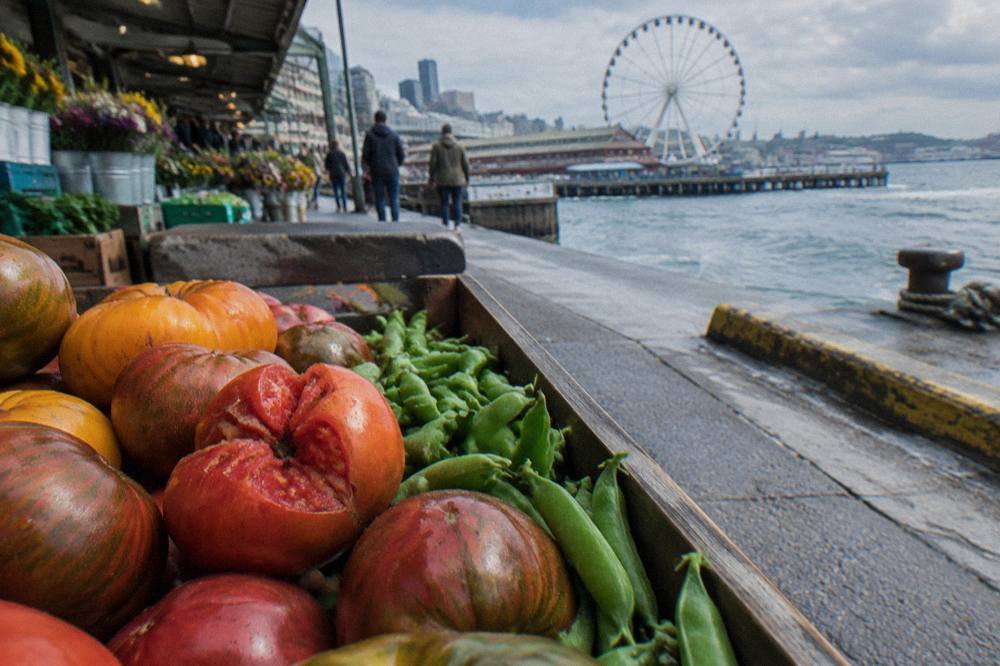
The proof is in who shops there. Seventy-plus farmers sell at the farm tables, running 9 a.m. to 4 p.m., and the produce, seafood and cheese counters serve a city that cooks. The famous names, the chowder, the cheese, the doughnut counter, are famous because locals kept buying, and the lines are the price of that. The honest framing is not "tourist food versus local food" but "front-of-Market famous food versus the rest of the building," and the rest of the building is enormous.
| What skeptics say | What the record shows |
|---|---|
| It is all souvenir shops | 220+ independent shops and restaurants, 150+ to 180+ craftspeople selling their own work |
| Only tourists eat there | Farm tables, seafood and produce counters open from 7 a.m., serving home cooks and restaurants |
| Everything is overpriced | Prices vary by vendor and section; tour prices from the booking pages start at $30 |
| It is one crowded street | A district across multiple levels, open 363 days a year |
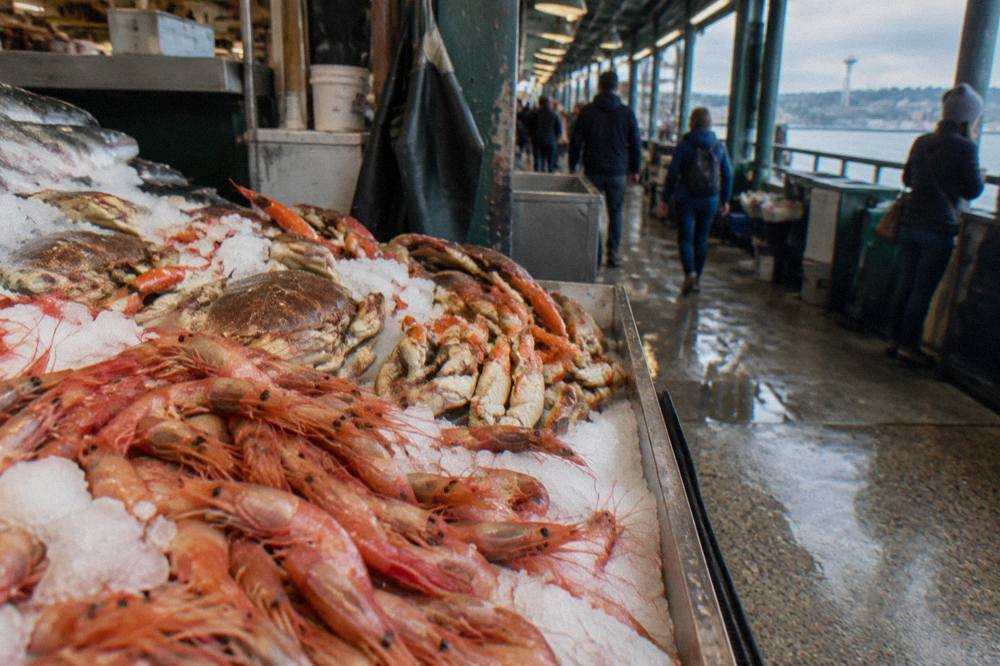
Seafood is the clearest case, because it is the category where a market either has a real supply chain or it does not. The counters at Pike Place sell the same Puget Sound and Alaska fish that the city's restaurants build menus around: Copper River sockeye and king reaching Seattle stalls in late May with the season opener, Dungeness crab under quota-managed Washington seasons, oysters from Puget Sound, Hood Canal and Willapa Bay farms available year-round with the cold months of roughly September to April as the traditional flavor peak. A stall selling that product to locals every day of the week is not a trap, whatever the line out front. The Seattle seafood walk guide covers where those counters sit and how to buy from them.
A tasting walk is the efficient way to sort famous from worthwhile in one pass. The Pike Place Market: Original Food Tour covers 14-plus tastings from 8 vendors over 2 hours 15 minutes, rated 5.0 across 670 reviews and from $112 per person with gratuity included. For a fuller map of what to eat and where, the Pike Place food guide is the page that owns that question in depth.
Timing settles most of the argument. Produce and seafood counters open at 7 a.m., the Market says mornings before noon are generally less crowded, and the farm tables are running by 9, so a 9 a.m. start gets you farmers, fish and cheese before the midday rush.
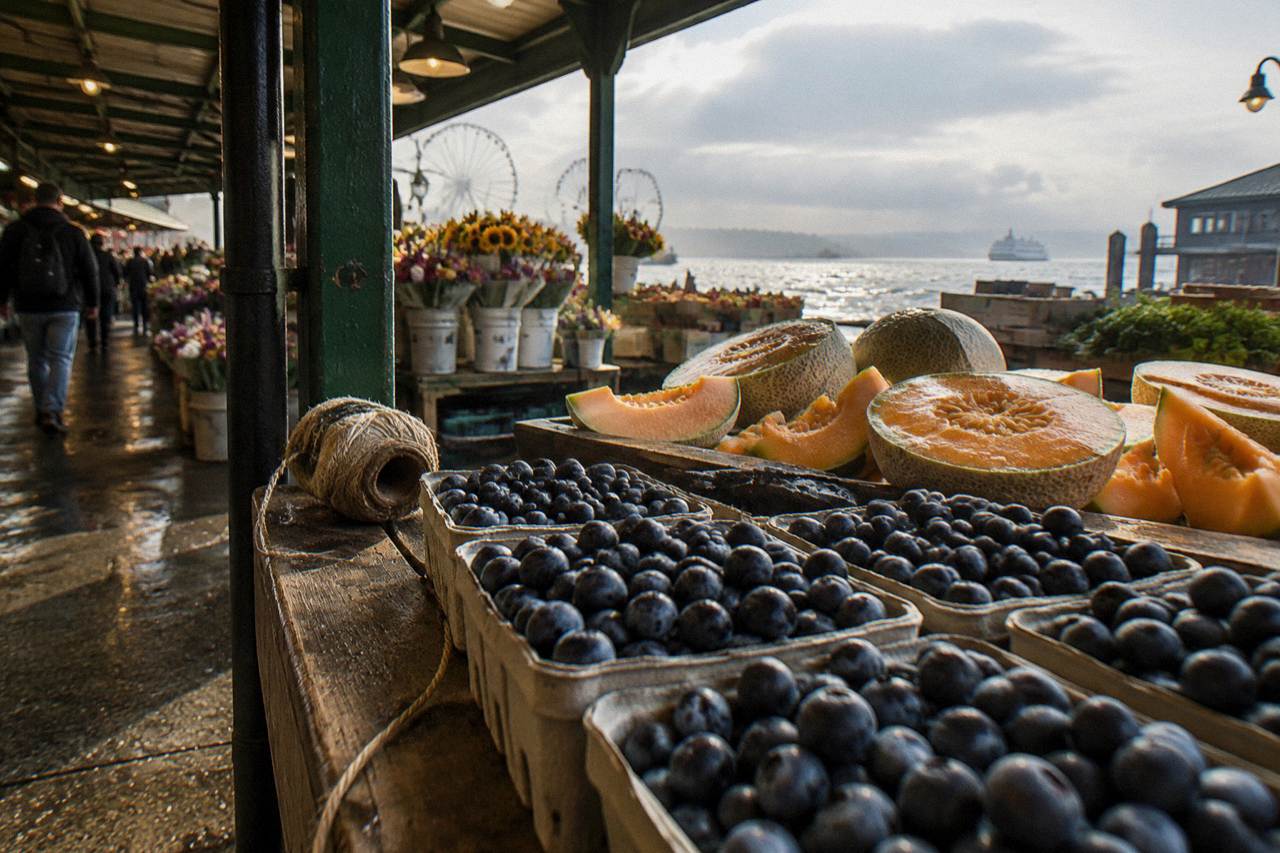
One planning wrinkle: the street access pilot runs Oct 1, 2026 to Mar 31, 2027. Vehicles and pedestrians share Pike Place Monday to Thursday; on Friday to Sunday, access is limited at 1st Ave and Pike St from 11 a.m. to 4 p.m., so a weekend arrival before 11 clears the restriction window and the crowd peak at once.
For the long tail, budget time rather than money. The famous counters sit at the front of the Market, the rest of the building is enormous, and the craftspeople selling their own work are part of the reason: this is a working district across multiple levels, not a single street with a line.
When Is The Best Time To Visit Pike Place Market?
Before noon, on a weekday, is the reliable answer: the Market itself says mornings before noon are generally less crowded, breakfast and produce counters open at 7 a.m., and the Market is open 363 days a year, closed only on Thanksgiving Day and Christmas Day. November through February adds weather-driven quiet that many visitors never consider.
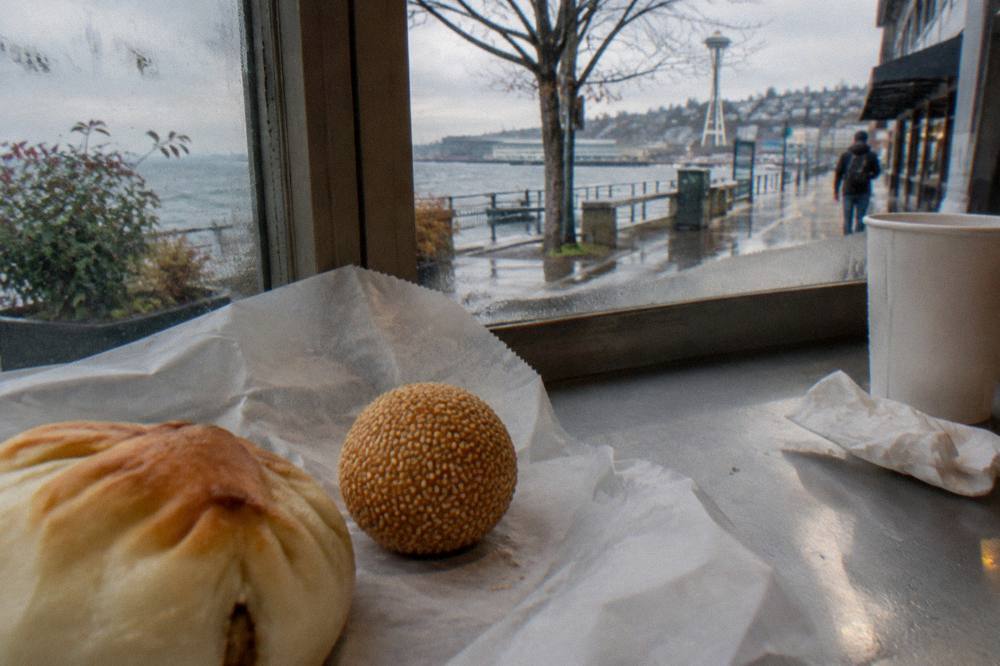
The seasonal angle matters more than most guides admit. Seattle's wettest months are November at 6.31 inches of rain, December at 5.72 and January at 5.78, per the NOAA 1991 to 2020 climate normals at Sea-Tac, while July and August average highs of about 77 to 78 degrees with under an inch of rain each. Summer brings the crowds and the cruise season, which ran April 17 to October in 2026 with a record 330 ship calls at the Port of Seattle and roughly two million revenue passengers, many of whom head straight to the Market on arrival day. A rainy Tuesday morning in January is a completely different Market: the same counters, the same fish, a fraction of the foot traffic, and the arcade is covered, so the weather mostly does not touch the walk itself.
| Time window | What it is like | Best for |
|---|---|---|
| 7 to 10 a.m. | Quietest, breakfast and produce open, crafts not yet set up | Photographs, breakfast, shopping like a local |
| 10 a.m. to noon | Market at full function, moderate crowds | First visits, tasting walks |
| Noon to 4 p.m. | Peak crowds, all sections active | People-watching, crafts market 11 to 4 |
| After 5 p.m. | Most stalls close, some restaurants open until midnight or later | Dinner at a sit-down spot |
The Market's internal clock rewards early risers unevenly across its sections, which is worth knowing when you plan. The main arcade is active about 10 a.m. to 5 p.m., farm tables run 9 to 4, the crafts market 11 to 4, and the artisanal food program 11 to 4 Friday to Sunday only. A visitor who arrives at 7:30 a.m. expecting the full crafts market will find breakfast and produce instead; a visitor who arrives at 3:30 p.m. will catch the tail of everything. Neither is wrong, but they are different Markets, and matching your arrival to what you came for is the single easiest upgrade to a first visit.
Do You Need A Tour Or Can You Explore Pike Place On Your Own?
You can absolutely explore Pike Place on your own and millions do, but a guided tasting walk converts roughly two hours and $50 to $112 per person into a curated route through a building whose best counters are not signposted, and the Market's own permit rules mean guided groups stay small, capped at 16 people per guide. The value is in the curation, not in access you could not otherwise buy.
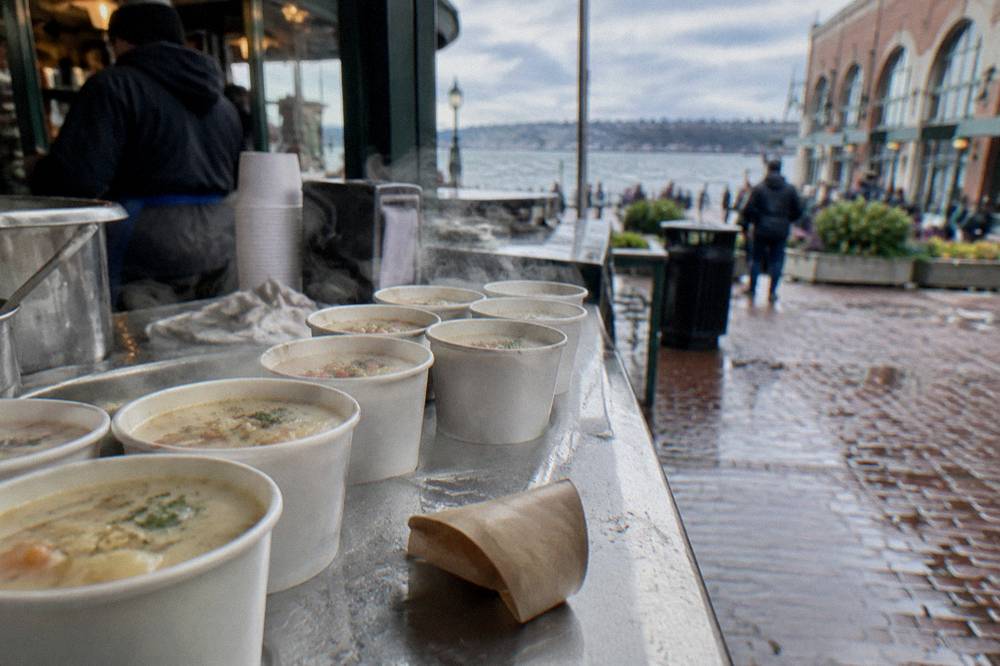
The Market licenses its tour operators: group size is capped at 16 per guide, participants wear Market-issued stickers, amplified sound is banned, and operators pay a participant fee per customer, with guides holding a $30 annual permit. Those rules exist to protect a working market, and they incidentally guarantee that a licensed walk is a small-group experience by design, not by marketing. A visitor comparing a Pike Place tasting walk against the giant-flag-follow-me format common in other cities is comparing two different products, and the Market's own rules are the reason.
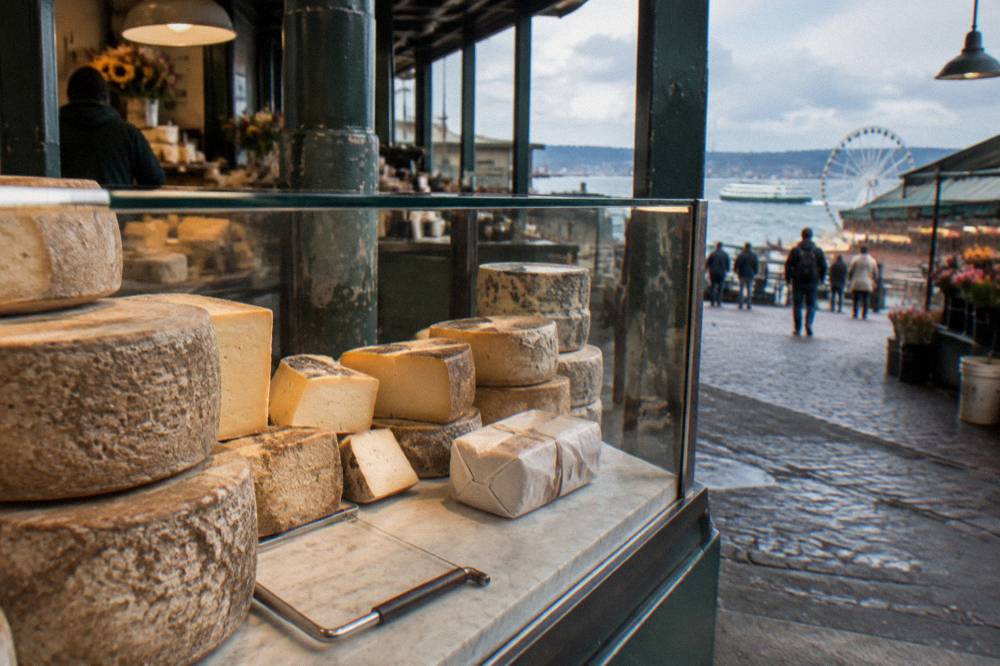
Solo exploring has real advantages, cost first among them, and the Market's visitor FAQ answers most practical questions, from parking to the fish throwing. What self-guided visitors give up is the shortlist. A Market regular knows which bakery, which cheese counter, which produce stall; a first-timer knows the three names that made it onto a postcard. The walks covered here close that gap from under $60: the Meet the Market Food and Fun tour runs 2 hours from $58 per person, rated 4.7 across 457 reviews, starting outside The Crumpet Shop on 1st Avenue and hitting Honest Biscuits, City Fish and DeLaurenti.
The math on a tasting walk is more favorable than it first looks, because the ticket is not purely a fee for company. A tasting ticket buys food: the Original tour's 14-plus tastings from 8 vendors, the chef-guided tour's nine vendor stops, the 3-hour Pike Market Food Tour's eight tastings. Strip out what you would have spent on lunch and a snack anyway, and the effective cost of the guiding itself shrinks considerably. Add that the standing format moves faster than a sit-down meal, and two hours in the Market with a guide can cover more ground than four hours alone with a map and a series of guesswork queue decisions.
What Are The Signs Of A Real Market Versus A Trap?
A real market has working wholesalers, resident vendors and a permit system that constrains tourism; a trap has none of those. Pike Place shows every sign of the former: 450-plus residents in affordable housing upstairs, farmers who sell there across seasons, fish that is thrown because it is sold.
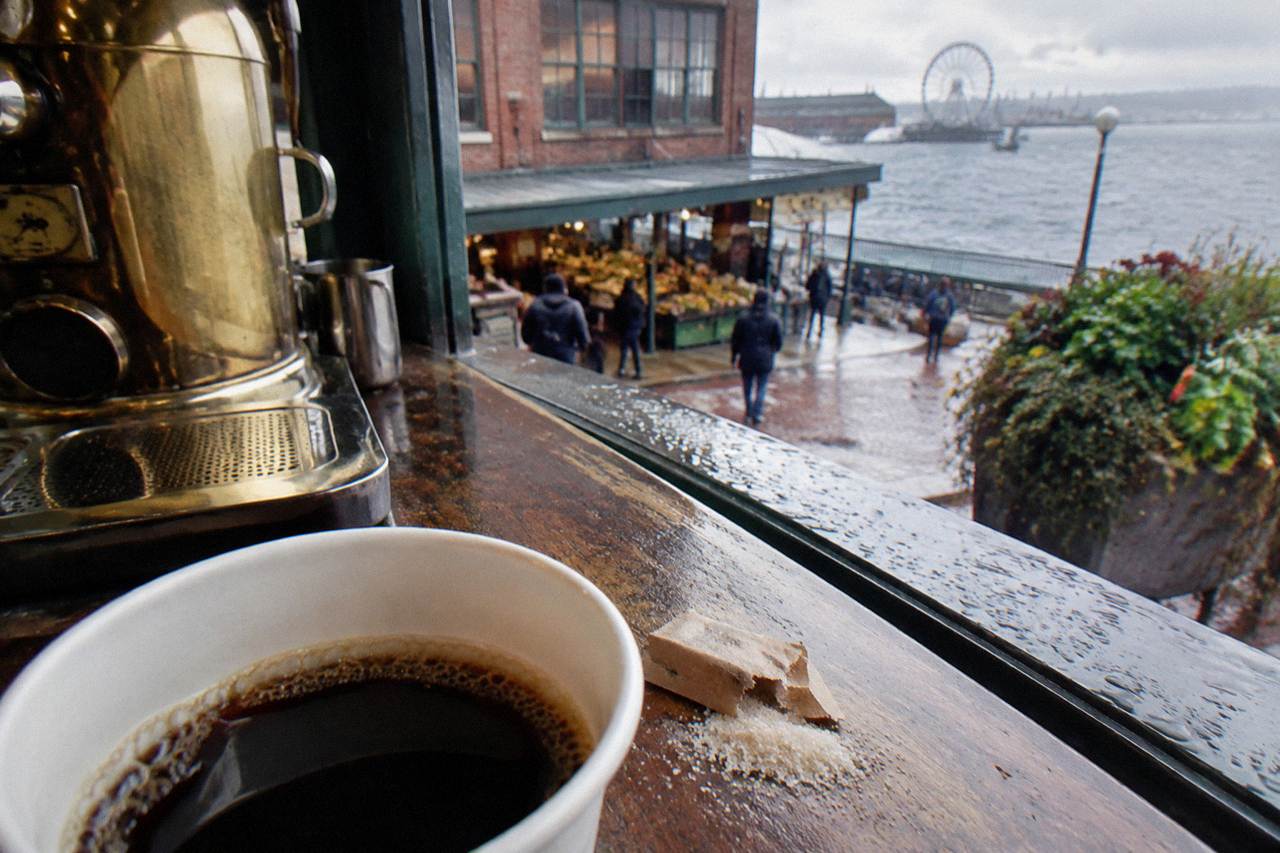
The distinction is worth spelling out because "touristy" and "trap" get collapsed. The gum wall is touristy. The fish throwing is a bit of theater wrapped around an actual fish sale. The first Starbucks at 1912 Pike Place, the company's oldest still-operating store from its 1971 founding, is a pilgrimage site with a line, and the honest answer on whether that line is worth it is worked through in the first Starbucks and Pike Place coffee guide. None of that is a trap; all of it is a decision about how you spend a morning.
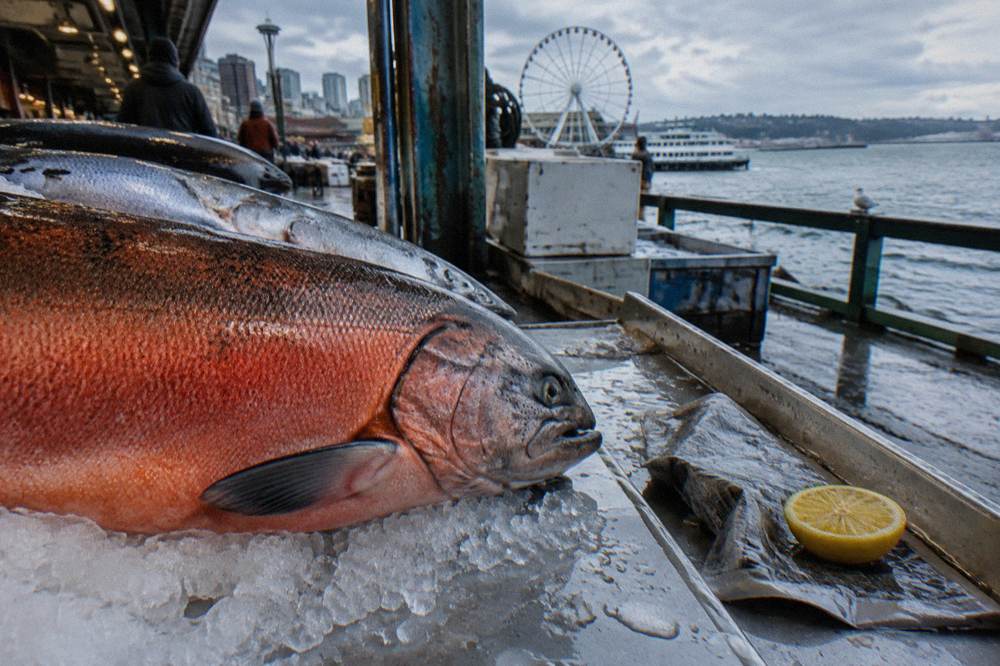
The strongest counterargument to the trap label is the Market's own calendar and institutional density: 220-plus shops, 70-plus farmers, 150-plus to 180-plus craftspeople, and 60-plus permitted buskers, all inside a district that closes only two days a year. Traps do not sustain that density of independent businesses across a century. The Market opened in 1907 and has survived regrades, redevelopment fights and every tourism cycle since, which is the resume of an institution, not a backdrop.
| Trap marker | Pike Place status |
|---|---|
| Prices detached from locals | Farm tables and seafood counters serve home cooks year-round |
| Nothing for residents | 450+ residents in affordable housing on site |
| Open only for peak traffic | 363 days a year, produce from 7 a.m. |
There is also the question of what surrounds the Market, because a trap tends to sit in a dead zone that exists only to feed it. Pike Place sits above a working waterfront and inside a dense downtown: Waterfront Park is open daily 7 a.m. to 10 p.m., the Overlook Walk and the Pier 58 play space are open, and the ferry terminal a short walk away runs the Seattle to Bainbridge route at $11.35 for an adult walk-on, collected from the Seattle side with the return free, per Washington State Ferries. A neighborhood that supports a public ferry commute, a park and a market simultaneously is a functioning district, not a staging area for visitors.
The final test is the one locals apply without thinking about it: would you send a friend there on a Tuesday? For Pike Place the honest answer is yes, with a time attached. Go before noon, eat at a counter with a line of people carrying grocery bags rather than cameras, and the Market reads exactly as what it is, a public institution that happens to be famous.
Common Questions About Pike Place Market
Is Pike Place A Tourist Trap?
No. Pike Place is heavily visited but it is a functioning public market with 220-plus independent shops and restaurants, 70-plus farmers and resident housing, open 363 days a year. The trap feeling comes from peak-hour crowds at the 1st and Pike corner, not from hollow attractions.
When Is Pike Place Market Least Crowded?
The Market's own guidance says mornings before noon are generally less crowded. Breakfast and produce counters open at 7 a.m., while the crafts market runs 11 a.m. to 4 p.m. Weekday mornings in the rainy months of November through January are the quietest combination.
How Much Does A Pike Place Food Tour Cost?
Walking tasting tours of the Market covered here start from $30 per person for a happy-hour format and from $50 to $112 for full tasting walks of 90 minutes to 3 hours. Prices are per person from-prices on the booking pages and inclusions vary, so check what each ticket covers.
Can You Visit Pike Place Without A Tour?
Yes. The Market is a public space open 363 days a year with free entry, and self-guided visits work well with the official visitor FAQ in hand. A guided tasting adds a curated route and vendor shortlist for a per-person fee, capped at 16 guests per guide under Market permit rules.
Is The Fish Throwing At Pike Place Staged?
The fish throwing happens when a customer buys a fish, during business hours from 7 a.m. to 5 p.m., per the Market FAQ. It is theater attached to a real transaction at a working fish counter, not a scheduled show.