First Starbucks And Pike Place Coffee: Is The Line Worth It
The original Starbucks at 1912 Pike Place is the oldest Starbucks still operating, and the queue outside it has become a Market landmark in its own right. Here is what the store actually is, what it sells, how the wait works, and what to do instead when the line wraps the corner.
Short answer
The first Starbucks store opened in 1971 at Pike Place Market, and the shop at 1912 Pike Place is the company's oldest location still operating. It sells whole beans, tea and merchandise rather than a full café menu. Waits run longest at midday in peak season, so many visitors photograph the sign, then buy coffee with no queue one block away.
Where Is The First Starbucks In Seattle?
The original Starbucks opened in 1971 at Pike Place Market, though it began on Western Avenue and moved a few years later; the store at 1912 Pike Place is the oldest Starbucks still operating rather than the literal first door. It sits at the north end of Pike Place, a short walk from the clock and sign, making it the oldest place you can still buy a Starbucks coffee.
The history is thinner than the mythology. Starbucks opened its first store in 1971, and in its early years it was not a café at all: it sold whole-bean coffee, tea and spices, with no espresso bar and no lounge. The company says the Pike Place store is its oldest still operating, and the store at 1912 Pike Place is where that continuity lives. Reports on the company's own history pages describe an original location on Western Avenue that no longer exists as a store, with the business moving to the 1912 Pike Place address in the 1970s. Treat the exact move year as reported rather than settled, but the address itself is not in dispute.
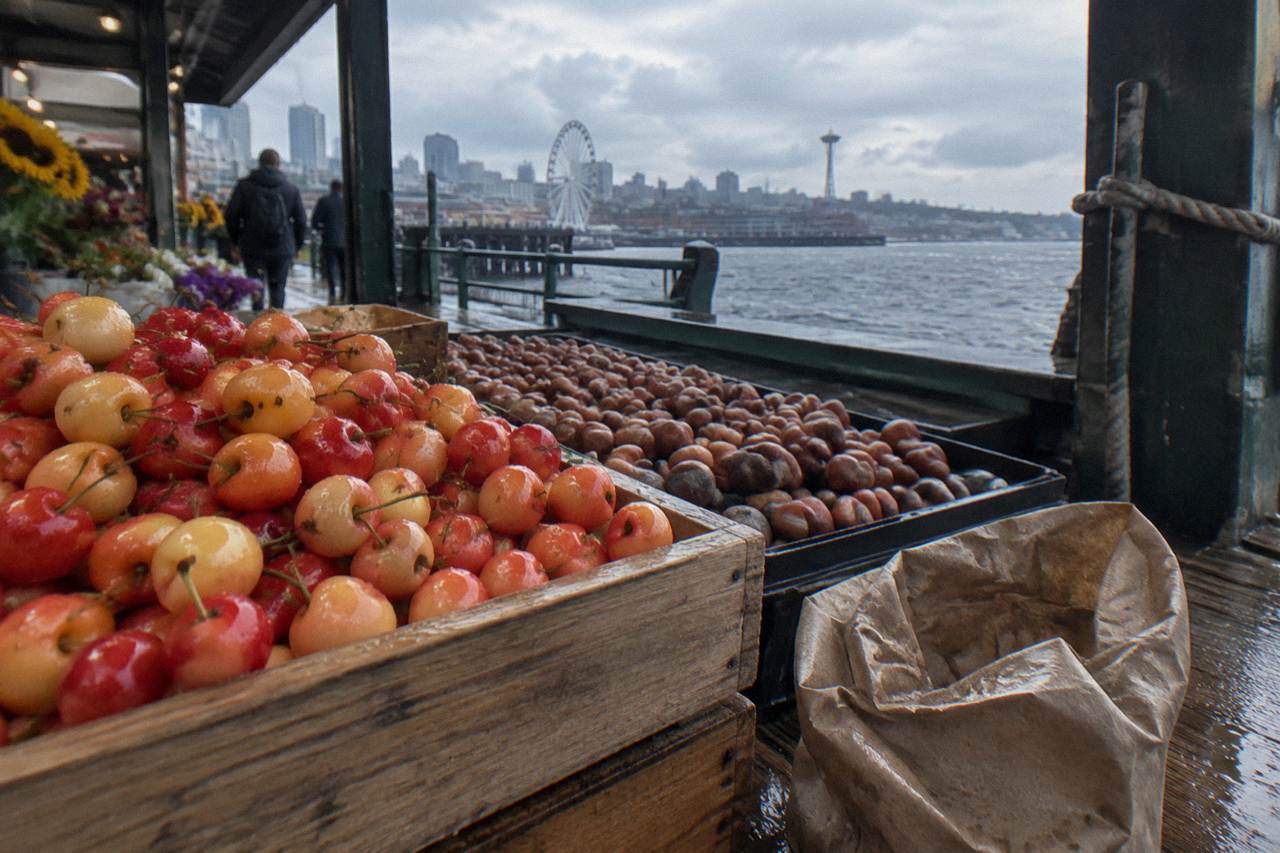
The setting matters as much as the store. Pike Place Market opened on August 17, 1907, after the Seattle City Council passed the ordinance creating it on August 5 of that year, when somewhere between six and twelve farmers brought produce wagons to Pike Place. The Market runs 363 days a year, closed only on Thanksgiving Day and Christmas Day, and today counts more than 220 independently owned shops and restaurants, 70 or more farmers, and 150 to 180 craftspeople across its buildings. The Starbucks sits inside that working market, which is why the queue and the fish throwing and the flower stalls all share the same cobblestone street. The Market's own visitor FAQ covers current opening details and is the best place to confirm anything before a visit: the Pike Place Market visitor FAQ.
What surprises most first-time visitors is how small the store is. It is a narrow, wood-lined room built for retail, not for lingering: a counter, bean shelves, and a line of people taking turns photographing the same logo. Nobody is expected to sit. If you arrive expecting a museum, you will be half right; if you arrive expecting a café, you will be in the wrong building, and the alternatives below are the fix.
How Long Is The Wait At The Original Starbucks?
There is no official published wait time for the original Starbucks, and the store offers no reservations or skip-the-line option, so your wait depends almost entirely on timing. The Market itself says mornings before noon are generally less crowded while the queue builds through the afternoon, meaning a weekday morning can mean walking straight in and a midday summer visit can mean a long wait.
The Market's own guidance is the most reliable planning tool available. Pike Place reports that mornings before noon are generally less crowded, and that the Market is at its fullest from Thursday through Monday. Most of the Market is active from about 10 a.m. to 5 p.m., while breakfast, fresh produce and seafood counters start at 7 a.m., which leaves a three-hour morning window where the neighborhood is awake but not yet packed. That window is exactly when the serious coffee options shine.
Beyond crowd levels, the Market is currently running a street access pilot: Phase 3 runs from October 1, 2026 to March 31, 2027, during which Pike Place is shared by vehicles and pedestrians Monday to Thursday, and from Friday to Sunday between 11 a.m. and 4 p.m. access is limited at 1st Ave and Pike St to deliveries, accessibility needs and pre-arranged pickups. The pilot does not close the Starbucks, but it changes how the street around it feels at exactly the hours the queue peaks, so check the Market's plan-your-visit page before you set your route: the Market's plan-your-visit guide.
A practical way to budget the decision: if your visit falls before 10 a.m. on a weekday between October and April, the wait is usually tolerable and the store is at its most pleasant. If it falls between noon and 4 p.m. on a summer weekend, treat the line as an attraction you either accept or route around. There is no third option, and pretending otherwise is how a two-hour Market visit disappears into a single storefront.
What Does The Original Starbucks Store Sell?
The original Starbucks sells whole-bean coffee, tea, and Pike Place-exclusive merchandise, in keeping with how the company began in 1971 as a bean-and-spice shop rather than a café. Drinks are served, but the store is fundamentally retail: the draw is buying beans at the oldest counter, not sitting with a latte. Expect a limited menu focused on the classics rather than the full range of a modern flagship.
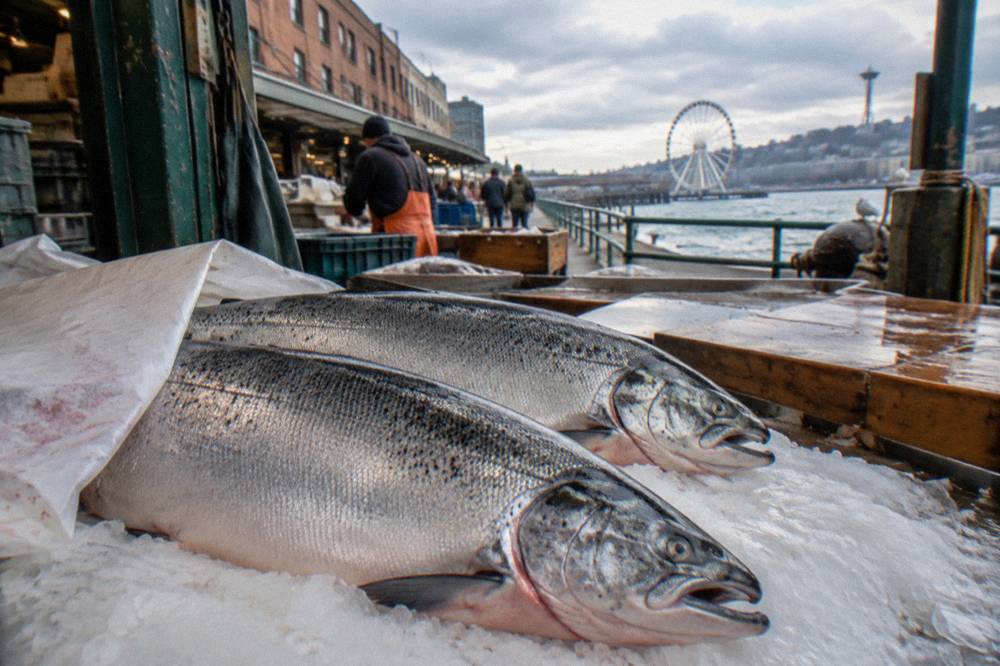
The honest framing is that you come here to buy an object, not a beverage experience. The beans and the store-specific merchandise are the reason to wait; the espresso is the same company's espresso. Visitors who want the historical moment usually buy a bag of whole beans at 1912 Pike Place and then drink their actual coffee somewhere with a seat and no queue, which is a perfectly good plan and one the Market's geography makes easy, since the alternative roasters below are a short walk through the same buildings.
| What The Store Offers | What It Feels Like | Who It Suits |
|---|---|---|
| Whole-bean coffee, including Pike Place-themed bags | Retail purchase at a historic counter | Visitors buying a souvenir they can brew at home |
| Tea and spice items, echoing the 1971 origins | A nod to the original shop's stock | History-minded visitors |
| Espresso drinks from a limited menu | Quick service, no seating to speak of | Anyone who wants to say they drank here |
| Store-exclusive merchandise | The most-photographed bags in Seattle | Gift buyers and collectors |
One caution worth printing plainly: do not build your coffee plan around prices or menus read anywhere other than the store itself, since menu details and any item pricing can change. The facts that hold steady are the store's address, its 1971 corporate origin, and its status as the oldest operating location. Everything else lives at the counter.
For visitors who want coffee woven into a fuller Market morning rather than a single stop, a guided option exists that starts before the crowds and includes breakfast alongside the tastings. The Coffee Crawl & VIP Morning in Pike Place Market runs 2 hours, is rated 5.0 across 93 reviews, and costs from $84 per person; it starts at Anchorhead Coffee on Western Ave and moves through the Market including stops at Pike Place Fish Market and indi chocolate. Read more on the tour page.
Which Coffee Shops Near Pike Place Skip The Line?
Several working coffee shops sit within a few minutes' walk of the original Starbucks, and all of them serve coffee with no heritage queue: Anchorhead Coffee on Western Ave, Storyville Coffee just up the hill, Ghost Alley Espresso in Post Alley, and Fonté Coffee on 1st Avenue are all stops on established Market coffee routes. None carries the 1971 story, but all of them will hand you an espresso in minutes rather than half an hour.
These are the names that appear on the guided coffee routes through the Market, which is a decent proxy for quality and walkability. The Roasted in Seattle: Bean to Cup Coffee Tour, a 2-hour walk rated 4.9 across 26 reviews from $55 per person, strings together Anchorhead, the original Starbucks, Storyville, Ghost Alley Espresso, the Gum Wall and Fonté in a single loop. You do not need a tour to walk that loop yourself, but the tour's stop list is effectively a map of the Market's serious coffee within a quarter mile. More detail on that option is in the tour write-up at Roasted in Seattle coffee tour.
| Coffee Stop | Where It Sits | Why It Works As A Queue Escape |
|---|---|---|
| Anchorhead Coffee | Western Ave, Market north end | Modern specialty counter, steps from the arcade |
| Storyville Coffee Pike Place | Up the hill from the main arcade | Quieter room, seating, view over the Market |
| Ghost Alley Espresso | Post Alley, below street level | Small, atmospheric, on the Gum Wall route |
| Fonté Coffee | 1st Avenue, south of the Market | Away from the arcade crowds |
The pattern that emerges is simple. The original Starbucks is the historical stop; the four shops around it are the drinking stops. Visitors with limited time often photograph the original store's exterior and sign, then walk two minutes in any direction for the actual cup. Serious coffee travelers tend to flip the priority entirely and treat 1912 Pike Place as the photo stop on a route whose real substance is the specialty roasters, a framing the Seattle coffee walk guide covers stop by stop.
Context helps here too. Starbucks is the biggest name in Seattle coffee, but it is one thread in a longer local story: Espresso Vivace was founded in 1988, Caffe Vita has been locally owned since 1995, Cherry Street Coffee House since 1997, Victrola since 2000, and Elm Coffee Roasters opened in Pioneer Square in December 2014. The Market's own coffee counter-culture, from Ghost Alley's Post Alley slot to Anchorhead's Western Ave corner, is part of why the original store's queue amuses locals: the city that invented the coffee giant also spent fifty years building better alternatives within sight of it.
Can A Guided Coffee Walk Replace The Queue?
No guided coffee walk can skip the original Starbucks line or promise you its counter, but a tour can replace the queue as the plan for your morning: walks like the Coffee Crawl & VIP Morning and Roasted in Seattle start early and center the tasting on working roasters, giving visitors who want coffee, breakfast, and Market orientation in two hours a full experience without the wait.
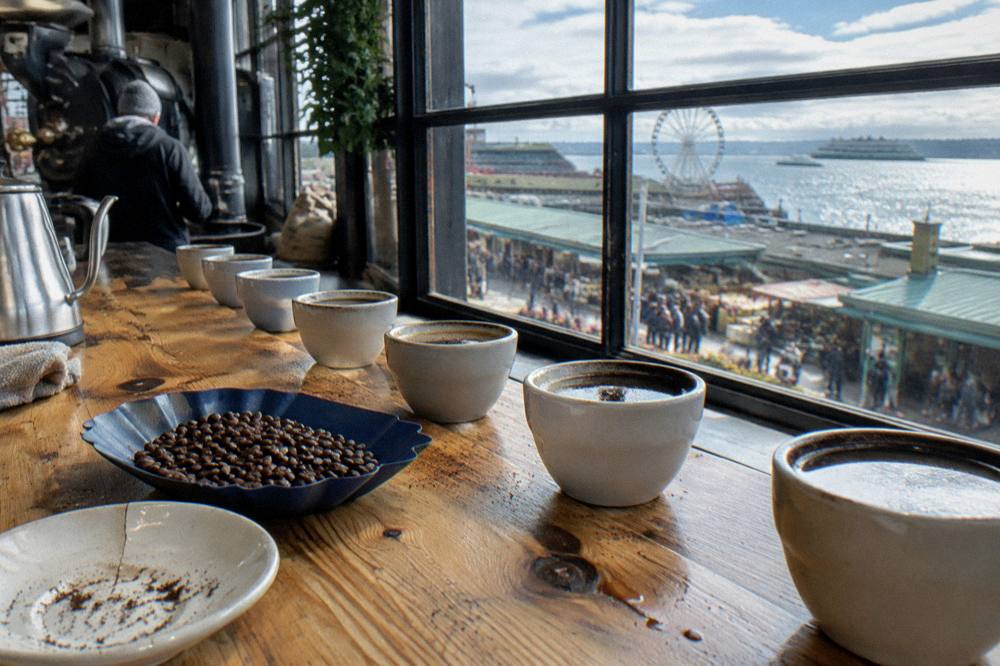
The economics are worth a look, because the price spread across the coffee options on this site is wide and the differences are real. The Capitol Hill options are cheaper and livelier in a different neighborhood, while the Market walks cost more and bundle the historic setting.
| Coffee Walk | Duration | Rating And Reviews | Price Per Person | Where It Starts |
|---|---|---|---|---|
| Coffee Crawl & VIP Morning in Pike Place Market | 2 hours | 5.0 across 93 reviews | from $84 | Anchorhead Coffee, Western Ave |
| Roasted in Seattle: Bean to Cup Coffee Tour | 2 hours | 4.9 across 26 reviews | from $55 | Anchorhead Coffee, Western Ave |
| Seattle Coffee Tour: Capitol Hill Coffee Culture & Tastings | 2 hours | 5.0 across 833 reviews | from $49.30 | Jimi Hendrix statue, Broadway |
| Seattle Coffee Walking Tour Specialty Cafes and Local Stories | 2 hours | 5.0 across 78 reviews | from $39.99 | Oddfellows Building lobby, E Pine St |
Read the inclusions carefully before booking anything. The Coffee Crawl & VIP Morning includes breakfast and coffee, which is why it costs more and why it earns the VIP label: it runs mornings only and is described as breakfast, not lunch. The Capitol Hill tours are coffee-only affairs; one listing excludes food and the other does not mention it, so the lower price reflects a narrower ticket. The listing for each option spells out exactly what is served, and the booking page is where the current terms, including cancellation terms, are shown before you pay.
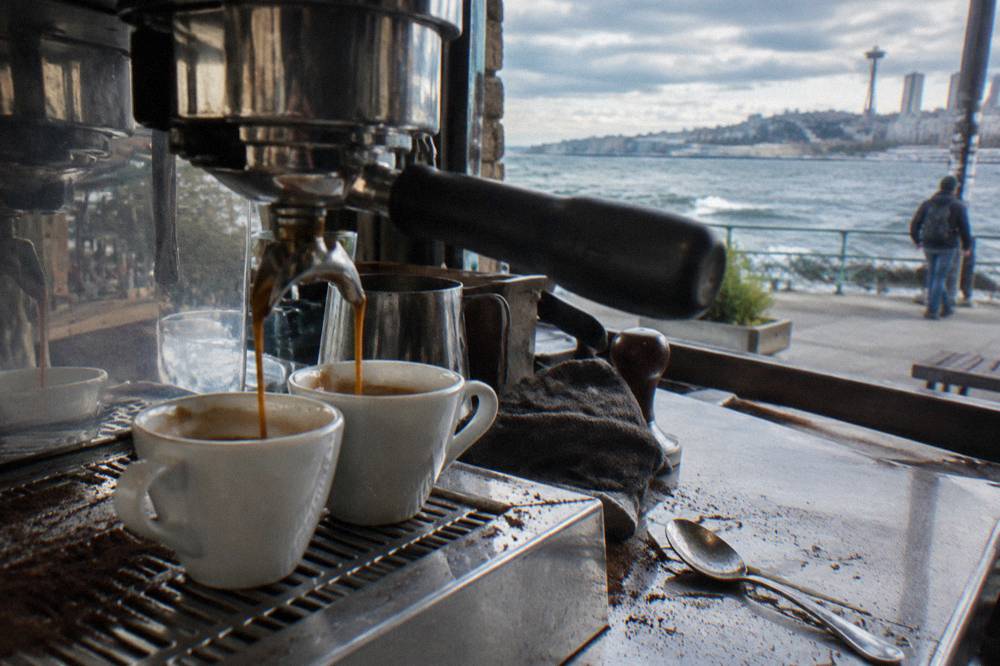
The Coffee Crawl & VIP Morning in Pike Place Market is the bookable coffee-in-the-Market option this site features, and it earns the spot honestly: 5.0 across 93 reviews, 2 hours, from $84 per person, starting at Anchorhead and winding through Pike Place Fish Market, Lands of Origin, Mr. Waffle and indi chocolate before it is done. It is a breakfast-and-coffee morning, not a line-skipping device, and the distinction matters. What it replaces is not the queue but the need to design your own 7 a.m. Market assault.
For a fuller comparison of the neighborhood food walks that also pass coffee stops, the Pike Place Market food walk fit guide breaks the options down by price and pace.
When Is The Best Time To Visit The Pike Place Starbucks?
The best time to visit the original Starbucks is between 7 a.m. and 10 a.m., the window the Market itself describes as generally less crowded, ideally on a Tuesday or Wednesday outside the July-to-September peak. The Market is fullest Thursday through Monday, breakfast vendors open at 7 a.m., and general market activity begins around 10 a.m., so the early window gives you the store, the arcade and the fish counter before the day turns.
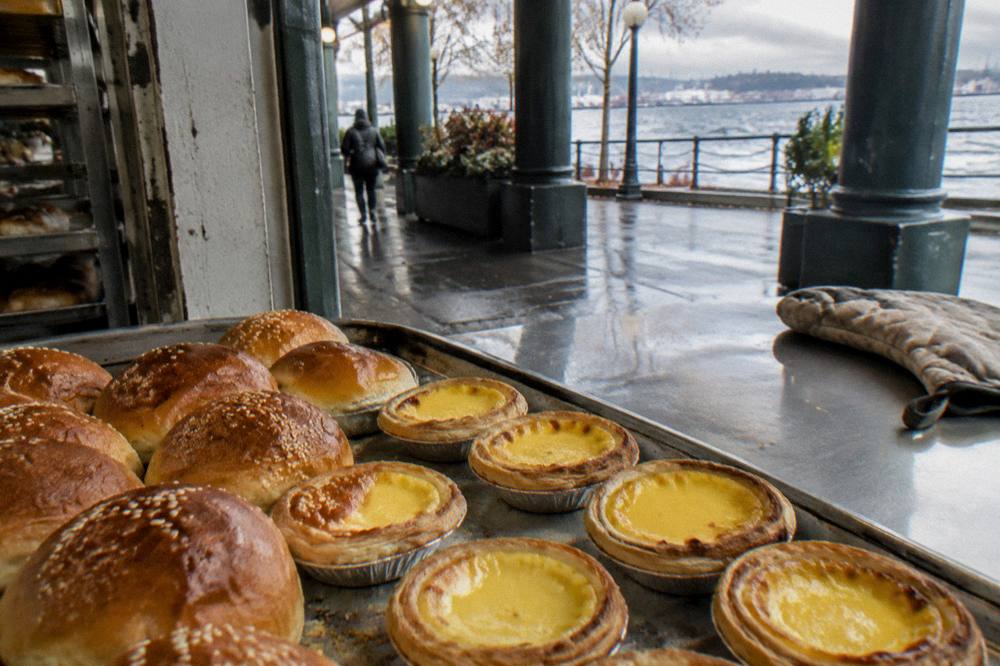
Seattle's weather makes the morning case even stronger. July and August average highs of about 77 to 78 degrees Fahrenheit with under an inch of rain each month, which is exactly when visitor volume peaks and when the cruise season overlaps, since the 2026 season ran from April 17 into October with a record 330 ship calls. Visit Seattle counted 39.7 million visitors to Seattle and King County in 2025, and a meaningful share of them funnel through the same three blocks. A dry July Saturday at 1 p.m. is the single worst-case scenario for the queue; the same day at 8 a.m. is close to the best case.
| Time Window | What The Market Feels Like | Starbucks Line Reality |
|---|---|---|
| 7 a.m. to 10 a.m. | Breakfast open, produce and seafood from 7 a.m., thinnest crowds | Shortest waits of the day |
| 10 a.m. to noon | General market hours begin, crafts from 11 a.m. | Building steadily |
| Noon to 4 p.m. | Peak, especially Thursday to Monday | Longest waits of the day |
| After 5 p.m. | Many stalls closing, some restaurants open late | Store may close with the market day |
Two more timing notes. The crafts market runs 11 a.m. to 4 p.m. and farm tables 9 a.m. to 4 p.m., so the late morning is when the whole Market is at full throttle, original store included. And remember the closures: the Market is open 363 days a year, shut only on Thanksgiving Day and Christmas Day, so the store follows that calendar rather than a café calendar. If your whole itinerary is a cruise-day squeeze, the cruise-day food plan from pier to Pike Place handles the tighter version of this timing problem.
Getting there early is also cheap. Link light rail costs $3.00 for an adult one-way ride with youth 18 and under free, and a King County Metro adult ride is $3.00, with a regional day pass at $6.00; current schedules and the trip planner are on Sound Transit's site. A 7 a.m. arrival by transit beats a 10:30 a.m. arrival by rideshare on every measure that matters for this particular store.
What Other Coffee Stops Fill A Pike Place Morning?
A Pike Place coffee morning can be built entirely from stops the guided routes already use: Anchorhead for the first shot, the original Starbucks for the history photo, Storyville for a seat, Ghost Alley Espresso for Post Alley atmosphere, and Fonté on the way back downtown. Add the Gum Wall and the Overlook Walk to the waterfront and the loop takes roughly two unhurried hours, which is the same duration the tours budget.
The do-it-yourself version of the coffee crawl is entirely legitimate, and walking it yourself costs nothing but the cups. Start on Western Ave, work up through the arcade while it is still quiet, descend into Post Alley where Ghost Alley and the Gum Wall sit, then cross to the Overlook Walk, which is open along with the Pier 58 play space and connects the Market to the waterfront without stairs. Coffee-focused walkers who want the deeper dive into the city's roasting scene can extend the theme across town using the best coffee roasters in Seattle guide, which covers the names worth a dedicated trip.
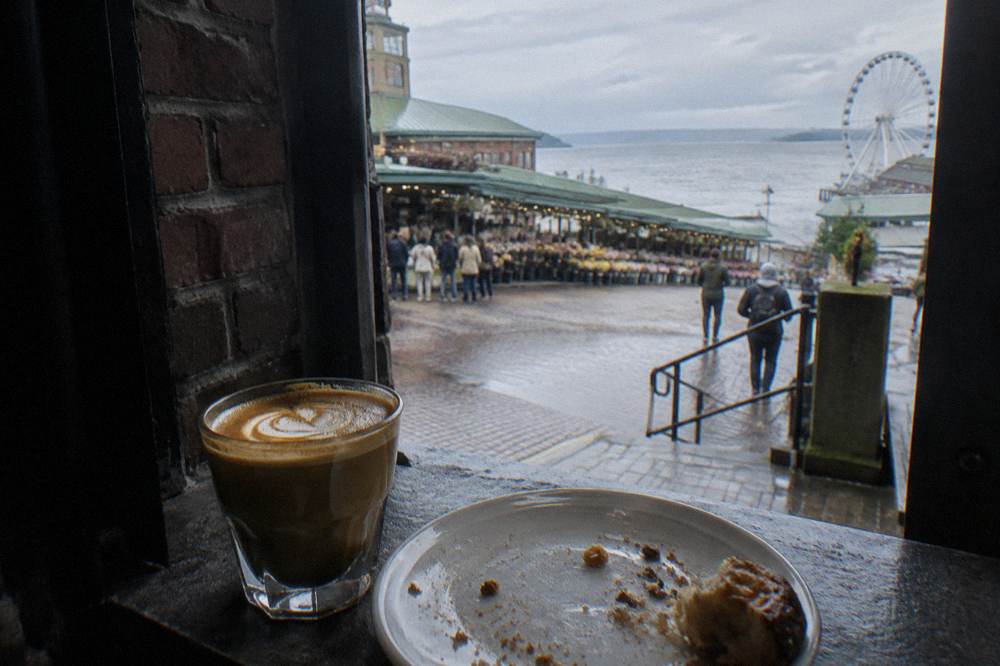
The guided alternative earns its fee on three fronts: timing, access and narration. A guide enforces the early start most visitors fail to self-impose, the Market caps guided groups at 16 people per guide under its operator permit rules, and the commentary turns a queue of storefronts into a story about how this city became a coffee capital. The Coffee Crawl & VIP Morning does all three with breakfast included. Between it, the Roasted in Seattle walk and the broader food walks, most visitors find one that matches their pace.
If coffee is only part of your Market plan, the wider food-walk field mixes seafood, cheese and produce stops into the same two hours, and the flagship of that family speaks for itself: the Chef Guided Food Tour of Pike Place Market runs 2 hours, is rated 4.9 across 4,806 reviews, and costs from $75 per person, covering nine standing vendor stops from the corner of 1st Ave and Pine St. It is not a coffee tour, but coffee country and chowder country share the same arcade, and plenty of visitors book one walk and photograph the other.
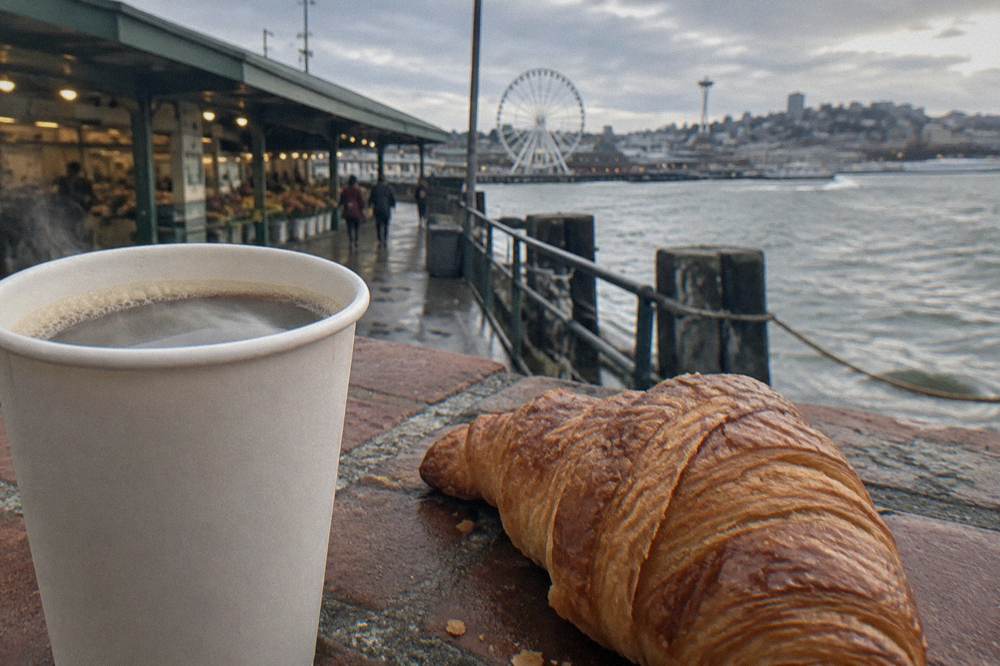
How Does The Original Store Compare To Seattle's Coffee Landmarks?
The original Starbucks is the oldest operating Starbucks, but Seattle's coffee landmarks run far deeper: Espresso Vivace has been pulling shots since 1988, Caffe Vita since 1995, Victrola since 2000, and the Pike Place Starbucks sits inside a market that predates all of them by decades, founded in 1907. Judged as a coffee experience, the original store ranks behind several of these; judged as a piece of history inside a working 119-year-old market, it holds its own.
The comparison is unfair to the coffee and fair to the story, which is the honest way to frame it. A bag of beans from 1912 Pike Place carries 1971 in it; a shot at Vivace carries the North Italian roasting tradition David Schomer spent decades perfecting. These are different purchases. The table below is the short version of how the landmarks stack up, using only dates the companies themselves state.
| Landmark | Established | What It Is Known For |
|---|---|---|
| Pike Place Market | 1907 | The public market that houses the original store |
| Original Starbucks, 1912 Pike Place | 1971 company founding; oldest operating store | Whole beans, tea and the heritage queue |
| Espresso Vivace | 1988 | Espresso craftsmanship, Capitol Hill |
| Caffe Vita | 1995 | Independently owned roaster |
| Cherry Street Coffee House | 1997 | Family-run coffee house |
| Victrola Coffee Roasters | 2000 | Capitol Hill roasting café |
| Elm Coffee Roasters | December 2014 | Pioneer Square roaster |
Seattle's coffee culture also has a calendar. The Seattle Coffee Festival held its second annual edition on October 24 and 25, 2026 at Magnuson Park's Hangar 30 with roasters and tastings, and the city's sweetened beverage tax, 1.75 cents per ounce paid by distributors on sweetened drinks, shapes what a bottled sweetened coffee costs at the register compared with a milk-primary latte, which is generally excluded from the tax. Neither fact changes the queue, but both explain a little of the city around it.
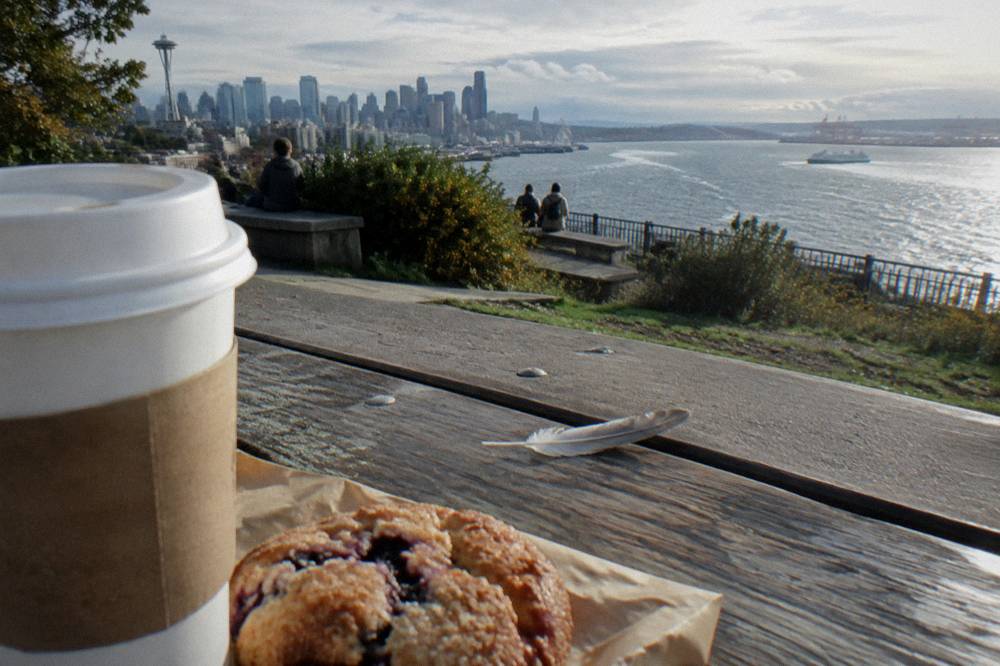
The one comparison that matters most for planning, though, is the one inside the same few blocks. Anchorhead versus the original Starbucks is the decision a visitor actually makes at 9 a.m. on a Tuesday, and the answer depends entirely on whether you are buying an hour of waiting or a bag of history.
Is The First Starbucks Line Worth It On A Short Trip?
On a trip of two days or less, the first Starbucks line is usually not worth it at peak times. Photograph the sign, walk the arcade, and spend the wait on the fish counter, the crafts stalls, and a no-queue espresso nearby; the line earns its wait only if you have a specific reason to buy beans at the oldest counter or arrive in the quiet 7 a.m. to 10 a.m. window.
The arithmetic is unforgiving. A first visit to Pike Place Market rewards two or three hours: the 220-plus shops, the fish throwing at Pike Place Fish when a customer buys, the crafts market from 11 a.m., the Overlook Walk to the waterfront, and a proper tasting somewhere along the way. A long queue at a single storefront consumes the same block of time the whole Market deserves. The Market's own FAQ describes fish throwing happening during business hours from 7 a.m. to 5 p.m. when a fish is sold, which is free to watch and sits thirty steps from the Starbucks line; the choice between the two is rarely close.
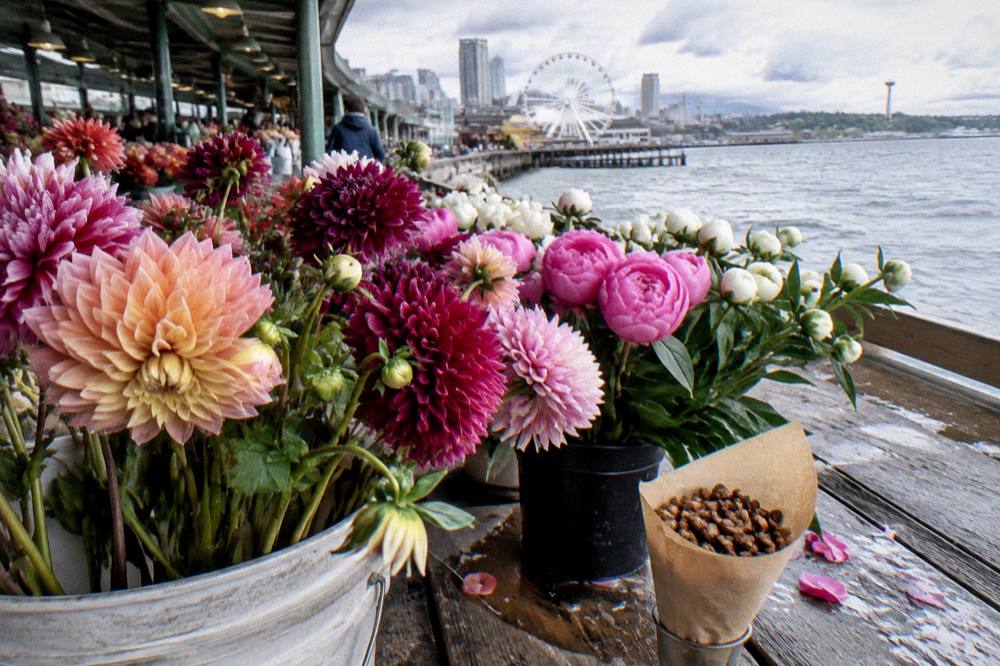
For visitors who decide the Market morning deserves a guide, the coffee-led option is the Coffee Crawl & VIP Morning described above, and the bean-to-cup alternative is the Roasted in Seattle walk, which covers the original store as one stop among Anchorhead, Storyville, Ghost Alley and Fonté. Outside the Market, the Capitol Hill coffee tours, led by the Seattle Coffee Tour rated 5.0 across 833 reviews from $49.30 per person, deliver the city's other great coffee neighborhood with no heritage queue in sight. Whichever way you go, book the early slot: in this Market, the early riser gets the coffee, the photo and the fish counter all to themselves.
That last point deserves its own sentence. Every timing advantage described on this page, from the thin 7 a.m. crowds to the midday peak, decays as the day goes on, so the single most valuable thing a visitor can control is the alarm clock. The queue is a morning problem with a morning solution.
Common Questions About The First Starbucks In Seattle
Where Is The First Starbucks In Seattle?
The original Starbucks is at 1912 Pike Place inside Pike Place Market. The company opened its first store in 1971, and the Pike Place location is its oldest store still operating, sitting at the north end of Pike Place, a short walk from the clock and sign.
Is The Starbucks At Pike Place The Actual First Store?
The company was founded in 1971 with a first store reported to have stood on Western Avenue, and the business moved to the 1912 Pike Place address within a few years. The Pike Place store is the oldest Starbucks still operating, which is what the queue is really about.
How Long Is The Line At The Original Starbucks?
There is no published figure, and the wait varies with season, day and hour. The Market says mornings before noon are generally less crowded and that it is fullest Thursday through Monday, so a 7 a.m. to 10 a.m. weekday visit means the shortest waits and a summer midday visit means the longest.
What Does The Original Starbucks Sell?
It sells whole-bean coffee, tea and store-exclusive merchandise, echoing its 1971 origins as a bean, tea and spice shop, plus a limited drink menu. It is a small retail space with essentially no seating, so most visitors buy and move on.
What Coffee Shops Near Pike Place Have No Line?
Anchorhead Coffee on Western Ave, Storyville Coffee up the hill, Ghost Alley Espresso in Post Alley and Fonté Coffee on 1st Avenue all sit within a few minutes' walk and serve espresso without the heritage queue. All four are stops on the established Market coffee routes.
Is There A Tour That Includes The Original Starbucks?
Yes. The Roasted in Seattle: Bean to Cup Coffee Tour includes the original Starbucks among its stops alongside Anchorhead, Storyville, Ghost Alley Espresso and Fonté, running 2 hours from $55 per person. The Coffee Crawl & VIP Morning in Pike Place Market covers the Market's coffee and breakfast stops in the early window, from $84 per person.