What Is Something You Can Only Get In Seattle?
From Beecher's cheese to geoduck and Seattle-style teriyaki, the foods you genuinely cannot get anywhere else, and the walks that serve them.
The honest answer is a set of foods with local roots: Beecher's Flagship cheese, made in view of the market floor since it opened its Pike Place creamery; Seattle-style teriyaki, a mid-century local invention; geoduck and Puget Sound oysters pulled from Washington waters; and the Market's own Daily Dozen doughnuts, sold at Pike Place since 1978. None of these traveled here fully formed. Each one either started in Seattle or grows only in this region, which is what separates a genuine local-only food from a good dish that happens to be sold here.
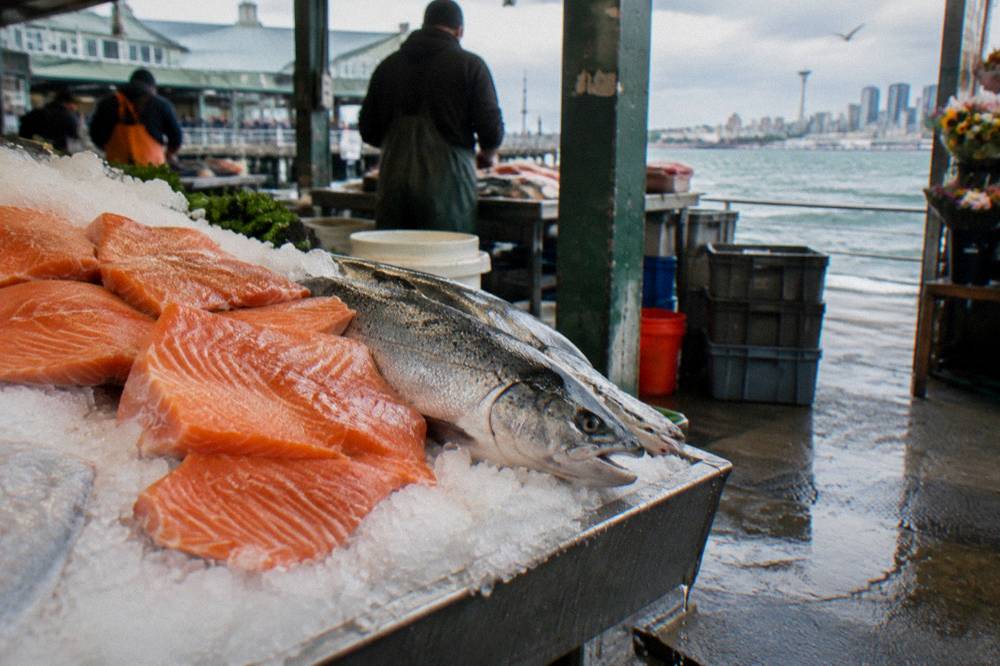
That distinction matters, and it is the difference between a useful answer and a listicle. Plenty of pages will tell you Seattle is known for coffee, salmon and seafood generally. True, but coffee is global and salmon is shared with the whole Pacific coast, from Alaska down to California. A king salmon fillet in Seattle and a king salmon fillet in San Francisco may well have come off the same boat. The foods below have a specific birthplace or a specific body of water attached to them, and several of them can be tasted on a walk that stops at the source, which saves you a day of hunting across neighborhoods. If the internet-famous side of the city appeals more than the old hometown staples, the guide to Seattle's viral foods covers the flying fish, the mac and cheese, the donuts, and the walking tours that hit several of them in one go.
The editorial approach on this page is simple: name the food, name where it came from, and tell you where it is actually served. Where a guided walk includes a stop, that is noted, because a two-hour circuit can cover four or five of these foods in a single morning, something a solo visitor would need most of a day and a lot of queueing to arrange.
The fastest way to taste several of these in one morning is a guided walk through the Market. The Chef Guided Food Tour of Pike Place Market runs 2 hours from $75 per person, rated 4.9 across 4,806 reviews, and its nine standing tastings include Beecher's Handmade Cheese, Pike Place Chowder and indi chocolate, three stops on any honest list of Seattle-only foods. The tour starts at the corner of 1st Ave and Pine St, and pickup is not included, so you meet the guide on foot like everyone else in the Market.
Which Foods Were Actually Invented In Seattle?
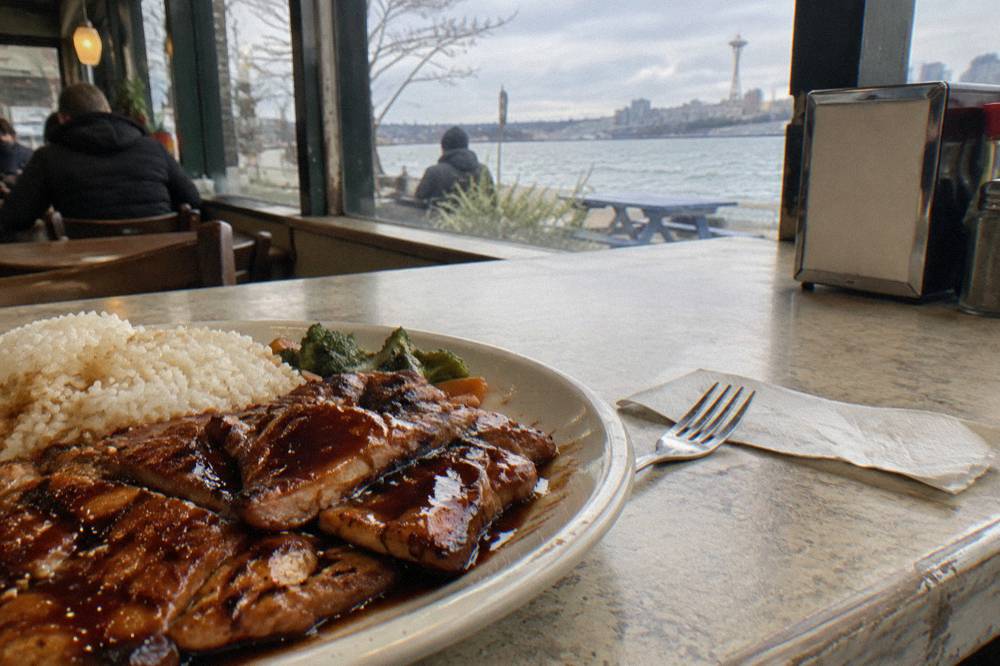
Seattle-style teriyaki is the clearest case: the sweet, generously sauced chicken-over-rice plate that defines cheap Seattle lunch was developed locally and does not exist in the same form in Japan. The others are foods with a protected local identity rather than an inventor: Beecher's makes cheese in view of the street at its Pike Place shop, and geoduck is a Washington shellfish that is rarely on menus outside the Pacific Northwest and Asia. Invented and exclusive are different claims, and both are worth making precisely.
Teriyaki deserves the first paragraph because visitors consistently underestimate it. The dish arrived with Japanese-American cooks and then diverged, becoming a thicker, sweeter, cheaper plate than anything in Tokyo. It spread through the city as a lunch-counter staple, the kind of food office workers and construction crews eat side by side. The Seattle teriyaki guide covers the style and where to try it. You will not find this exact plate called normal outside the Puget Sound region.
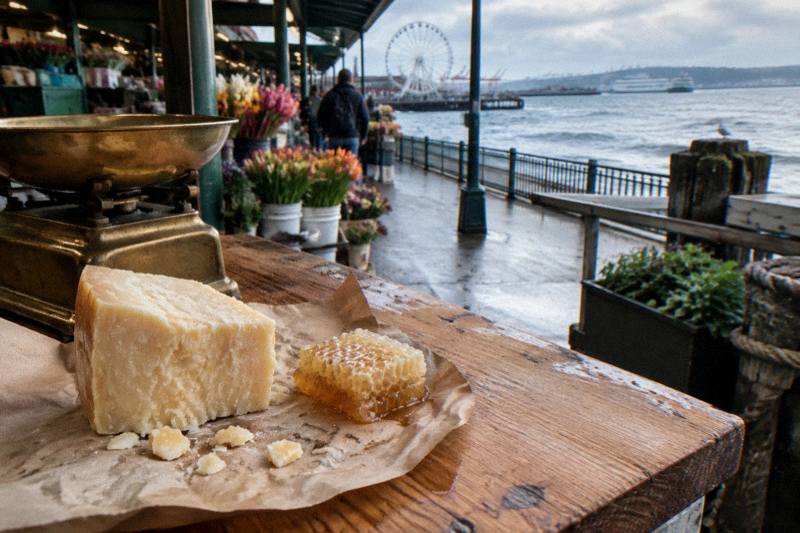
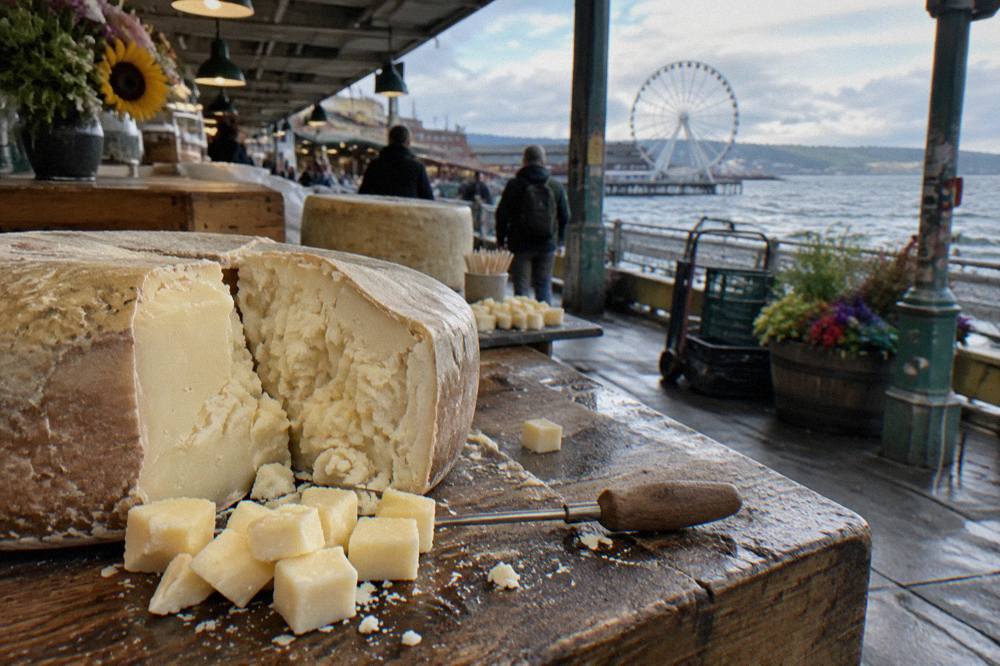
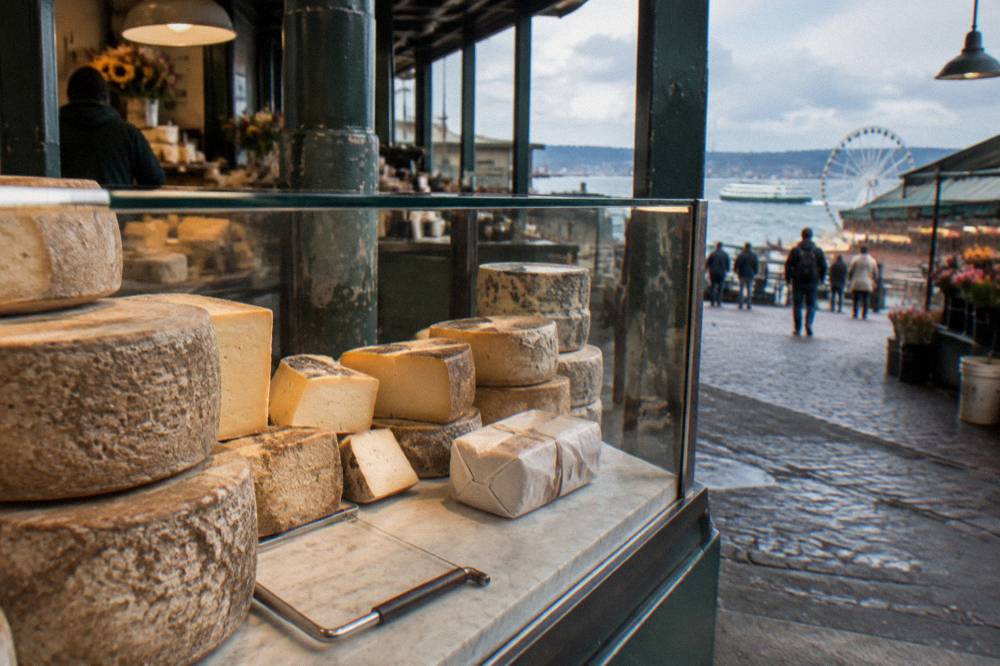
Beecher's Handmade Cheese is the second case. The creamery operates inside Pike Place Market with the cheesemaking vats visible from the street, and its Flagship cheese is made there. You can buy cheese anywhere, and watching it being made is part of what you are paying for when you stand at the counter. The Market itself opened on August 17, 1907, after the City Council passed the ordinance creating it on August 5 of that year, when somewhere between six and twelve farmers brought produce wagons to Pike Place. It now holds more than 220 independently owned shops and restaurants, more than 70 farmers and 150 to 180 craftspeople according to its own pages, plus more than 450 residents in affordable housing above the stalls, which is the density that makes a single-site producer like this possible. The Market's visitor FAQ confirms the basics: open 363 days a year, closed only Thanksgiving and Christmas.
Geoduck, the enormous buried clam prized in both local and Asian cooking, is the third. It grows on Washington tidelands for roughly five to seven years before harvest, and Taylor Shellfish farms it across Puget Sound, Hood Canal and Willapa Bay before it lands at Seattle oyster bars and farm stores. A geoduck is not something you stumble onto by accident; it appears at shellfish counters and specific restaurant menus, sold raw in slices or cooked in hot pot, and its odd appearance is part of the story. Because supply is steady but not unlimited, and because it is rarely on menus outside the Pacific Northwest and Asia, it remains a genuinely regional order, which is why the Dungeness crab and geoduck guide exists.
| Food | Why it is Seattle-only | Where it comes from |
|---|---|---|
| Seattle-style teriyaki | Plate style developed locally | Teriyaki shops citywide |
| Beecher's Flagship | Made at the Pike Place creamery | Pike Place Market |
| Geoduck | Farmed Washington shellfish, 5 to 7 year grow-out | Puget Sound and Willapa Bay tidelands |
| Puget Sound oysters | Grown in local bays; brine reflects the water | Hood Canal and Willapa Bay |
| Crumpets from The Crumpet Shop | Single stall in the Market | Pike Place Market |
One caution on the table above: availability at any given stall or restaurant varies by day and season, and a farm's harvest or a stall's production schedule can empty a counter by mid-afternoon, so treat the table as a map of origins rather than a promise of what is on display when you arrive. Call ahead or go early if one item matters more to you than the rest.
What Can You Only Taste At Pike Place Market?
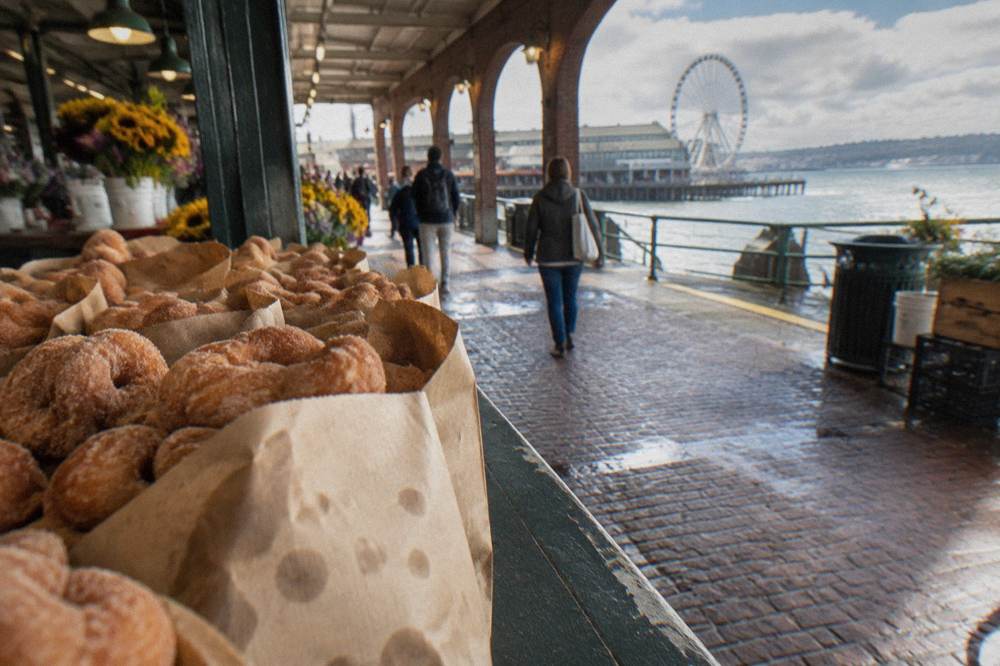
A cluster of foods exists only inside the Market: Daily Dozen doughnuts cooked at a stall in the main arcade, crumpets from The Crumpet Shop, chowder from the Pike Place Chowder counter, and the original Starbucks at 1912 Pike Place, the company's oldest still-operating store. These are not dishes you can order in another city and get the same thing, because the stall itself is the product.
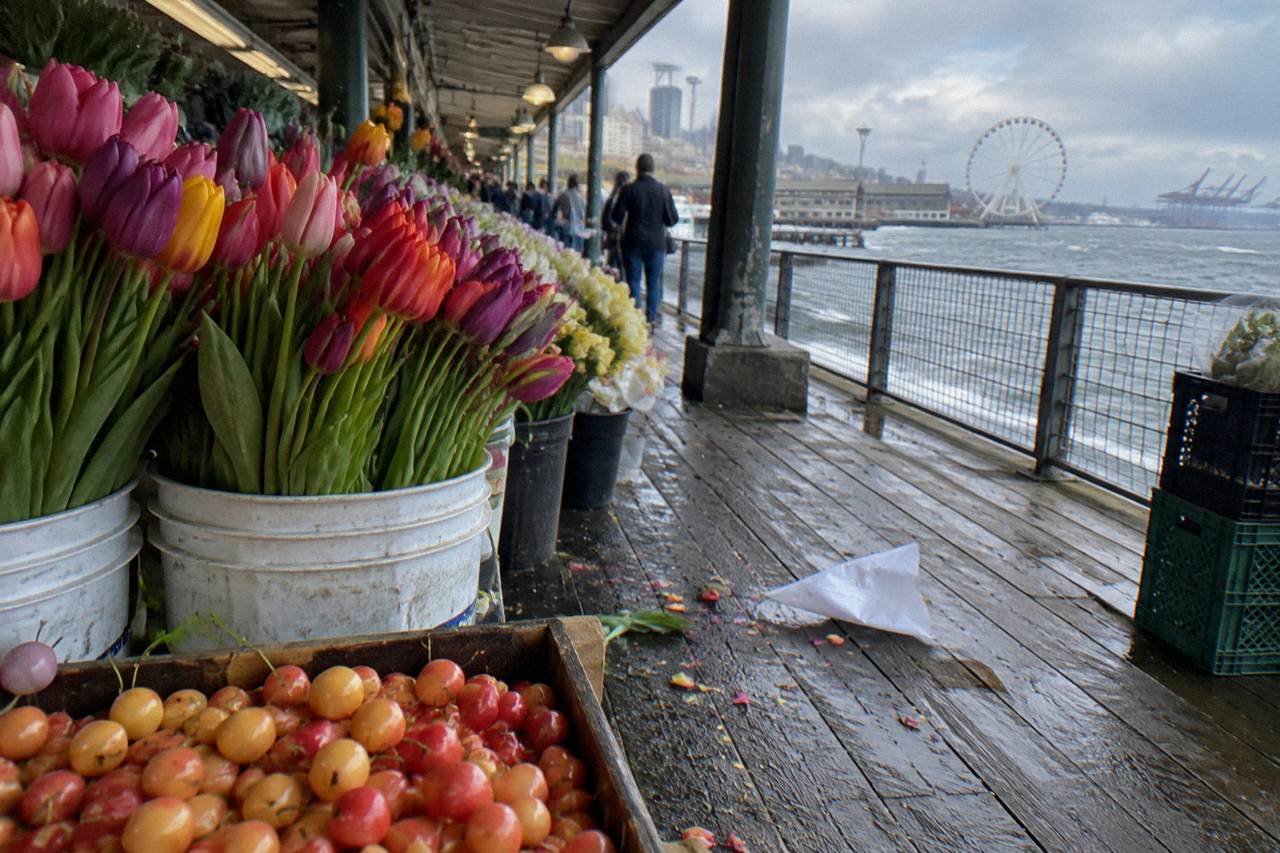
The Market's structure explains why this concentration exists. It is a public market, founded by ordinance in 1907 to let farmers sell directly to city residents, and its vendors are overwhelmingly independent single-location businesses rather than branches of chains. Daily Dozen doughnuts, for instance, are made in view of customers at a stall the size of a small kitchen, turning out small hot batches all morning. The Crumpet Shop sits on 1st Ave at the Market's edge and is the meeting point for at least one guided walk. Pike Place Chowder operates a counter inside the Market that grew into a recognizable name, and the fish throwing at Pike Place Fish happens when a customer buys a fish, during business hours of 7 a.m. to 5 p.m. daily per the Market FAQ, not on a timer for tourists.
Several of these stalls appear on tour itineraries, and that is not a coincidence but a function of the permit system: operators build routes around vendors they know, and the vendors get a predictable stream of customers. The Meet the Market Food and Fun tour starts outside The Crumpet Shop and moves through Honest Biscuits, City Fish and DeLaurenti, from $58 per person, rated 4.7 across 457 reviews. The Original Food Tour from the north end lists 14 or more tastings from 8 vendors, including Daily Dozen, Pike Place Chowder, rachel's ginger beer and Beecher's, with gratuity included, from $112 per person, rated 5.0 across 670 reviews. For a fuller picture of the stalls themselves, the Pike Place Market food guide walks the route dish by dish.
Timing shapes what you actually taste, more here than at most attractions. Breakfast, produce and seafood stalls open from 7 a.m., most of the Market runs about 10 a.m. to 5 p.m., farm tables run 9 a.m. to 4 p.m. and crafts run 11 a.m. to 4 p.m. Mornings before noon are generally less crowded according to the Market's own guidance, and the Market is fullest Thursday through Monday in typical weeks. One current wrinkle: the street access pilot's Phase 3 runs October 1, 2026 to March 31, 2027, with Pike Place shared by cars and pedestrians Monday to Thursday and limited vehicle access Friday to Sunday between 11 a.m. and 4 p.m. at 1st Ave and Pike St, so a morning walk dodges most of that too. A parking garage is available for drivers.
The Pike Place Market food walk guide explains the route geography in detail, including how the north end, the main arcade and the Down Under levels connect, and where each of these stalls sits on the map.
Which Seattle Drinks And Coffee Are Locally Born?
Seattle's coffee culture is the clearest drink with a local birth certificate: Starbucks opened in 1971, and the 1912 Pike Place location is its oldest still operating. Espresso Vivace, founded 1988, Caffe Vita from 1995, Victrola from 2000 and Elm Coffee Roasters, opened in Pioneer Square in December 2014, all remain Seattle companies. The city did not invent coffee, but it built a specific cafe culture around it that other cities then copied.
The distinction between the global brand and the local roasters matters for a visitor deciding where to spend a morning. The original Starbucks at 1912 Pike Place is a pilgrimage site with a line to match. The question of whether that line is worth it has its own first Starbucks and Pike Place coffee guide. The independent roasters, by contrast, are spread across neighborhoods, and several of them are within a few blocks of each other on Capitol Hill, where baristas will talk through a roast the way a sommelier talks through a wine list.
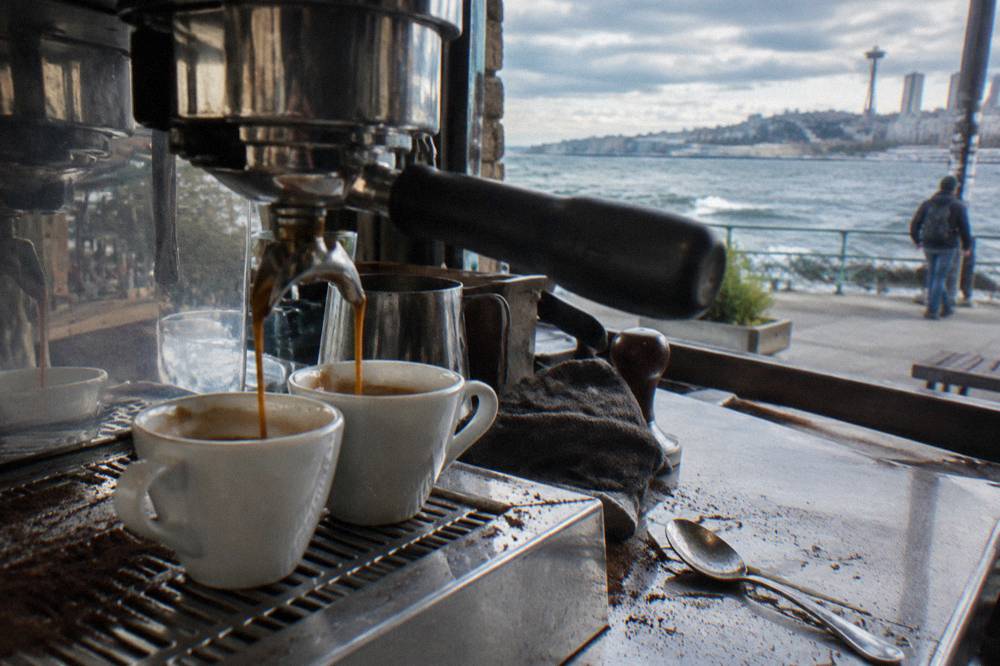
That density is why a guided coffee walk works there. The Seattle Coffee Tour: Capitol Hill Coffee Culture and Tastings starts at the Jimi Hendrix statue on Broadway, runs 2 hours from $49.30 per person, and is rated 5.0 across 833 reviews. Coffee is the focus: food and extra drinks are not included, and the tour stays on Capitol Hill rather than the Market, so it pairs well with, rather than replaces, a Market food walk on a separate morning. A slower option is the Roasted in Seattle: Bean to Cup tour from Anchorhead Coffee on Western Ave, from $55 per person, rated 4.9 across 26 reviews, which threads Storyville, Ghost Alley Espresso and the Gum Wall, and the cheaper Seattle Coffee Walking Tour from the Oddfellows Building lobby runs from $39.99 per person, rated 5.0 across 78 reviews.
One odd local fact worth knowing before you order: Seattle taxes sweetened drinks at 1.75 cents per ounce, paid by distributors on sweetened beverages including presweetened coffees and teas, but a milk-primary latte is generally excluded from that tax. It is one of the small quirks of buying coffee in this city specifically, and a reminder that Seattle's relationship with its drinks is written into municipal code, not just cafe culture.
What Food Experiences Come Only With A Guided Walk?
Some Seattle food experiences are structurally unavailable to a walk-up visitor: a chef-led route through the Market's back stalls, a standing tasting at nine vendors in two hours, or a long-lunch seafood walk through six restaurants, all of which depend on operator relationships and Market permits a solo visitor cannot replicate. The Market caps permitted tour groups at 16 people per guide, requires participants to wear Market-issued stickers and charges a $1 participant fee per customer, so every legal Market tour is small by rule.
That permit system is the information most first-page summaries miss. Guides must hold a Market-issued permit, pass a test, pay a $30 annual guide permit and keep groups at or under 16 with no amplified sound. The practical effect is that no Market tour, regardless of operator, will be a 40-person umbrella-following experience, and the small group size is also what makes standing tastings at working stalls feasible: nine people at a counter is a welcome, forty is a mob. If you ever see a Market tour advertised at that size inside the arcade, that is a sign the permit rules are not being followed, and the Market's plan-your-visit page covers the official position on commercial tours.
| Tour | What it serves that you cannot easily self-arrange | Duration | From price per person |
|---|---|---|---|
| Chef Guided Food Tour of Pike Place Market | Nine standing vendor tastings with a chef guide | 2 hours | $75 |
| Seattle Seafood Tour: A Long Lunch | Eight seafood tastings across six market and downtown restaurants | 2 hours 15 minutes | $119 |
| Pike Place Market: Insider's Breakfast Tour | Early breakfast circuit, gratuity included, 12 guests or fewer | 2 hours 30 minutes | $160 |
| Northwest Wine Tasting Tour with Cheese and Chocolate | Six or more Washington wines inside the market district | 2 hours 30 minutes | $109 |
The seafood tour in that table is the only seafood-themed walk among the options covered here, running market counters and downtown restaurants, including Matt's in the Market and City Fish, and it is not oyster-specific nor does it cover Pioneer Square or the Chinatown-International District. The Insider's Breakfast Tour caps at 12 people or fewer and includes gratuity, starting at the same north-end meeting point as the Original tour, with stops at Honest Biscuits, frank's quality produce and Le Panier among others. Ratings in the table come from each operator's booking page, and prices are per-person from-prices that can change; the booking page shows the current figure. The Seattle seafood walk guide covers what to order when you arrive at those counters on your own.
Which Day Trips Count As Seattle-Only Food?
Woodinville wine country is the strongest case: a concentration of 100 or more tasting rooms about 19 miles and 25 to 30 minutes from downtown, representing producers from across a state with about 985 licensed wineries and 22 growing regions. The tasting rooms cluster in Woodinville, and the Washington State Wine Commission tracks the licensed-winery count.
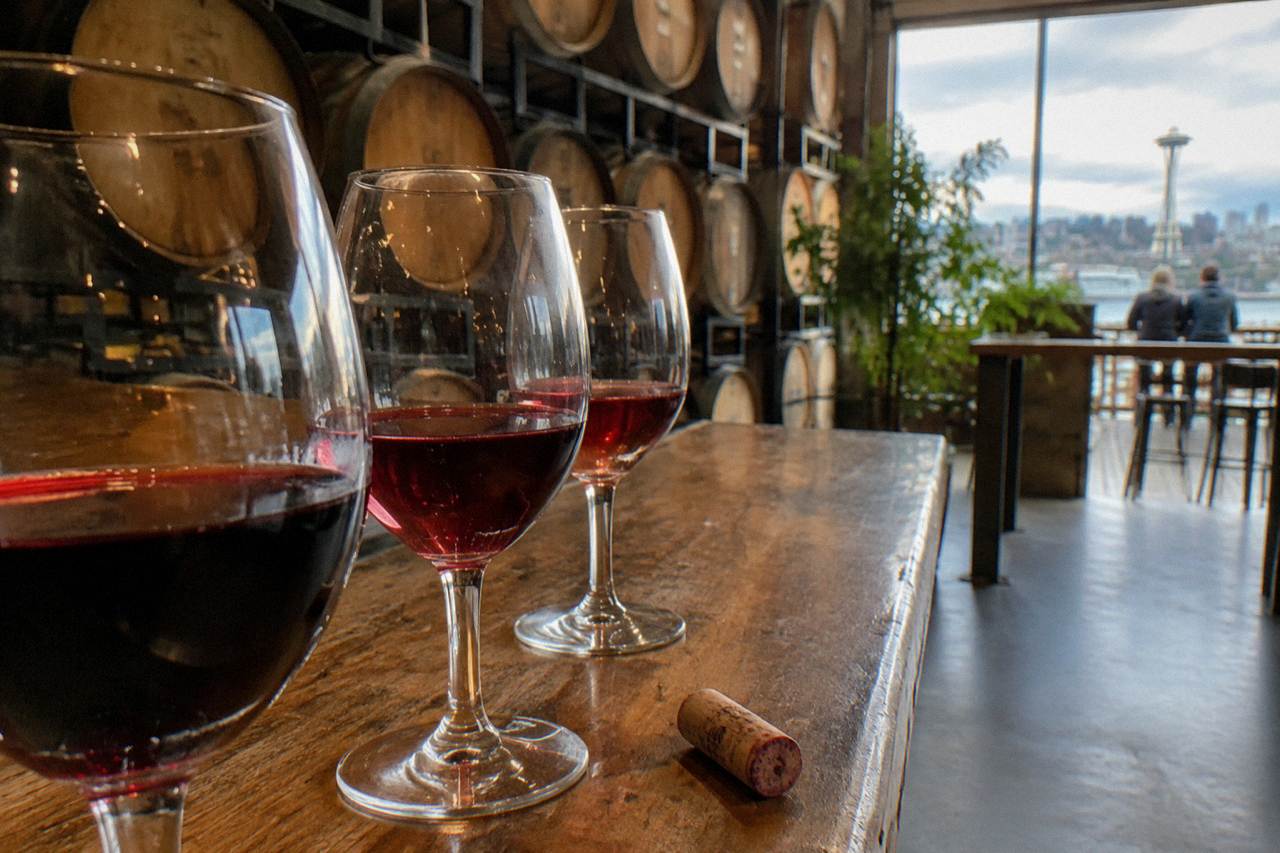
The wine day trips reflect that structure. The Seattle Wine and Snoqualmie Falls Highlights Tour runs 6 hours from $140 per person, rated 4.5 across 1,285 reviews, with hotel pickup from downtown or the airport, visiting Chateau Ste. Michelle and Goose Ridge in Woodinville plus Snoqualmie Falls and Boehms Candies. Tasting fees, $20 to $35 per person, and lunch are extra and not in the ticket, so budget for both when comparing against food tours where tastings are included. The longer Snoqualmie Falls and Wineries Tour runs 7 hours from $135, rated 4.6 across 300 reviews, and is mostly sightseeing with a driver-guide; snacks and water only, with dinner, alcohol and gratuities excluded. The Bon Vivant Woodinville tour runs 7 hours from $120, rated 4.8 across 207 reviews, with transport provided and tasting fees and lunch paid at the wineries.
Seattle's seasonality is the other thing to plan around, because the local food calendar moves with it more than visitors expect. July and August average highs of about 77 to 78 degrees Fahrenheit with under an inch of rain, per the NOAA 1991 to 2020 normals at Sea-Tac; November is the wettest month at 6.31 inches, with December at 5.72 and January at 5.78. Copper River salmon arrives in late May, oysters peak in the cold months, and the farmers markets run year-round in the rain, which is part of their character rather than a flaw. The farmers markets by neighborhood guide maps the full week, from Ballard on Sunday mornings to the University District on Saturdays.
| Season | What is at its peak | Where to find it |
|---|---|---|
| Late May to June | First Copper River sockeye and king | Market pre-orders and seafood counters |
| July to August | Dry walking weather, full market days | Pike Place and all walking tours |
| September to October | Oysters firming up, fall restaurant week | Oyster bars and participating restaurants |
| November to March | Oyster peak, covered winter markets, fewer crowds | Fremont Sunday Market |
Common Questions About Seattle-Only Foods
What Is Something You Can Only Get In Seattle?
Seattle-style teriyaki, Beecher's Flagship cheese made at its Pike Place creamery, geoduck and Puget Sound oysters from Washington waters, and single-stall Market foods like Daily Dozen doughnuts and The Crumpet Shop's crumpets. Each has a specific local origin rather than being a good dish that happens to be sold in the city.
Is Seattle-Style Teriyaki Really Different From Teriyaki Elsewhere?
Yes, in form. The local plate style, a generous sweet-sauced chicken-over-rice plate, developed in Seattle and spread across the city's lunch counters. It is thicker, sweeter and cheaper than the Japanese dishes it descends from, and visitors ordering teriyaki elsewhere often notice the difference.
Can You Taste Beecher's Cheese Without Buying A Whole Block?
Yes. Beecher's appears as a tasting stop on several Market food walks, including the Chef Guided Food Tour of Pike Place Market from $75 per person, which lists Beecher's among its nine vendor stops. The creamery counter also sells samples directly during Market hours.
What Seattle-Only Food Is Easiest To Try In One Short Visit?
A two-hour Market walk. The Market concentrates several single-location stalls within a few blocks, and a guided route covers Beecher's, Pike Place Chowder and Daily Dozen in one circuit without waiting in each individual line.
Are Geoduck And Local Oysters Available Year-Round?
Farmed oysters are sold year-round, with roughly September to April the traditional peak for firm, briny flavor. Geoduck appears at shellfish counters and specific menus rather than everywhere; it takes five to seven years to grow on a farm, so supply is steady but not unlimited.
Do Any Tours Include Wine Tastings In The City Rather Than A Full Day Trip?
Yes. The Northwest Wine Tasting Tour with Cheese and Chocolate runs 2 hours 30 minutes from $109 per person inside the market district, pouring at least six Washington wines with cheese and charcuterie, with age identification required. It skips the drive to Woodinville entirely.