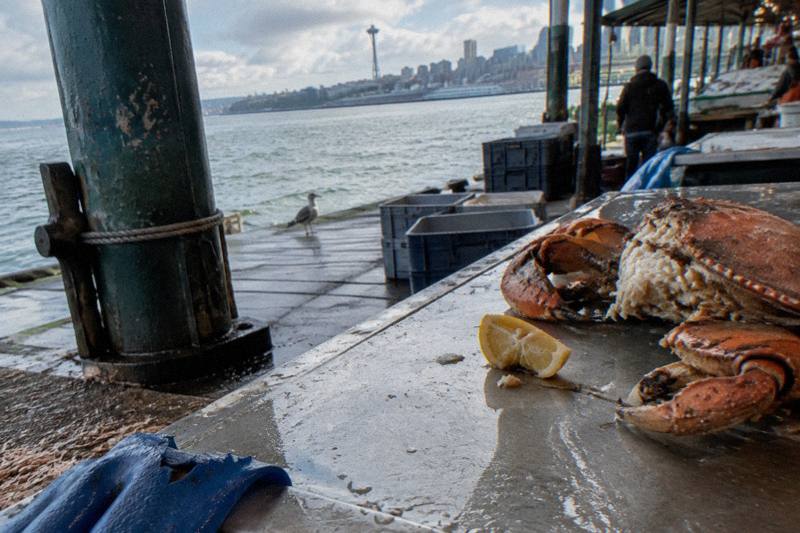
Dungeness Crab And Geoduck In Seattle: What To Try
Dungeness crab and geoduck are two of the most distinctly Pacific Northwest shellfish you can eat in Seattle, and both show up in the city's markets and seafood restaurants in very different ways. Here is how the seasons work, how each is served, and what to order the first time.
Short answer
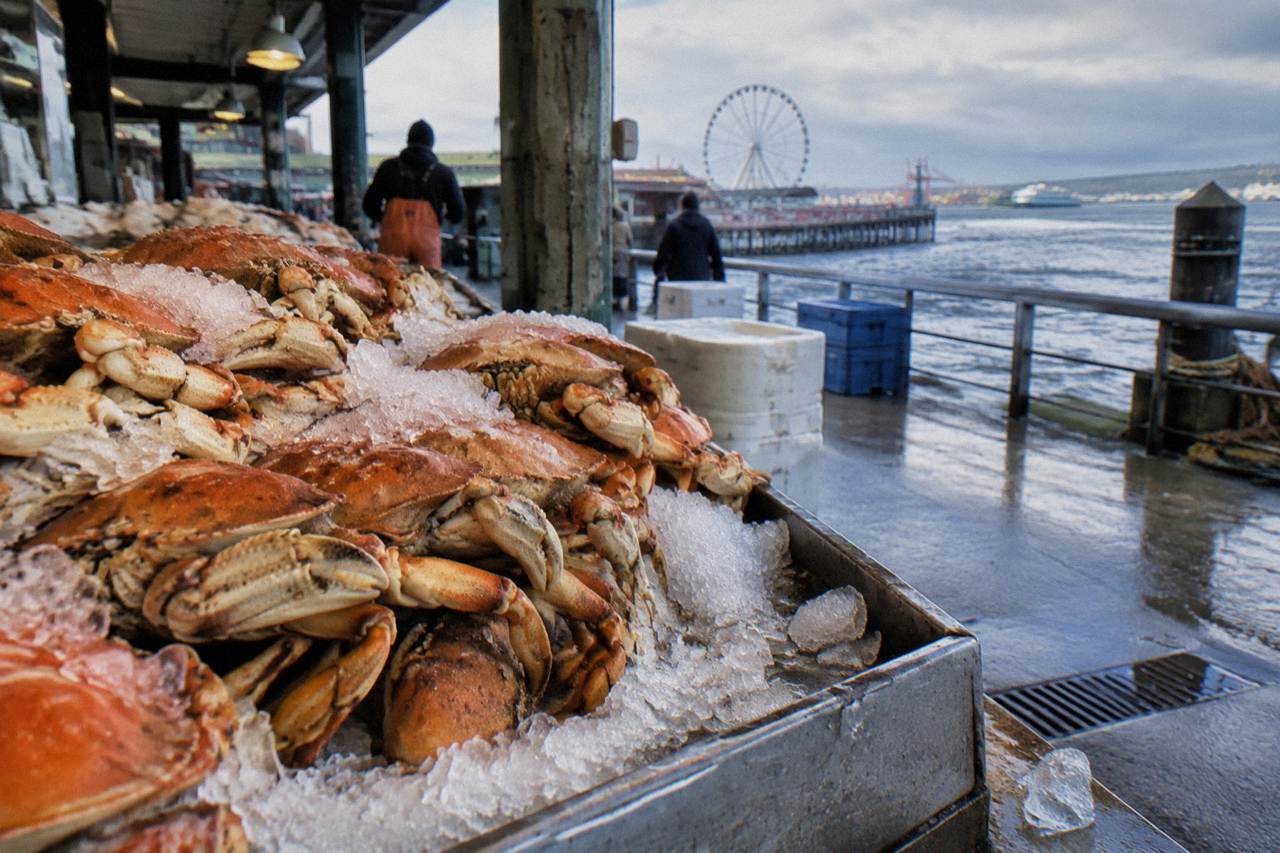
Dungeness crab is a sweet, meaty Pacific crab at its best in the cold-water months, while geoduck is a giant burrowing clam served raw as sashimi or cooked in hot dishes. In Seattle, both appear at Pike Place Market counters and seafood restaurants. A guided tasting walk such as the Seattle Seafood Tour, from $119 per person, strings several market-fresh stops into one long lunch.
What Is Dungeness Crab And Why Does Seattle Care About It?
Dungeness crab is a large, sweet-fleshed crab native to the Pacific coast from Alaska to California, named after the port of Dungeness in Washington state. The meat is delicate and slightly briny, concentrated in the body and legs, and it is the shellfish most locals name first when asked what to eat from local waters.
The two shellfish could hardly be more different in character. Crab is approachable, easy to like and built for sharing, all cracked shells and napkins. Geoduck, pronounced "gooey-duck", is stranger: a clam with a siphon that can stretch longer than your hand, eaten paper-thin raw or quick-seared. Trying both in one visit is a fair test of how deep Seattle's seafood culture goes, and it is a test the city makes easy.
Washington's relationship with Dungeness crab is partly a matter of geography. Puget Sound offers protected, cold, productive water that supports both commercial and recreational crabbing, and the coastal fishery to the west adds another supply stream. The state's shellfish industry also farms oysters, clams and geoduck on tidelands, which is why a single market counter in Seattle can carry so much local product at once. Between the wild fisheries and the farms, the city sits inside one of the most productive shellfish regions on the continent.
If you are planning around food rather than fishing, the practical takeaway is simple. Both species are available in Seattle year-round in some form, live, cooked or frozen, because the supply comes from multiple fisheries and farms. What changes through the year is how fresh the local catch is and how much of it is coming from right there in Puget Sound rather than farther afield. Winter visitors sometimes assume they have missed the boat on shellfish; the opposite is true, as the cold-water months are when local product is at its firmest.
When Is Dungeness Crab Season In Seattle?
There is no single crab season in Seattle: Puget Sound recreational crabbing runs in managed summer and winter windows that differ by marine area, coastal commercial seasons are set each winter by the state, and farmed shellfish like geoduck and oysters are harvested year-round. In 2026, Seattle's Marine Area 10 allowed recreational crabbing on Sundays and Mondays from July 5 to September 7. Seasons are quota-managed and can change.
The summer window is the one most visitors encounter. Crabbers drop pots on summer weekends across Puget Sound, and the limit in most areas is five male hard-shell Dungeness of legal size. The winter season, when it opens in a given area, runs daily from October 1 toward the end of the year, though some marine areas, including Seattle's own, have opened late or stayed closed depending on summer catch totals. The state wildlife agency publishes the current rules, and they are the only authority worth trusting on whether a pot goes in the water this week.
For eaters rather than catchers, the calendar matters less than you might think. Commercial landings from the coast and the Sound keep cooked and live crab moving into Seattle counters through most of the year. The cold-water months, roughly September to April, are the traditional peak for firm, briny shellfish flavor, which lines up nicely with the fall and winter visitor season even if the weather does not.
Geoduck, by contrast, has no season at all in the way people expect. It is farmed on tidelands, planted as seed and grown for about five to seven years before hand harvest, so a steady supply reaches restaurants and market stalls regardless of the month. That long grow-out is why farmed geoduck is a farmed product with a price to match, and why a farm store in Seattle can sell it fresh any day of the week. A harvest planned years in advance does not care what month your vacation falls in.
| Shellfish | Main source | Season pattern | Best bet for visitors |
|---|---|---|---|
| Dungeness crab | Puget Sound and Washington coast fisheries | Summer and winter recreational windows; coastal commercial seasons are set each winter by the state | Cooked whole crab at market counters, any month |
| Geoduck | Farmed on Washington tidelands, 5 to 7 year grow-out | Year-round harvest | Sashimi or seared at seafood restaurants |
| Oysters | Puget Sound, Hood Canal, Willapa Bay farms | Farmed year-round; traditional peak September to April | Raw bar, cold-water months |
The Market itself is a reliable place to read the season, whatever the month. Pike Place is open 363 days a year, closed only on Thanksgiving and Christmas Day, with fresh seafood counters starting at 7 a.m., and the Pike Place Market visitor FAQ tracks current hours and access details. During the current street access pilot, which runs October 1, 2026 to March 31, 2027, vehicle access on Pike Place is limited on Friday to Sunday afternoons, which is worth knowing if your crab lunch is a weekend one.
Where To Eat Dungeness Crab In Seattle?
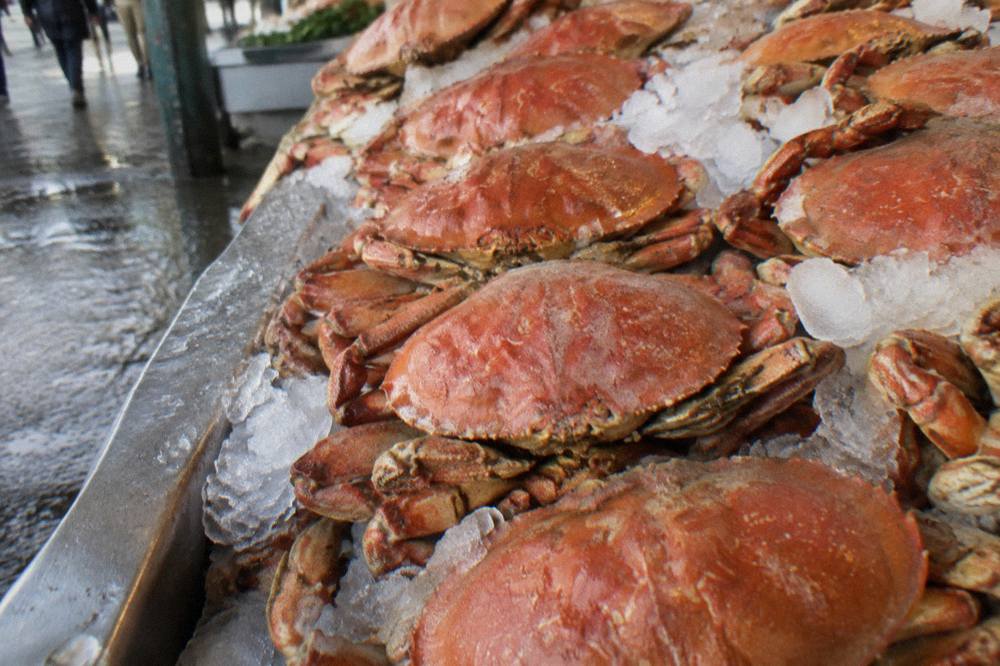
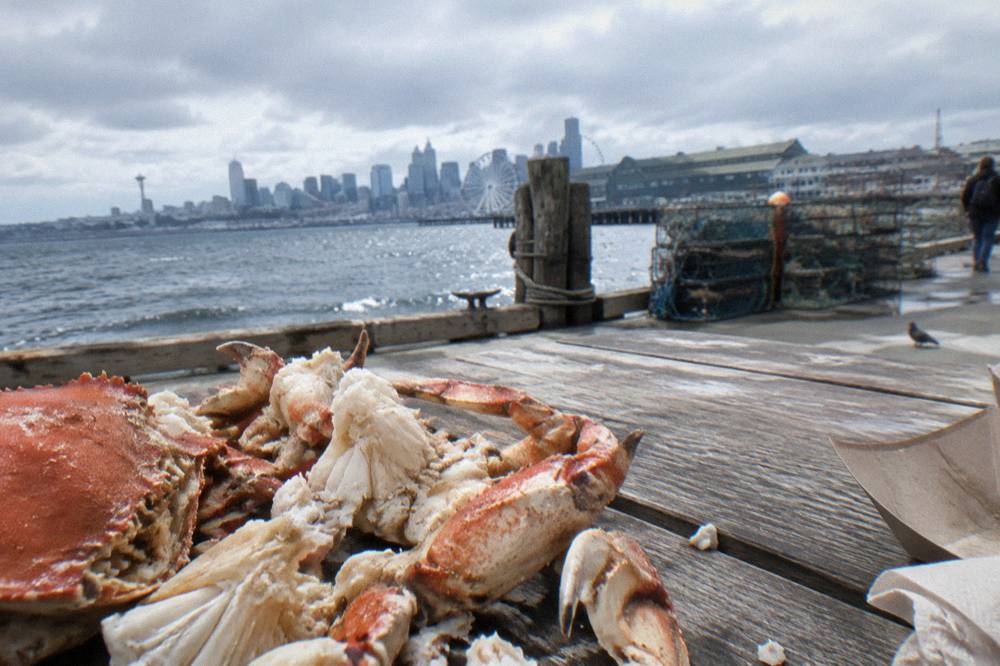
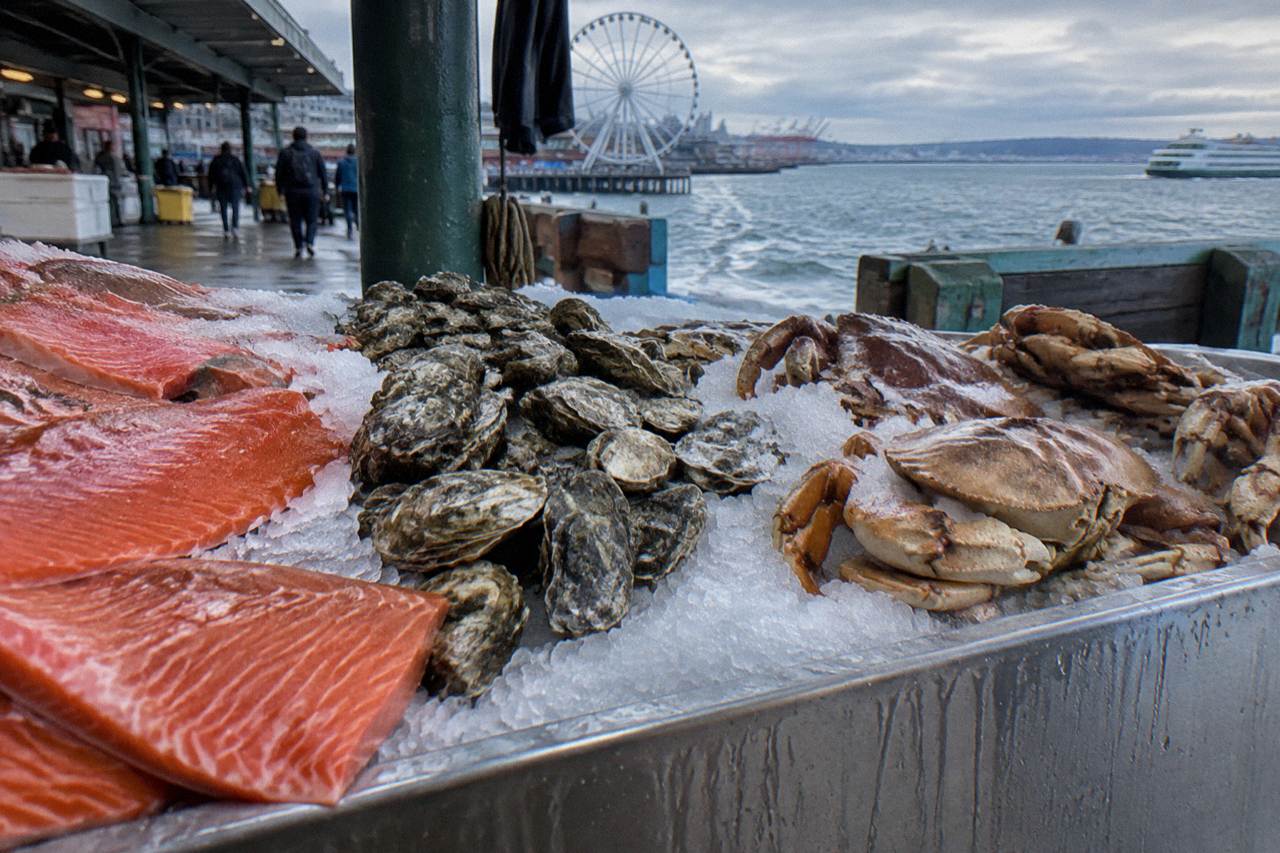
Pike Place Market is the densest single place to find Dungeness crab in Seattle, with seafood counters selling cooked crab and crab cakes among the 220-plus independently owned shops and restaurants, and downtown seafood restaurants within a short walk serving it in sit-down form. Crab appears as whole cooked clusters, in chowder, in cakes and in rolls, so the choice is between counter-eating and a seated meal.
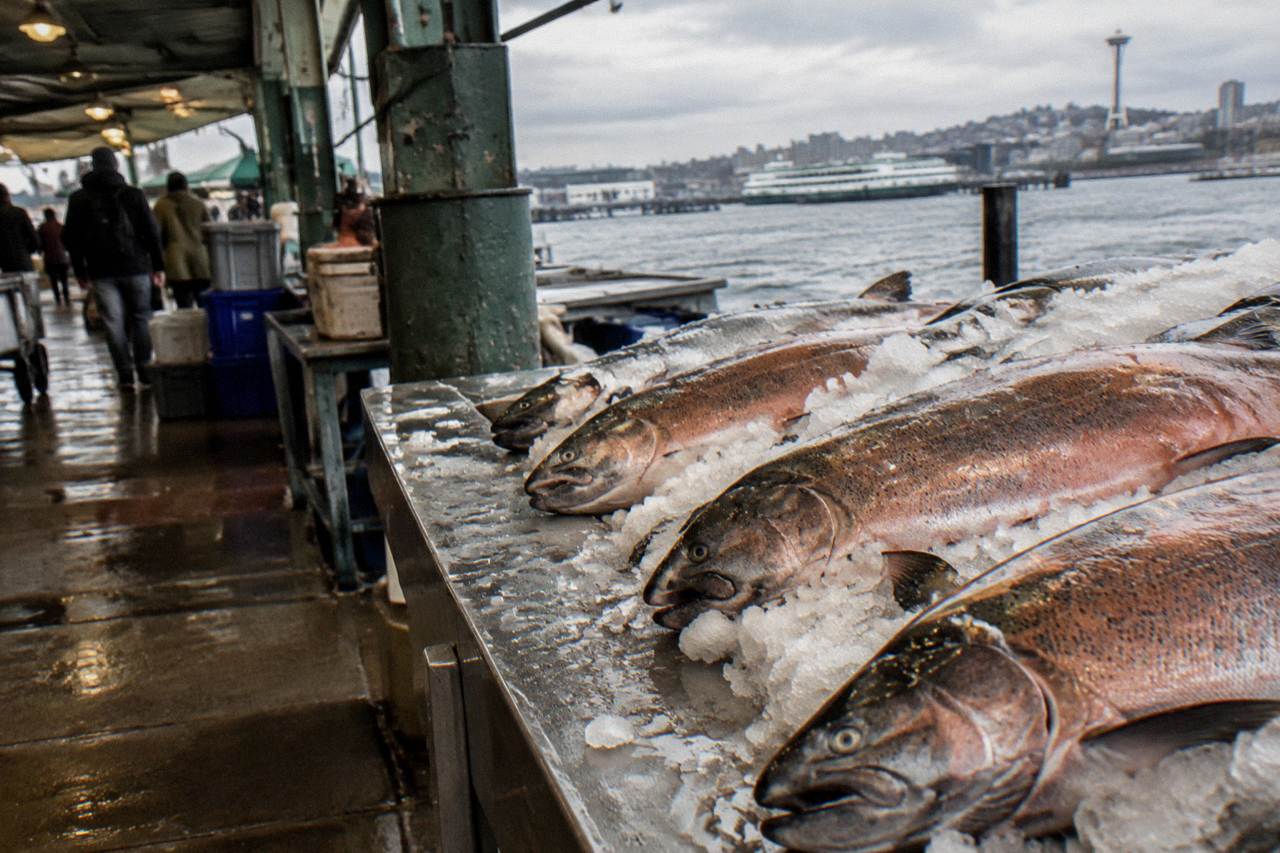
Inside the Market, City Fish Co. is a counter where several of the guided walks stop, and Pike Place Fish Market is the home of the famous fish throw. A fish throw happens when a customer buys a fish, during business hours, and it has become the Market's signature bit of theater. Buying a cooked cluster and eating it on the waterfront steps nearby is the cheapest-feeling, most Seattle way to do crab, even if the register adds the city's 10.55 percent sales tax like anywhere else.
The sit-down option is where a crab cake or a crab dinner with a drink comes in. MARKET Seafood Eatery is one of the downtown restaurants on the route of a guided restaurant walk, and other seafood restaurants ring the downtown core and the waterfront. Ivar's Acres of Clams, on Pier 54 since July 22, 1946, is the historic waterfront name, and the Seattle Great Wheel and the newly opened Overlook Walk put crab-with-a-view within easy range.
For structure, the seafood counters and oyster bars guide breaks down which parts of the city do counters best and which do seated meals, and the clam chowder guide covers the bowl side of the menu if crab ends up in yours. If your crab plans are part of a bigger market day, the Pike Place Market restaurants guide names the sit-down spots worth the wait.
One honest warning for first-time visitors: crab is messy, and that is the point. Counters will crack it for you or hand you a mallet, and the meat you pick out yourself somehow tastes better. A guided tour handles the logistics instead, which is worth considering if you would rather sample broadly than negotiate one whole animal. Either way, arrive hungry and dress down; a napkin-heavy lunch is a badge of honor in this city, not a failure of planning.
What Is Geoduck And How Is It Served In Seattle?
Geoduck is a very large saltwater clam whose body ends in a long siphon, farmed in Washington for five to seven years before harvest, and in Seattle it is served two main ways: sliced paper-thin as clean, sweet, crunchy sashimi, or quick-seared and stir-fried in hot dishes where the meat takes on a scallop-like bite.
The raw preparation is the purist's introduction. The siphon is trimmed, sliced into translucent crescents and served chilled, often with nothing more than soy and citrus, because the flavor is mild and the texture is the whole story: crisp, snappy, entirely unlike the soft cooked clams most people know. Cooked, geoduck behaves differently. A fast sear or a turn in a hot pot keeps the snap, while long cooking toughens it, which is why menus that braise it are rarer than menus that flash it.
Taylor Shellfish, one of the state's major producers, farms geoduck alongside oysters on Puget Sound, Hood Canal and Willapa Bay tidelands and runs oyster bars and farm stores in Seattle, which makes the farm-to-counter distance remarkably short. The company's outlets are a reasonable place to ask questions about what you are eating, and staff at shellfish counters generally know exactly how each product was grown.
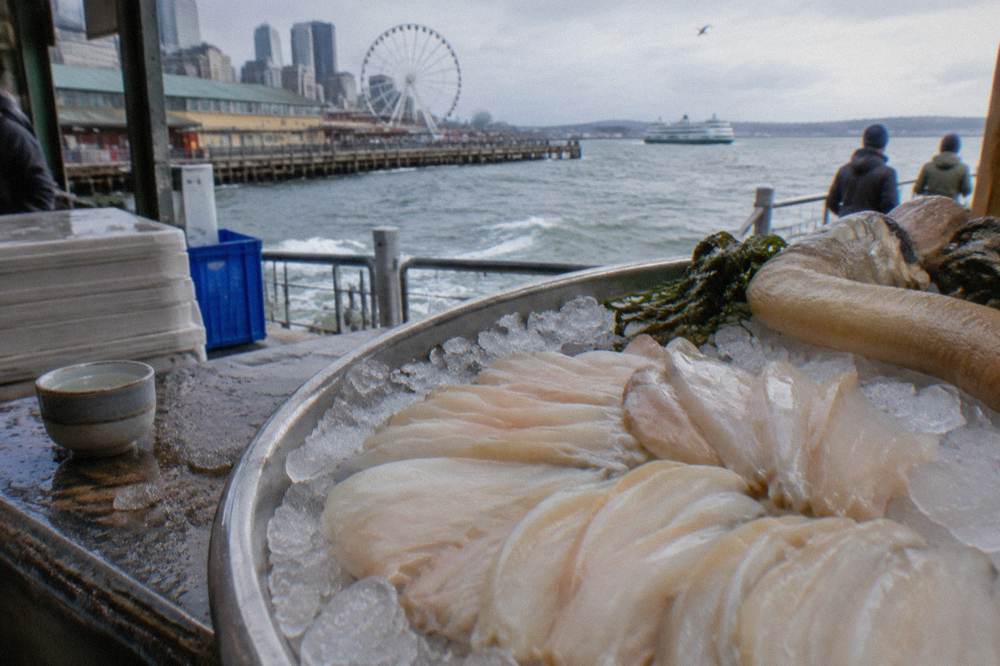
Where you find it follows the city's food geography. Sashimi preparations appear in Japanese restaurants across the city, and the International District food walk guide covers the Chinatown-International District for anyone exploring that neighborhood. Seared and stir-fried versions appear on Chinese menus. Raw-bar treatments show up downtown and near the Market. None of this is hidden; it is simply split across neighborhoods, so knowing which preparation you want tells you where to go.
| Preparation | What it is | Where it typically appears | Good for first-timers |
|---|---|---|---|
| Geoduck sashimi | Paper-thin raw siphon slices, chilled | Japanese restaurants, raw bars, Asian restaurants | Yes, if you like raw seafood |
| Seared geoduck | Quickly seared pieces, scallop-like texture | Chinese and Pan-Asian menus | Yes, the gentlest entry |
| Hot pot geoduck | Briefly cooked in broth at the table | Chinese restaurants | Sharing tables |
| Whole live geoduck | Sold at shellfish counters to cook at home | Market counters, farm stores | Confident cooks only |
The honest framing for a skeptical eater: geoduck is not an extreme food, whatever its looks suggest. Handled raw it reads as a sweeter, crunchier clam; seared it reads as shellfish with a bite. The only real mistake is expecting it to taste exotic. It tastes clean, of cold water, and very mildly of the sea. Order it once for the story, then order it again because you liked it.
Can You Try Both On A Guided Food Walk In Seattle?
Yes, guided walks in Seattle reach both crab and geoduck territory, though only one is seafood-led: the Seattle Seafood Tour, a 2 hour 15 minute long lunch of market-fresh tastings rated 4.7 across 40 reviews, from $119 per person, covering eight seafood tastings across six restaurants from the Market's north end into downtown. Other walks pass seafood counters among broader market tastings, so read what each includes.
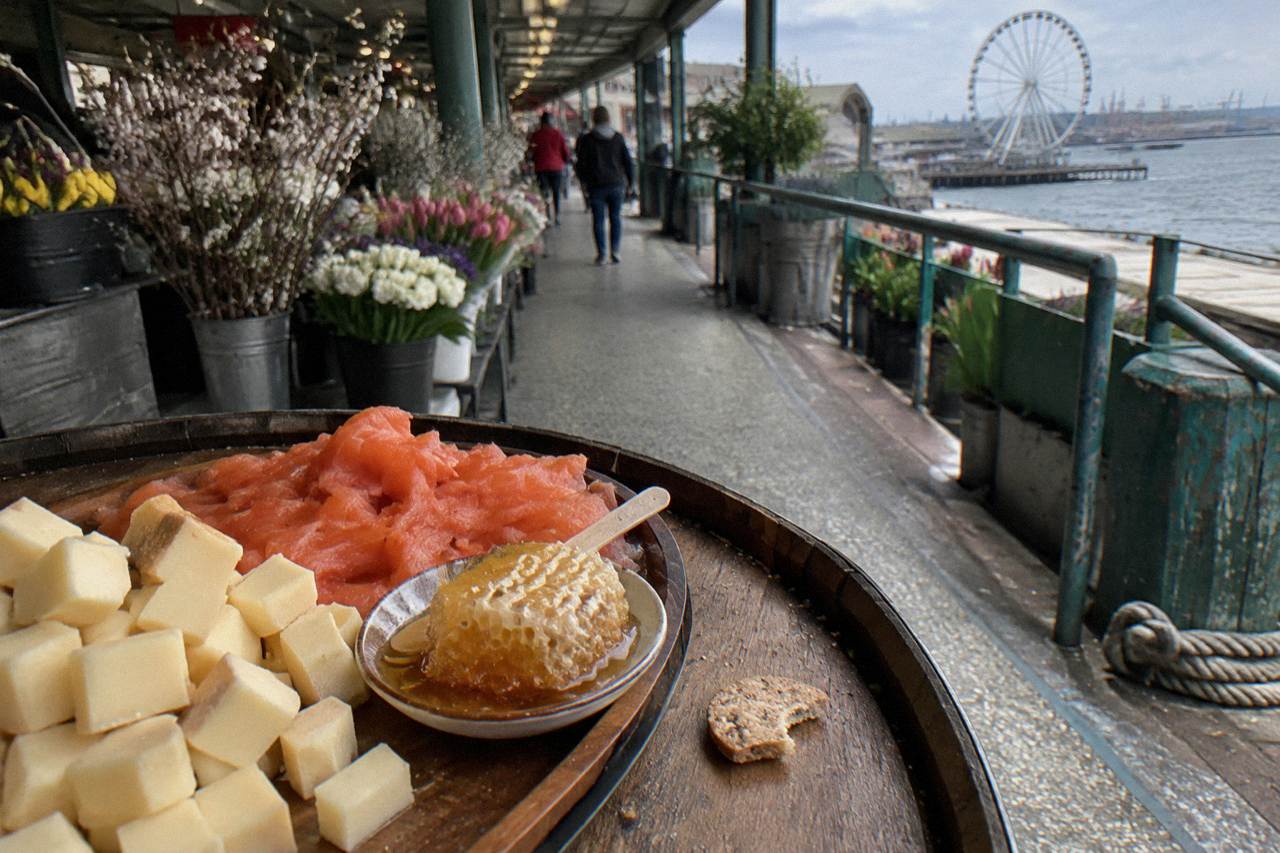
The seafood tour is the closest thing to a shellfish-focused day out. Its route starts at the Pike Place Market north end on 1st Avenue and moves between market stalls and downtown seafood restaurants, including Matt's in the Market and City Fish Co. among its stops, and the listing describes it as brunch-length rather than a snack walk. It is the only seafood-themed tour of its kind covered here, and it is not oyster-specific, so expect crab-adjacent tastings rather than a guaranteed species on any given day.
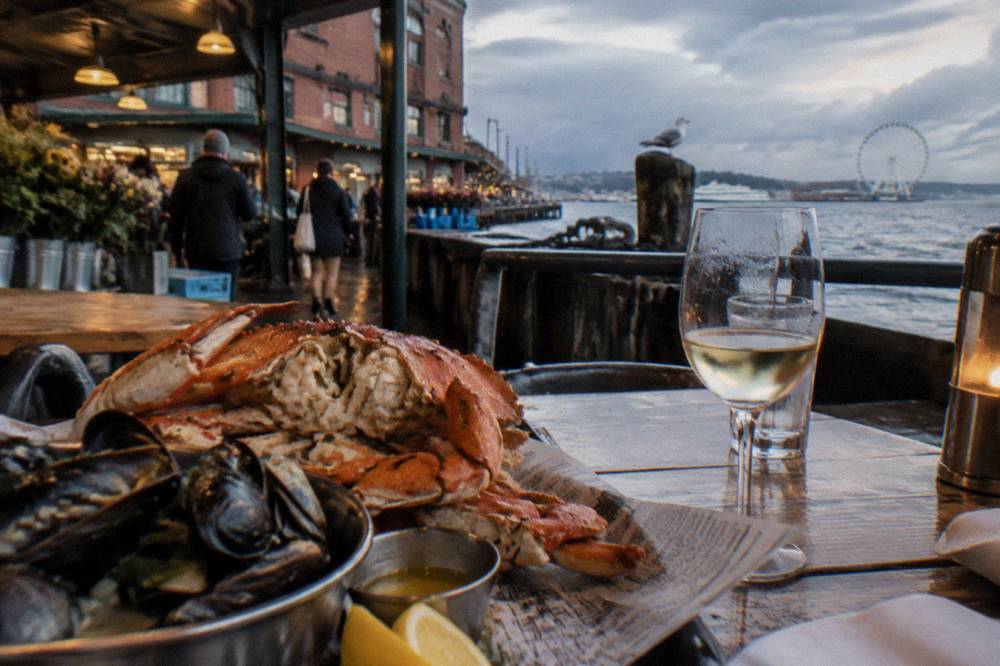
If seafood is the goal but a whole seafood lunch is more than you need, the shorter market walks reach several of the same counters. The Pike Place Market Original Food Tour, 2 hours 15 minutes, rated 5.0 across 670 reviews and from $112 per person, stops at Pike Place Chowder, Mr. Fish Chips and Chowder and other vendors, with 14-plus tastings from 8 vendors and gratuity included. It is a broader market experience that happens to hit seafood hard.
The Meet the Market tour, 2 hours, rated 4.7 across 457 reviews and from $58 per person, includes City Fish Co. among its stops alongside The Crumpet Shop and Honest Biscuits. It is one of the lower-priced ways to walk the Market with a guide and still finish within sight of the seafood counters. Both this and the Original tour leave from the Market itself, so neither needs a car, and neither adds parking to your day.
For drinks and small plates in a restaurant setting rather than a market stall, the Downtown Seattle Restaurant Tour with Drinks and Food, 2 hours 30 minutes, rated 4.7 across 89 reviews and from $135 per person, visits MARKET Seafood Eatery and other downtown spots for appetizers and cocktails. It is a drinks-and-bites walk rather than a market walk, which suits an evening better than a morning.
| Tour | Length | Rating and reviews | Price per person | Seafood angle |
|---|---|---|---|---|
| Seattle Seafood Tour: A Long Lunch | 2 hours 15 minutes | 4.7 from 40 reviews | from $119 | Eight seafood tastings, six restaurants |
| Pike Place Market: Original Food Tour | 2 hours 15 minutes | 5.0 from 670 reviews | from $112 | Chowder and fish stops among 14-plus tastings |
| Meet the Market, Food and Fun | 2 hours | 4.7 from 457 reviews | from $58 | City Fish Co. among five stops |
| Downtown Seattle Restaurant Tour | 2 hours 30 minutes | 4.7 from 89 reviews | from $135 | MARKET Seafood Eatery, appetizers and drinks |
A note on timing, since the fish calendar does not pause for visitors: reported first-of-season Copper River salmon reached Seattle around late May in 2026, with restaurant plates following in early June, and those runs wind down by mid-fall. Crab and farmed shellfish carry no such cliff. If your visit is tied to a specific species, the wild salmon guide covers the timing in more detail than a booking page ever will.
What Should First-Timers Order In Seattle?
Order cooked Dungeness crab by the cluster at a market counter, geoduck sashimi or seared geoduck at an Asian restaurant or raw bar, and one bowl of chowder as the bridge between them; together they cover the city's shellfish range without any dish requiring a reservation weeks ahead. Start with crab if you are cautious, geoduck if you are curious, and both if you are only here once.
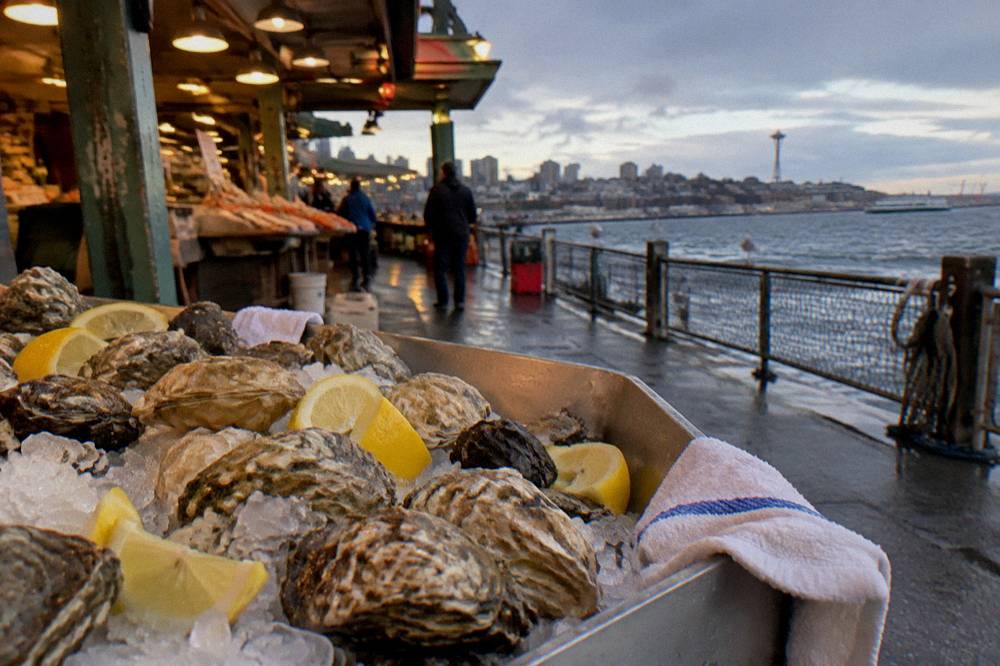
The cautious path is the cooked crab cluster. Nothing about it will surprise you, and everything about it will please you: sweet leg meat, briny body meat, melted butter or nothing at all. Counters in the Market will sell you a cluster and crack it, and the nearby waterfront steps do the rest. The adventurous path is geoduck sashimi, and the advice there is to order it where the kitchen slices it every day, which in practice means a Japanese restaurant or a serious raw bar.
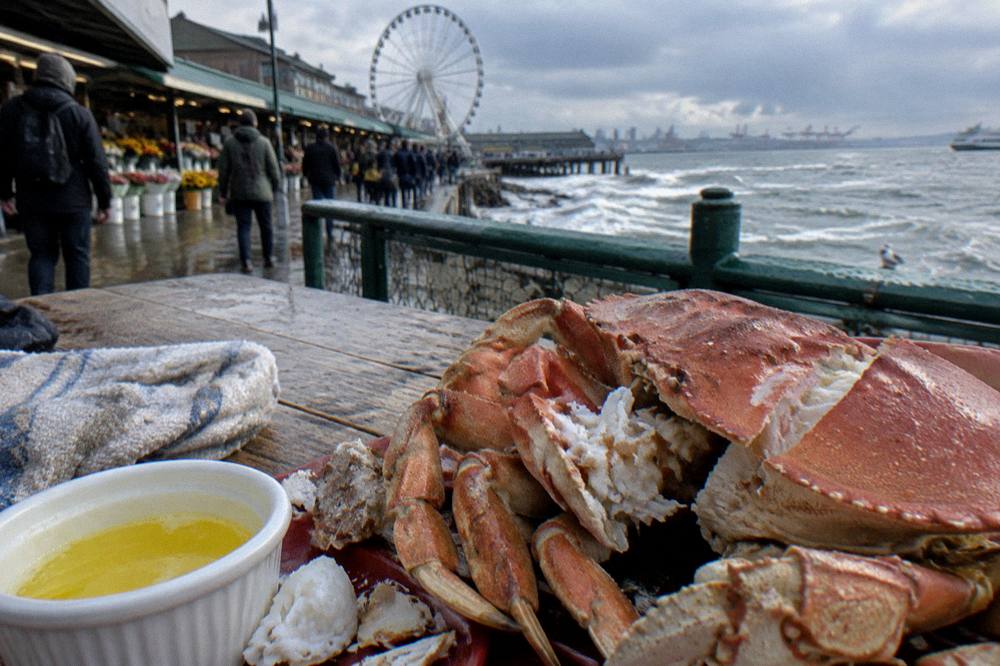
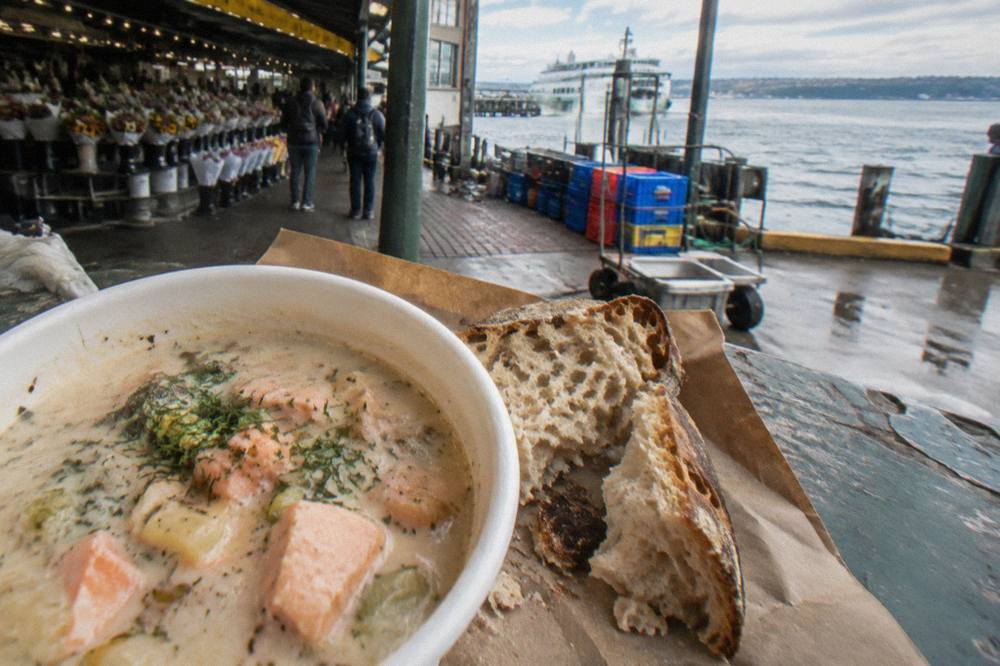
Between those two sits a wide middle ground that first-timers underestimate. Chowder, crab cakes, oysters on the half shell and fish and chips are all local staples, and a counter crawl that samples three of them teaches you more about Seattle seafood than one sit-down dinner can. The what to eat in Seattle guide lays out the full staple list, and the oyster guide picks up where the raw bar begins. Add a side of sourdough wherever chowder is involved; the bread is doing real work.
| If you want | Order this | Where | Watch out for |
|---|---|---|---|
| Easy, shareable local shellfish | Cooked Dungeness cluster | Market counters, waterfront | Messy hands, bring napkins |
| The local delicacy | Geoduck sashimi | Japanese restaurants, raw bars | Mild flavor, not exotic |
| Warm and forgiving | Crab chowder | Market chowder counters | Filling before a long walk |
| A cooked first taste of geoduck | Seared geoduck | Chinese restaurants | Tough if overcooked |
| A bit of everything | Guided seafood tasting walk | Market and downtown routes | Book ahead in summer |
Two practical notes close the ordering question. First, the drinking age in Washington is 21 and identification is checked on tours that include alcohol, so anyone pairing crab with a local beer or cider should carry ID. Second, tipping is not mandated anywhere in the city and practice varies, so decide on service rather than a rule. Beyond that, the only real mistake a first-timer can make in Seattle is leaving without trying at least one of these two shellfish, and the city makes that hard to do. For trip planning beyond the plate, Visit Seattle maintains current event and neighborhood information, and the Washington State Ferries site covers the Bainbridge crossing if your crab day turns into a Sound day.
Timing shapes what you will find. If your trip falls between July 5 and September 7, 2026, Sundays and Mondays are the days recreational crabbers are on the water in Marine Area 10, and winter openings depend on summer quotas, so ask the counter about winter crab rather than assume. Geoduck carries no such calendar: Washington farms need five to seven years to bring one from seed to harvest, and that slow pipeline is why farmed supply holds steady all year.
Logistics favor the early hours. Pike Place Market seafood counters start at 7 a.m., three hours before most of the Market's shops, so an early cluster gives you a head start before the shops open; the Market closes only on Thanksgiving and Christmas Day, so almost any itinerary works.
One calendar note for value hunters: Seattle Restaurant Week's fall 2026 edition ran October 18 to 31 with menus at four price tiers, a set-price window that sits after the summer crabbing stretch, when farmed geoduck's steady year-round supply makes it the dependable order. Pair a set-price dinner with a market-counter crab lunch and you cover two price points in one day.
Common Questions About Dungeness Crab And Geoduck In Seattle
When Is Dungeness Crab Season In Seattle?
Recreational crabbing in Puget Sound runs in managed summer and winter windows that vary by marine area; Seattle's Marine Area 10 allowed Sundays and Mondays from July 5 to September 7, 2026, and winter openings depend on summer quotas. Cooked crab from commercial landings is sold at market counters through most of the year, so eating crab does not depend on the season the way catching it does.
What Does Geoduck Taste Like?
Raw geoduck is mild, clean and crisp, closer to a sweet clam with a snappy texture than to anything brash. Seared, it firms up with a bite similar to scallop. It is not an aggressively flavored delicacy; the texture is what people remember.
Where Can I Try Geoduck In Seattle?
Geoduck sashimi appears at Japanese restaurants and raw bars, seared and hot-pot preparations at Chinese restaurants, and farmed geoduck is sold at shellfish counters and farm stores year-round.
Is There A Seafood Tour In Seattle?
Yes, the Seattle Seafood Tour is a 2 hour 15 minute long lunch of market-fresh tastings, rated 4.7 across 40 reviews and from $119 per person, covering eight seafood tastings across six restaurants from the Market north end into downtown. Broader market walks, including the Original Food Tour, also stop at chowder and fish counters.
Do I Need A Reservation To Eat Dungeness Crab In Seattle?
For a market counter, no: counters sell cooked crab during Market hours, and the Market is open 363 days a year. For a seated seafood dinner, weekend reservations are wise in summer, and the Friday-to-Sunday street access pilot through March 31, 2027 can slow arrivals by car in the afternoons.
What Should A First-Timer Order, Crab Or Geoduck?
Order crab if you want an easy win and geoduck if you want the story. A cooked Dungeness cluster pleases almost everyone, while geoduck sashimi or a seared piece is the once-per-trip taste. Doing both in one day, one at a counter and one at a restaurant, is the classic Seattle move.