What Snacks Is Seattle Known For?
The snacks Seattle is known for, from market chowder and cheese curds to donuts, smoked salmon and coffee, with the tasting walks that serve them.
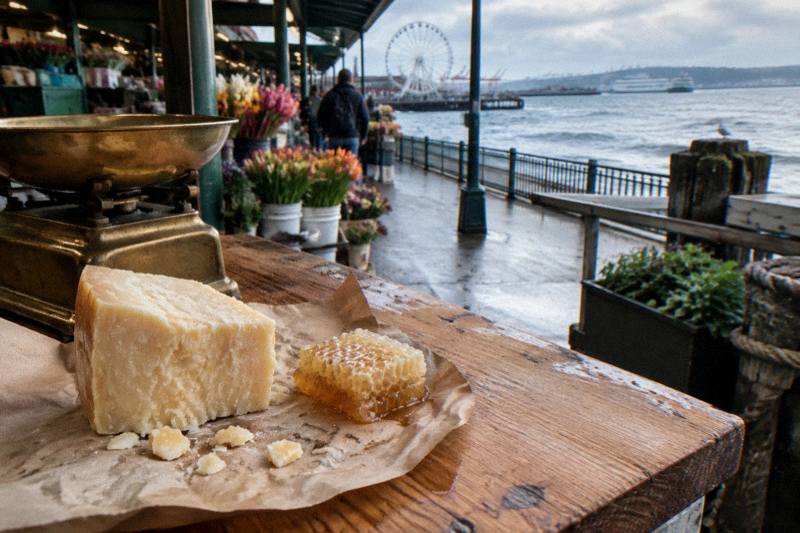
Seattle is best known for clam chowder in bread bowls, cheese curds from Beecher's Handmade Cheese, mini donuts from Daily Dozen Doughnut, smoked and cured salmon, fresh crab and oysters, and coffee in nearly every form, most of it concentrated in and around Pike Place Market. Add teriyaki, Top Pot doughnuts and market fruit, and the city's snack list covers savory, sweet and caffeinated in one walkable downtown area. Beyond the classic snacks, the guide to the foods that made Seattle internet-famous rounds up the viral bites worth queuing for and the walking tours that reach several in a single stretch.
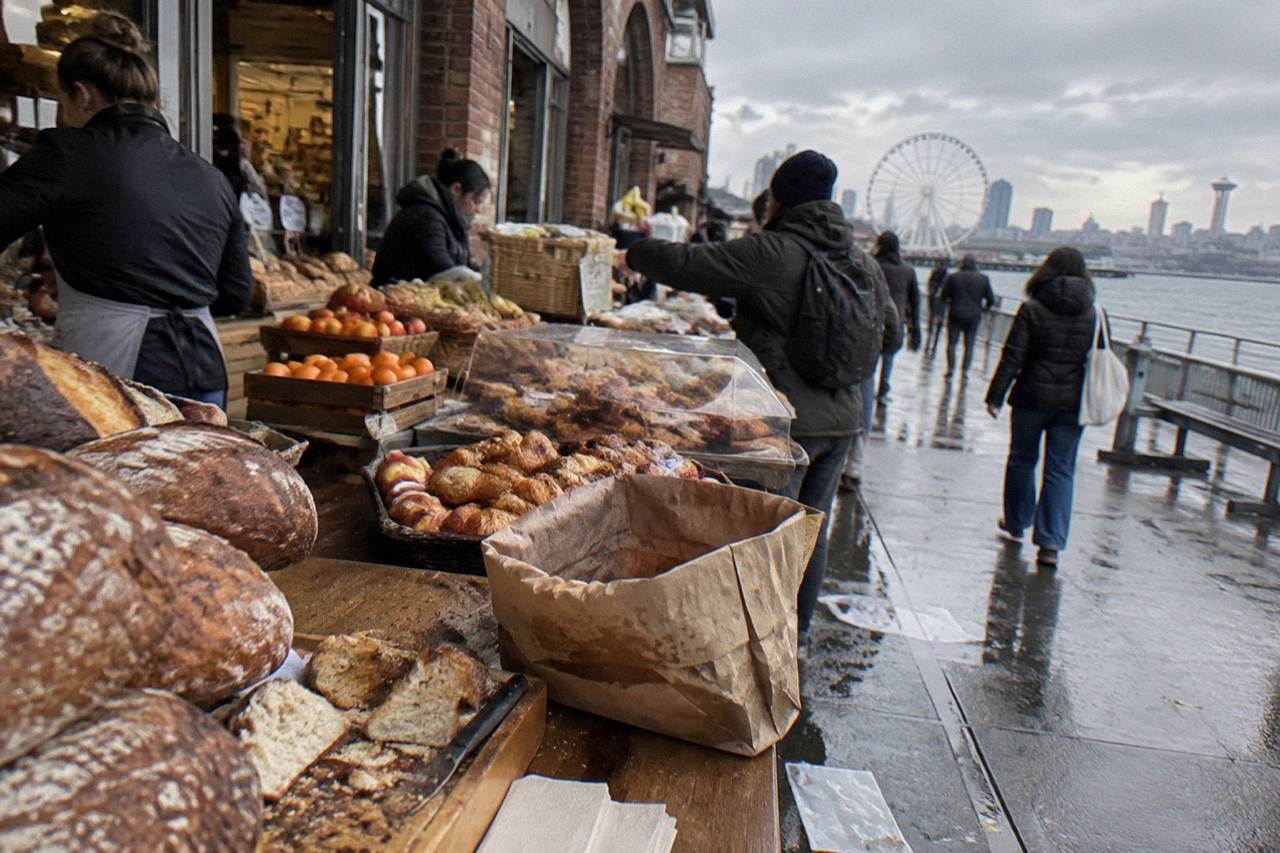
The answer begins at the Market because that is where the city's food identity was built. Pike Place opened on August 17, 1907, when six to twelve farmers brought produce wagons down to Pike Place after the City Council passed the ordinance creating a public market on August 5 of that year. More than a century later the same blocks hold 220-plus independently owned shops and restaurants, 70-plus farmers and 150-plus craftspeople, according to the Market's own pages. Nearly every snack Seattle is associated with can be traced to a stall, counter or bakery inside the Market.
That concentration is the practical reason a first-time visitor can eat most of the list in a single morning. The Market is open seven days a week, 363 days a year, closed only on Thanksgiving Day and Christmas Day, with breakfast, produce and seafood counters starting at 7 a.m. even though most of the building wakes up closer to 10. An early arrival means shorter lines at the chowder counter and a chance to watch the fish throwing before the arcade fills, since the tossing happens when a customer buys a fish, during business hours.
That same density is why a guided tasting walk is often the fastest way to eat through the list. The options covered here pair the city's signature bites with the routes that serve them.
For readers who want the deep background on individual bites, the site's guide to what to eat in Pike Place covers vendors stall by stall, and the Pike Place Market visitor FAQ answers the practical questions the Market itself fields, from parking to the fish throwing. Planning a wider visit also benefits from the plan your visit page on the Market's site, which tracks current events and access changes.
Which Savory Snacks Come From Pike Place Market?
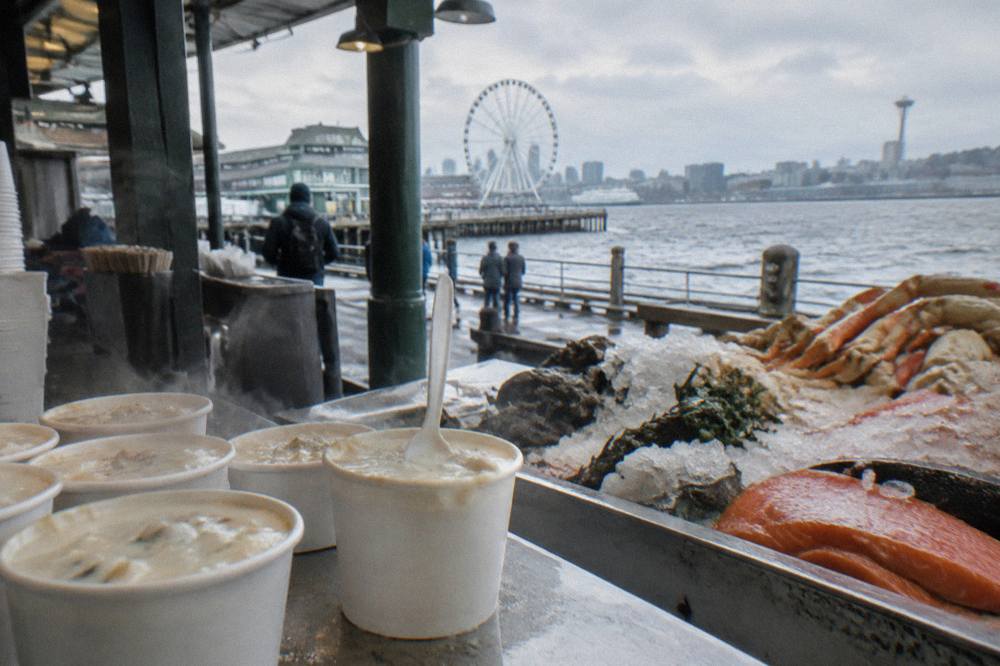
The Market's savory snacks are clam chowder, notably from Pike Place Chowder, cheese curds and macaroni from Beecher's Handmade Cheese, crumpets from The Crumpet Shop, biscuits from Honest Biscuits, and fresh fish and shellfish from the counters along the main arcade. Several guided walks string these stops together in about two hours. For a look at which of these bites exist nowhere else, the guide to foods you can only get in Seattle pairs each specialty with the walks that serve them.
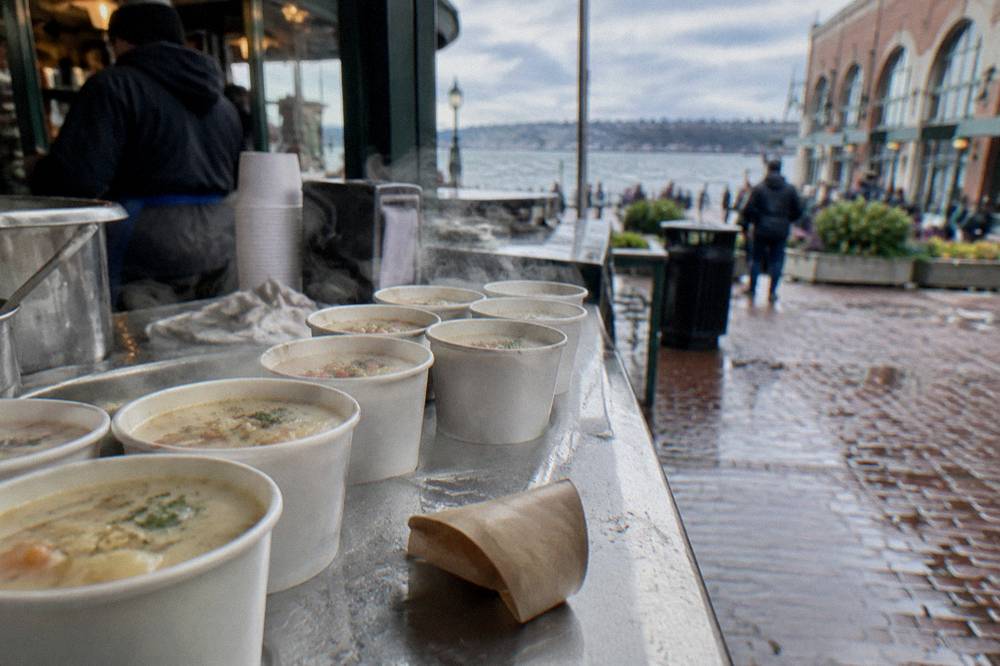
Chowder is the closest thing Seattle has to a signature spoonable snack. Pike Place Chowder appears on the inclusions of several Market tasting tours, including the Chef Guided Food Tour of Pike Place Market, which runs two hours from the corner of 1st Ave and Pine St, from $75 per person, rated 4.9 across 4,806 reviews. That tour's nine vendor stops include Pike Place Chowder, Beecher's Handmade Cheese and Indi Chocolate, with standing tastings rather than a sit-down meal, which suits a snacking pace. The same tour passes Simply Seattle, the Pizza and Pasta Bar, maíz and Made in Washington, so the route mixes savory stops with a few purely local retail landmarks.
Beecher's is the other anchor. Beecher's shows up on two Market tour routes, and the window onto the working kitchen draws its own crowd. The Crumpet Shop and Honest Biscuits, both included on other Market walks, cover the bready end of the spectrum: a warm crumpet or a biscuit is the classic mid-morning Market snack, eaten standing while the arcade fills up around you. DeLaurenti Food & Wine, the Italian grocer on 1st Ave, is a third fixture, appearing on the Meet the Market walk and the wine and chocolate routes alike, and its counters are where many locals do their actual shopping.
Fish is a spectator snack as much as an edible one. The fish throwing at Pike Place Fish Market happens when a customer buys a fish, during business hours, and it is the single most filmed moment in the building. The cured and smoked salmon sold beside the ice is the travel-friendly version of the same counter, and it is the snack most visitors actually carry home. Rachel the Piggy Bank, the bronze pig installed in 1986 by sculptor Georgia Gerber, sits under the Market clock a few steps away and collects donations for Market Foundation services, a reminder that the whole snack ecosystem is also a social enterprise.
The Street Access Project is worth knowing about if a visit falls between October 1, 2026 and March 31, 2027: Phase 3 shares Pike Place between vehicles and pedestrians Monday to Thursday, and limits access at 1st Ave and Pike St on Friday to Sunday from 11 a.m. to 4 p.m. None of that closes the snack counters, but it can change how the blocks feel at midday. Visitors arriving by transit have an easy run: King County Metro's adult fare is $3.00 a ride and the regional day pass is $6.00, with details on King County Metro's fare page.
A shorter, cheaper way to cover the same ground is the Meet the Market tour, from $58 per person, two hours, rated 4.7 across 457 reviews, which includes The Crumpet Shop, Honest Biscuits and City Fish Co. The longer Pike Place Market: Original Food Tour, from $112 per person and rated 5.0 across 670 reviews, lists 14-plus tastings from 8 vendors with tips included, a listing detail that matters to anyone budgeting beyond the ticket price.
Is Coffee A Snack In Seattle?
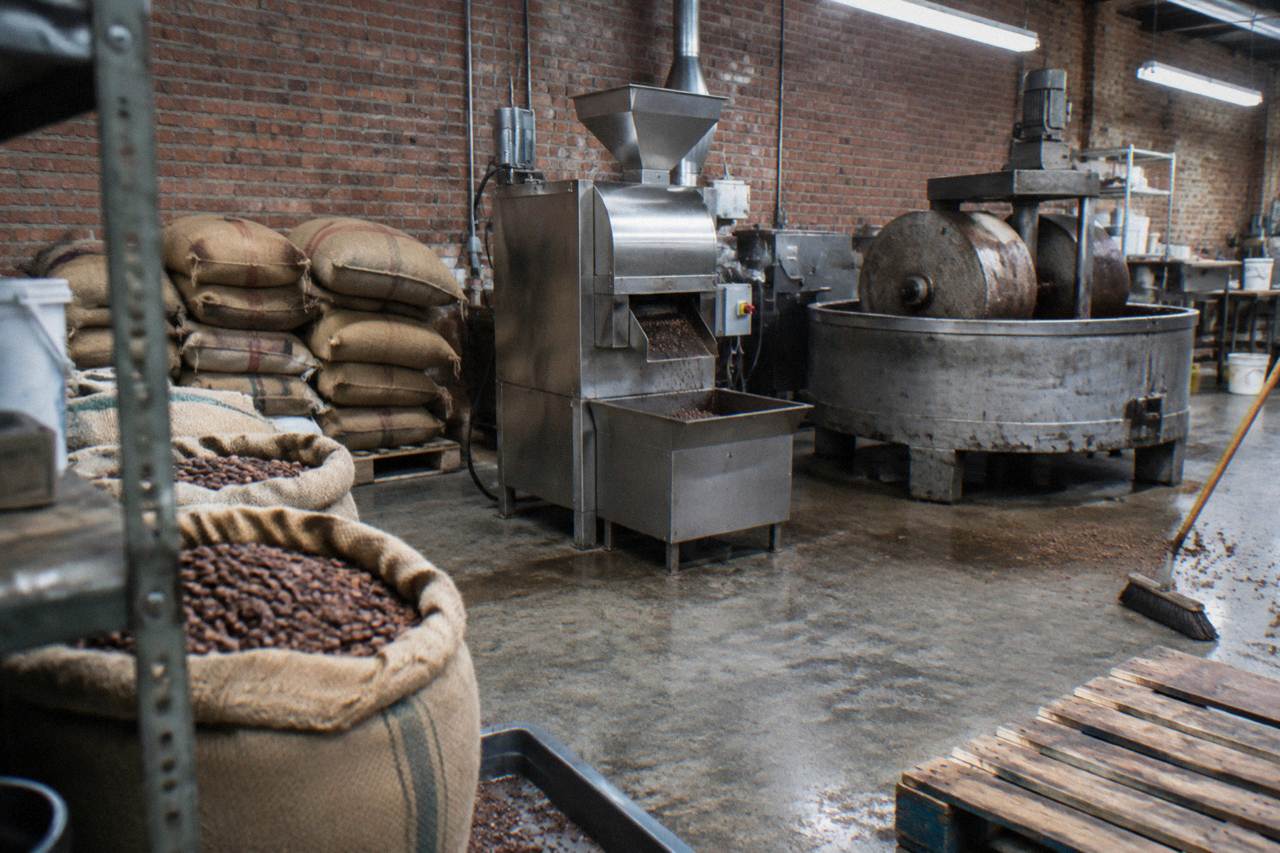
In Seattle, yes: coffee functions as a snack category of its own, anchored by the Pike Place Starbucks, the company's oldest operating store (Starbucks opened in 1971), and by a deep bench of local roasters including Espresso Vivace (1988), Caffe Vita (1995) and Victrola (2000). Coffee walks on Capitol Hill and two Pike Place coffee tours cover the culture in about two hours each.
The first Starbucks still operates at 1912 Pike Place and remains the company's oldest store, which makes it both a snack stop and a landmark. The line is part of the experience, and the site's guide to the first Starbucks and Pike Place coffee weighs whether the wait is worth it against the roasters a block away.
The coffee snacking is not confined to the Market. Capitol Hill is the other coffee district, and the Seattle Coffee Tour: Capitol Hill Coffee Culture & Tastings runs two hours from the Jimi Hendrix statue on Broadway, from $49.30 per person, rated a perfect 5.0 across 833 reviews. The listing is clear that it is coffee only: food and extra drinks are not included, so it pairs well with, rather than replaces, a food walk. A second Capitol Hill option, the Seattle Coffee Walking Tour: Specialty Cafes and Local Stories, starts in the Oddfellows Building lobby on E Pine St, from $39.99 per person, rated 5.0 across 78 reviews, making it one of the cheapest guided bites of culture in the city.
For visitors who want their coffee inside the Market itself, the Coffee Crawl & VIP Morning in Pike Place Market starts at Anchorhead Coffee on Western Ave, from $84 per person, two hours, rated 5.0 across 93 reviews, and includes breakfast alongside the coffee. The Roasted in Seattle: Bean to Cup tour, from $55 per person, traces the route from Anchorhead past the original Starbucks, Storyville, Ghost Alley Espresso and the Gum Wall before finishing at Fonté on 1st Avenue.
What Sweet Snacks Should You Hunt Down?
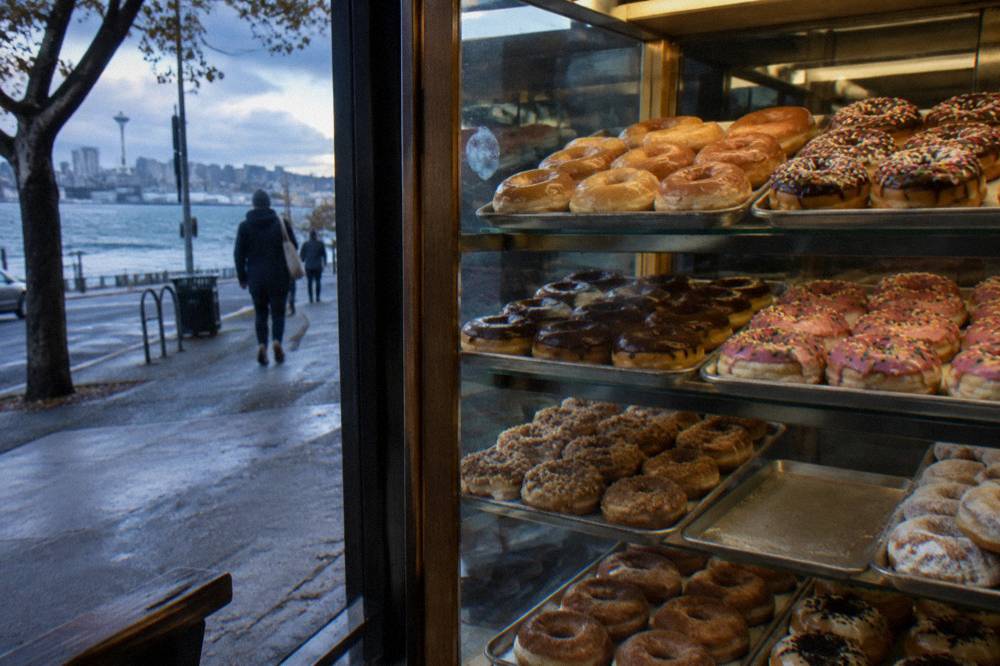
Seattle's sweet snacks run from mini donuts at Daily Dozen Doughnut in the Market to Top Pot Doughnuts downtown, plus chocolate from Indi Chocolate, Theo and the city's bean-to-bar makers, and bakery items from Dahlia Bakery and Freya Bakery & Cafe. A dedicated sweets tour connects donut and beignet stops across downtown in two hours.
Daily Dozen Doughnut is the Market's answer to the mini donut, made in view of the line, and it appears on both the Original Food Tour and the Insider's Breakfast Tour inclusions. Top Pot Doughnuts is the other pole of the city's donut culture, and it is the starting point of Seattle's Sweetest Food Tour, which runs two hours from the Denny Triangle edge of downtown, from $65 per person, rated 4.9 across 1,018 reviews, and stops at Top Pot, Doce Donut Co, Dahlia Bakery, the Market and Daily Dozen.
The route starts downtown, runs through the Amazon Spheres area with sweets and donuts only, and ends at the Market's Daily Dozen, making it the right pick for a visitor whose snack priorities are fried dough rather than chowder. The Insider's Breakfast Tour, from $160 per person, two hours 30 minutes, rated 5.0 across 90 reviews and capped at 12 people, is the morning alternative, pairing Honest Biscuits, Daily Dozen and Le Panier with gratuity already included.
Chocolate rounds out the sweet list. The Chocolate Tour in Seattle with Guided Tastings, from $76 per person, two hours 15 minutes, rated 4.8 across 244 reviews, starts at Dahlia Bakery downtown and moves through Pike Place chocolate stops including Woodring, Truffle Queen, DeLaurenti and SELEUŠS Chocolates. A 90-minute vegan and vegetarian version, from $50 per person, rated 4.9 across 116 reviews, covers a similar corridor with plant-based tastings. For background on the bean-to-bar scene, the site's Seattle chocolate tour guide goes deeper than a snack list can.
| Sweet snack | Where it comes from | Tour that serves it |
|---|---|---|
| Mini donuts | Daily Dozen Doughnut, Pike Place Market | Original Food Tour; Insider's Breakfast Tour; Sweetest Food Tour |
| Hand-forged donuts | Top Pot Doughnuts, Denny Triangle | Seattle's Sweetest Food Tour |
| Chocolate tastings | Woodring, Truffle Queen, SELEUŠS and others | Chocolate Tour with Guided Tastings |
| Bakery items | Dahlia Bakery, Freya Bakery & Cafe | Sweetest Food Tour; Chocolate Tour (Dahlia); By-the-Course (Freya) |
What Seafood Snacks Is Seattle Known For?
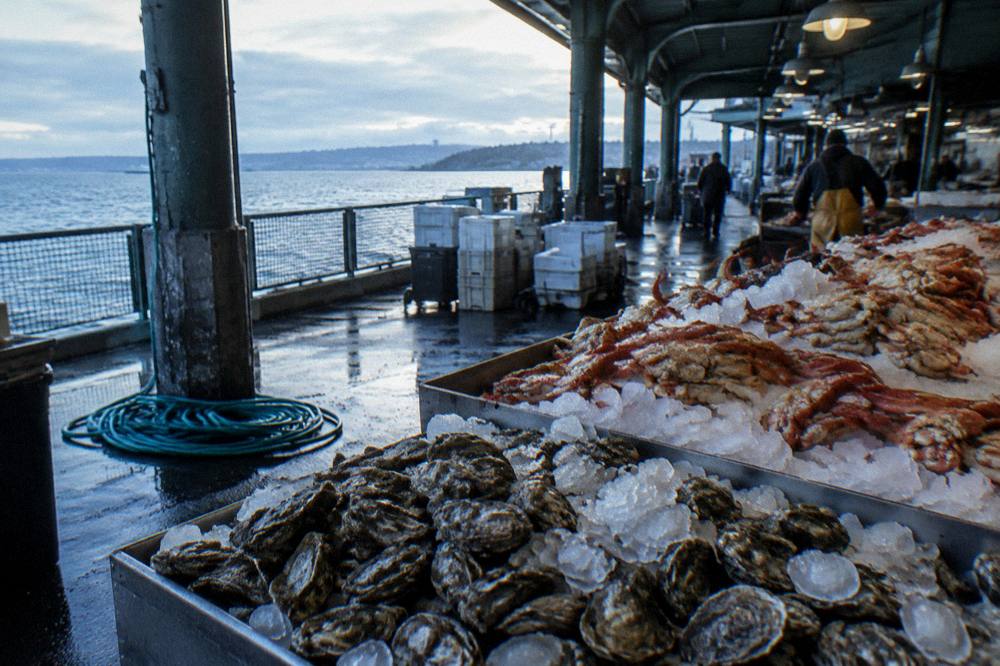
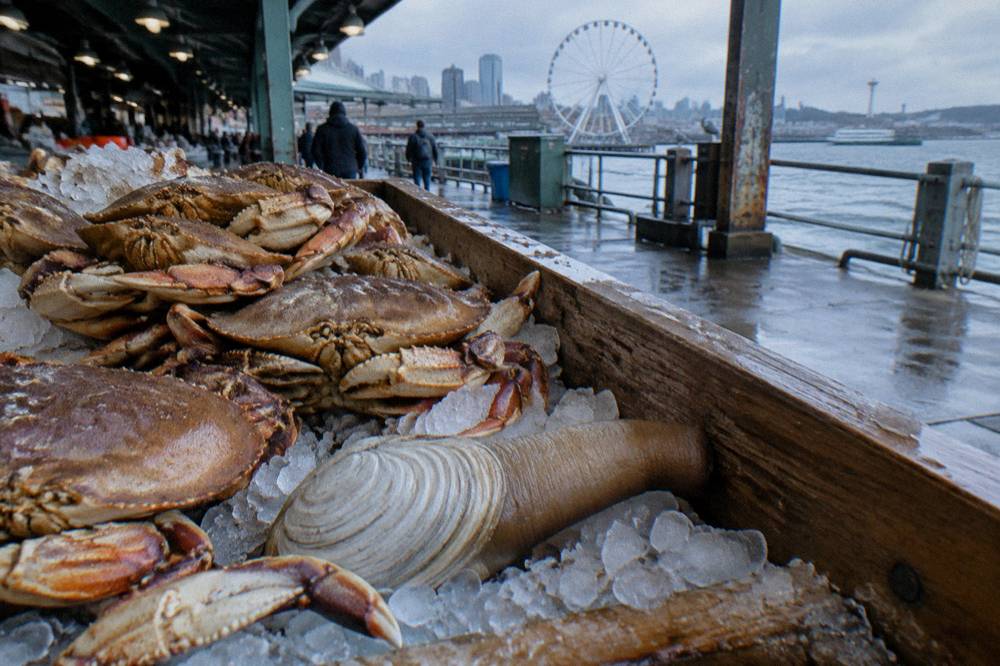
Seattle's seafood snacks are cups of clam chowder, smoked and cured salmon, Dungeness crab and farmed oysters, with the cold-water months from roughly September to April the traditional peak for firm, briny oysters. The only seafood-themed tour listed here is a two hour 15 minute long lunch from $119 per person, rated 4.7 across 40 reviews.
Salmon is the headline. Wild Alaska runs five Pacific species, Chinook (king), sockeye, coho, pink and chum, and the Copper River sockeye and king openings are treated as events in Seattle: the 2026 commercial fishery opened May 22, with the first fresh fish reaching Pike Place pre-orders around May 27 and first restaurant plates around June 1. Smoked and cured salmon is the year-round snack version, sold at Market counters and fish shops along the arcade, and it survives a plane ride home better than almost anything else on this list.
Oysters are the other cold snack. Farmed oysters are available year-round, and Taylor Shellfish farms Puget Sound, Hood Canal and Willapa Bay tidelands while running oyster bars and farm stores in Seattle. Geoduck, the region's strangest looking delicacy, takes about five to seven years to grow on a farm before it is hand-harvested. Dungeness crab is quota-managed, so promising crab on a given date is a mistake; recreational seasons in Puget Sound run in summer and winter windows that shift each year, and Seattle's own Marine Area 10 was limited to Sundays and Mondays from July 5 to September 7 in the summer 2026 season.
The Seattle Seafood Tour: A Long Lunch of Market-Fresh Tastings is the one walk built around this list: eight seafood tastings across six restaurants, starting at the Market's north end on 1st Ave and running two hours 15 minutes. It is not oyster-specific and it does not go to Pioneer Square or the Chinatown-International District, but for a visitor whose snack question is really a seafood question, it is the direct answer. The site's Seattle seafood walk guide covers the same territory for self-guided eaters.
Where Do You Snack Beyond Pike Place Market?
Outside the Market, Seattle snacks shift to the Sunday farmers markets, including Ballard's year-round market on Ballard Ave NW, the Capitol Hill market on E Barbara Bailey Way and the Fremont Sunday Market under the Fremont Bridge, plus the Chinatown-International District's bakeries, dim sum counters and the Uwajimaya food halls. The Capitol Hill coffee walk and a South Lake Union street food tour cover two more snacking districts.
Four neighborhood markets run on weekends: Ballard on Sundays 9 a.m. to 2 p.m., University District on Saturdays 9 a.m. to 2 p.m., West Seattle on Sundays 10 a.m. to 2 p.m., and Capitol Hill on Sundays 11 a.m. to 3 p.m. The Fremont Sunday Market runs Sundays 10 a.m. to 4 p.m. at the Fremont Bridge, with more than 200 artisans in season and a covered, heated winter market, which makes it a genuine rainy-month snack destination rather than a fair-weather one. Rain should never rule out a market day in this city: November averages 6.31 inches of rain per the NOAA 1991 to 2020 normals at Sea-Tac, and the markets simply carry on under cover.
The Chinatown-International District is the snack district the Market cannot replicate. Tai Tung on S King St says it was established in 1935 and is the district's oldest surviving Chinese restaurant; Kau Kau BBQ has been at 656 S King St since 1974; Uwajimaya started in 1928 in Tacoma and opened its Seattle store after WWII. None of the tours listed here cover the district, so it is a self-guided snack run, and the site's International District food walk guide maps it.
South Lake Union has its own tour: the Street Food Tour of the area around the Amazon Spheres, from $80 per person, two hours, rated 5.0 across 65 reviews, stopping at Maiz Molino, Marination, Rubinstein Bagels and Great State Burger. It is a lunch-grade walk rather than a nibble route, and it is the clearest signal that Seattle's snack identity is no longer only a downtown story. An evening option in the same corridor, the Chef Guided Happy Hour Tour, runs two hours from $140 per person with cocktails and bites from King Leroy to Lady Yum, though IDs are checked and it skews dinner rather than snack.
| Snack district | Signature bites | How to eat it |
|---|---|---|
| Pike Place Market | Chowder, cheese curds, mini donuts, smoked salmon | Multiple tasting tours from $58 per person |
| Capitol Hill | Coffee flights, cafe bites | Coffee tour from $49.30 per person |
| South Lake Union | Street food, bagels, burgers | Street food tour from $80 per person |
| Ballard | Market produce, bakery stalls, brewery snacks | Self-guided Sunday market, 9 a.m. to 2 p.m. |
| Chinatown-International District | Dim sum, barbecue, bakery items | Self-guided; none of the tours listed here |
Can One Tour Cover Most Of The Snack List?
Yes: the Chef Guided Food Tour of Pike Place Market comes closest, with nine vendor stops in two hours spanning Pike Place Chowder, Beecher's Handmade Cheese, maíz and Indi Chocolate, from $75 per person. It is rated 4.9 across 4,806 reviews, the most reviewed walk covered here, and it starts at the corner of 1st Ave and Pine St.
That tour is the practical answer to the snack question because it samples across categories, soup, cheese, savory and sweet, rather than specializing. Tastings are standing rather than sit-down, pickup is not included, and the tour is not seafood-only. For eaters who want a full meal instead, the Pike Place By-the-Course Tour serves a lunch with six stops from $119 per person, with drinks bought separately.
Pairing is the other strategy. A morning coffee walk plus an afternoon sweets tour covers the caffeinated and the fried, and the seafood long lunch covers the briny, all inside one downtown day. The site's comparison of which food walk to book lays out that arithmetic tour by tour, and the meeting points and what to bring guide handles the logistics, since most of these walks start within three blocks of each other at the Market's north end.
Common Questions About Seattle Snacks
What Snacks Is Seattle Known For?
Clam chowder, Beecher's cheese curds, mini donuts from Daily Dozen, Top Pot doughnuts, smoked and cured salmon, Dungeness crab, oysters and coffee. Most of the list is concentrated in Pike Place Market, with donuts downtown, coffee on Capitol Hill and dim sum in the Chinatown-International District.
Is Pike Place Chowder The Same As Pike Place Market?
No. Pike Place Chowder is a vendor inside Pike Place Market and appears on several tasting tour routes. The Market itself is the larger public market, open 363 days a year, closed only on Thanksgiving Day and Christmas Day.
Can You Taste Seattle's Snacks On A Tour?
Yes. The Chef Guided Food Tour of Pike Place Market covers nine vendor stops in two hours from $75 per person, and sweeter, seafood and coffee-focused walks each cover a narrower slice of the list.
What Is The Best Month For Oysters In Seattle?
Farmed oysters are available year-round, but the cold-water months from roughly September to April are the traditional peak for firm, briny flavor.
Are There Snack Tours Outside Downtown?
Yes. Coffee walks run on Capitol Hill, a street food tour runs in South Lake Union near the Amazon Spheres, and a craft beer and food walk runs in Ballard's brewery district. None of the tours listed here cover the Chinatown-International District.