Clam Chowder In Seattle: Where To Try It
Clam chowder is the dish visitors ask about first, and Seattle answers it with market counters, sourdough bread bowls and seafood walks. Here is where the bowls actually are, what each style tastes like, and how to chase chowder without wasting a morning in the wrong line.
Short answer
Seattle clam chowder clusters around Pike Place Market, where several food walks include a chowder stop among their tastings. Market chowder counters open from 7 a.m. with the seafood stalls, and the guided options run from $58 to $119 per person for 2 to 3 hours. The only seafood-led walk is a 2 hour 15 minute long lunch from $119.
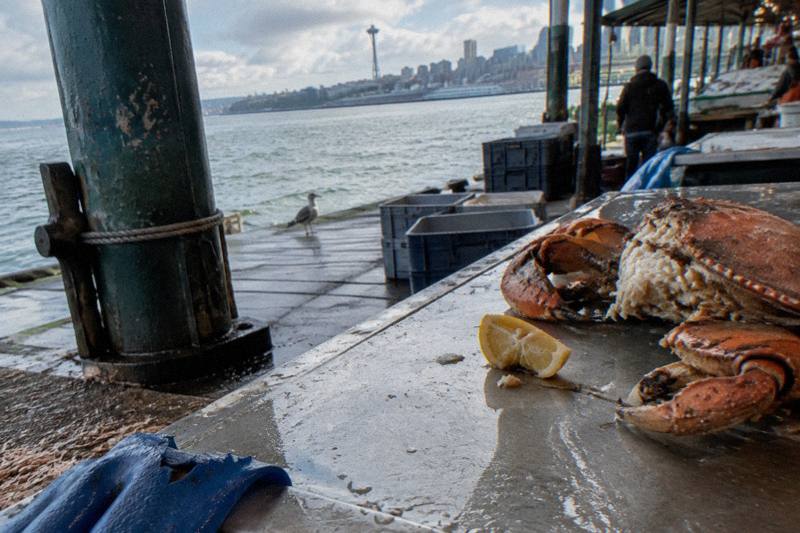
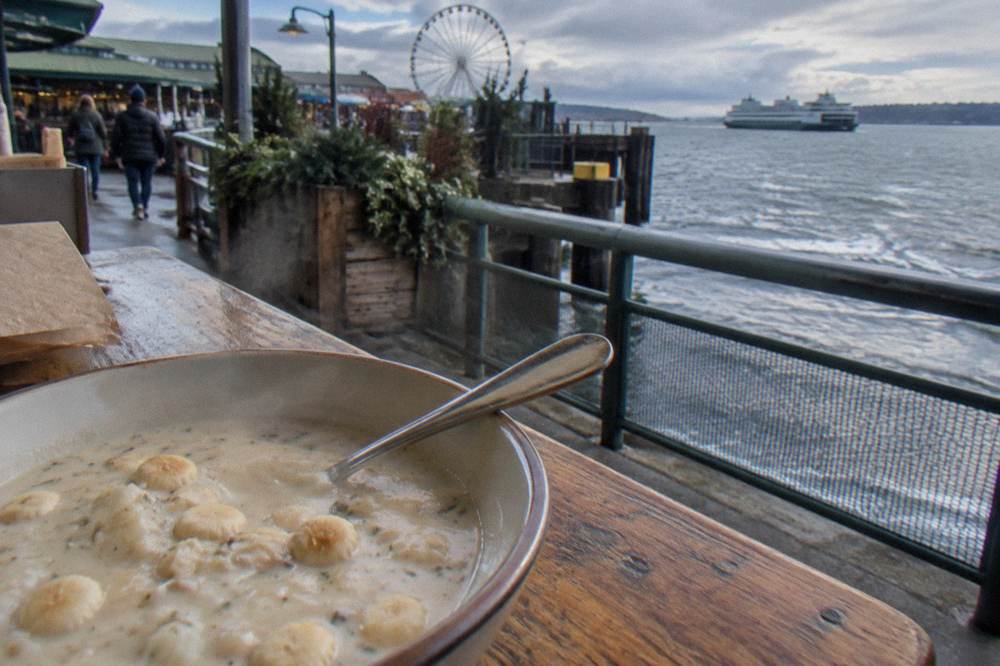
Clam chowder arrived in Seattle long before the food walks did, and it never left. The city sits on Puget Sound shellfish grounds, with oyster farms in Hood Canal and Willapa Bay and Dungeness crab seasons managed just offshore, so the cream-and-clam tradition here is tied to working seafood counters rather than to a single famous recipe. Ivar's Acres of Clams, the waterfront institution on Pier 54, opened on July 22, 1946, and gave the city one of its most recognizable chowder namesakes. Today the bowl most visitors meet first is a market counter cup, often sampled standing up in the middle of a guided walk.
The chowder chase in Seattle is really a Pike Place Market chase. The Market has operated since August 17, 1907, when six to twelve farmers brought produce wagons to Pike Place after the City Council created the public market on August 5 of that year, and it now holds more than 220 independently owned shops and restaurants. Fresh seafood and breakfast service start at 7 a.m., which matters when you are planning around crowds. This page lays out the styles you will meet, where the famous bowls are, what a bread bowl does and does not get you, and which guided walks actually stop at a chowder counter.
Where Did Seattle's Clam Chowder Reputation Come From?
Seattle's chowder reputation rests on three legs: a working waterfront, a public market that has sold fresh seafood since 1907, and a shellfish industry that keeps clams, oysters and crab in local cases year-round. The Ivar's name dates to 1946 on Pier 54, and Pike Place's fish counters have been throwing and selling fish during business hours for decades. None of that is a single champion bowl; it is an ecosystem.
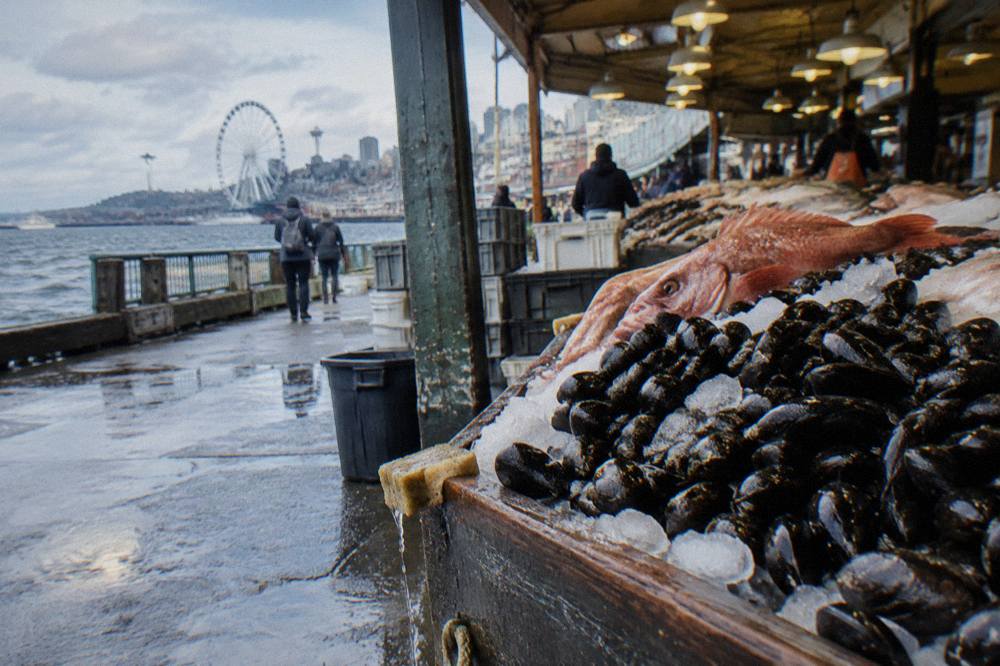
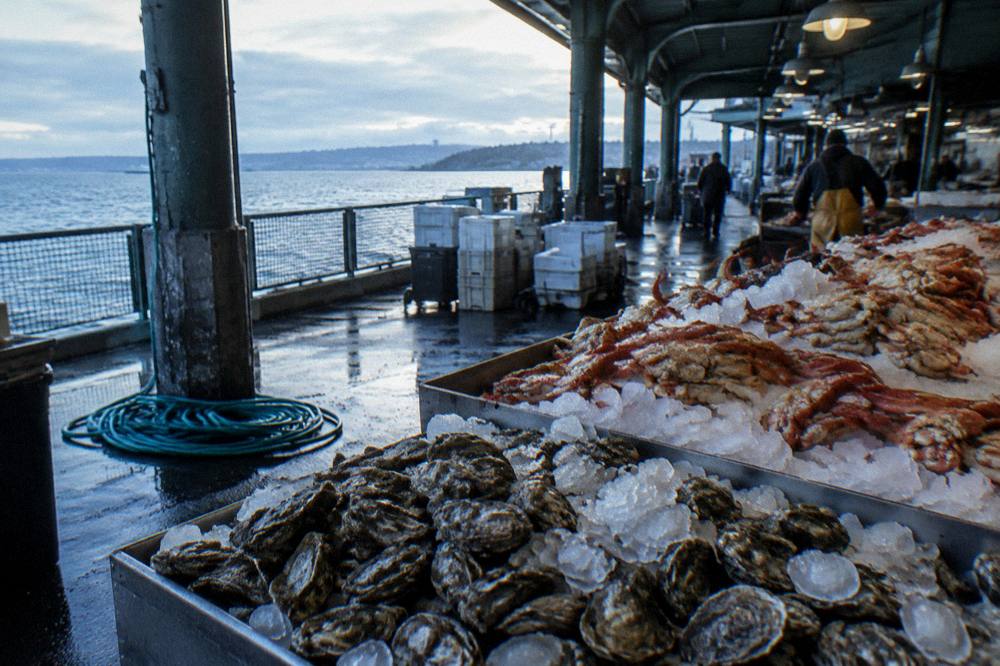
The waterfront connection is the oldest part. Ivar Haglund opened Ivar's Acres of Clams on July 22, 1946, at Pier 54, and the restaurant's name itself tells you what the city was eating: clams, in quantity, close to the boats that landed them. That was not a novelty then and it is not one now. Puget Sound, Hood Canal and Willapa Bay remain productive shellfish waters, and Taylor Shellfish, one of the region's major producers, farms Puget Sound, Hood Canal and Willapa Bay and runs oyster bars and farm stores in Seattle. Farmed oysters are available all year, and the cold-water months from roughly September to April are the traditional peak for firm, briny flavor, a rhythm that shapes the whole raw bar and chowder case calendar.
The Market is the second leg. Pike Place opened in 1907 as a place for farmers to sell directly to the city, and within that structure a class of fishmongers, cracker stalls and soup counters grew up. City Fish Co, one of the stops named on several guided walks, is a working fish counter inside the Market arcades. The chowder you taste two steps from the fish case is a different proposition from a canned bowl anywhere else: it is the retail end of a supply chain you can watch with your eyes.
The third leg is the touring culture. Guided food walks inside the Market are permitted commercial activities, with a Market-issued operator permit capping groups at 16 people per guide, no amplified sound and a small per-customer participant fee. Several of those walks, covered in detail below, list chowder vendors among their stops, which means many visitors meet Seattle chowder as a tasting pour rather than as a full meal. That tasting format is exactly why the dish has an outsized reputation relative to its footprint: a small sample at a counter is a low-commitment way to fall for a soup.
Which Clam Chowder Styles Will You Find In Seattle?
Expect three broad styles: classic New England-style cream chowder, which dominates; smoked salmon or seafood chowders that swap some clams for Pacific fish; and seasonal Dungeness crab chowders that follow the quota-managed crab calendar. The cream base is the constant. What changes is the protein and whether the kitchen smokes it first.
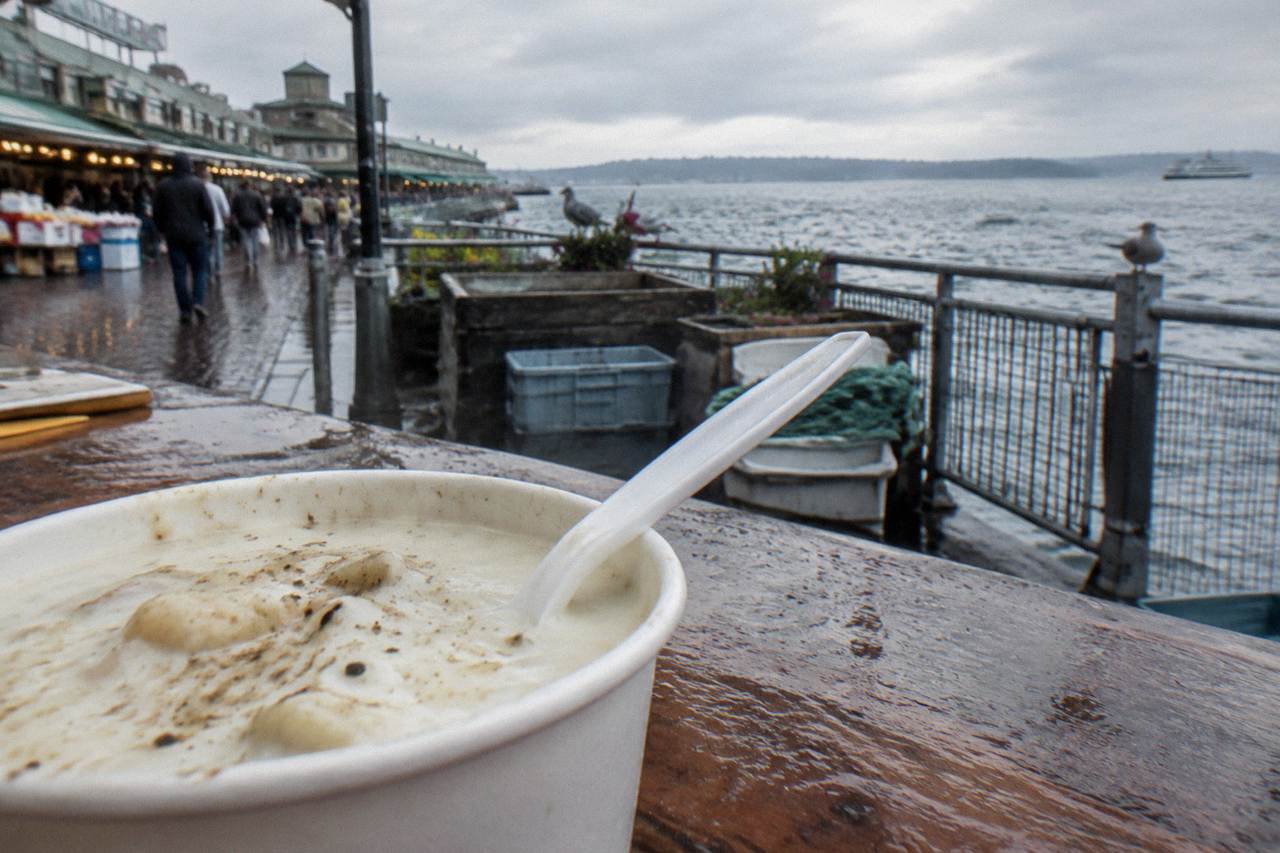
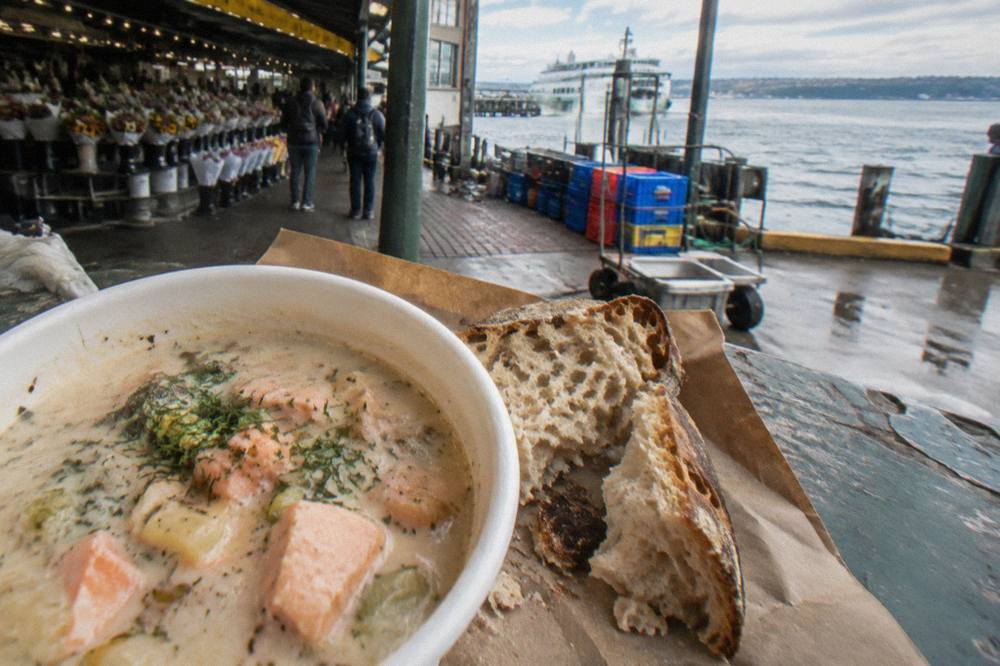
New England-style, the creamy, potato-thick, milk or cream-based bowl, is the default in Seattle. It is what the market counters pour into sample cups and what most visitors mean when they say clam chowder. The regional twist is that Seattle kitchens sit inside one of the country's great salmon regions, so smoked salmon chowder is common enough to count as a local second style. Wild Alaska runs five Pacific salmon species, Chinook or king, sockeye, coho, pink and chum, and the Copper River openings that restaurants celebrate each spring are the best-known of those runs. The 2026 Copper River commercial opener was reported for May 22, with first fresh fish reaching Seattle pre-order customers around May 27 and restaurant plates following around June 1.
The third style, crab chowder, is the most seasonal and the one no honest guide can promise on a date. Puget Sound recreational Dungeness seasons are quota-managed and set marine area by marine area; Seattle's own Marine Area 10 ran Sundays and Mondays from July 5 to September 7 in 2026, and winter openings depend on summer quota accounting. What that means for a chowder seeker is simple: if a menu lists Dungeness crab chowder, order it, but do not build a trip around crab arriving on any particular week.
| Style | Base and character | When to order it |
|---|---|---|
| New England-style clam | Cream or milk, potatoes, minced clams; the market default | Any season; this is the sample-cup standard |
| Smoked salmon chowder | Cream base with smoked Pacific salmon replacing some clams | Year-round; a distinctly Pacific Northwest reading |
| Seafood mixed chowder | Clams plus market fish, sometimes shellfish odds and ends | When the case looks full; ask what went in today |
| Dungeness crab chowder | Cream base with crab meat; richer and pricier to make | When listed; seasons are quota-managed, so never guaranteed |
One planning note that has nothing to do with soup: sales tax in Seattle is 10.55 percent, and it is added at the register on restaurant meals. The number on the menu board is not the number you pay, whether you are buying a cup of chowder or a full seafood platter.
Where Are The Famous Chowder Bowls In Pike Place Market?
The famous market bowls sit along the Pike Place arcades: Pike Place Chowder, which appears by name on two guided walks, City Fish Co's counter, and the seafood restaurants ringing the Market's lower floors. Most pour New England-style chowder, most open with the seafood stalls from 7 a.m., and the shortest lines form before noon, per the Market's own crowd guidance.
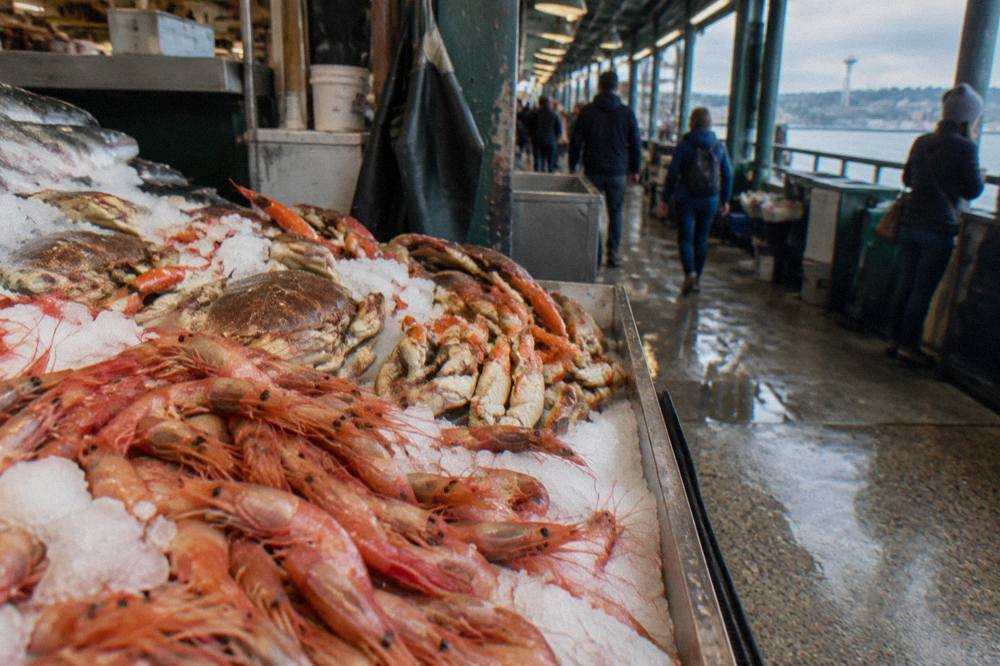
Pike Place Chowder is the name to know, and it appears verbatim on the stops list of two of the guided walks described on this site. A counter that shows up twice on different operators' routes is a counter doing volume, and volume at a chowder counter is usually a good sign for turnover and a bad sign for lines. The Market's own visitor guidance says mornings before noon are generally less crowded, and that advice applies doubly to any stop with a dedicated queue. The fish throwing at Pike Place Fish happens when a customer buys a fish, between 7 a.m. and 5 p.m. daily per the Market FAQ, so an early chowder run also catches the arcade at its most watchable.
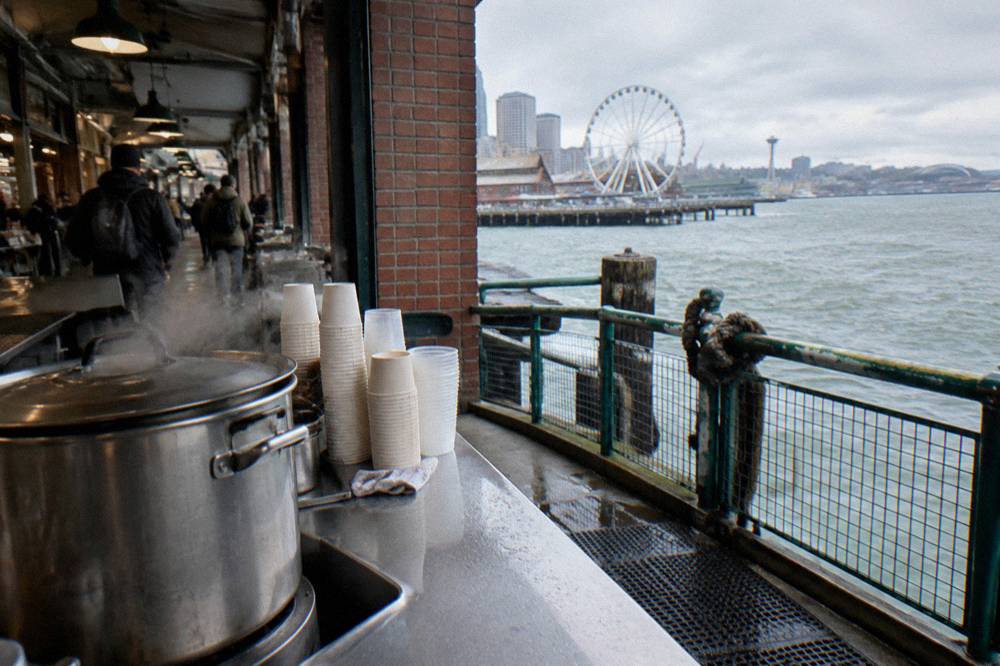
City Fish Co is the other counter the walks name, a working fishmonger where the fresh case is the draw. Then there is the sit-down tier: Matt's in the Market, Pasta Casalinga and MARKET Seafood Eatery all appear on guided routes as restaurant stops, and each gives you a chair and a table rather than a standing sample. The choice between counter and table is really a choice about time. A counter crawl of three cups takes an hour if the lines cooperate; one sit-down bowl takes the same hour and includes resting your feet.
The Market's hours shape all of this. It is open 363 days a year, closed only on Thanksgiving Day and Christmas Day, with most of the Market active from about 10 a.m. to 5 p.m. but breakfast, produce and seafood starting at 7 a.m. The crafts market runs 11 a.m. to 4 p.m., farm tables 9 a.m. to 4 p.m. The official Pike Place Market visitor FAQ carries the current version of all of this, and the plan your visit page is the right place to check anything time-sensitive.
| Stop type | Examples named on guided walks | What you get | Time cost |
|---|---|---|---|
| Standing chowder counter | Pike Place Chowder | A cup or bread bowl, eaten standing or at a ledge | Fast, line-dependent |
| Working fish counter | City Fish Co | Fresh seafood beside a full retail fish case | Short, browse the case |
| Market sit-down restaurant | Matt's in the Market, MARKET Seafood Eatery | A table, a menu, a sit-down meal | An hour or more |
| Downtown seafood bar | Zig Zag Cafe, The Athenian | Cocktails or a full plate | Evening-friendly |
One access note for the 2026 to 2027 season: the Market's street access pilot is in Phase 3 from October 1, 2026 to March 31, 2027. Pike Place itself is shared by vehicles and pedestrians Monday to Thursday, and from Friday to Sunday between 11 a.m. and 4 p.m. access at 1st Ave and Pike St is limited to deliveries, accessibility needs and pre-arranged pickups. None of that closes a chowder counter, but it can change how you approach the arcade on a winter weekend.
The guided version of this crawl is worth a look if you would rather someone else manage the lines, and the seafood long lunch is the one walk built entirely around this exact hunt. Its full listing is on the Seattle Seafood Tour page.
What Is A Bread Bowl And When Is It Worth It?
A bread bowl is clam chowder served inside a hollowed round of sourdough, and in Seattle it is a format choice more than a recipe: same soup, edible container. It is worth it when the bread is fresh and you are eating immediately; it is a soggy liability for anyone photographing, walking or splitting a bowl later.
The mechanics are unforgiving. A bread bowl holds its shape only briefly before the cream soaks the walls, and the last third of the bowl is always the best or the worst bite depending on your tolerance for soup-soaked crust. If your plan is to sit at a ledge and eat right away, the bread bowl is a two-course experience, chowder first and saturated sourdough after. If your plan is to carry the bowl to a viewpoint or eat while herding a family through an arcade, order the cup and buy the bread separately.
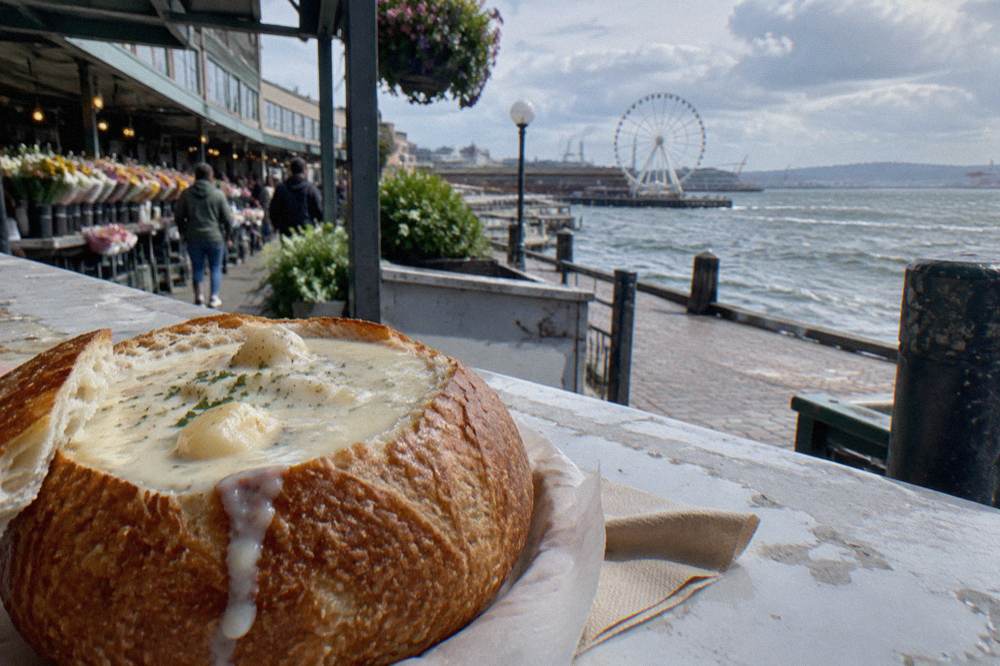
Seattle's sourdough tradition is real, which helps. Bakeries inside and around the Market keep sourdough in daily rotation, and the bakery stops named on the sweet-focused walks, Dahlia Bakery, Le Panier, Freya Bakery, Daily Dozen, are the same ecosystem a bread bowl draws from. No ranking settles which bakery's bowl is best, so treat bread bowl quality the way you treat any bakery claim: follow the smell and the queue of people carrying loaves.
There is also a sharing trick worth knowing. A cup plus a small loaf frequently outperforms a bread bowl for two people, because you control the soak ratio yourself, dunking bread into chowder rather than letting the structure fail on its own schedule. That is the move for couples and for anyone who wants the chowder experience without committing to a full bread cavity of soup.
Which Food Walks Actually Stop At A Chowder Counter?
Three guided walks in the Market name chowder stops outright: the chef-guided walk, the original tips-included tour and the eight-tastings walk. Two more touch the same territory, the Meet the Market walk stopping at the City Fish Co counter and the seafood long lunch being the only seafood-themed walk. Prices run from $58 to $119 per person, durations from 2 to 3 hours, and the walks are mostly standing-tasting formats, with the seafood long lunch built as a long lunch.
The chef-guided food tour of Pike Place Market is the most reviewed option on this site: rated 4.9 across 4,806 reviews, from $75 per person, 2 hours, starting at the corner of 1st Ave and Pine St. Its stop list names Pike Place Chowder and Beecher's Handmade Cheese among nine vendor stops, all standing tastings. It is a broad market walk that happens to include chowder, not a chowder tour, and that distinction matters if soup is your whole reason for booking. For a fuller picture of what to eat beyond the soup bowl, the guide to Seattle's must-eat dishes covers wild salmon, Dungeness crab and Capitol Hill coffee.
The Pike Place Market Original Food Tour, tips included, is the second heavyweight: rated 5.0 across 670 reviews, from $112 per person, 2 hours 15 minutes, starting on 1st Ave between Virginia and Lenora. Its listing describes 14 or more tastings from 8 vendors, and its stop list includes Pike Place Chowder, Mr. Fish Chips and Chowder, Daily Dozen and rachel's ginger beer. Gratuity is included in the price, which is the format difference its name advertises.
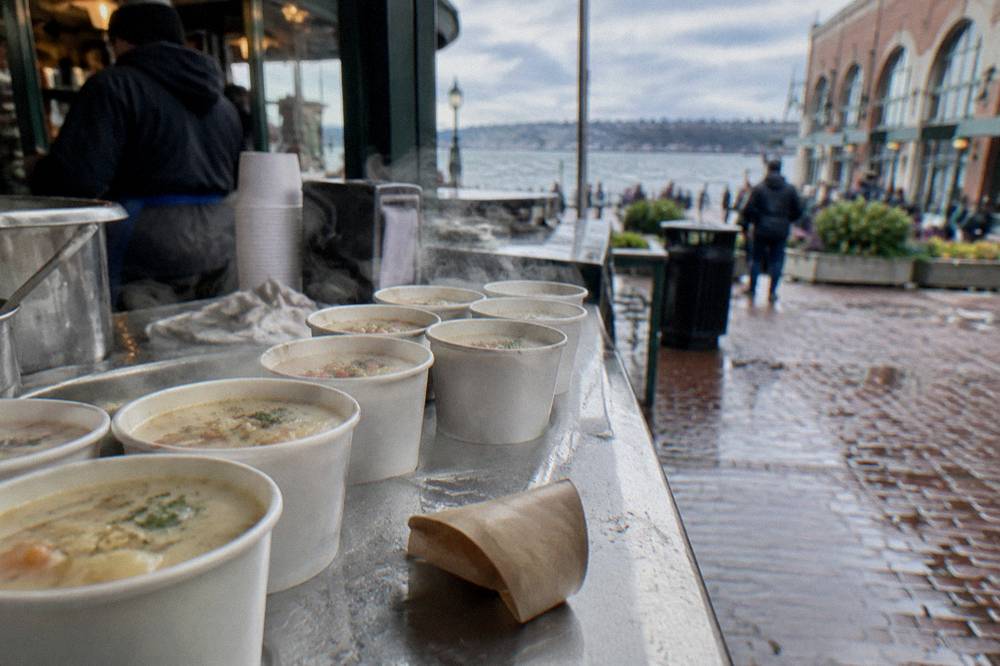
Meet the Market, the budget entry at from $58 per person and rated 4.7 across 457 reviews, runs 2 hours from outside The Crumpet Shop and stops at City Fish Co among its five named vendors. The eight-tastings walk, from $60, rated 4.8 across 129 reviews, is the longest Pike Place walk at 3 hours. And the seafood long lunch, from $119 and rated 4.7 across 40 reviews, is the only walk on this site whose whole theme is seafood: its line describes 8 seafood tastings across 6 restaurants over 2 hours 15 minutes, built as a long lunch rather than a standing crawl.
The Meet the Market walk suits a chowder-first plan on a budget: City Fish Co is the seafood stop, Honest Biscuits and The Crumpet Shop carry the carb side, and DeLaurenti is the grocery ending. Pickup and parking are not included, per the listing.
The Original tour's chowder coverage is double-stacked, Pike Place Chowder plus Mr. Fish Chips and Chowder, which is the most chowder per dollar of any stop list here once the 14-plus tastings are counted.
| Walk | Duration | Rating and reviews | From price | Chowder connection |
|---|---|---|---|---|
| Chef Guided Food Tour of Pike Place Market | 2 hours | 4.9 across 4,806 reviews | $75 per person | Pike Place Chowder named stop |
| Pike Place Market Original Food Tour | 2 hours 15 minutes | 5.0 across 670 reviews | $112 per person | Pike Place Chowder and Mr. Fish Chips and Chowder |
| Meet the Market Food and Fun | 2 hours | 4.7 across 457 reviews | $58 per person | City Fish Co stop |
| Pike Market Food Tour, 8 Tastings | 3 hours | 4.8 across 129 reviews | $60 per person | Market-wide stops, longest walk |
| Seattle Seafood Tour: A Long Lunch | 2 hours 15 minutes | 4.7 across 40 reviews | $119 per person | The only seafood-themed walk, 8 tastings, 6 restaurants |
Two boundaries worth stating plainly. None of these is an oyster-specific tour, and none of them leaves the Market or downtown seafood orbit. If your question is really oysters, the Seattle seafood walk guide on oysters and salmon covers that territory, and the counters and oyster bars guide maps the sit-down tier.
Pike Place Market Numbers For Chowder Planning
Days, hours, tax and group-size figures
- 363 days a yearDays Pike Place Market is openClosed only on Thanksgiving Day and Christmas Day
- 7 a.m.Breakfast, produce and seafood startThe Market says the shortest lines form before noon
- 10.55 percentSales tax added at the registerNot applied to tour prices
- 16 peoplePer-guide cap on permitted Market walks
- more than 220Shops and restaurants in the Market
What Should You Skip When Chasing Clam Chowder In Seattle?
Skip three things: the middle-of-the-day queue at the single most famous counter when a five-minute-away equivalent exists, any bread bowl you plan to eat later rather than immediately, and any tour booked on the promise of a specific fish or crab on a specific date. Seasons and runs move. The chowder case, not the calendar, tells you what is in the pot.
The queue problem is arithmetic. The Market is fullest from Thursday through Monday, per its own guidance, and the 11 a.m. to 4 p.m. window overlaps the craft market, the farm tables and every tour group's mid-morning slot. A chowder counter at 1 p.m. on a Saturday is a different venue from the same counter at 8:30 a.m. If your schedule allows only an afternoon, a sit-down market restaurant often beats the famous standing counter on total time, chair included.
The date-promise problem is about biology and regulation, not marketing. Dungeness seasons are quota-managed, marine area by marine area, and 2026 winter openings in Seattle's own area were still pending quota accounting. Copper River salmon dates, similarly, are reported events rather than fixed ones: the 2026 opener was reported for May 22 with Seattle arrivals around May 27. Any operator promising you a specific run or a crab week is promising something the state manages in-season. Book the walk for the walk.
The third skip is subtler: do not buy a non-chowder tour and expect chowder. The wine and falls day trips from $135 and $140 include no meal. The Woodinville wine tours are wine tours. The coffee walks are coffee. The happy hour walk in the Market is the one edge case: from $30 per person, 2 hours, snacks included but alcoholic drinks bought separately by guests at a discounted rate, with The Athenian among its stops. That is a bar-forward walk with a chowder-capable venue in the route, not a soup tour.
Its stop list runs through The Athenian Seafood Restaurant and Bar, a Market institution of the sit-down tier, so it works as an evening chowder-adjacent option for travelers whose soup window is after 5 p.m.
| Temptation | The catch | Better move |
|---|---|---|
| Famous counter at 1 p.m. Saturday | Peak queue, peak crowd | Same counter before 10 a.m., or a sit-down market restaurant |
| Bread bowl carried anywhere | Soaks through quickly | Cup now, fresh loaf separately |
| Booking a tour for a specific fish date | Runs and crab seasons are quota-managed | Book the walk's format, eat what the case holds |
| Wine day trip for the food | Day trips from $135 and up include no meal | A market walk from $58 that includes tastings |
How Do You Build A Chowder Day Around The Market?
A workable chowder day starts before 10 a.m. at the Market's seafood arcades, rides the quiet-window crowd advice, moves to a sit-down seafood lunch or the guided long lunch, and ends on the waterfront, which sits a short walk downhill. Link light rail is $3.00 adult one-way, a King County Metro ride is $3.00, and the walk from downtown hotels is often shorter than the transit math suggests.
Morning is the structural advantage. Seafood and breakfast stalls open at 7 a.m., the full Market wakes around 10, and the before-noon window is the Market's own recommendation for thinner crowds. A first cup at a counter, a lap of the fish cases while the arcades are still navigable, and a second sit-down bowl or a long lunch walk covers the whole chowder spectrum in half a day. Transit is easy: King County Metro adult rides are $3.00 with a $6.00 regional day pass, and Sound Transit's Link light rail is $3.00 adult one-way with youth 18 and under free.
Afternoon options split by energy level. The Market's Overlook Walk connects to the waterfront, where Waterfront Park is open daily 7 a.m. to 10 p.m. and the Ivar's name has anchored Pier 54 since 1946. A rainy afternoon, and November is Seattle's wettest month at 6.31 inches on average per the NOAA 1991 to 2020 normals at Sea-Tac, is honestly a chowder afternoon: soup weather is the local default from October through March, with November, December and January all averaging well over five inches of rain.
For trip timing beyond the day, two calendar anchors matter. Seattle Restaurant Week's fall 2026 edition ran October 18 to 31 with $20, $35, $50 and $65 prix-fixe tiers, and a spring 2027 edition is announced without dates yet. And the cruise season, which swells the downtown lunch crowd, ran April 17 into October in 2026 with a record 330 ship calls. November through spring is the quiet, soup-forward season: 39.7 million people visited Seattle and King County in 2025, but very few of them line up at a chowder counter in February.
| Time block | What to do | Why it works |
|---|---|---|
| 7 to 10 a.m. | Counter chowder and fish cases at Pike Place | Seafood stalls open at 7, crowds arrive later |
| 10 a.m. to 1 p.m. | Guided walk, or sit-down bowl at a market restaurant | Full Market active, tours running |
| Afternoon | Overlook Walk to the waterfront, Waterfront Park | Open daily 7 a.m. to 10 p.m., downhill stroll |
| Evening | Happy hour walk or a seafood bar | Bars run later than the stalls |
Is A Guided Chowder Walk Better Than Going Alone?
A guided walk beats a solo crawl when you want lines managed, vendors explained and a fixed price; going alone wins on pace, portion control and budget. The cheapest chowder-inclusive walk is from $58 and the sit-down seafood long lunch is from $119, while a solo two-counter crawl costs only the soup, tax and transit, and you set the pace.
The guided case comes down to logistics. Walks start at named meeting points, the north end of 1st Ave for several of them, and a guide who knows which counter moves fast at 11 a.m. is genuinely saving you time. The permitted format also puts you in groups of 16 or fewer inside the Market, which is a calmer way to move through crowded arcades than a self-formed herd. And the standing-tasting format of the chef-guided and original tours means you sample broadly, chowder included, without committing to any single restaurant.
The solo case comes down to appetite and control. Nothing stops you from walking the same arcades free, and the free things to do in Pike Place Market guide covers what costs nothing, including the sample culture that makes chowder hunting cheap. The middle path is the one many visitors land on: one guided walk for the structure, then a solo evening bowl at a sit-down spot, using the Pike Place Market restaurant guide for the table half.
For most first-time visitors with one market morning, the guided version is the safer bet: the stops are booked, the chowder pour is included in the ticket, and the from-price is known before you leave the hotel. For repeat visitors, families with picky eaters and anyone whose itinerary is already tour-heavy, the solo crawl plus one good sit-down bowl is the better day. Whichever you choose, book the walk before you travel in peak season; the small permitted groups mean the popular morning slots fill first, and every walk here can be checked on its own booking page with free cancellation terms stated there.
Common Questions About Clam Chowder In Seattle
Where Is The Most Famous Clam Chowder In Seattle?
Pike Place Chowder, inside Pike Place Market, is the name that appears on the stop lists of two different guided walks, which is the strongest fame signal among the stops named here. City Fish Co is the other counter the walks name. Eat at either before 10 a.m. if you can; the Market itself says mornings before noon are generally less crowded.
Can You Try Clam Chowder On A Guided Food Walk?
Yes. Three walks name chowder stops outright, from $60 to $112 per person, and the seafood long lunch, the only seafood-themed walk, is from $119. The chef-guided walk is rated 4.9 across 4,806 reviews and includes Pike Place Chowder among nine standing tastings.
Is A Bread Bowl Worth It For Clam Chowder?
Only if you eat it immediately. A sourdough bread bowl loses its structure quickly as the cream soaks through, so it suits a sit-and-eat stop, not a walking tour. For two people, a cup plus a small fresh loaf usually works better, since you control the dunking.
When Is Clam Chowder Season In Seattle?
Clam chowder itself has no season; New England-style bowls pour year-round. The seasonal layers are Dungeness crab chowder, which follows quota-managed crab openings, and the fall-to-spring stretch when cold water firms up oyster flavor. Rainy November through February is peak soup weather, with November averaging 6.31 inches of rain.
How Much Does A Chowder-Focused Tour Cost?
The market walks with a chowder connection run from $58 to $112 per person for 2 to 3 hours, and the seafood long lunch, the only seafood-themed walk, is from $119 per person for 2 hours 15 minutes. All prices are per-person from-prices as listed.
Is Pike Place Market Open Every Day?
Almost. The Market is open 363 days a year, closing only on Thanksgiving Day and Christmas Day. Seafood and breakfast stalls start at 7 a.m., most of the Market runs about 10 a.m. to 5 p.m., and some restaurants stay open until midnight or later.