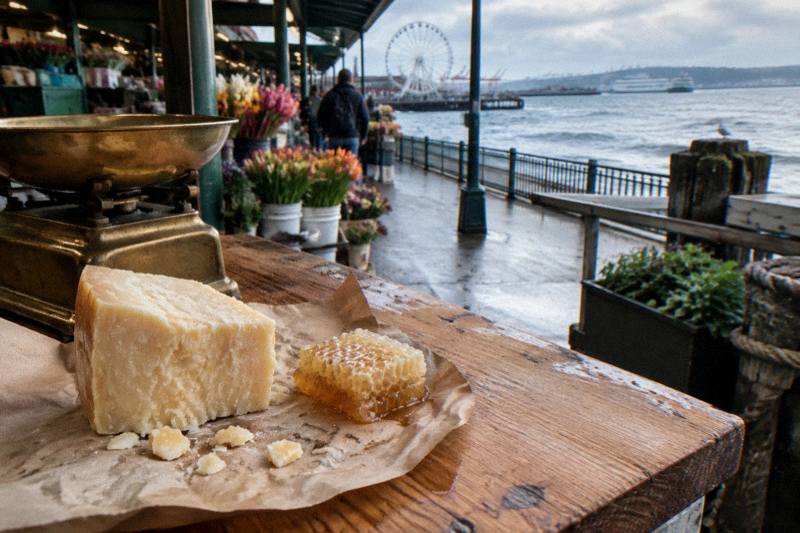
What Is A Must Eat In Seattle?
The dishes, snacks and drinks that define eating in Seattle, from Pike Place chowder and Beecher's cheese to wild salmon, Dungeness crab and Capitol Hill coffee.
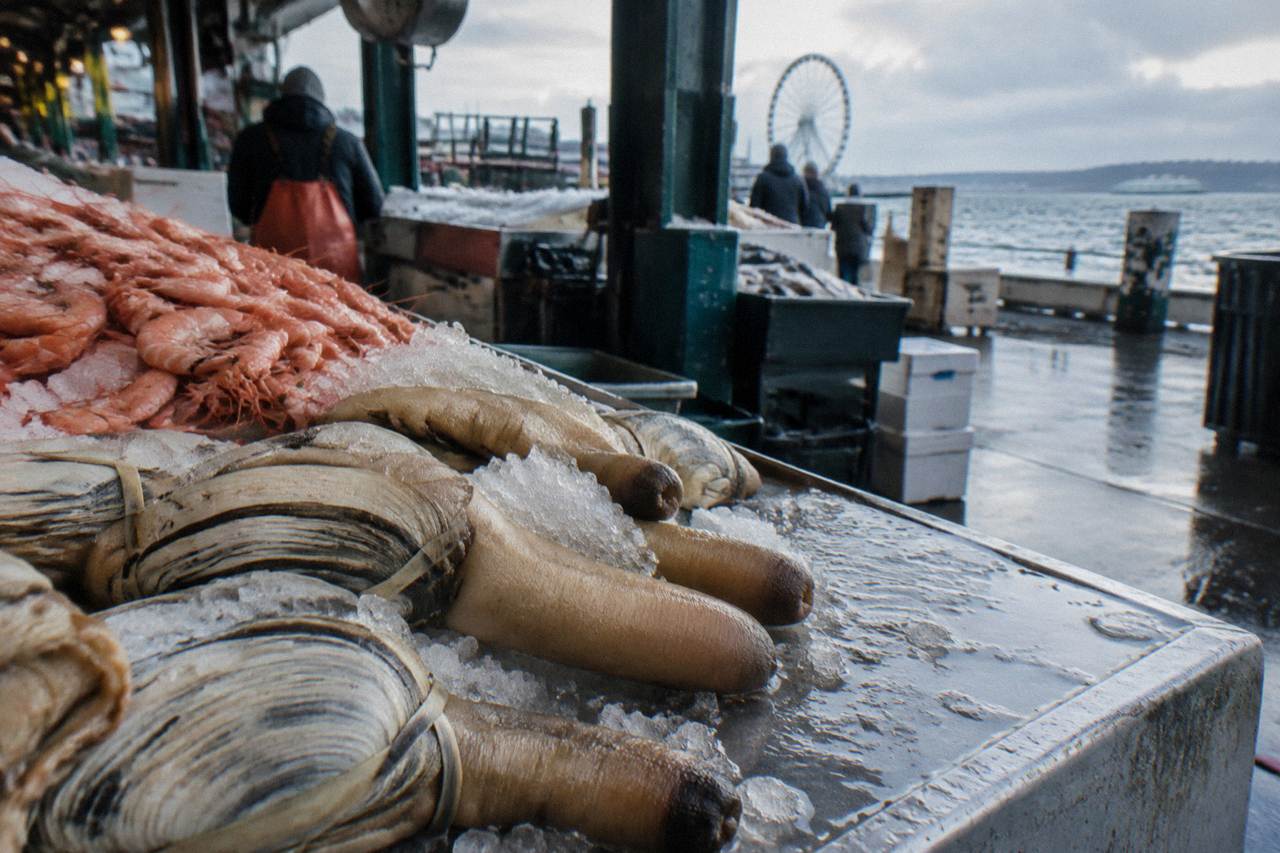
The single must eat in Seattle is a cup of clam chowder at Pike Place Market, and it is best treated as the anchor of one full visit there. If your appetite allows, follow it with cheese from Beecher's and a doughnut from Daily Dozen in the same trip around the market. Chowder is the city's most repeated food answer, the Market is where most visitors taste it first, and a two hour walk can add cheese, chocolate and coffee in one loop around the stalls. Beyond the Market, wild salmon, Dungeness crab and oysters in the cold months, plus Capitol Hill espresso and teriyaki citywide, complete the list for anyone eating seriously in the city. To see how far that reputation reaches beyond the Market stalls, read the case for Seattle as a true food destination.
That answer is deliberately narrow. Seattle's food identity spreads across a market district that has operated since August 17, 1907, when six to twelve farmers brought produce wagons to Pike Place, and across neighborhoods from Ballard to the Chinatown-International District. The Market itself now counts more than 220 independently owned shops and restaurants, 70-plus farmers and 150 to 180 craftspeople on its own pages, which is why a single dish only scratches it. A realistic must-eat plan touches four bases: the Market classics, wild Pacific salmon, shellfish in season, and the coffee culture that grew out of Starbucks, which opened in 1971; its 1912 Pike Place store is its oldest still operating. Once the main meals are planned, a companion piece on the snack crawl from market chowder and cheese curds to warm donuts covers the quick bites that fill the gaps between them.
The practical question is how much of that list you can eat in the time you have. The walks are not the only way, but they solve the one problem the Market poses for first timers: it is loud, vertical and enormous.
Three options fit most itineraries, and they map onto the must-eat list directly.
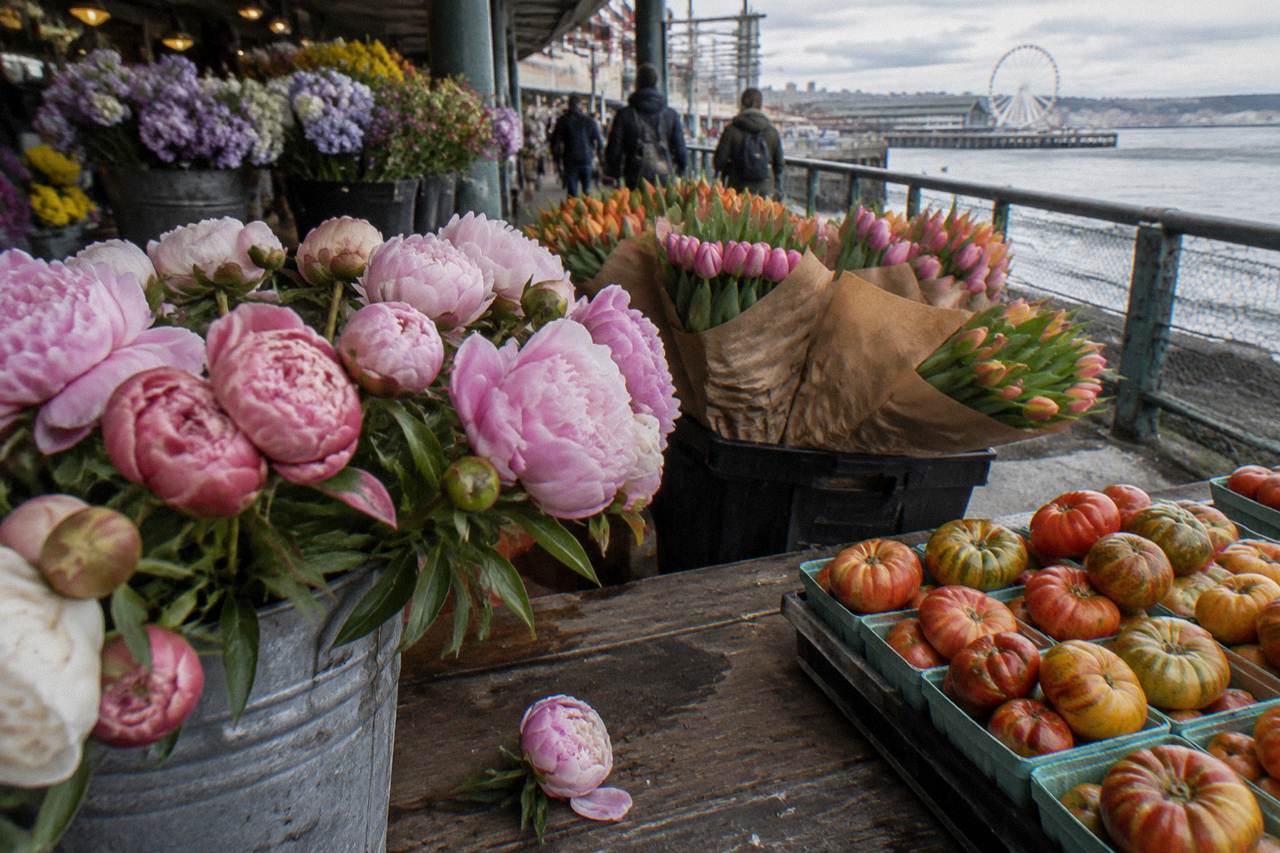
The rest of this page goes dish by dish, keeps to what the research supports, and links each food to the guide that owns the detail, starting with the Market itself. The Pike Place Market food guide breaks the Market down stall by stall for readers who want the long version.
Which Pike Place Market Foods Belong On A Seattle Must Eat List?
Four Pike Place Market foods belong on any Seattle must-eat list: clam chowder, cheese from Beecher's Handmade Cheese, a Daily Dozen doughnut, and something from the fresh fish counters. Piroshky and chocolate also deserve attention, earning their places as strong bench players on the list. Chowder and cheese are the two most named items in the city, the doughnut works because Daily Dozen makes them hot in front of you, and the fish counters anchor the Market's working identity as a place where food is thrown, sold and shucked. All four sit within a five minute walk of each other. Curious which of these bites went viral beyond the Market itself, the guide to Seattle's internet-famous foods traces the flying fish, the mac and cheese, and the donut moments that took over feeds everywhere.
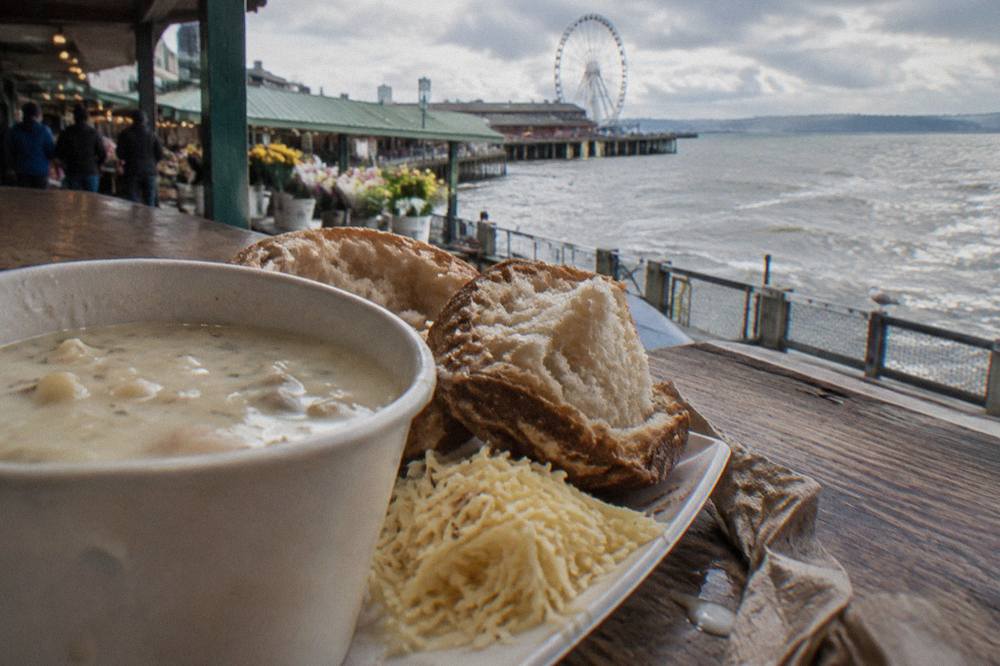
The chowder answer is the strongest one. Pike Place Chowder appears on more than one of the guided walks covered on this site, including the Original Food Tour and the Chef Guided Food Tour, and it appears on two of the Market walks. The Market's own visitor guidance notes that mornings before noon are generally less crowded, and that fish throwing at Pike Place Fish happens when a customer buys a fish, between 7 a.m. and 5 p.m. daily. Those two facts shape any chowder-and-fish-counter morning.
Beecher's belongs on the list because it is both a working cheese kitchen and a Market fixture; it appears on the Chef Guided Food Tour's stop list alongside maíz, the waterfront and Indi Chocolate. Piroshky bakeries, covered in detail in piroshky and Pike Place bakeries, what to order, are the carbohydrate entry, and the chocolate stops, from Indi Chocolate to the specialists on the chocolate walks, cover the sweet tooth. The free things to do in the Market guide adds the zero-cost layer: samples and buskers, of which the Market permits more than 60.
The Market's schedule matters more than visitors expect. It is open 363 days a year, closed only on Thanksgiving and Christmas, with most of it active about 10 a.m. to 5 p.m., breakfast and produce and seafood from 7 a.m., and the crafts market from 11 a.m. to 4 p.m. A street access pilot is also running: Phase 3 runs October 1, 2026 to March 31, 2027, with Pike Place shared by cars and pedestrians Monday to Thursday, and access limited Friday to Sunday between 11 a.m. and 4 p.m. at 1st Ave and Pike St. The Market's plan your visit page carries the current version of all of this.
| Pike Place must eat | What it is | Where it fits |
|---|---|---|
| Clam chowder | Creamy New England style cup, the city's most repeated answer | Pike Place Chowder, on multiple guided walk routes |
| Beecher's cheese | Working cheese kitchen at Pike Place | Beecher's Handmade Cheese, a stop on the Chef Guided tour |
| Daily Dozen doughnut | Small hot doughnuts made in view | Daily Dozen, served on three walk routes |
| Fresh fish counter | Working throw-the-fish stalls, salmon and crab in season | Pike Place Fish, throws happen on purchase, 7 a.m. to 5 p.m. |
| Piroshky | Russian style filled bakes | Covered in the bakeries guide |
If you would rather have a guide thread these together, the chef-guided option is the one that matches the list most closely.
Check availability beside the Chef Guided Food Tour of Pike Place Market, which runs two hours from $75 per person, is rated 4.9 across 4,806 reviews, and starts at the corner of 1st Ave and Pine St.
Where Can You Eat Wild Salmon And Dungeness Crab In Seattle?
Wild salmon is the must-eat that most defines Seattle's regional cooking, and Dungeness crab is its seasonal companion; the seafood that matters here is Pacific, not Atlantic, and the five Alaska species, Chinook, sockeye, coho, pink and chum, all reach the city's counters and restaurants. Salmon lands in the Market's fish stalls and on restaurant plates year-round in smoked and frozen form, with fresh Copper River sockeye and king arriving late each spring. Crab is quota-managed and strictly seasonal.
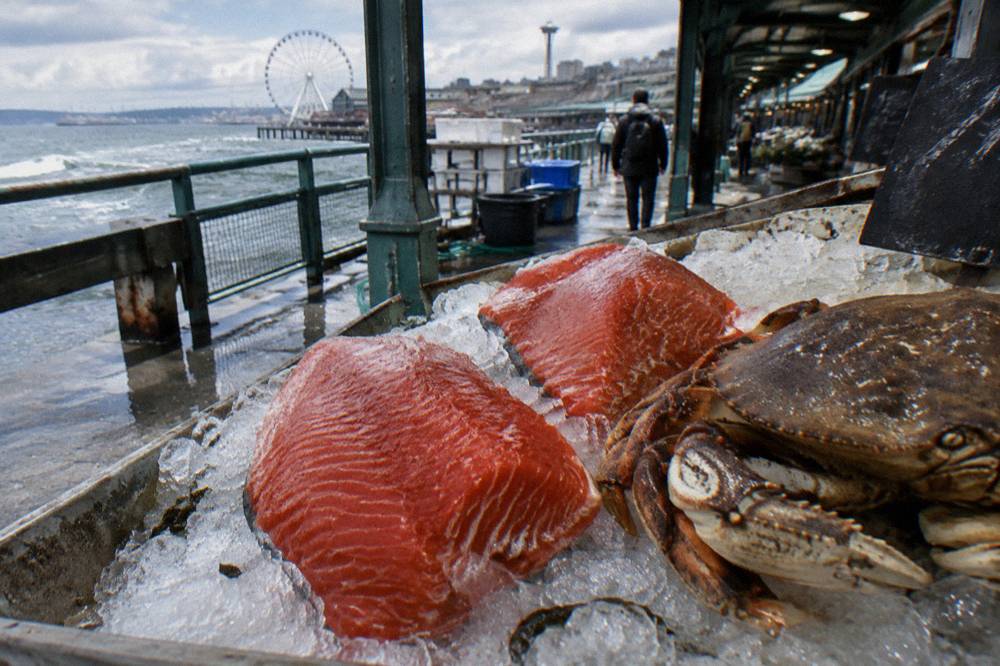
The calendar is the part outsiders miss. The 2026 Copper River commercial fishery opened May 22, with the first fresh fish reaching Seattle around May 27 and the first restaurant plates around June 1; that window, repeated in some form each year, is when "fresh wild king" claims are most trustworthy. Dungeness seasons are quota-managed and shift: in 2026, Seattle's own marine area, Area 10, allowed recreational crabbing Sundays and Mondays only, July 5 to September 7, and winter seasons vary by area. Nobody can promise crab on a date, but a summer visit has the best odds and a fall-to-spring visit has the best oysters, since farmed oysters run year-round while the cold-water months, roughly September to April, are the traditional peak for firm, briny flavor.
Where you eat it splits three ways, and each has an owning guide. Market counters and fish stalls are covered in wild salmon in Seattle, where to eat it and where to buy it and Dungeness crab and geoduck in Seattle. Oyster bars get their own treatment in Seattle oysters, where to slurp, and the broader counter-to-restaurant sweep lives in best seafood in Seattle. One walk also turns the whole subject into a meal.
The Seattle Seafood Tour, a long lunch of market-fresh tastings, runs 2 hours 15 minutes from $119 per person, is rated 4.7 across 40 reviews, and is the only seafood-themed walk on the site: eight seafood tastings across six restaurants, market and downtown, starting at the Market's north end on 1st Ave. It is a brunch-scale meal rather than a snack run, and it does not promise oysters or any single dish on a given day.
| Seafood must eat | Season window | Best format |
|---|---|---|
| Copper River sockeye and king | First fresh fish arrives late May, runs summer | Restaurant plates and Market pre-orders |
| Wild salmon generally | Year-round smoked, cured and frozen; fresh in season | Market counters and sit-down spots |
| Dungeness crab | Quota-managed summer and winter windows, vary by area | Counters and crab rolls, no date promises |
| Farmed oysters | Year-round, peak roughly September to April | Oyster bars, cold months best |
What Coffee And Sweets Should You Eat In Seattle?
Seattle's must-drink is espresso, so order that when you need your coffee fix. For sweets, the right treat depends on your neighborhood: downtown calls for a hot doughnut, while a chocolate tasting that starts at a bakery and ends in the Market makes the perfect finish elsewhere. Starbucks opened in 1971 and its Pike Place store at 1912 Pike Place is the company's oldest still operating, and the independents that followed, Espresso Vivace in 1988, Caffe Vita in 1995, Victrola in 2000, still define how the city tastes and roasts. Sweets split between doughnuts and bean-to-bar chocolate.
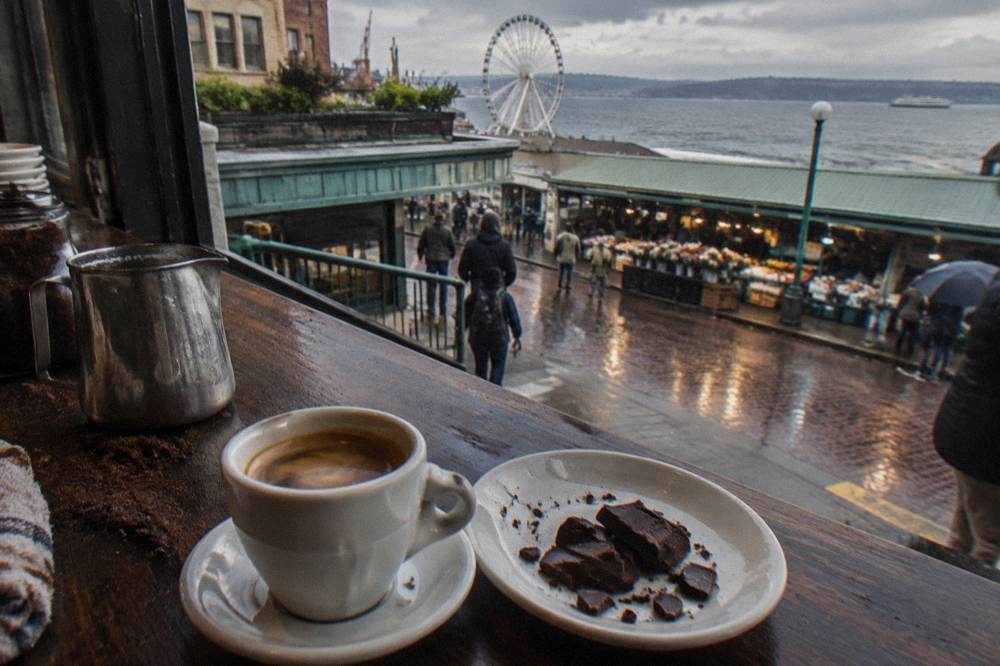
Capitol Hill is where coffee culture is most itself, and one walk covers it properly.
The Seattle Coffee Tour on Capitol Hill runs two hours from $49.30 per person, is rated a perfect 5.0 across 833 reviews, and starts at the Jimi Hendrix statue on Broadway. It is drinks only: no food is included, so plan it as a morning of tastings rather than a meal. A budget-priced alternative, the Seattle Coffee Walking Tour, also runs Capitol Hill from $39.99 per person with a 5.0 rating across 78 reviews. For tasting coffee the analytical way, coffee cupping in Seattle explains the format, and the best roasters covers who to detour for.
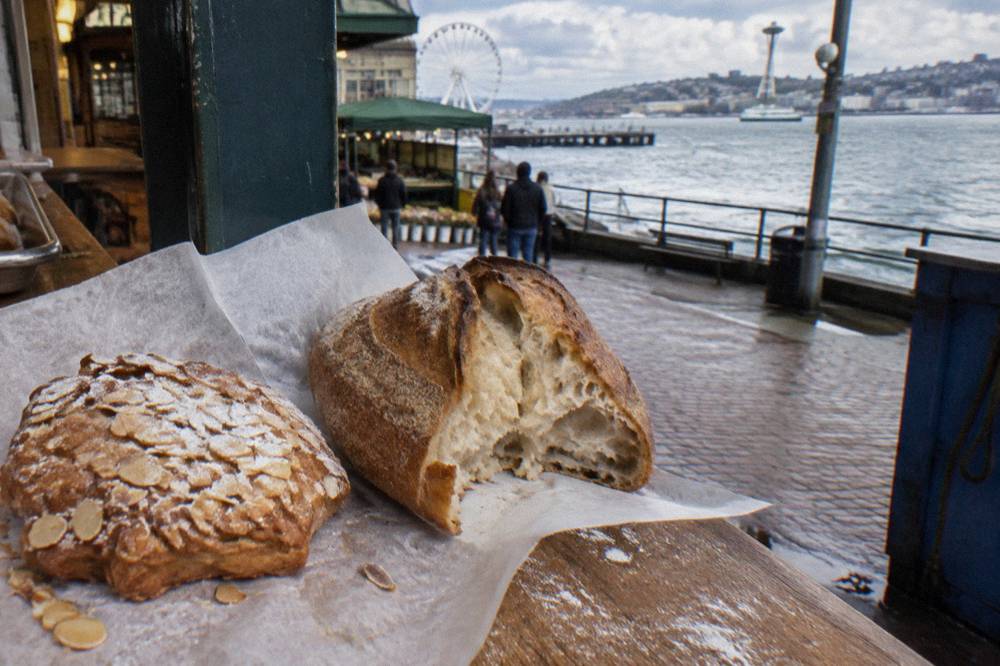
On the sweet side, the honest must-eats are the ones with stops on the tours listed here. Seattle's Sweetest Food Tour runs donuts and beignets from $65 per person, rated 4.9 across 1,018 reviews, starting at Top Pot downtown and walking toward the Amazon Spheres area. The Chocolate Tour with guided tastings, from $76 and rated 4.8 across 244 reviews, starts at Dahlia Bakery downtown and threads through the Market's chocolate specialists. The Seattle donuts and bakeries guide and the chocolate tour guide hold the detail.
One piece of local trivia worth knowing at the register: Seattle applies a sweetened beverage tax of 1.75 cents per ounce, paid by distributors, and it covers presweetened coffees and teas, while a standard milk-primary latte is generally excluded. It is a distributor tax, not a menu surcharge, but it explains some of the price texture around sweet drinks.
| Coffee or sweet | What it is | How to taste it |
|---|---|---|
| Capitol Hill espresso | Independent roaster and cafe culture | Coffee tours from $39.99 and $49.30, drinks only |
| Hot doughnuts and beignets | Downtown to Amazon Spheres sweet walk | Sweetest tour, $65, 4.9 across 1,018 reviews |
| Bean-to-bar chocolate | Bakery start, Market chocolate stops | Chocolate tour, $76, 4.8 across 244 reviews |
| Original Starbucks | Oldest operating store, 1912 Pike Place | Free to visit; line advice in the coffee guide |
Which Neighborhood Foods Are Must Eats In Seattle?
Beyond the Market, the essential neighborhood eats are teriyaki citywide, dim sum around King and Jackson streets, and bakery goods in Ballard. Round out the list with anything from the farmers markets that run most weekends in five neighborhoods. Teriyaki is the one dish actually invented in Seattle's own restaurant culture, dim sum anchors the district that grew after the Jackson Street regrade around 1910, and Ballard pairs a year-round Sunday market with more than a dozen breweries inside about a mile of cobblestones. Each neighborhood earns a dedicated trip rather than a drive-by.
The Chinatown-International District rewards a full afternoon. Tai Tung, established 1935 at 655 S King St, is the district's oldest surviving Chinese restaurant; Kau Kau BBQ has sold Cantonese barbecue at 656 S King St since 1974; Dim Sum King opened in 2009 in the Bush Hotel; and Uwajimaya, which began in Tacoma in 1928, runs the food market that ties the district together. The Wing Luke Museum, in the 1910 East Kong Yick Building since 2008, sits inside the same blocks. The international district food walk and the dim sum guide own the dish-by-dish detail, and Seattle teriyaki covers the city's genuine invention.
Ballard works as a Sunday pairing because the farmers market, 9 a.m. to 2 p.m. year-round on the cobblestones of Ballard Ave NW, sits inside walking distance of the brewery district. The Seattle Farmers Markets organizer page lists all the days: University District Saturdays 9 to 2, West Seattle and Capitol Hill and Fremont on Sundays. The Ballard food walk and the farmers markets by day guide lay out the routes.
Neighborhood walks that tie food to streets exist beyond the Market too, from Capitol Hill brunch crawls to Pioneer Square pubs; the full map lives in Seattle food by neighborhood. What the neighborhood list adds up to is simple: the must-eat question is really a must-eat-in-which-neighborhood question, and the answer depends on which day of the week you have free.
How Do You Turn The Seattle Must Eat List Into One Day?
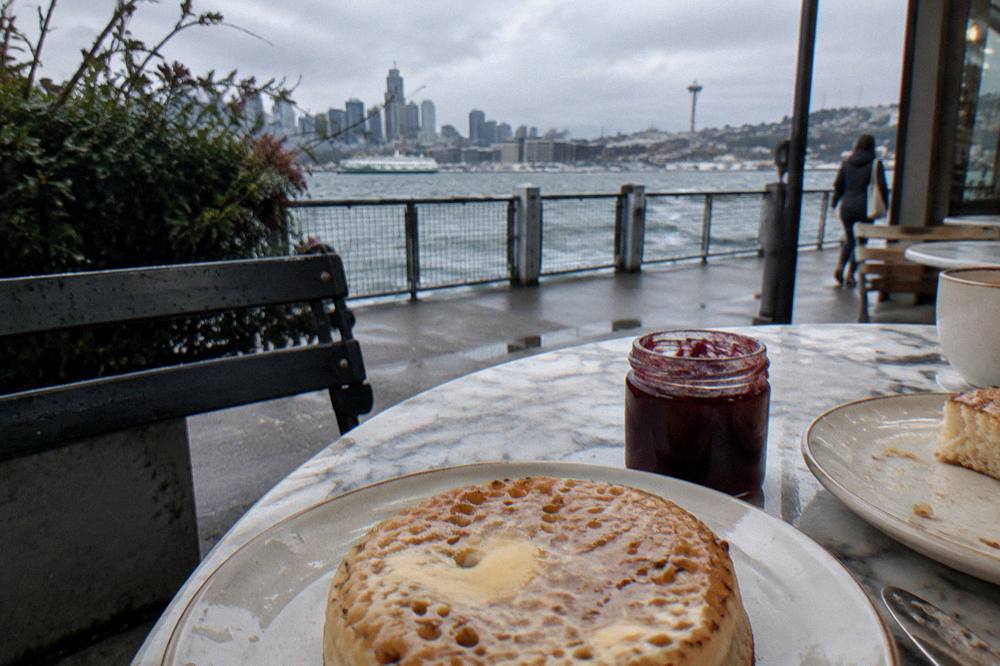
A one-day must-eat plan works best as a morning in the Market, a midday seafood lunch, an afternoon coffee stop on Capitol Hill, and an evening of dim sum around King and Jackson streets or teriyaki citywide, in that order, because each stop matches when it is at its best. The Market is calm before noon, seafood lunches run early afternoon, coffee carries the mid-afternoon dip, and the ID eats late. Two guided walks can cover three of the four blocks.
Timing rules do most of the work. The Market's seafood and produce counters open at 7 a.m., and the Market itself reports mornings before noon as the less crowded window; the street access pilot limits vehicle access at 1st Ave and Pike St on Friday to Sunday afternoons, which argues for a morning visit through March 2027. Getting between neighborhoods needs no car: a King County Metro ride is $3.00 for adults, a regional day pass is $6.00, and Link light rail runs $3.00 one-way with youth 18 and under free. If your day starts from a cruise berth, a Seattle cruise day food plan does the timing math for a ship schedule.
Budget realistically. Sales tax of 10.55 percent is added at the register on restaurant meals, so menu prices read lower than the check. Tipping is not mandated and practice varies. A tasting walk bundles many of the single-price stops into one ticket: the Pike Place options run from $50 to $160 per person depending on length and inclusions, and the seafood long-lunch tour covers a full meal at $119. The what a food walk costs guide itemizes every option.
Here is the day in compressed form, with the two walks that fit it.
One honest caveat closes the planning: no dish is guaranteed on any day. Fish counters sell what the boats brought, seasonal windows move, and the Market's own FAQ says fish throwing happens when someone buys a fish, not on a schedule. The must-eat list is a set of strong probabilities, not a promise, and the walks that serve them say as much in their own inclusions.
Common Questions About Must Eats In Seattle
What Is A Must Eat In Seattle?
A cup of clam chowder at Pike Place Market is the single most repeated answer, ideally with Beecher's cheese and a Daily Dozen doughnut in the same visit. Wild salmon, Dungeness crab in season, Capitol Hill espresso and dim sum in the Chinatown-International District complete the list.
Is Pike Place Market Worth Visiting For Food?
Yes. The Market has run since 1907, holds more than 220 independent shops and restaurants, and opens 363 days a year. Most of it is active 10 a.m. to 5 p.m., with breakfast, produce and seafood from 7 a.m., and mornings before noon are generally less crowded.
When Is Salmon Season In Seattle?
Fresh Copper River sockeye and king typically arrive in late May; in 2026 the fishery opened May 22 and the first fresh fish reached Seattle around May 27. Smoked, cured and frozen wild salmon is available year-round at Market counters.
What Food Was Invented In Seattle?
Seattle-style teriyaki, the chicken-and-rice plate format that spread from the city's own restaurant culture, is the dish most credibly invented there. Starbucks opened in 1971; its Pike Place store at 1912 Pike Place is the company's oldest still operating.
Can You Try Several Must-Eat Dishes In One Tour?
Yes. The Chef Guided Food Tour of Pike Place Market covers nine vendor stops, including Pike Place Chowder and Beecher's, in two hours from $75 per person. The seafood long-lunch tour covers eight seafood tastings across six restaurants for a full meal format.
Do I Need A Car To Eat Across Seattle?
No. King County Metro rides are $3.00 for adults, Link light rail is $3.00 one-way with youth 18 and under free, and a regional day pass is $6.00. The Market, Capitol Hill and the Chinatown-International District all sit on frequent transit lines from downtown.