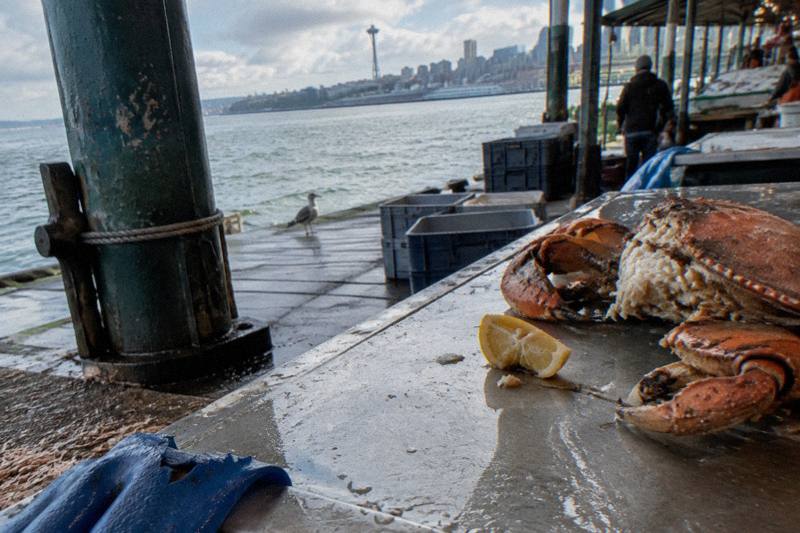
Best Seafood In Seattle: Counters, Oyster Bars And Markets
Seattle's seafood reputation rests on three things: a 119-year-old public market, cold Pacific water within a short drive of the docks, and a row of raw bars and chowder counters packed into a few walkable blocks. Here is how to work through the counters, the oyster bars and the market stalls without wasting a stop.
Short answer
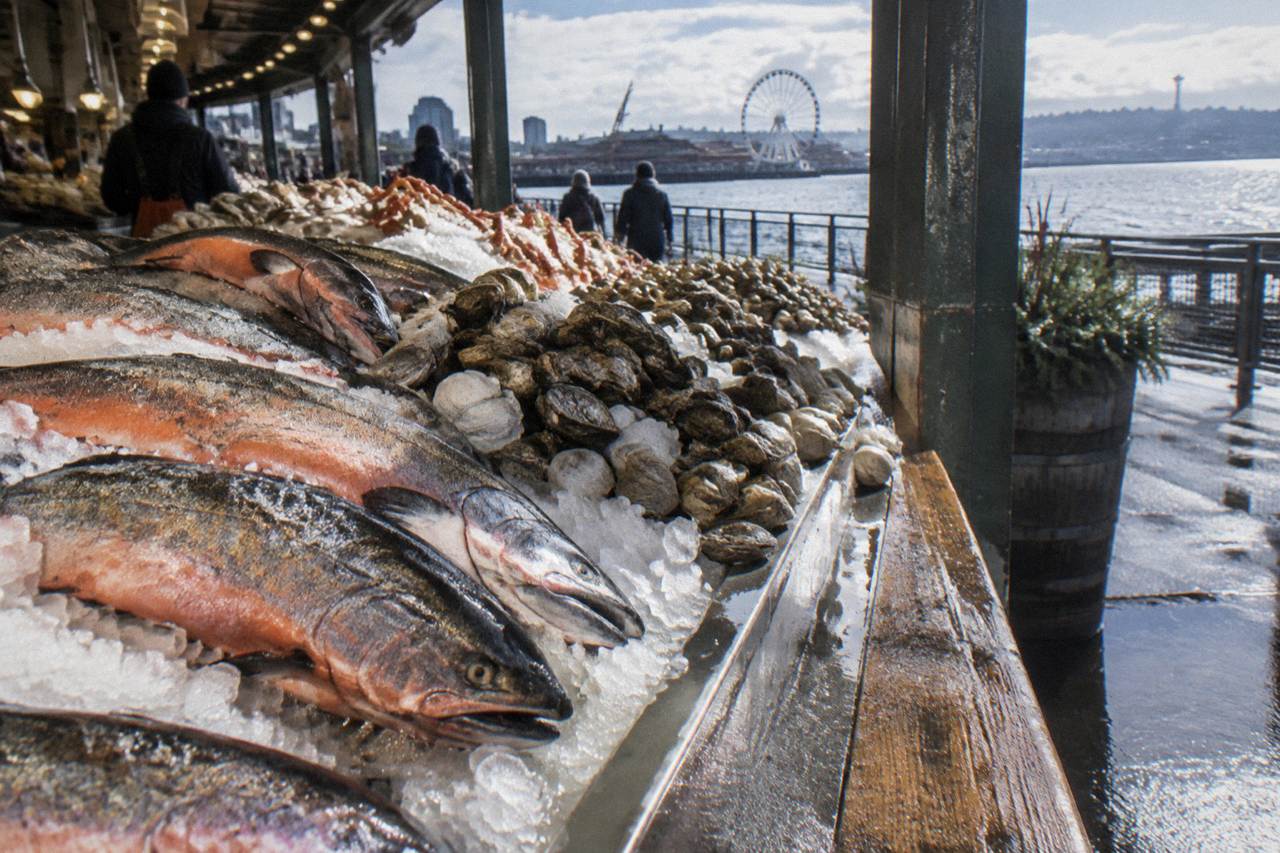
Start at Pike Place Market, where fishmongers lay out salmon and shellfish from 7 a.m. Follow with an oyster bar stop, where farmed Puget Sound oysters are shucked year-round. A guided option, the seafood-tasting long lunch, runs from $119 per person for 2 hours 15 minutes.
Seattle's seafood scene is not one restaurant or one dish. It is a system: boats land at the waterfront, fish moves a few blocks uphill to Pike Place Market stalls, and the cold-water calendar decides what is worth ordering in any given month. The city's most famous fish counter throws salmon across its stall, and the oyster bars shuck shells farmed in the same Puget Sound many diners look at while eating. This guide walks through the three seafood venues that matter, market counters, oyster bars and neighborhood fish stops, and closes with the guided walks that connect them in a single afternoon.
Where Can You Find The Best Seafood In Seattle?
The best seafood in Seattle concentrates in four places: Pike Place Market's fish counters and chowder stalls, the downtown oyster bars a short walk away, the waterfront piers below the Market, and the Ballard seafood kitchens near the fishing fleet's home docks. Each suits a different appetite, and most visitors can cover two of them on foot in one day. For the spots residents return to between those stops, the local's guide to eating in Seattle rounds up the neighborhood counters and markets most visitors never hear about.
The Market is the anchor. It opened on August 17, 1907, when six to twelve farmers rolled produce wagons onto Pike Place, and it has run 363 days a year ever since, closing only on Thanksgiving Day and Christmas Day. Seafood is part of its rhythm: fresh fish and produce start at 7 a.m., while most of the Market warms up around 10 a.m. and winds down at 5 p.m., with some restaurants open far later. The Market's own visitor guidance says mornings before noon are generally less crowded, which matters if you want to see the fish counters at their calmest and coldest.
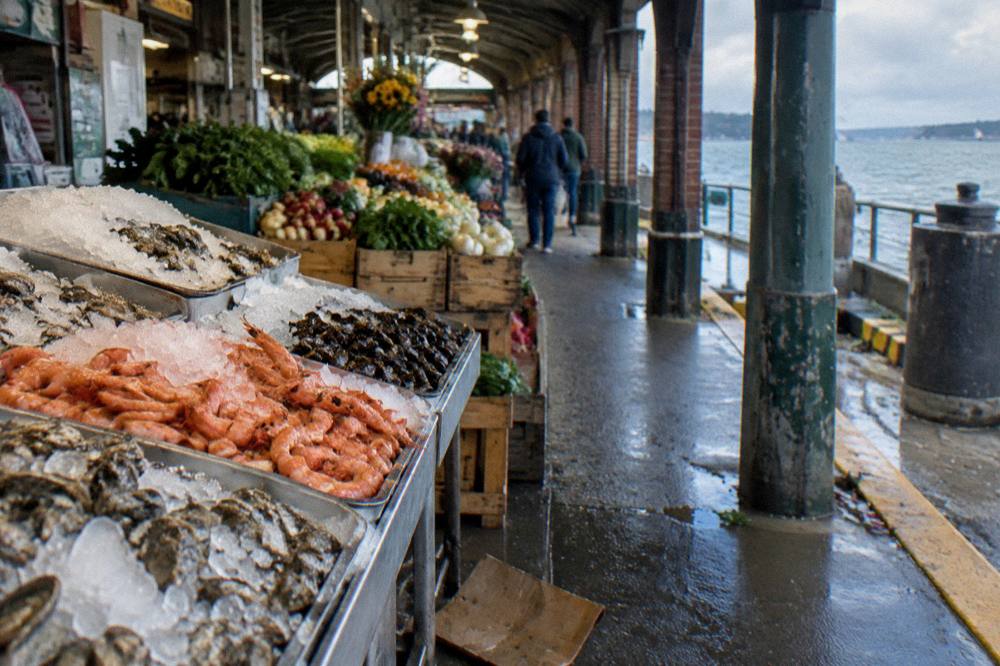
Below the Market, the waterfront holds its own seafood history. Ivar's Acres of Clams opened on Pier 54 on July 22, 1946, started by Ivar Haglund, and the waterfront's renewed park and Overlook Walk now connect the piers to the Market's upper level with a walkable slope. Waterfront Park is open daily from 7 a.m. to 10 p.m., so a fish counter stop and a pier-side meal can share one afternoon without a car.
Ballard, northwest of downtown, rounds out the picture. The neighborhood hosts a Sunday farmers market from 9 a.m. to 2 p.m. year-round along Ballard Ave NW, sits near the locks where salmon run in season, and carries more than a dozen breweries and cideries within about a mile, which makes it a natural seafood-plus-beer pairing for a second day. For a broader look at that stretch, the Ballard food walk guide covers the full route.
Which Pike Place Market Counters Serve The Freshest Fish?
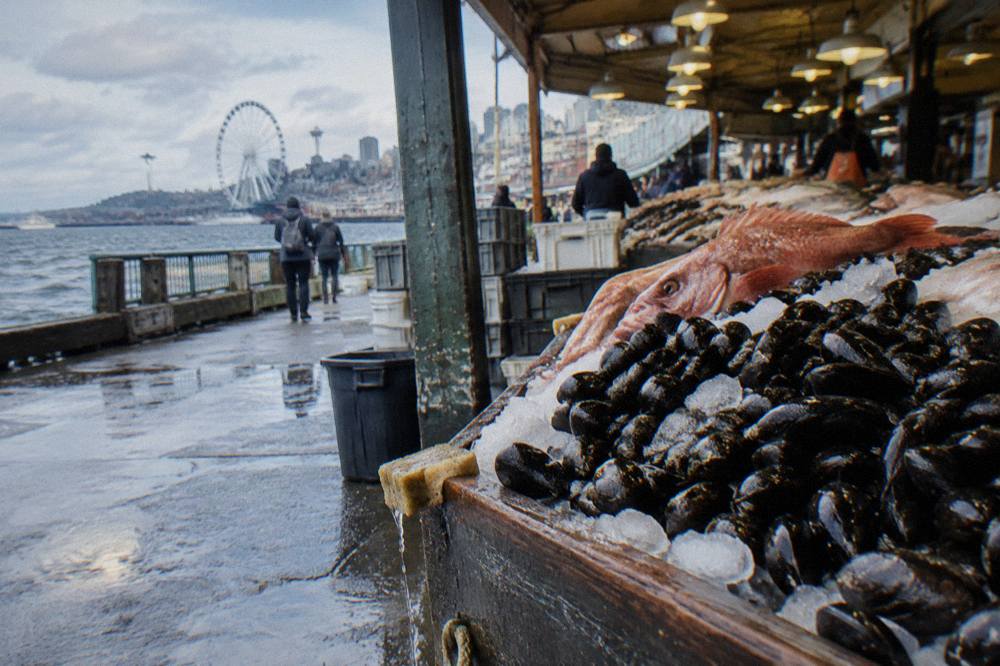
The Market's main seafood counters are Pike Place Fish Market, City Fish Co and the chowder stalls, including Pike Place Chowder. Fish throwing happens when a customer buys a fish, during business hours.
City Fish Co appears on several guided tasting routes as a stop in its own right. Pike Place Fish Market is the counter famous for tossing fish; the throw is a real working part of the sale, not a scheduled show, so it happens when someone buys. Chowder stalls draw their own lines.
The Market runs its food operation under rules visitors rarely see. Guided tours inside the Market need a Market-issued operator permit, group sizes cap at 16 people per guide, amplified sound is banned, participants wear Market-issued stickers, and operators pay a $1 participant fee per customer. Those rules exist to keep a working market working, and they are a fair hint that the stalls are small, busy places rather than stages. The Market's scale backs that up: 220+ independently owned shops and restaurants, 70+ farmers and 150+ to 180+ craftspeople trade under its roofs, alongside 450+ residents in affordable housing.
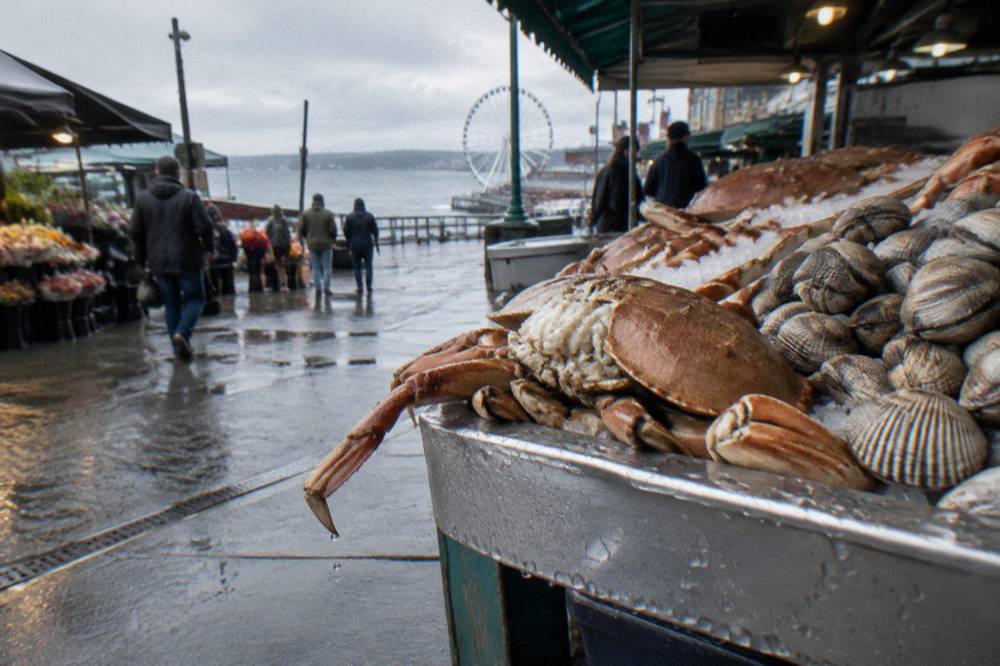
A few counter stops recur across the guided walks, which is a useful signal of which stalls carry the weight. The table below lists the Market seafood names that appear on tour routes, with what each is known for.
| Counter or stall | What it is known for | Where guided walks meet it |
|---|---|---|
| Pike Place Fish Market | Whole fish, the fish throw when a customer buys | Coffee crawl and breakfast routes pass the stall |
| City Fish Co | Fishmonger counter | Short tasting routes and the 90-minute walk stop here |
| Pike Place Chowder | Cup-and-bowl chowder counter | Multiple Pike Place food walks list it as a stop |
| Daily Dozen | Mini doughnuts sold at Pike Place since 1978 | Appears on breakfast and original-tour routes |
| Indi Chocolate | Chocolate from cacao, an unexpected Market crossover stop | On the chef-guided market route |
If you want the counters explained rather than decoded alone, the chef-guided market walk pairs the stalls with a professional cook's commentary.
What Should You Order At An Oyster Bar In Seattle?
Order farmed Puget Sound oysters, which are available year-round, and lean into the cold-water months from roughly September to April when the shells carry their firmest, briniest flavor. Seattle's oyster bars shuck shells farmed in Puget Sound, Hood Canal and Willapa Bay, all within Washington.
Taylor Shellfish farms those same waters and runs oyster bars and farm stores in Seattle, including a spot on the Seattle Center food tour route near the Space Needle. That means an oyster stop and a sightseeing stop can share a single block. The company also farms geoduck, a clam that takes about five to seven years to grow on a farm.
The seasonal logic is worth knowing before you order. Farmed oysters never close, but the traditional peak runs through the cold months, roughly September to April, when cold water firms the meat and sharpens the brine. Summer oysters are perfectly edible; they are simply softer and milky during spawning. If your trip falls in late fall, you have landed in the sweet spot, and the raw bars will say so.
For a deeper look at shells alone, the Seattle oyster guide breaks down ordering by farm and flavor. If you would rather have a bigger seafood lunch, oysters are not promised on it, but the seafood-tasting long lunch is the one tour on this site built around that idea, and the question below covers it in full.
The geoduck deserves its own sentence or two. Farmed geoduck takes about five to seven years to grow, and most Washington geoduck is exported to China and Hong Kong, so Seattle, with the farms at its doorstep, is one of the better cities to try it.
When Is Wild Salmon Season In Seattle?
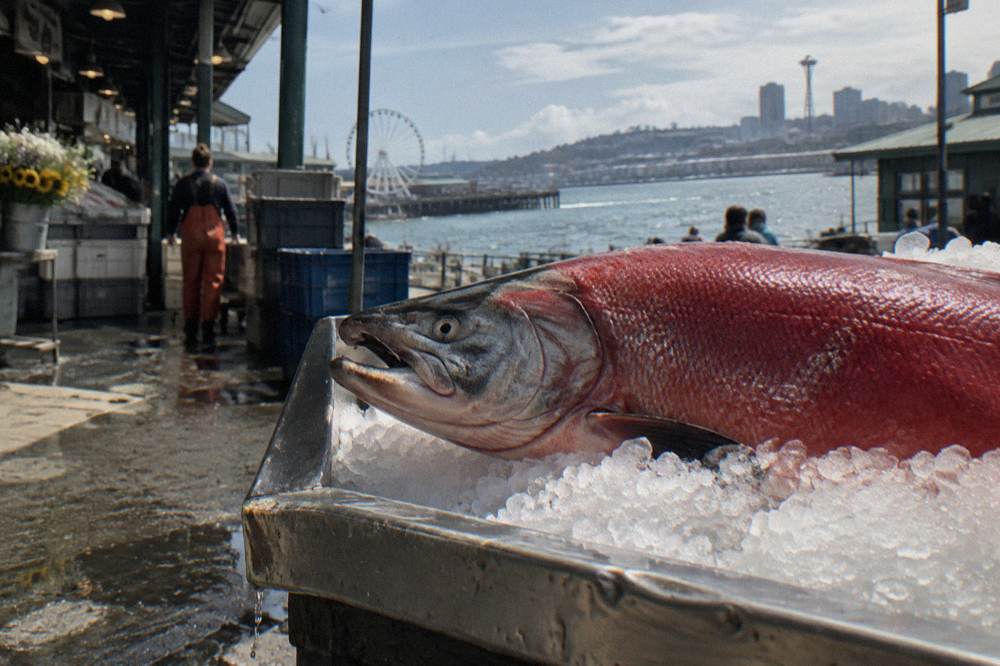
The wild Alaska salmon calendar opens with Copper River sockeye and king in late May, with 2026's first Seattle arrivals reported around May 27 and first restaurant plates around June 1, and runs through early fall as coho periods extend into September. Wild Washington and Alaska salmon reach Pike Place stalls and restaurant menus across that stretch, with king, sockeye, coho, pink and chum all in the mix.
The Copper River opener is the city's unofficial start of salmon season. The 2026 commercial drift gillnet fishery in the Copper River district opened May 22, according to Alaska fishery announcements reported in coverage of the Seattle arrival, with pre-orders at Pike Place filling around May 27 and restaurants plating first-of-season fish near June 1. Those dates shift each year with run timing and management, so treat late May as the pattern rather than a promise.
Species shape what you should order. Wild Alaska runs five Pacific salmon species: Chinook (king), the richest and most expensive; sockeye (red), deep-colored and firm; coho (silver), a milder mid-season fish; plus pink and chum, which appear more often smoked or canned.
The wild salmon guide covers where to eat and buy each species across the city. The short version for a first visit: order king or sockeye in June and July for the fat and color, coho later in summer, and smoked any month of the year.
Where Do You Find Dungeness Crab And Geoduck In Seattle?
Dungeness crab shows up at Pike Place counters and on restaurant menus through seasons that are quota-managed by area, so no date is ever guaranteed, while geoduck appears raw or blanched at oyster bars that buy from Puget Sound farms. Washington's recreational crab seasons run area by area, and commercial landings follow separate regional blocks, which is why menus say "when available."
The 2026 Puget Sound recreational summer season in Seattle's own Marine Area 10 ran Sundays and Mondays from July 5 to September 7. Seasons shift area by area with quota accounting, a fair illustration of how variable the crab calendar is. Never plan a trip around a crab date; plan it around a counter that buys well.
Coastal commercial seasons follow their own calendar, separate from the recreational one. The practical takeaway for a visitor is simple: fresh local Dungeness is most reliable from a fishmonger or a restaurant that names its source, and sweet crab meat travels fine into salads, melts and rolls whenever it lands.
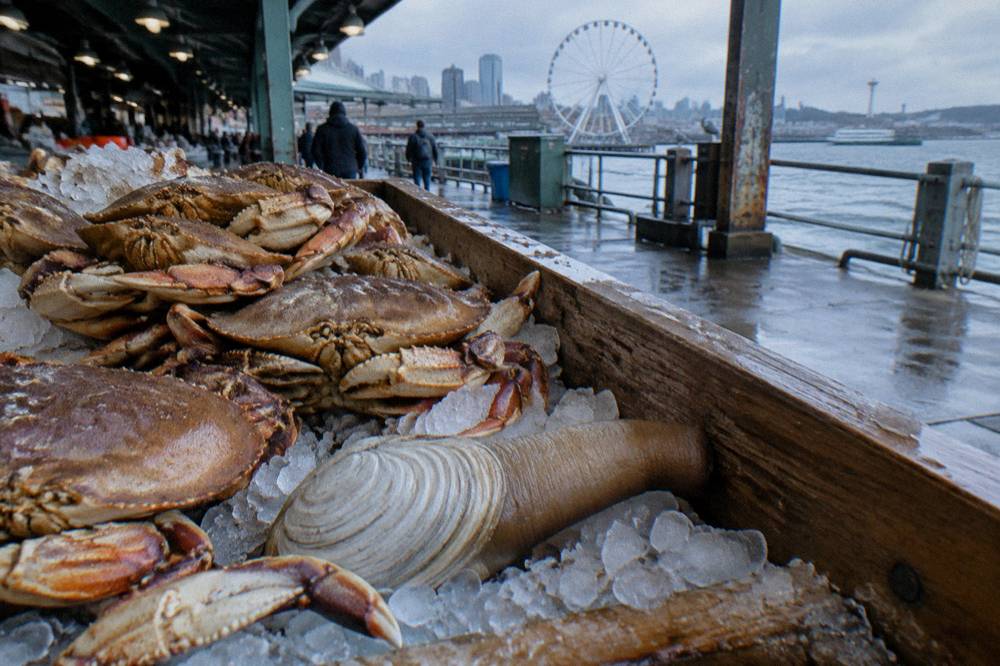
The crab and geoduck guide goes deeper on what to order when you find them. On any given day, the honest answer to "is crab in season" lives with the counter, not the calendar.
Is Clam Chowder A Seattle Dish Worth Ordering?
Yes, clam chowder is a genuine Seattle staple, served in sourdough rounds and cups at Market counters and waterfront kitchens, and it is the single most common hot seafood stop on the guided tasting walks of Pike Place Market. The dish's local anchor is the New England-style chowder at Pike Place Chowder, but the waterfront and Ballard both serve credible bowls.
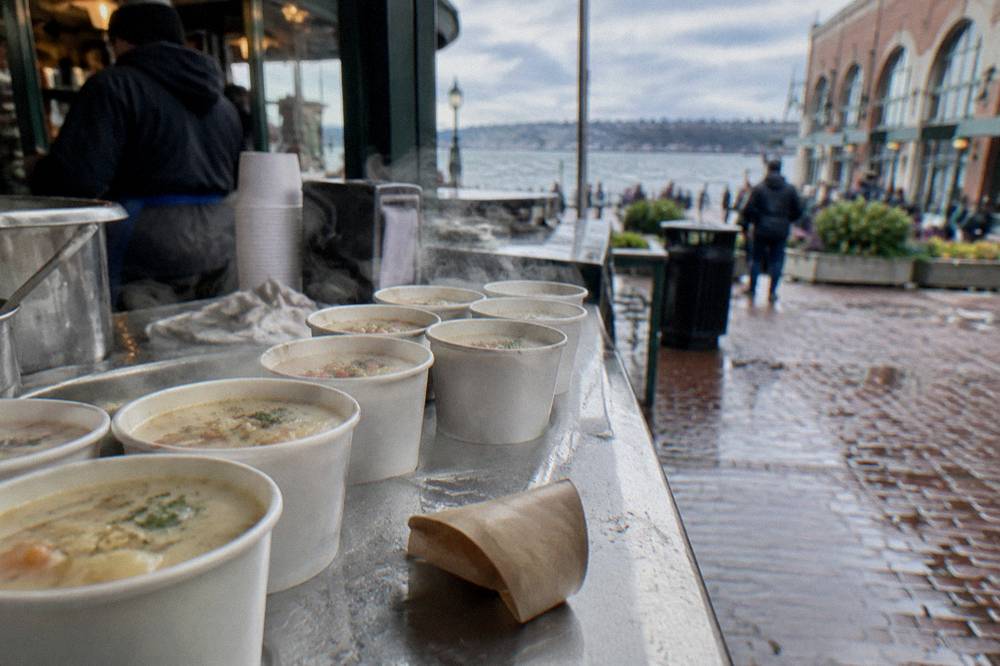
Chowder works in Seattle for structural reasons. The city sits inside cold shellfish water, the cream-based style holds well through a market day, and the sourdough bread bowl turns a snack into a meal without a table. Multiple tour routes list Pike Place Chowder as a named stop.
Ordering advice is short: get the cup, not the bowl, if you are eating your way through the Market, and save the bread bowl for a sit-down lunch. If chowder is your main mission rather than one stop among many, the clam chowder guide maps the city's bowls neighborhood by neighborhood, including where the Market's counter fits against waterfront and Ballard options.
How Does A Guided Seafood Walk Compare To Going Alone?
A guided seafood walk saves you the full day a solo visitor would need to assemble the same route, and the guide knows which stall deserves a stop that day; going alone wins on control of portions, pace and budget. The long-lunch tour at $119 per person covers eight seafood tastings across six restaurants in 2 hours 15 minutes, rated 4.7 from 40 reviews.
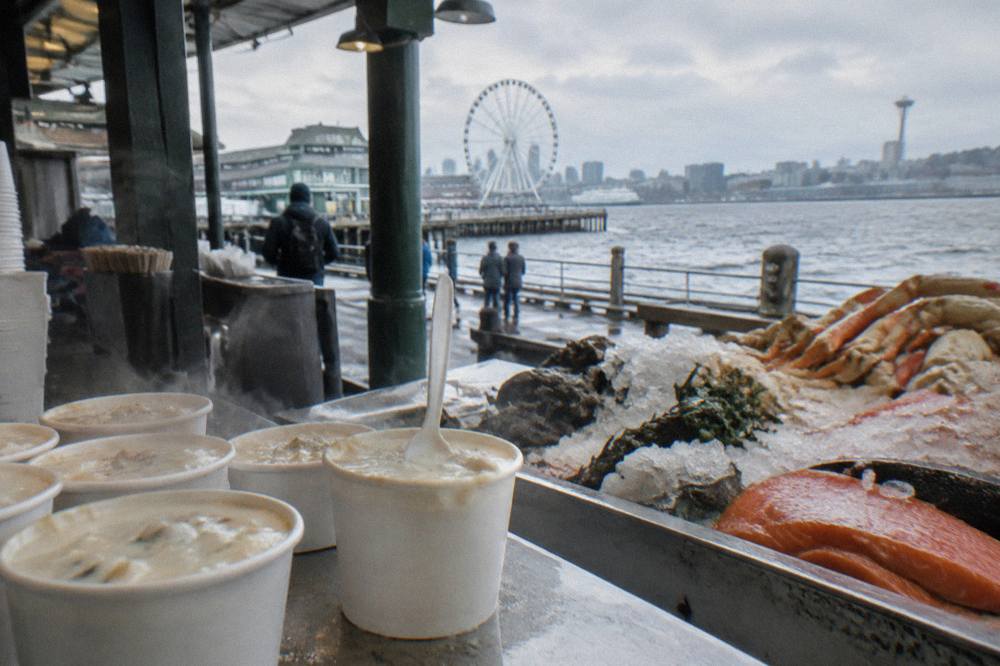
That tour, the Seattle Seafood Tour: A Long Lunch of Market-Fresh Tastings, starts at the Market's north end on 1st Ave and covers both market stalls and downtown seafood kitchens, ending near the waterfront with a chocolate stop. The tour covers eight seafood tastings across six restaurants, served brunch-style, and it is the only seafood-themed walk among the options here. The same operator runs the by-the-course tour from $119, a six-stop lunch where drinks are sold separately.
Going alone is genuinely viable in this city. The Market's counters sit within a five-minute walk of each other, seafood starts at 7 a.m., and a solo visitor who arrives before 10 a.m. can hit a fish counter, a chowder stop and an oyster bar before the crowds build. What you give up is the kitchen access: guides on permitted Market tours move groups of 16 or fewer through stalls with the operator's standing relationships, and tastings are pre-arranged rather than negotiated at the counter.
| Format | What you get | Trade-off |
|---|---|---|
| Seafood long lunch, from $119, 2h 15m | Eight seafood tastings, six restaurants, guide | Fixed route, set pace |
| By-the-course lunch, from $119, 2h 15m | Four-course tasting lunch, six stops | Drinks bought separately |
| Chef-guided Market walk, from $75, 2h | Nine vendor tastings, chef commentary | Standing tastings, not a meal |
| Independent Market crawl | You choose every stop and portion | No pre-arranged tastings, you carry the logistics |
For readers deciding between the two middle options, the Pike Place Market food walk comparison breaks down routes stop by stop.
What Do Seattle Seafood Tours Cost And What Is Included?
Seafood-adjacent walks on this site run from $50 per person for a 90-minute tasting loop to $160 per person for a breakfast-focused insider tour, with the seafood long lunch at $119 per person including its tastings. Most prices are per person from-prices; drinks are excluded on some routes and included on others, so the inclusion line matters more than the headline number.
The pricing ladder is real and worth reading closely. At the bottom, short 90-minute tasting loops from $50 cover snacks rather than meals. Mid-range walks from $58 to $84 deliver market tastings or coffee-plus-breakfast formats. The $100-plus tier is where meals begin: the by-the-course lunch, the seafood long lunch and the downtown restaurant tour with appetizers and drinks at $135. At the top, the insider's breakfast tour from $160 caps groups at 12 or fewer and includes gratuity.
| Tour | Duration | From price | Rating and reviews | Key inclusions |
|---|---|---|---|---|
| Seafood long lunch | 2h 15m | $119 pp | 4.7, 40 reviews | 8 seafood tastings, 6 restaurants |
| Chef-guided Market walk | 2h | $75 pp | 4.9, 4,806 reviews | 9 standing vendor tastings |
| By-the-course lunch | 2h 15m | $119 pp | 4.5, 51 reviews | 4 courses, 6 stops, drinks extra |
| Original food tour | 2h 15m | $112 pp | 5.0, 670 reviews | 14+ tastings, 8 vendors, tips included |
| Meet the Market walk | 2h | $58 pp | 4.7, 457 reviews | Meal stops, crumpets and biscuits |
| Downtown restaurant tour | 2h 30m | $135 pp | 4.7, 89 reviews | Appetizers and drinks at bars |
Seattle Seafood Long-Lunch Tour: Key Figures
Price, length, tastings, group cap and rating for the guided walk
- $119Per person, seafood long lunchBy-the-course lunch also from $119
- 2 hours 15 minutesTour duration
- eightSeafood tastingsAcross six restaurants
- 16Max group size per guide
- 4.7 from 40 reviewsGuest rating
Two cost notes sit outside the ticket. Sales tax of 10.55 percent is added at the register on restaurant meals you buy on your own, so a solo crawl's receipts run higher than the menu suggests; tour tickets are quoted as booked. And getting to the Market is cheap: a King County Metro adult ride is $3.00, a Link light rail one-way adult fare is $3.00 with youth 18 and under free, and the regional day pass is $6.00, all per the transit agencies' posted fares.
Which Neighborhood Suits A Seafood Day In Seattle?
Pike Place Market and the downtown core suit a first visit, since counters, oyster bars and the waterfront sit within a 15-minute walk; Ballard suits a second day built around the fishing-fleet neighborhood, its Sunday farmers market and its brewery district; and the Seattle Center area works for a seafood stop beside the sightseeing.
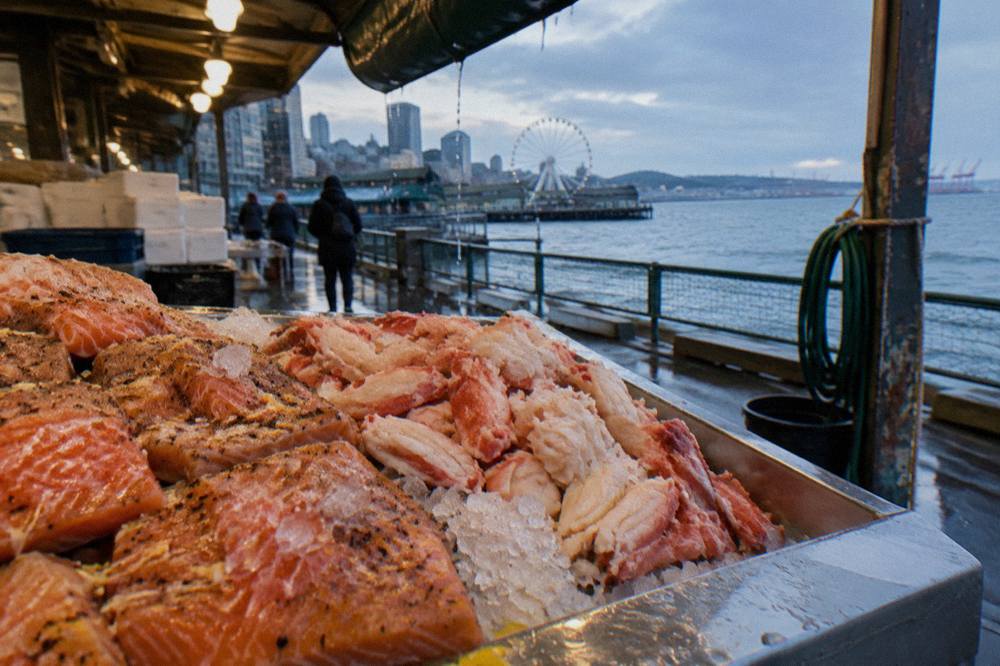
Downtown and the Market are the efficiency play. The seafood long lunch starts at the Market's north end, the chef-guided walk starts at 1st and Pine, and the downtown restaurant tour runs cocktails and appetizers through the core, all without a car. The Market's street-access pilot, Phase 3, runs October 1, 2026 to March 31, 2027, sharing Pike Place between vehicles and pedestrians Monday to Thursday and limiting access Friday to Sunday from 11 a.m. to 4 p.m. at 1st and Pike, so transit or the parking garage beats street parking during the pilot.
Ballard is the character play. Its Sunday market runs 9 a.m. to 2 p.m. year-round, rain or shine, along the cobblestone stretch of Ballard Ave NW, and the neighborhood's breweries make a post-seafood pint a one-block proposition. The guided option there leans beer rather than fish, with a brewery tasting walk from $99 pairing beer flights with chicken and empanadas, and a shorter beer wander from $65 covering three breweries with no food.
Seattle Center is the sightseeing play. A chef-led food tour of the Seattle Center area from $85 runs 2 hours past oyster bars, meat-pie shops and bakeries beside the Space Needle and the Museum of Pop Culture, though the tour does not include a visit inside the Space Needle. Taylor Shellfish's oyster bar sits in that orbit, which makes the area a low-effort seafood stop for visitors already committed to the sights.
| Neighborhood | Seafood strength | Best time | Guided anchor |
|---|---|---|---|
| Pike Place Market and downtown | Counters, chowder, oyster bars, restaurants | Before noon, 7 a.m. fish counters | Seafood long lunch, from $119 |
| Ballard | Fish-house kitchens, Sunday market | Sunday morning | Brewery tasting walk, from $99 |
| Seattle Center | Oyster bar beside the sights | Midday | Chef food tour, from $85 |
| Waterfront | Pier-side seafood, views | Afternoon | Reached on foot from the Market |
For eaters who want the full city picture before committing, the food by neighborhood guide lays out every district's strengths side by side.
When Is The Best Time Of Day For Seafood In Seattle?
Early morning is the best time for the Market's fish counters, which lay out fresh fish and shellfish from 7 a.m., and mornings before noon are generally the least crowded stretch of the Market day. Midday suits a guided lunch, and late afternoon suits oyster bars and happy hour, when appetizer pricing appears at downtown bars.
The 7 a.m. fish counter window is a genuinely local experience. Seafood and produce begin at 7, farm tables run 9 a.m. to 4 p.m., crafts run 11 a.m. to 4 p.m., and most of the Market is fully active from about 10 to 5. A visitor who arrives at 8 walks the arcade nearly alone, watches stalls set up, and can still finish a chowder breakfast before the first tour groups form. The fish throw, meanwhile, happens whenever a customer buys, through business hours, so a purchase matters more than a clock.
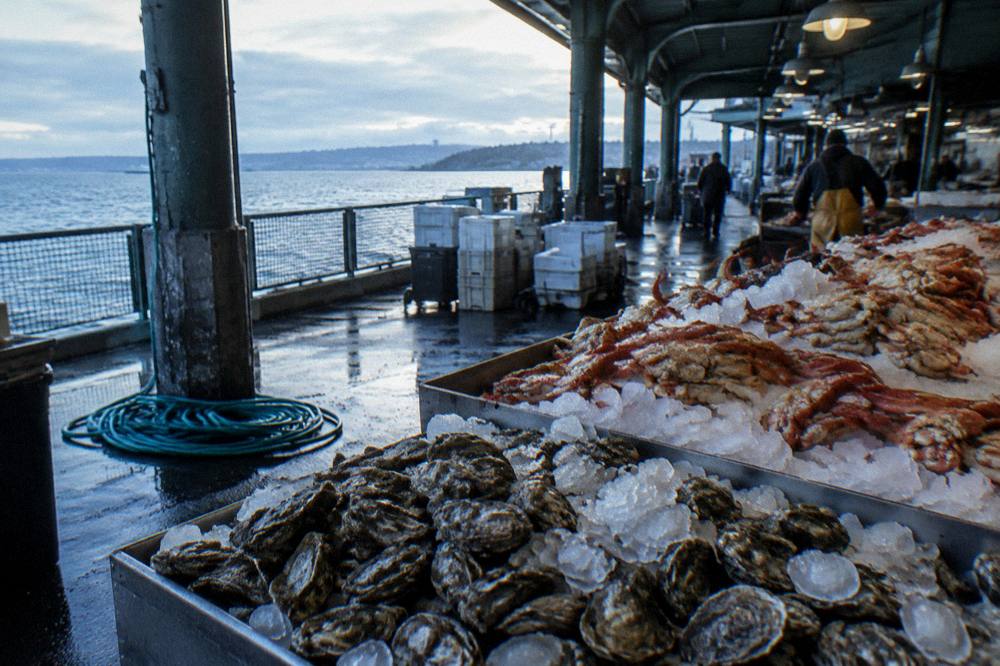
Weather barely changes the calculus. July and August average highs of about 77 to 78 F with under an inch of rain each month, while November averages 6.31 inches of rain, making the covered Market a safe bet any month; the arcade is under roof, and the counters run year-round. The wettest months are the best oyster months, a coincidence that works in the raw bar's favor.
Evening has its own answer: the happy hour format. A Market happy hour walk from $30 runs 2 hours with snacks included and drinks bought by guests at a discounted rate, and a chef-guided happy hour tour from $140 runs cocktails, bubbles and bites through the Denny Triangle and South Lake Union restaurant row. Both trade the fish-counter morning for a bar-stool evening, and both involve alcohol, since Washington's drinking age is 21 and alcohol service stops between 2 a.m. and 6 a.m.
If a late-afternoon appetizer-and-drinks format sounds like your speed after a morning at the counters, the downtown restaurant walk covers exactly that ground:
Can You Cover Seattle's Seafood In One Day?
Yes, with one structured plan: fish counters at 7 a.m., a chowder or crumpet mid-morning stop, a guided seafood long lunch at midday covering eight tastings across six restaurants, and an oyster bar or happy hour in the late afternoon, all on foot between the Market, downtown and the waterfront. Transit connects every leg for $3.00 per adult ride or $6.00 for a regional day pass.
The day works because the geography cooperates. The Market's north end, where the seafood long lunch and the breakfast tours start, sits above the waterfront; the Overlook Walk and the Pier 58 play space connect the two on foot; and the downtown restaurant row runs a few blocks east. The Market's official visitor guidance covers hours, closures and the current street-access pilot in one place, and the plan-your-visit page maps the parking garage and transit options. Nothing in the day requires a car, and the cruise terminal crowd can walk the whole route from some berths.
For a one-day seafood plan already written out with times, the seafood walk guide sequences oysters, salmon and chowder into a single route. Pair it with a morning arrival and the day effectively books itself.
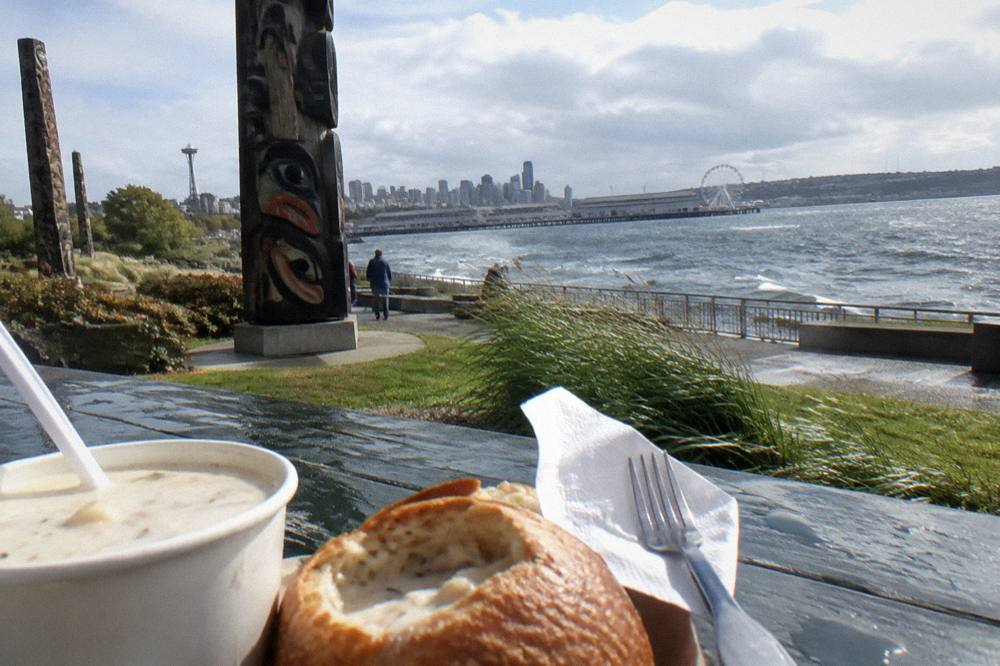
Budget the extras honestly. The tour ticket covers its tastings; anything you buy at the counters carries the 10.55 percent sales tax at the register, tips are not mandated anywhere in the city and practice varies, and no tour price here includes a dish you buy on your own. A reasonable seafood day budget is the tour price plus a modest counter allowance, and the Market's stalls make it easy to spend small: a cup here, a half dozen there, a smoked fillet for the road.
Common Questions About Seafood In Seattle
Where Can You Find The Best Seafood In Seattle?
Pike Place Market's counters, the downtown oyster bars and the waterfront piers hold the densest concentration, with Ballard as the second-day option near the fishing fleet. The seafood long lunch tour strings the Market and downtown seafood restaurants into one 2-hour-15-minute route from $119 per person.
When Is Oyster Season In Seattle?
Farmed Puget Sound, Hood Canal and Willapa Bay oysters are available year-round. The traditional peak for firm, briny flavor runs roughly September to April in the cold-water months.
When Does Copper River Salmon Arrive In Seattle?
The Copper River fishery opened May 22 in 2026, with first Seattle arrivals reported around May 27 and first restaurant plates around June 1, per news coverage of the run. Dates shift each year with run timing, so treat late May as the pattern.
Is Dungeness Crab In Season?
It depends on the area and quota. Puget Sound recreational seasons run area by area. Ask the counter what is fresh that day rather than planning around a date.
How Much Does A Seafood Tour In Seattle Cost?
Seafood-adjacent walks on this site run from $50 per person for a 90-minute tasting loop to $160 for a breakfast insider tour. The seafood-led long lunch is from $119 per person and includes eight tastings across six restaurants.
Can You Walk From Pike Place Market To The Waterfront Seafood?
Yes. The Overlook Walk connects the Market to the waterfront on a gentle slope, and Waterfront Park is open daily 7 a.m. to 10 p.m. The whole Market, downtown and waterfront seafood belt is walkable without a car.