Pike Place Fish Market: What To Watch And What To Buy
The fish throwing at Pike Place Fish Market is real, but it is not a show put on for crowds. It happens when a customer buys a fish. Here is how the counter works, what is worth buying, and how a guided walk fits around it.
Short answer
Pike Place Fish Market sits at 86 Pike Place inside Pike Place Market, which is open 363 days a year. Fish throwing happens when a customer buys a fish, roughly between 7 a.m. and 5 p.m. daily. Ask at the counter about packing fish for travel, and two guided market walks stop here by name, from $84 per person.
The fish counter under the clock and Rachel the Piggy Bank is the single most photographed spot in a market that draws crowds every day of the year. Pike Place Fish Market, at 86 Pike Place, has been throwing fish for decades, and the throw itself is not theater for its own sake. A fish flies across the counter when a customer buys it, a worker calls the order, and the fish travels from the ice to the wrapping station. No purchase, no throw. That single fact changes how you should plan a visit, because the experience depends on somebody spending money at the right moment.
This page covers what actually happens at the counter, when to stand there, what is worth buying, how shipping works, what you can eat within a few steps, and which guided walks stop at or near the counter.
What Is The Pike Place Fish Market Counter Actually Like?
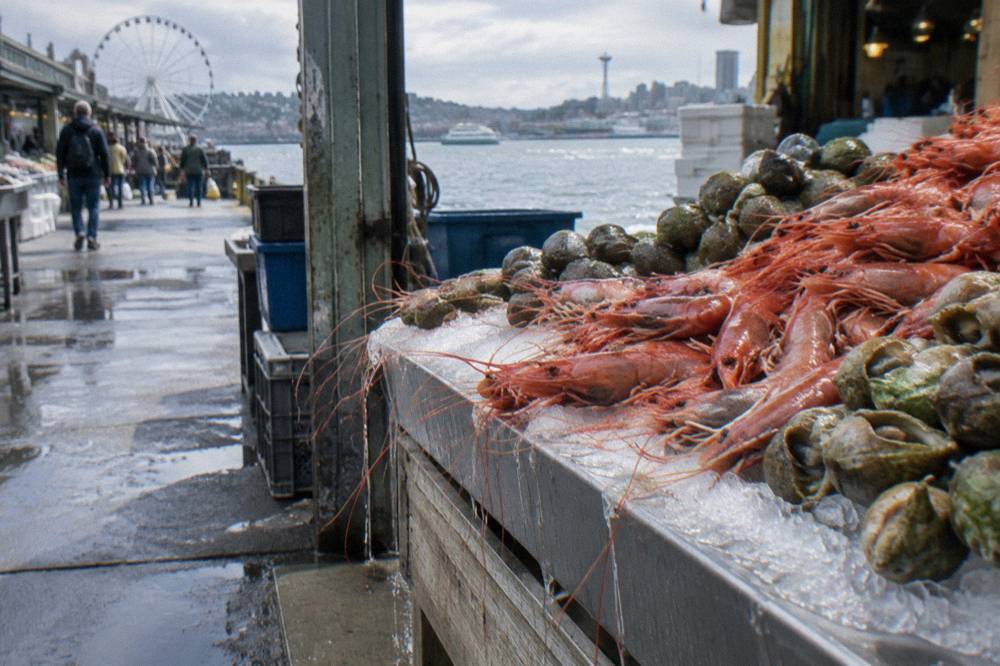
The Pike Place Fish Market counter is an open, ice filled seafood stall at 86 Pike Place, under the Market clock, staffed by crews in rubber aprons who cut, wrap and toss fish across a crowded walkway. The stall is small, the aisles around it are narrower than most first time visitors expect, and the crowd builds in layers: photographers at the front, shoppers waiting to order, and market traffic pushing through behind everyone. The Market itself is enormous by comparison, with 220 or more independently owned shops and restaurants, 70 or more farmers, and 150 to 180 craftspeople, so the fish counter is one stall inside a much larger institution that opened on August 17, 1907, after the City Council created the public market on August 5 of that year.
The Market's own visitor materials describe the layout and the crowd patterns honestly, and the Pike Place Market visitor FAQ is the best single page to check before a visit, since it covers hours, parking and the day to day logistics. One detail worth knowing: the market runs 363 days a year, closing only on Thanksgiving Day and Christmas Day. Most of the Market is active from about 10 a.m. to 5 p.m., while breakfast, fresh produce and seafood counters start at 7 a.m. That early window is the quietest time to see the stall at work without a wall of people between you and the ice.
The counter's fame rests on the throw, but the everyday business is fish butchery and retail. Crews break down whole salmon, portion halibut, and wrap orders for travelers heading back to hotels. Watching a whole fish broken down cleanly is arguably the better show, and it happens constantly, purchase or not.
When Does The Fish Throwing Actually Happen In Seattle?
Fish throwing at Pike Place Fish happens whenever a customer buys a fish, which means it occurs during business hours, and the Market FAQ describes those hours as 7 a.m. to 5 p.m. daily. So if you want to see fish flying through the air, plan your visit between 7 a.m. and 5 p.m., when purchases trigger the throws. There is no schedule, no announced showtime and no guarantee on any given day. A throw needs a sale, and sales cluster when the Market is busy, so the odds of seeing one rise sharply between late morning and mid afternoon, when the arcade is at its fullest. Arrive at 8 a.m. and you may have the counter nearly to yourself, with pristine fish on ice and no throws at all.
| Time of day | Crowd level | Throw odds | What it is good for |
|---|---|---|---|
| 7 to 9 a.m. | Very light | Low, few sales | Photos, easy counter access, breakfast nearby |
| 9 a.m. to 11 a.m. | Building | Moderate | Shopping with staff attention, some throws |
| 11 a.m. to 4 p.m. | Heaviest | Highest | Most likely window to see a throw |
| 4 to 5 p.m. | Thinning | Moderate | Late purchases, easier walking |
The Market says mornings before noon are generally less crowded, and that lines up with what the stall's own rhythm suggests: fewer buyers, fewer throws. Visitors who want both the quiet and the spectacle often split a visit, coming early to shop and photograph, then returning later or catching the counter as part of a longer route through the arcade. A guided walk solves this timing problem neatly, since a local guide knows the alley shortcuts and can position a group near the counter when activity peaks.
That is a real argument for booking a walk rather than self directing on a first visit. The most reviewed market food walk on this site, the Chef Guided Food Tour of Pike Place Market, rated 4.9 across 4,806 reviews, from $75 per person for about 2 hours, runs nine vendor stops with standing tastings. Two walks list the fish counter by name: the Pike Place Market Insider's Breakfast Tour, 5.0 across 90 reviews from $160, includes up close interaction with the famous fish-throwers, and the Coffee Crawl and VIP Morning tour, 5.0 across 93 reviews from $84, lists Pike Place Fish Market among its stops. Two other seafood leaning options frame the choice.
The Seattle Seafood Tour: A Long Lunch of Market Fresh Tastings is the one seafood led product among them, rated 4.7 across 40 reviews, from $119 per person for 2 hours 15 minutes, covering 8 seafood tastings across 6 restaurants in the market and downtown. The By-the-Course option, 4.5 across 51 reviews from $119, is a full-lunch format instead. Both are compared in more detail below.
What Should You Buy At The Pike Place Fish Counter?
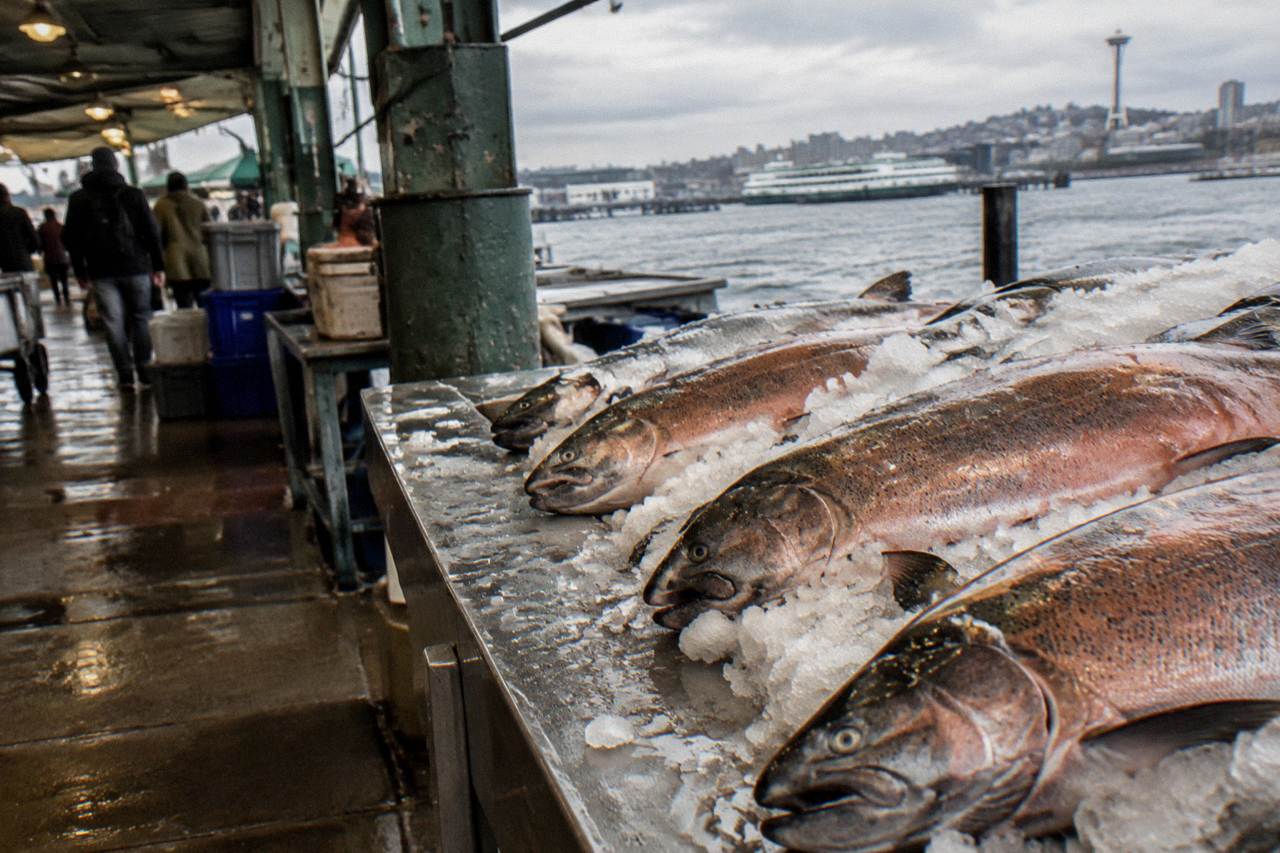
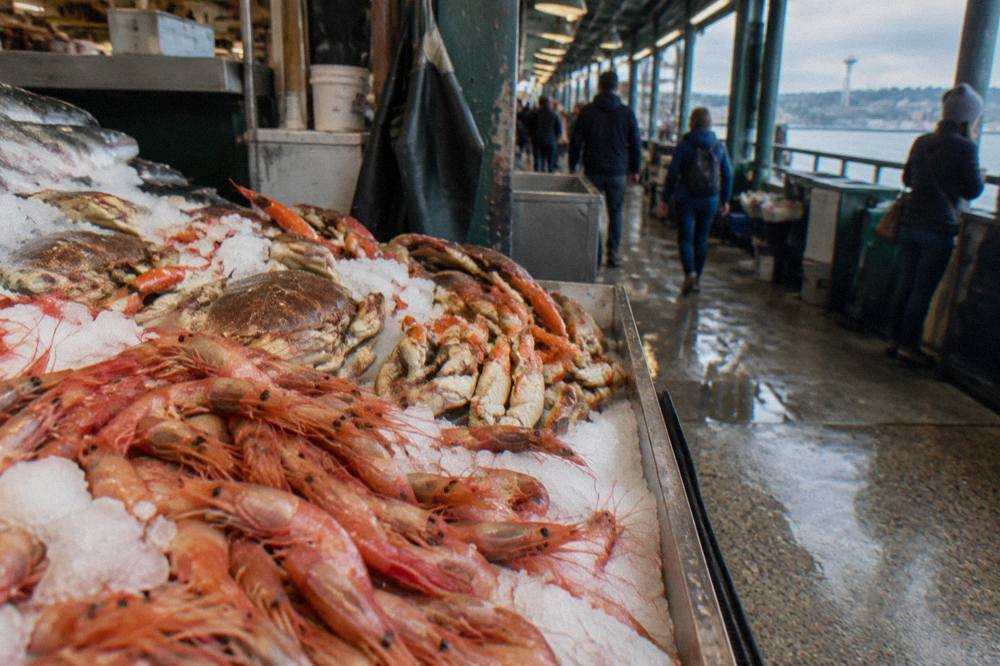
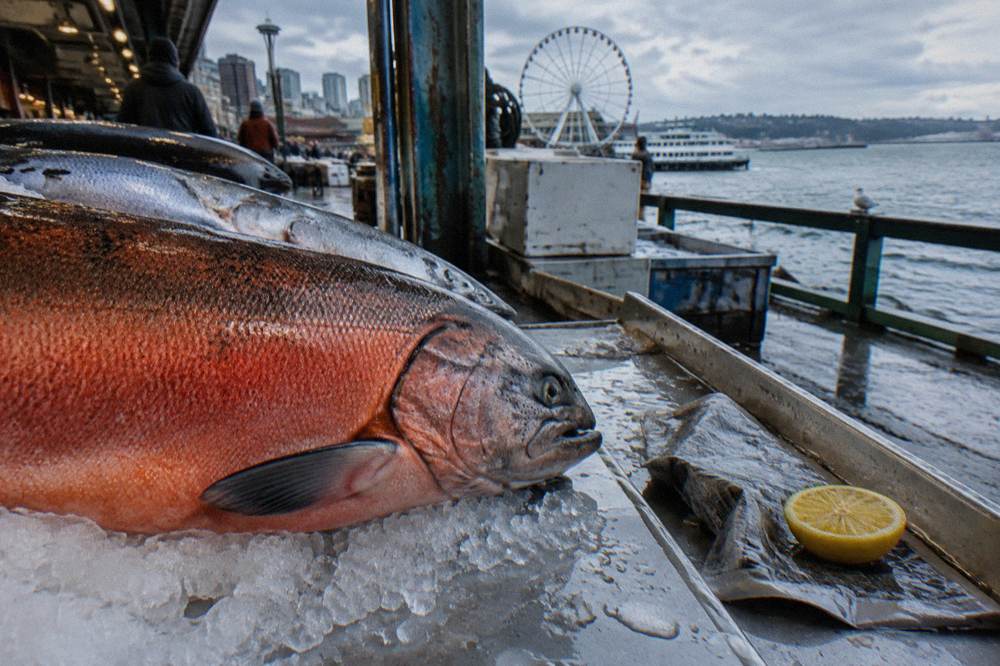
The counter sells whole and portioned fish, shellfish and smoked items, and the practical buys for travelers are portioned fresh salmon, smoked salmon and crab; ask staff about packing orders for same day carry or shipping. What you should not do is assume any fish is in season at any moment: salmon runs move through the year, and the freshest thing on the ice depends on the week.
| What you want | What to ask for | Practical notes |
|---|---|---|
| Eat this week in Seattle | Portioned fresh fish, same day | Packed cold, keep chilled, eat within a day or two |
| Take home on a plane | Smoked fish, vacuum packed | Travels best, ask staff about cold packing |
| Ship anywhere | Fresh or frozen, boxed | Ask staff about courier shipping and cost |
| Watch a throw | Any whole fish purchase | The throw is the call and toss of your own order |
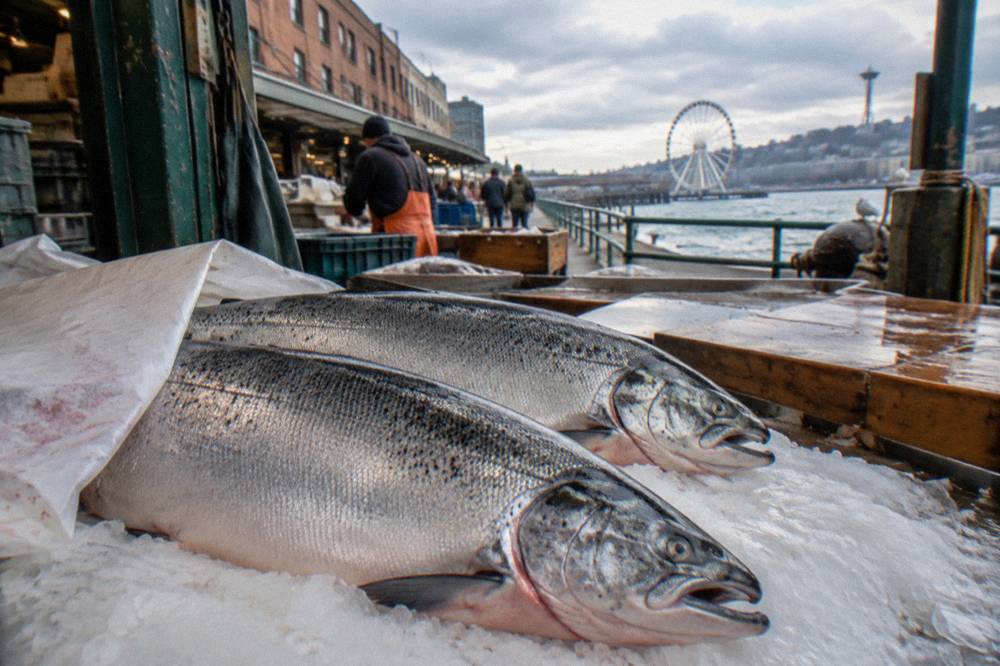
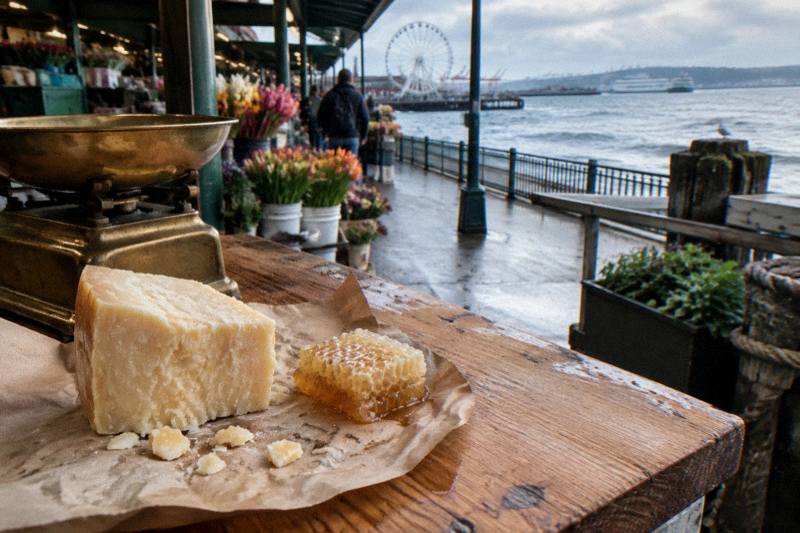
Seasonality matters more here than most visitors realize, and the Pacific Northwest calendar drives it. The 2026 Copper River season opened May 22, with the first fresh fish reaching Pike Place pre-orders around May 27 and the first restaurant plates appearing around June 1. Wild Alaska brings five Pacific salmon species, Chinook (king), sockeye, coho, pink and chum, and they do not arrive together. Dungeness crab seasons are quota managed and shift year to year, so no stall can promise crab on a given date. Farmed oysters run year-round, with the cold water months from roughly September to April the traditional peak for firm, briny flavor. Ask the counter what came in that morning; it is the honest question and they answer it all day.
For deeper background on the fish themselves, the wild salmon in Seattle guide covers species, runs and where else in the city to buy, and the Dungeness crab and geoduck primer explains what those seasons actually mean for a visitor.
If shopping rather than watching is the goal, go early. Counter staff have more time before the 11 a.m. surge, the ice is fully stocked, and you can ask about cutting, packing and shipping without a queue behind you. Buy the fish, and you may trigger the throw yourself, which is the most reliable way to see one.
How Does Counter Etiquette Work When The Crowd Is Deep?
Etiquette at the fish counter comes down to three rules: stand clear of the working area behind the ice, wait your turn at the order point rather than the photo spot, and never handle the fish or the ice unless staff hand something to you. The stall is a working retail counter inside a narrow public arcade, not a stage. Crews carrying whole fish and swinging cleavers need the space behind the display clear, and the Market's rules for commercial activity inside the building, including a 16 person cap per guided group, exist partly because the walkways are tight.
Photographers crowd the front rail, and that is fine, but the order line is separate. If you are buying, look for the order point and queue there; if you are watching, keep the walking lane behind you open, because the arcade is a public street of sorts and everyone else is trying to pass. During the Street Access Project pilot, whose third phase runs October 1, 2026 to March 31, 2027, Pike Place itself is shared by vehicles and pedestrians Monday to Thursday, and access is limited to deliveries and pre arranged pickups between 11 a.m. and 4 p.m. Friday to Sunday. That changes traffic at the 1st Ave and Pike St end of the arcade, not the fish counter itself, but it is worth knowing when planning an approach.
Tipping at the counter is not mandated, and practice varies; some buyers add something for the crew, many do not, and either is normal. There is no required amount and staff do not solicit one. The meeting points and what to bring guide covers the broader market etiquette question if you are joining a walk, since guided groups inside the Market wear issued stickers and move under the operator permit system.
Can You Ship Fish Home From Pike Place Market?
Ask at the counter: staff can tell you whether fresh or frozen fish can be packed in insulated boxes and sent by courier, with any cost quoted when you order, since it depends on weight, destination and speed.
For air travelers, the simpler route is often cold packed carry on. Smoked and vacuum packed fish travel better than fresh fillets. Ask directly which items suit your travel day; the answer changes with the season and the fish. Frozen items hold for a flight home, fresh portions need a cooler or a same day kitchen.
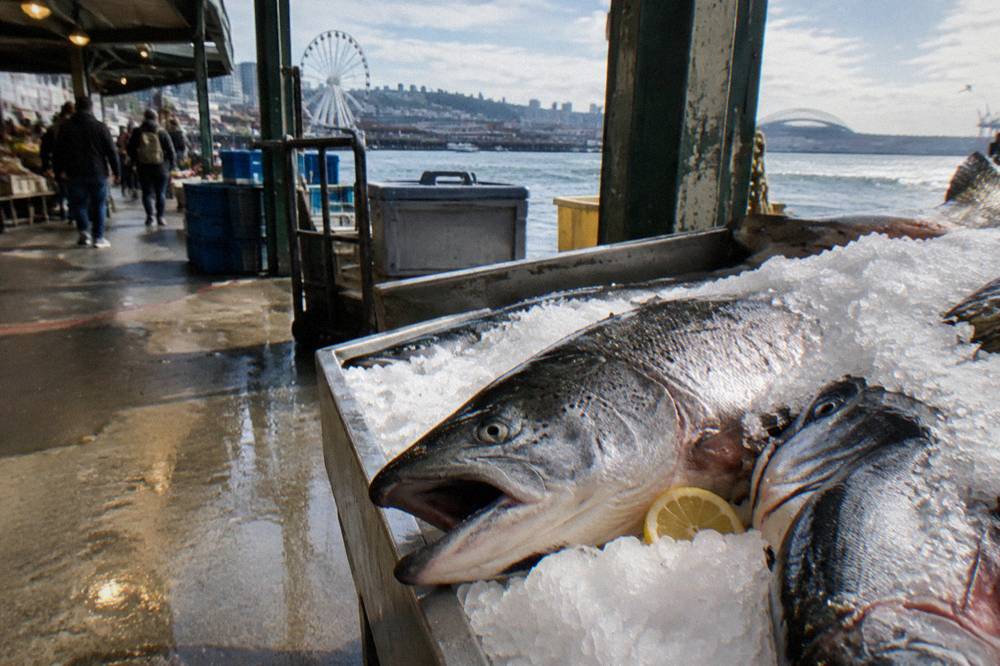
Two practical cautions. First, buy shipping items last, the day before or the day of departure, so the cold chain stays short. Second, confirm delivery windows with the counter for perishable orders. The Market's plan your visit page covers the building's access and parking details for a shopping trip, including the garage, which matters if you are leaving with a cold box.
What Can You Eat On The Spot Near The Fish Counter?
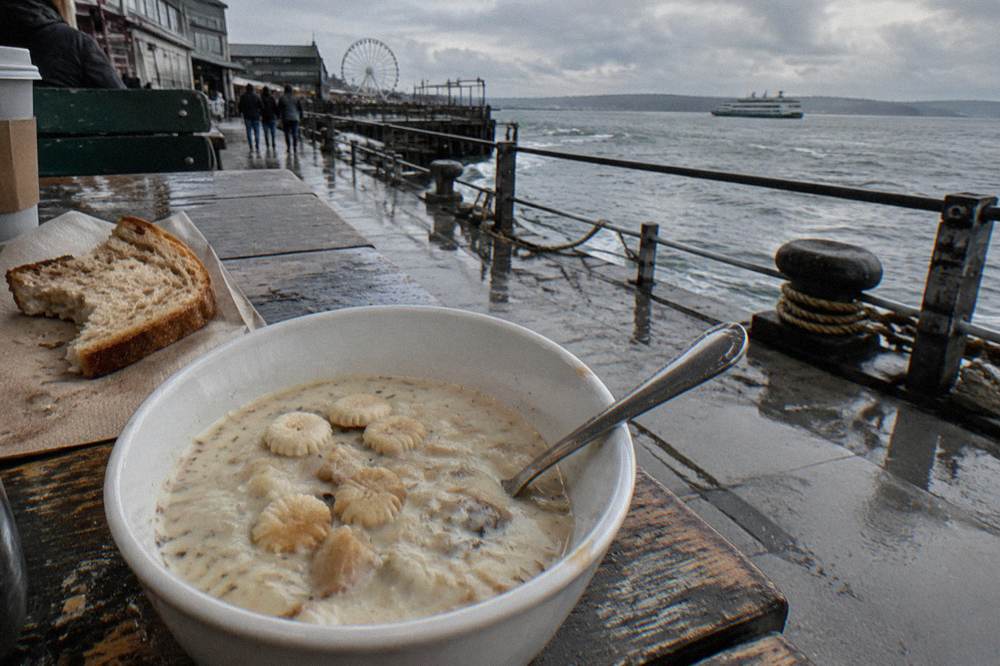
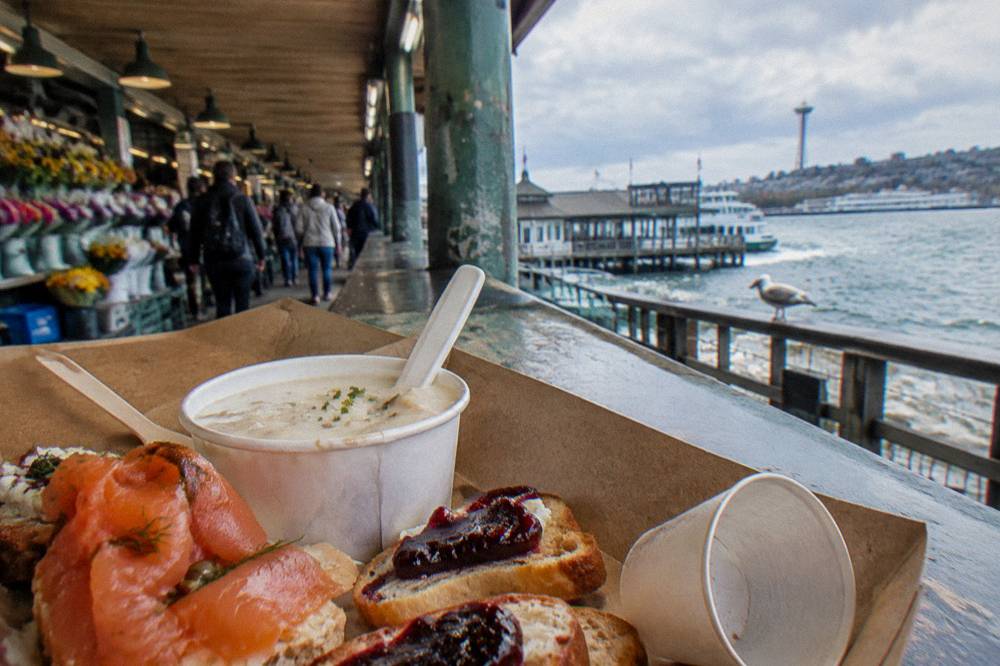
Within a short walk of the fish stall you can eat chowder, crumpets, biscuits, cultured creamery scoops, doughnuts and more, plus sit down seafood at established Market restaurants, so a fish counter visit can anchor a full eating route without leaving the building. The Market houses 220 or more independent shops and restaurants, enough of them within a short walk to fill a morning. The counter itself sells fish to cook, not meals, so plan the eating separately.
| Nearby stop | What it is | Order strategy |
|---|---|---|
| Pike Place Chowder | Chowder counter, long lines | Go before 11 a.m. or after 3 p.m. |
| Daily Dozen | Mini doughnuts, hot | Watch for a fresh batch moment |
| The Crumpet Shop | Crumpets, sweet and savory | Small, worth the queue at opening |
| Hellenika Cultured Creamery | Cultured cream scoops | Fast, good mid route pause |
| Matt's in the Market | Restaurant on two listed tours | Part of the by-the-course and seafood routes |
Guided walks stitch several of these into one route. The Pike Place Market: Original Food Tour, rated 5.0 across 670 reviews, from $112 per person for 2 hours 15 minutes, lists 14 or more tastings from 8 vendors with gratuity included, and it moves through the same arcade the fish counter anchors. For a fuller primer on the eating landscape, the pike place market restaurants guide covers the sit down options, and the broader pike place market food guide maps the whole stall to stall route.
The seafood long lunch tour is the pick if eating seafood, not just watching it, is the point. Its 8 tastings across 6 restaurants include market counters and downtown seafood rooms, and at 2 hours 15 minutes from $119 per person it functions as a full meal rather than a snack route. It is rated 4.7 across 40 reviews.
Which Market Food Walks Stop At The Fish Counter?
Two of the market walks listed here stop at the fish counter by name, and the practical differences between the walks are format and price: the chef guided walk from $75 is a fast nine stop standing tasting route, the original tour from $112 adds gratuity and 14 or more tastings, and the by-the-course lunch from $119 is a full meal across six stops. The Insider's Breakfast Tour and the Coffee Crawl and VIP Morning tour both list the fish counter as a stop. The chef guided food tour of Pike Place Market is the most reviewed option at 4.9 across 4,806 reviews, meeting at the corner of 1st Ave and Pine St.
| Tour | Duration | Rating | From price | Format |
|---|---|---|---|---|
| Chef Guided Food Tour of Pike Place Market | 2 hours | 4.9, 4,806 reviews | $75 pp | 9 vendor stops, standing tastings |
| Pike Place Market: Original Food Tour | 2 hours 15 minutes | 5.0, 670 reviews | $112 pp | 14+ tastings, 8 vendors, tips included |
| Seattle Seafood Tour: A Long Lunch | 2 hours 15 minutes | 4.7, 40 reviews | $119 pp | 8 seafood tastings, 6 restaurants |
| Pike Place By-the-Course Tour | 2 hours 15 minutes | 4.5, 51 reviews | $119 pp | Full meal, 6 stops, drinks extra |
| Meet The Market Food and Fun Tour | 2 hours | 4.7, 457 reviews | $58 pp | Meal stops, budget friendly |
Budget matters, and the spread is wide. The Meet The Market tour, from $58 per person, is the least expensive market walk that includes real food stops, rated 4.7 across 457 reviews, starting outside The Crumpet Shop on 1st Ave. The vegan and vegetarian tasting walk, from $50, also runs through the market, with plant based tastings. At the other end, the Insider's Breakfast Tour, from $160, rated 5.0 across 90 reviews, caps groups at 12 or fewer, includes gratuity and lists the fish counter among its stops. The full decision framework, including the self guided comparison, is in which food walk in Seattle you should book.
The by-the-course format is a full lunch rather than a standing tasting route. Six stops including Matt's in the Market and Pasta Casalinga, drinks bought separately at the restaurants, and a route that covers both the market and downtown.
How Do You Time A Visit Around Crowds And Market Hours?
Visit between 7 and 9 a.m. for quiet and the best counter access, or between 11 a.m. and 4 p.m. for the fullest market and the highest chance of seeing a fish thrown, and remember the Market closes only on Thanksgiving Day and Christmas Day. Most of the Market runs about 10 a.m. to 5 p.m., with breakfast and seafood counters from 7 a.m., crafts from 11 a.m. to 4 p.m., and farm tables from 9 a.m. to 4 p.m. The Market's own guidance says mornings before noon are generally less crowded, and the market is fullest Thursday through Monday.
Weather barely changes the calculus, because the arcade is covered. Seattle's November averages 6.31 inches of rain and July and August stay under an inch with highs around 77 to 78 F per the NOAA 1991 to 2020 normals at Sea-Tac, but a wet Tuesday in January and a dry Saturday in July produce the same covered market, only with different crowd sizes. Dress for standing and walking, bring layers, and expect the arcade to feel warm when it is packed.
Getting there is straightforward. King County Metro adult rides are $3.00, the regional day pass is $6.00, and Link light rail adult one-way fares are $3.00 with youth 18 and under free; the Sound Transit site covers rail connections, and downtown hotels are mostly a short walk or one ride from the Market. On a cruise day, timing matters even more, since the 2026 Seattle season brought a record 330 ship calls between April and October, and midday market crowds swell when ships are in port. The cruise day food plan guide handles that scenario in detail.
For early risers, the Coffee Crawl and VIP Morning tour reframes the timing question entirely. It starts at Anchorhead Coffee on Western Ave, rated 5.0 across 93 reviews, from $84 per person for 2 hours, and pairs breakfast and coffee with market stops in the quiet morning window before the arcade fills.
Whichever way you time it, the fish counter rewards two things: patience and a purchase. Stand there long enough and a throw happens. Buy something, and you make it happen yourself, then carry salmon, smoked or fresh, out of a market that opened in 1907.
Common Questions About Pike Place Fish Market
When Does The Fish Throwing Happen At Pike Place Fish Market?
Fish throwing happens when a customer buys a fish, during business hours, which the Market FAQ describes as 7 a.m. to 5 p.m. daily. There is no set schedule, and your best odds are between 11 a.m. and 4 p.m. when sales are most frequent.
How Much Does Fish From Pike Place Fish Market Cost?
Prices vary by species, cut and season. Ask at the stall for current per pound prices, and confirm any shipping costs at the counter when ordering.
Can You Ship Fish Home From Pike Place Market?
Ask at the counter. Staff can say whether fresh or frozen fish can be packed in insulated boxes and shipped by courier, with the cost quoted at the counter. Smoked and vacuum packed items travel best for air travelers.
What Time Should I Visit Pike Place Fish Market?
Visit between 7 and 9 a.m. for quiet and easy counter access, or between 11 a.m. and 4 p.m. for the fullest market and the highest chance of seeing a throw. The Market is closed only on Thanksgiving Day and Christmas Day.
Do Food Tours Stop At The Pike Place Fish Counter?
Two of the walks listed here stop at the counter by name: the Insider's Breakfast Tour from $160 per person and the Coffee Crawl and VIP Morning tour from $84 per person. The seafood long lunch tour from $119 per person builds a full meal around market seafood.
Is Pike Place Fish Market Worth Seeing If I Am Not Buying Fish?
Yes, watching the crew break down whole fish is constant during business hours and needs no purchase, though the famous throw only happens when someone buys. Arrive early for clear views, or go midday for the atmosphere and the crowd energy.