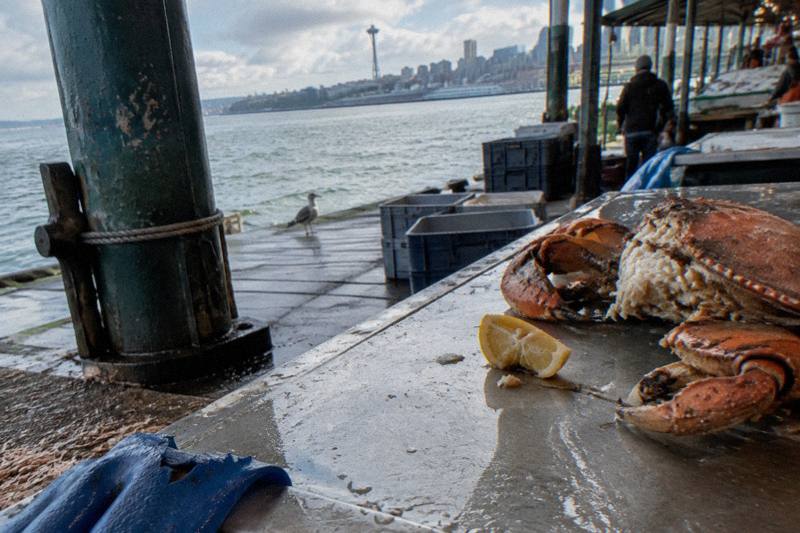
Wild Salmon In Seattle: Where To Eat It And Where To Buy It
Wild salmon is the fish Seattle built its food reputation on. This guide covers the species, the season, the best counters and restaurants for eating it, and where to buy fillets or smoked fish to carry home.
Short answer
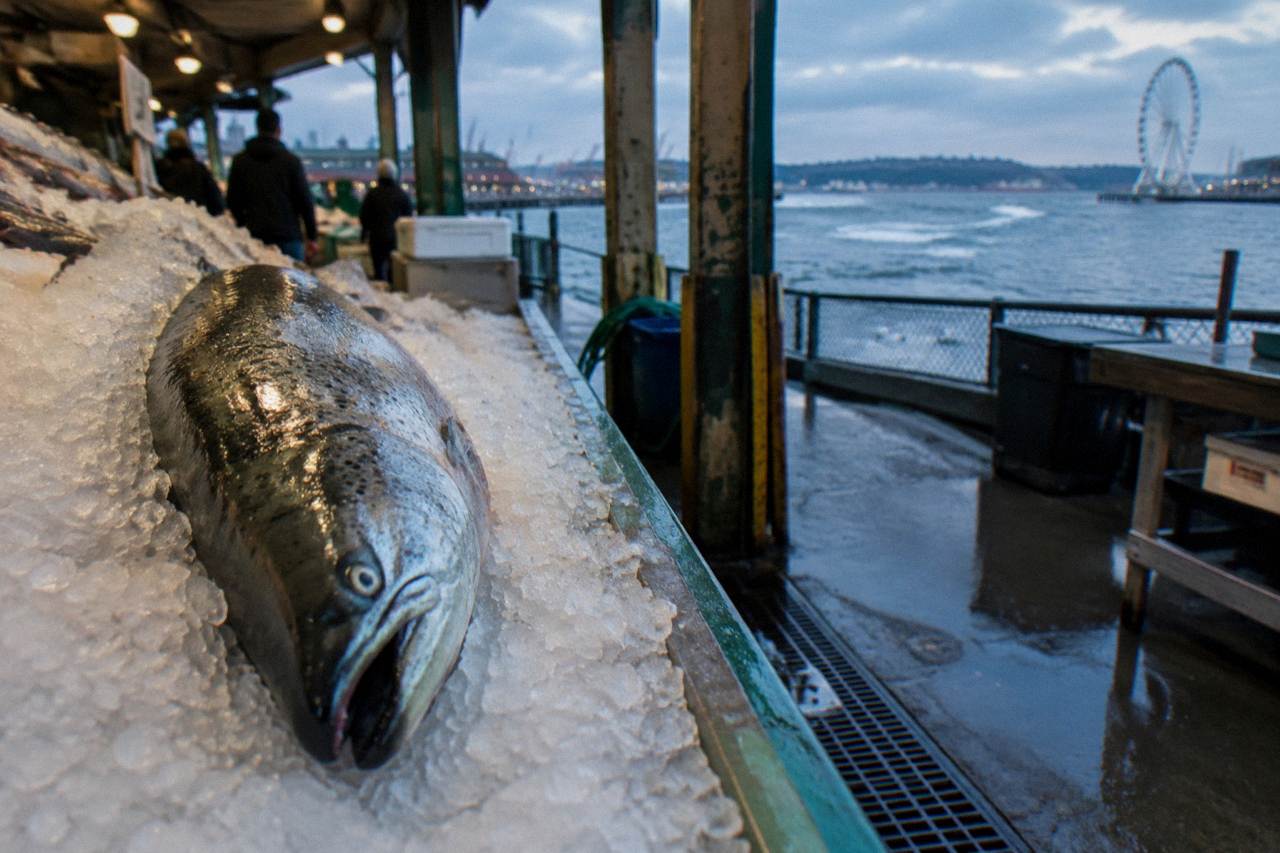
Seattle eats five wild Pacific salmon species: king, sockeye, coho, pink and chum. The famous Copper River fish arrive in late May, and the Market's seafood counters open from 7 a.m. Expect to pay from $119 per person for a seafood-focused tasting tour; a king or sockeye fillet at a market counter costs by the pound, so ask at the counter.
Wild salmon is the one food that ties Seattle's markets, its waterfront and its restaurant tables together. The city sits at the end of the supply line for Alaska and Puget Sound runs. This page walks through the species, the calendar, the places to eat it and the places to buy it, with the practical details a first-time visitor actually needs: which questions to ask at a fish counter, which tour formats include salmon stops, and what survives a flight home in a suitcase.
What Salmon Can You Actually Eat In Seattle?
The wild salmon you will see on Seattle menus and counters comes from five Pacific species: Chinook (king), sockeye (red), coho (silver), pink and chum, and king and sockeye carry the reputation and the price while the others fill the smokehouses and the shelves. Farmed Atlantic salmon exists in the city too, but the menus that trade on the name advertise wild fish, and the counters at Pike Place Market label the difference when you ask. King is the largest and richest, sockeye is deep red and firm, coho sits milder in the middle, and pink and chum appear more often smoked, canned or in budget-friendly cuts than as the centerpiece of a dinner plate.
The distinction matters because the word "salmon" on a menu covers an enormous range. A king fillet and a chum fillet are different meals with different price tags, and a buyer who cannot tell them apart risks paying king prices for chum. Counters in the Market will tell you what is in the case, and the good ones cut to order rather than selling you whatever was portioned that morning.
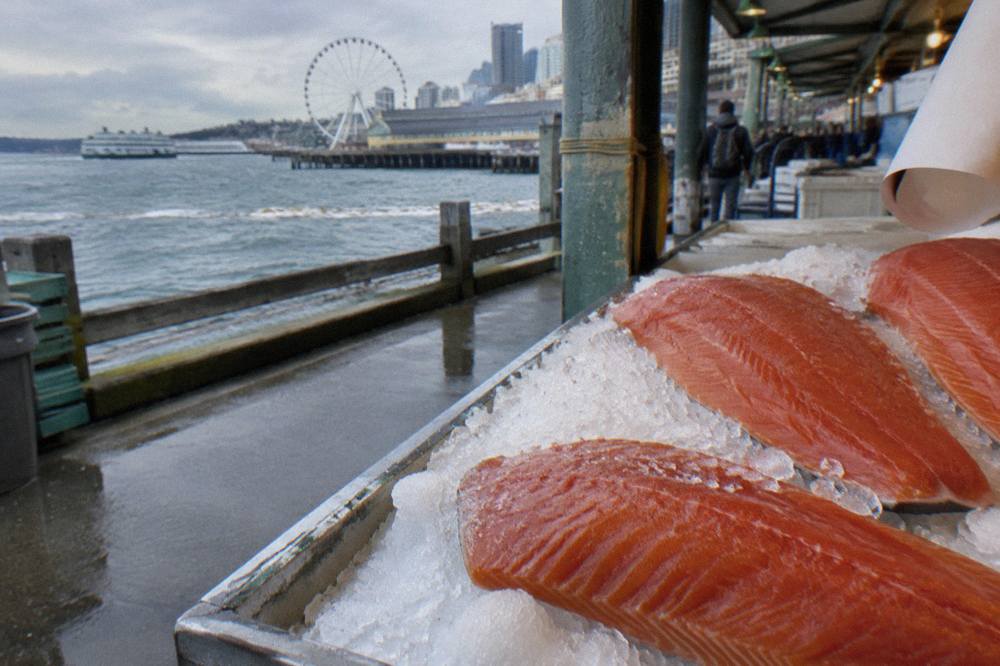
Color is the fastest tell at a glass case. Sockeye runs a deep, almost brick red that stays vivid after cooking; king ranges from orange to a pale ivory depending on diet; coho leans orange-red; chum is paler and more matte. Fat content tracks the size of the flakes: king breaks into large, buttery pieces, while chum and pink are leaner and firmer and dry out fast if overcooked. None of that requires expertise, only a willingness to point at the case and ask what arrived that day.
Here is the quick reference for what each species gives you at the table:
| Species | Also Called | Flesh And Flavor | Where You Usually Find It |
|---|---|---|---|
| Chinook | King | Highest fat, buttery, large flakes | Premium counters, high-end restaurants |
| Sockeye | Red | Deep red, firm, pronounced flavor | Counters and menus all season |
| Coho | Silver | Milder, medium fat | Grills, casual menus |
| Pink | Humpy | Softer, paler | Smoked and canned products |
| Chum | Keta, dog | Lean, firm | Smoked, jerked, budget fillets |
The Copper River names you see on signs refer to a river in Alaska, not a local waterway, and much of what fills Seattle cases in high summer is Alaska-caught. The Market's own visitor FAQ answers common questions about buying seafood there, and it is worth a read before you shop: the Pike Place Market visitor FAQ.
When Does Wild Salmon Season Run In Seattle?
Fresh wild salmon in Seattle runs roughly from mid-May into early fall, with the Copper River opener in late May as the city's unofficial starting gun and king and sockeye filling the counters through summer before coho carries the autumn months. The 2026 Copper River commercial opener was reported for May 22, with the first fresh fish reaching Seattle pre-order customers around May 27 and the first restaurant plates following around June 1. Those dates shift every year with the fishery and the processors, so treat them as the pattern rather than a promise for any given season.
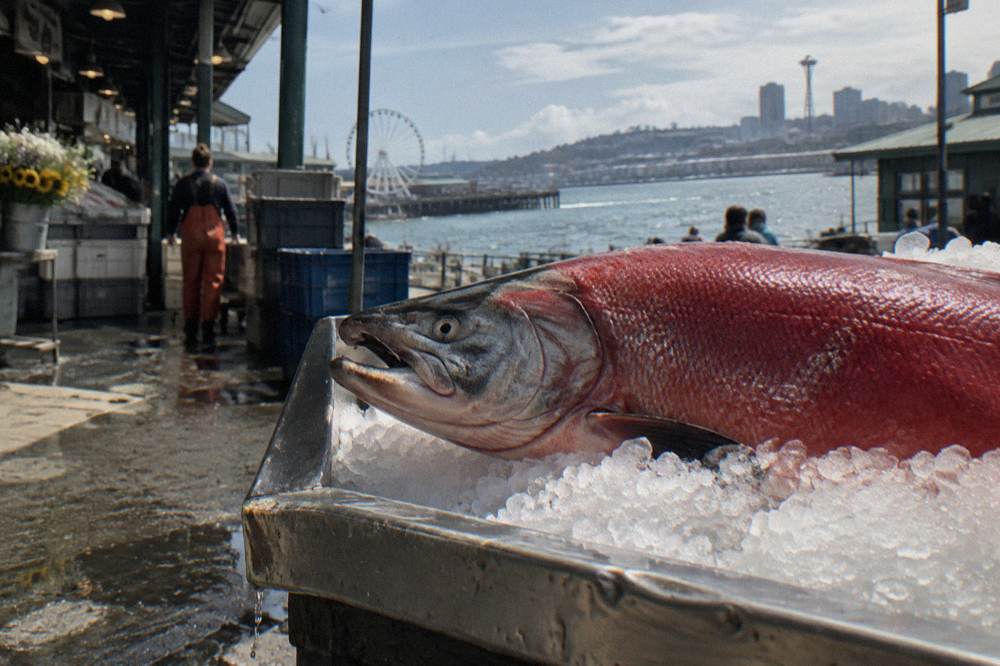
By July and August, fresh wild fish is simply everywhere: counters, food halls, restaurant specials, the grill smells drifting off restaurant patios downtown. Late summer adds coho, and as fall deepens the fresh case gives way to smoked, frozen and canned product, which in Seattle is not a downgrade but a distinct tradition with its own devoted following. The cold months are also when oysters hit their peak, and many salmon stops sit next to oyster bars; that pairing is covered in the salmon and oyster seafood walk guide.
Weather shapes the trip more than most visitors expect. July and August average highs of about 77 to 78 degrees with under an inch of rain, while November is the wettest month at 6.31 inches, December 5.72 and January 5.78, per the NOAA 1991 to 2020 climate normals at Sea-Tac. A summer trip lands you in peak fresh season with long daylight evenings; a November trip leans toward smoked fish, chowder and oysters, which is a different and arguably cozier food city.
| Period | What Is Fresh | What To Expect |
|---|---|---|
| Late May | First Copper River king and sockeye | Hype, pre-orders, highest prices |
| June to August | King, sockeye, coho at peak | Full counters, steady restaurant supply |
| September to October | Coho tailing off, more smoked and canned | Oyster season opening |
| November to April | Primarily smoked, frozen, canned | Cold-water shellfish takes the spotlight |
If salmon tasting is the whole point of your visit, a guided walk through the Market's seafood stalls is the most efficient way to cover several stops in one sitting without doing the research yourself.
Where To Eat Wild Salmon In Seattle?
For eating salmon on the spot, Pike Place Market and its downtown fringe hold the densest cluster in the city: Matt's in the Market and City Fish inside the Market itself, MARKET Seafood Eatery on the downtown side, and the waterfront rooms a short walk below. The Market has anchored Seattle's food trade since it opened on August 17, 1907, when six to twelve farmers brought produce wagons to Pike Place, and the seafood counters still open from 7 a.m., hours before the craft stalls roll out their tables.
Matt's in the Market appears on two of the tasting walks covered on this site, which tells you something about its standing with the operators who plan routes for a living. Below the Market, the Seattle waterfront adds sit-down seafood rooms within a ten minute walk of the fish stalls, and Pier 54 carries its own history: Ivar's Acres of Clams opened there on July 22, 1946, and has served fish through the window to the Sound ever since.
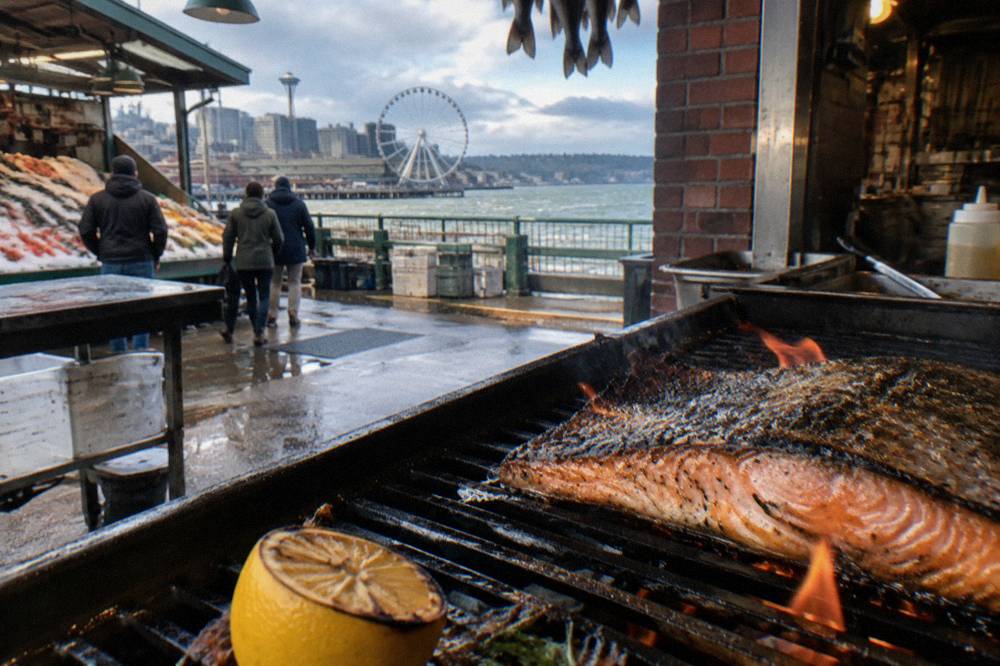
The most efficient introduction is a guided tasting walk, and the only seafood-led product of its kind among the options covered here is the Seattle Seafood Tour: A Long Lunch of Market-Fresh Tastings, a 2 hour 15 minute walk from the Market's north end that the listing describes as eight seafood tastings across six restaurants. It runs from $119 per person, is rated 4.7 across 40 reviews, and is a long lunch rather than a stall crawl. It is not oyster-specific and does not go to Pioneer Square or the Chinatown-International District, which keeps the whole route inside the Market and downtown seafood corridor.
Two other walks suit salmon seekers with different appetites. The chef-guided Market walk below pairs a professional cook's commentary with nine standing tastings across vendors including the chowder counter and a cheese shop, and the by-the-course tour builds a full seated meal across six stops including Matt's in the Market itself.
For planning a wider trip around the fish, the official tourism body maintains neighborhood and event listings at Visit Seattle, useful for checking which food events coincide with the salmon runs before you lock travel dates.
Where To Buy Wild Salmon To Take Home?
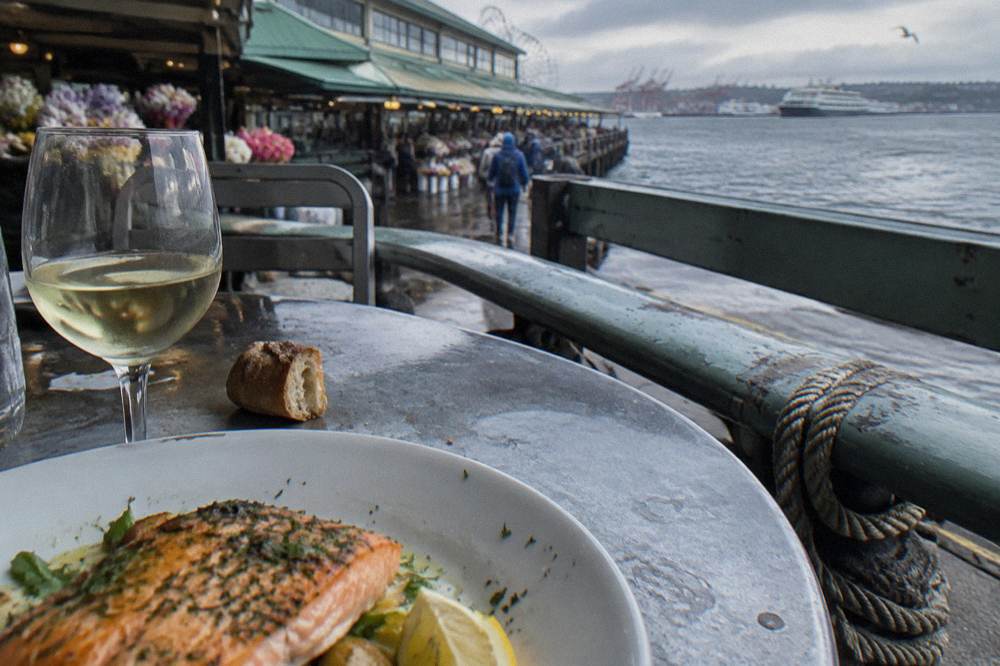
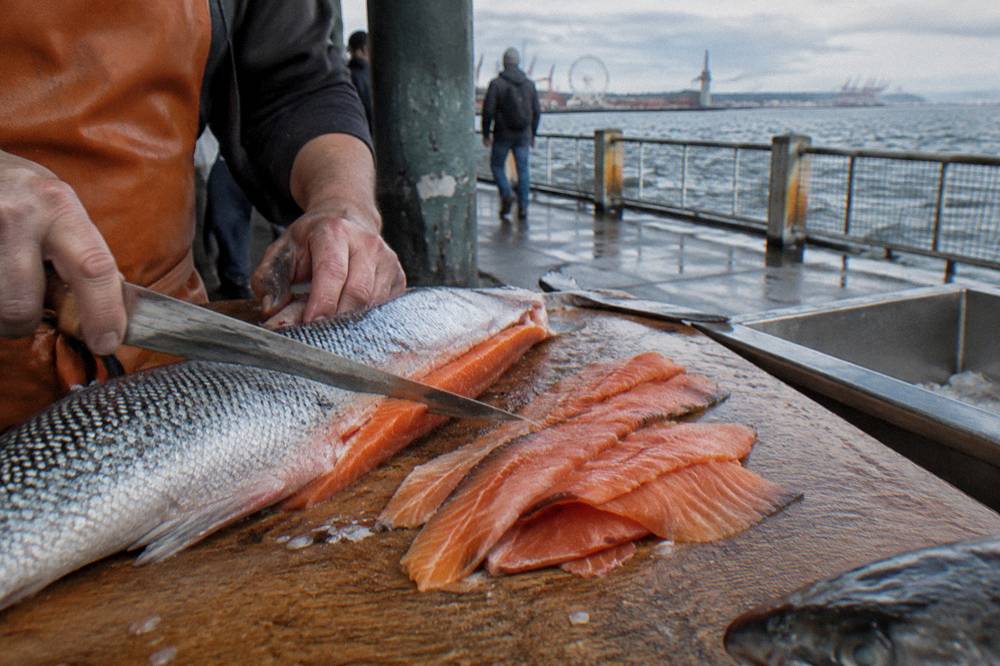
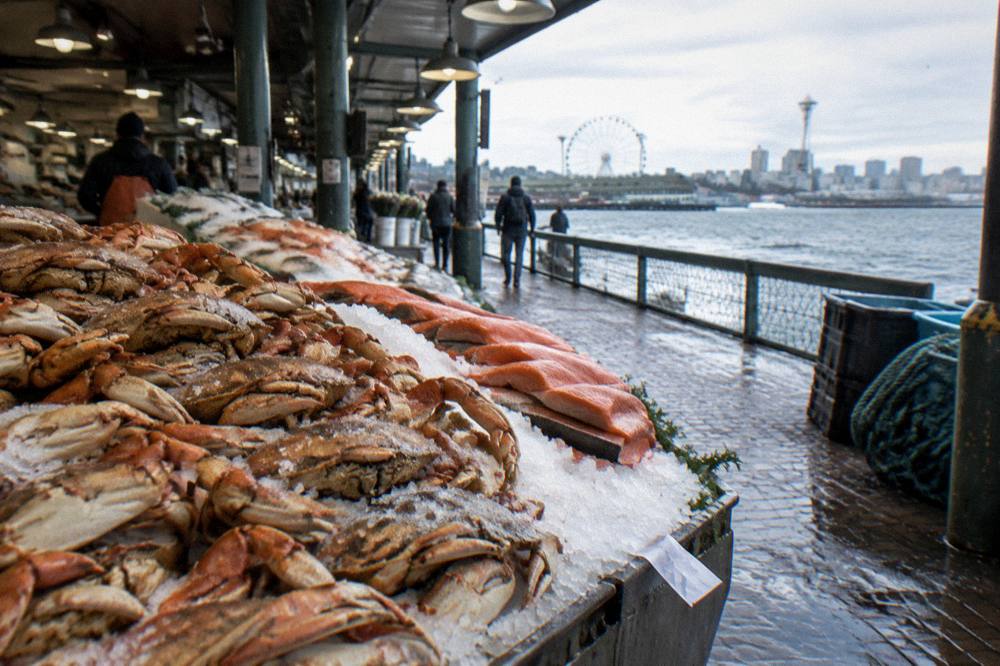
To buy salmon, go to the Pike Place Market fish counters for same-day fillets cut to order while you watch, or buy smoked, canned and jarred salmon from Market vendors and specialty shops when you need something that survives a plane flight. The Market is open 363 days a year, closed only Thanksgiving Day and Christmas Day, with seafood and produce counters starting at 7 a.m. and most of the Market active from about 10 a.m. to 5 p.m. Mornings before noon are generally the least crowded window, per the Market's own guidance.
The fish-throwing counter at Pike Place Fish Market is the famous one, and the spectacle is real: fish fly when a customer buys, during business hours. Buying there is straightforward if you know what you want; the counters will cut, portion and pack, and a whole side can be broken down into meal-size pieces on request. The smart move is to ask what came in fresh that morning rather than pointing at the first red fillet you see behind the glass, because the case holds a mix of species and price points at any given hour.
For traveling, smoked and canned fish beat fresh fillets every time. Cold-smoked sides, hot-smoked chunks, canned sockeye and salmon jerky all pack into a suitcase without ice. Fresh fillets can travel in a sealed cold pack for a same-day flight, but the window is tight and the risk is yours. The specifics of what to watch at the fish counter are covered in the Pike Place Fish Market buying guide.
| Buy This | Keeps How | Best For |
|---|---|---|
| Fresh fillet, cut to order | Same day, or one day chilled | Eating in Seattle tonight |
| Cold-smoked side | Ask the counter | A gift or a brunch at home |
| Hot-smoked portions | Ask the counter | Eating on the trip, packing home |
| Canned or jarred sockeye | Months on the shelf | Checked luggage, gifts |
Getting to the Market is cheap by big-city standards: a King County Metro adult ride is $3.00 and the regional day pass is $6.00, and Link light rail runs adult one-way trips at $3.00 with youth 18 and under free, per King County Metro's fare page and Sound Transit. Sales tax of 10.55 percent is added at the register on restaurant meals.
Smoked Or Grilled: How Do Seattle Kitchens Prepare Salmon?
Seattle kitchens split salmon preparation into two camps: quick high-heat cooking of fresh fillets, meaning grilling, roasting and searing, and the long cold-smoke tradition that preserves the fish and turns it into a distinctly regional product with a shelf life long enough to carry home in a suitcase. The smoking tradition in the Pacific Northwest long predates the city itself; Indigenous communities of the region have cold-smoked salmon, often over alder wood, for countless generations, and modern Seattle smokehouses work in that lineage whether they say so on the label or not.
Grilled or roasted king and sockeye is the summer restaurant plate: a fillet, salt, heat, and whatever the kitchen's signature accompaniment happens to be, from seasonal vegetables to grain bases. Hot-smoked salmon, cooked through and flaky, shows up in salads, on bagels and sold by the piece at counters, and it keeps far better than raw fish. Cold-smoked, the translucent sliced kind, is closer to lox in use but firmer and more assertive in flavor than the Atlantic version most visitors know from delis elsewhere.
If tasting your way through both styles in one afternoon sounds better than researching individual vendors one at a time, the by-the-course tour in the options earlier on the page builds a seated, multi-stop meal that includes Market institutions among its six stops.
One honest caution: smokehouses and counters do not publish standardized hours or prices. Ask at the counter what was smoked that week and what is being cut to order that day; the answer is often the most useful food intelligence you will get on the trip.
How Much Should A Salmon Meal Or Tour Cost In Seattle?
There is no honest single number for a salmon meal in Seattle, because dish prices are set by each restaurant; what you can actually plan around are the tour prices, which run from $30 to $160 per person depending on format, and the sales tax, which adds 10.55 percent at the register on restaurant meals. The tour prices below are from-price figures as printed by each operator, per person, and they are the only firm numbers available for budgeting a guided tasting day.
| Tour | Duration | Price Per Person | Rating |
|---|---|---|---|
| Seattle Seafood Tour: A Long Lunch of Market-Fresh Tastings | 2 hours 15 minutes | From $119 | 4.7 across 40 reviews |
| Chef Guided Food Tour of Pike Place Market | 2 hours | From $75 | 4.9 across 4,806 reviews |
| Pike Place By-the-Course Tour with 4 Gourmet Tastings | 2 hours 15 minutes | From $119 | 4.5 across 51 reviews |
| Happy Hour Tour of Pike Place Market | 2 hours | From $30 | 10 reviews, no star rating printed |
| Pike Place Market: Insider's Breakfast Tour | 2 hours 30 minutes | From $160 | 5.0 across 90 reviews |
Note what those prices include and exclude, because the differences are not obvious from the names. The seafood long-lunch lists eight tastings across six restaurants. The by-the-course tour is a full meal with drinks not included, bought at the restaurants. Tipping in Seattle is not mandated and practice varies; no percentage needs to be budgeted as a rule of the city. Seattle's minimum wage rose to $21.30 in 2026 and goes to $22.14 on January 1, 2027
For sit-down restaurant strategy beyond the fish counters, the Pike Place sit-down restaurants guide covers which tables are worth the queue and how to time them against the Market crowds.
What To Know Before You Go For Salmon In Seattle?
Plan around three things before you set out: the season you are visiting, because it decides fresh versus smoked; the street-access pilot currently changing how Pike Place works on weekends; and the fact that guided groups inside the Market are capped at 16 people per guide, which shapes every walking tour you might join. The Market's Street Access Project Phase 3 runs from October 1, 2026 to March 31, 2027: Pike Place is shared by vehicles and pedestrians Monday to Thursday, but Friday to Sunday from 11 a.m. to 4 p.m. access is limited to deliveries, accessibility needs and pre-arranged pickups at 1st Avenue and Pike Street. If your salmon trip falls in that window, arrive outside those hours or expect to approach on foot from downtown.
The Market permit system also shapes the guided experience in ways worth knowing. Operators need a Market-issued permit, groups are capped at 16 per guide, no amplified sound is allowed, and each participant pays a $1 fee built into the experience. None of that changes your day visibly, but it explains why the walks feel small and personal, and why guides move through the crowds the way they do rather than lecturing a tour group from a fixed spot.
Practical logistics worth booking around: the Market is closed only on Thanksgiving Day and Christmas Day, and its planning page carries current access notices and event calendars: the Market's plan your visit page. If you are pairing salmon with a ferry day, the Seattle to Bainbridge walk-on fare is $11.35 adult, collected from Seattle with the return free, per Washington State Ferries.
Where Does Salmon Fit Among Seattle's Other Seafood?
Salmon is the headline act, but it shares the case with Dungeness crab, geoduck and a genuinely year-round oyster scene, and visitors who come to the city only for salmon usually end up eating all four before the trip is over. Cold-water months, roughly September to April, are the traditional oyster peak, while crab seasons are quota-managed and shift year to year, so no specific crab date should ever be promised by a menu or a guide, and any tour that guarantees a species on a given week is overpromising.
The neighboring guides carry the detail on each. The Dungeness crab and geoduck primer explains what to order when crab is in and what geoduck actually tastes like, and the chowder guide for Seattle covers the other dish the counters are famous for. A long weekend can realistically cover salmon at the counters in the morning, crab at a sit-down room at night, oysters on the waterfront and a smoked-fish purchase for the flight home, all without leaving the downtown core.
If one guided experience has to stand in for all of it, the seafood long lunch described earlier is the only seafood-led walk of the options here, and its eight-tasting format reaches several of these stops in a single sitting. For a format that leans sit-down rather than counter-side, there is one more option worth naming.
That downtown restaurant walk, from $135 per person and rated 4.7 across 89 reviews, leans toward appetizers and drinks at sit-down rooms including a seafood eatery, a cocktail bar and a chocolate shop, a different shape of experience from the counter-based Market walks and a better fit for an evening than a morning.
Whether you buy a fillet at 7 a.m., taste your way through six restaurants at lunch, or carry a smoked side home in your suitcase, the same rule holds at every counter in the city: ask what came in fresh, and buy the species in front of you, not the name on the sign.
Common Questions About Wild Salmon In Seattle
What Salmon Can You Actually Eat In Seattle?
Five wild Pacific species: Chinook (king), sockeye (red), coho (silver), pink and chum. King and sockeye are the premium fresh fish; pink and chum appear mostly smoked or canned. Counters label wild versus farmed if you ask.
When Does Wild Salmon Season Run In Seattle?
Roughly late May into early fall. The 2026 Copper River opener was reported for May 22, with first Seattle arrivals around May 27 and first restaurant plates around June 1. June through August is the peak for fresh king and sockeye.
Where Is The Best Place To Eat Wild Salmon In Seattle?
Pike Place Market and its downtown fringe hold the densest cluster, including Matt's in the Market and City Fish inside the Market, plus seafood restaurants on the nearby waterfront. A seafood-led tasting tour covers eight tastings across six restaurants in one walk.
Where Can I Buy Wild Salmon To Take Home?
The Pike Place Market fish counters cut fresh fillets to order from 7 a.m. For travel, buy smoked sides, hot-smoked portions or canned sockeye, which keep far longer and pack into luggage.
Is Smoked Or Grilled Salmon Better In Seattle?
They are different products rather than rivals. Grilled fresh king or sockeye is the summer plate; cold-smoked and hot-smoked salmon are the carry-home tradition rooted in Indigenous smoking practices of the region.
How Much Does A Salmon Food Tour In Seattle Cost?
Seafood and market tasting tours run from $30 to $160 per person depending on format. The seafood long lunch is from $119 per person for 2 hours 15 minutes; sales tax of 10.55 percent is added at the register on restaurant meals.