International District Food Walk: Dim Sum, Noodles And Bakeries
The Chinatown-International District packs dim sum parlors, noodle shops, bakeries and an Asian food market into a walkable grid south of Pioneer Square. Here is how the neighborhood works, what to eat, and how a guided downtown food tour fits the same afternoon.
Short answer
The Chinatown-International District sits about a mile south of Pike Place Market, reachable on Link light rail for a $3.00 adult fare. Plan a walk around dim sum at lunch, noodles or pho mid-afternoon, and bakeries plus Uwajimaya before you leave. No guided food tour runs inside the neighborhood itself; the bookable alternatives start at Pike Place, from $50 per person.
Seattle's Chinatown-International District grew out of the Jackson Street Regrade around 1910, when filled tideflats made construction possible and Asian immigrant businesses took root along King Street and Jackson Street. More than a century later the same few blocks hold dim sum restaurants, Hong Kong-style noodle shops, Vietnamese pho houses in Little Saigon, family bakeries and a grocery store that started as a Tacoma fishcake truck in 1928. Unlike Pike Place Market it costs nothing to wander.
What Makes The Chinatown-International District Seattle's Best Neighborhood For Eating?
The district concentrates three distinct food cultures, Chinese, Japanese and Vietnamese, inside a grid you can cross on foot in fifteen minutes, anchored by a National Register historic district listed in 1986 and a food market that traces its roots to a Tacoma shop founded in 1928. Few American neighborhoods pack this range into so little space. Chinatown proper centers on South King Street and Maynard Avenue South, Japantown sits a block east around Sixth Avenue South, and Little Saigon spreads south of South Jackson Street toward Rainier Avenue. A walker moves from Cantonese barbecue windows to Japanese grocers to pho houses without ever needing a car. The density is the point: a first-time visitor can sample four cuisines in an afternoon and still be back downtown for dinner.
The neighborhood's anchor institutions explain its staying power. The Wing Luke Museum, opened in 1967 and housed in the 1910 East Kong Yick Building since 2008, preserves the pan-Asian Pacific American history of the blocks around it. Uwajimaya, the enormous Japanese grocery that began in Tacoma in 1928 and opened its Seattle store after World War II, functions as both supermarket and tourist attraction, an aisle-by-aisle tour of Japanese, Chinese, Korean and Southeast Asian pantry staples. Around them, restaurants have survived on loyal neighborhood trade for decades, which is why the district rewards a slower walk rather than a single-stop visit.
| Sub-area | Center point | What it is known for |
|---|---|---|
| Chinatown | S King St and Maynard Ave S | Dim sum, Cantonese barbecue, bakeries |
| Japantown | Around 6th Ave S | Japanese groceries, sweets, small restaurants |
| Little Saigon | S Jackson St toward Rainier Ave | Pho, banh mi, Vietnamese markets |
| Hing Hay Park | 423 Maynard Ave S | Gathering square, festivals |
For readers planning a full Seattle weekend around this neighborhood, the seattle food by neighborhood guide maps where each district sits and what it does best.
How Do You Plan An International District Food Walk In Seattle?
Arrive mid-morning, start with dim sum when the dining rooms are at their liveliest, walk off lunch through the shops and Hing Hay Park, then finish with noodles, pho or bakery stops before the afternoon fades; Link light rail gets you there from downtown in minutes for a $3.00 adult one-way fare. The district is compact enough that a rigid itinerary works against you. A better approach is to pick two sit-down or counter stops, one dim sum and one noodle shop, and leave room for whatever the bakery windows and grocery aisles suggest along the way. Budget two to three hours for a first visit, more if the Wing Luke Museum is on the list.
Money is simple here. Seattle adds 10.55 percent sales tax at the register on restaurant meals, so the price on a menu board is not the price you pay. Individual restaurant and bakery prices vary and are best checked on the day, this page does not quote them. Transit is the cheap part: King County Metro charges $3.00 per adult ride and a regional day pass costs $6.00, and Sound Transit's Link light rail runs the same $3.00 adult one-way fare, with youth 18 and under riding free. An ORCA card or a contactless bank card taps you through.
| Stop type | How many to plan | When to go | Why it works on a walk |
|---|---|---|---|
| Dim sum | One, at lunch | Late morning to early afternoon | Shared tables, fast turnover, many small dishes |
| Noodles or pho | One, mid-afternoon | Any time | Small shops, quick service, warming bowls |
| Bakeries | Two or three, between stops | Afternoon | Grab-and-go, eaten walking |
| Uwajimaya | One, before leaving | Afternoon | Food hall, ready-to-eat counters, pantry gifts |
One honest caveat matters before the planning gets detailed: no guided food tour operates inside the Chinatown-International District or Little Saigon. The guided options that pair well with this neighborhood all start elsewhere, downtown or at Pike Place Market. If a guide is the difference between a good food day and an overwhelming one, the bookable walks are one neighborhood over.
The pairing that makes most sense for an International District day is a market walk in the morning and the neighborhood on your own in the afternoon, or the reverse with a downtown restaurant tour after dark. The next section lays out exactly which guided options exist and what each one covers.
Which Guided Seattle Tours Pair Best With An International District Visit?
Three guided walks fit naturally around a Chinatown-International District day: a downtown restaurant tour with drinks and appetizers from $135 per person, a chef-guided Pike Place Market walk from $75, and a market-fresh seafood lunch tour from $119, none of them inside the district itself. The Downtown Seattle Restaurant Tour with Drinks and Food is the closest in spirit to what an International District walk would be: 2 hours 30 minutes of cocktails and appetizers at downtown restaurants and bars, rated 4.7 across 89 reviews, starting from the Pike Place Market north end and routing through sit-down rooms rather than market stalls. For a visitor who wants the guided, someone-else-decides experience and does not need it to happen on King Street, it fills the role directly. For more options a short walk south of the district, the guide to Pioneer Square's pubs, pastries and historic food stops maps out the coffee, bakeries and bookable walks in Seattle's oldest neighborhood.
The Pike Place alternatives cover the market side of the same day. The Chef Guided Food Tour of Pike Place Market runs 2 hours, is rated 4.9 across 4,806 reviews, and costs from $75 per person, with nine vendor stops and standing tastings at places like Beecher's Handmade Cheese and Pike Place Chowder. It is the most reviewed walk on this site, and its start point at First Avenue and Pine Street is a short ride from the International District.
Seafood-minded walkers have a dedicated option too. The Seattle Seafood Tour, a long lunch of market-fresh tastings, runs 2 hours 15 minutes from $119 per person, rated 4.7 across 40 reviews, with eight seafood tastings across six market and downtown restaurants. It is the only seafood-themed guided walk available, and its brunch-style pacing leaves the late afternoon free for the International District.
Both market tours and the downtown restaurant tour can be booked for the same day as a self-guided International District walk, morning at the Market, afternoon in the district.
Where Do You Find The Best Dim Sum In Seattle's International District?
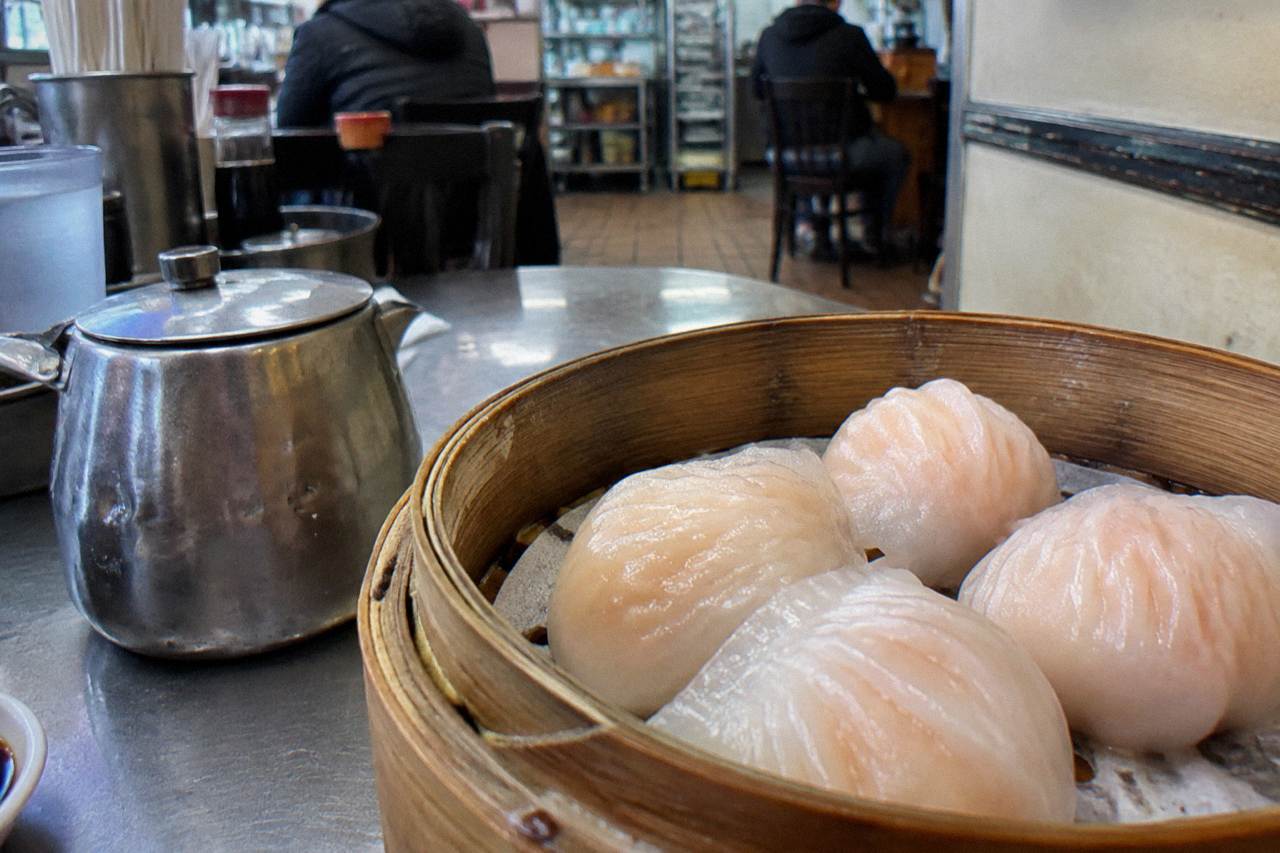
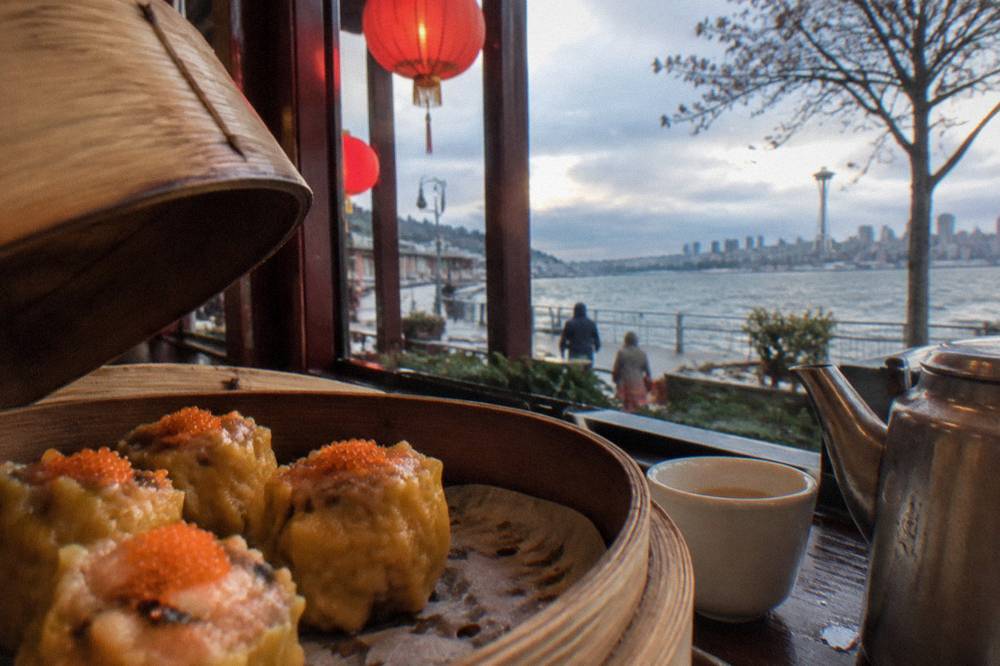
Dim sum in the district runs from old-school Cantonese dining rooms around South King Street to the a la carte Hong Kong-style counter at Dim Sum King, which opened in 2009 in the Bush Hotel at 617 S Jackson St, and the practical answer is to pick one room and commit to a full table of small plates. The traditional rooms bring carts or long menus of har gow, siu mai and rice noodle rolls to shared tables, and they are at their best before noon when the kitchens turn over fastest. Dim Sum King took a different path: a husband-and-wife shop doing a la carte dim sum rather than cart service, which suits solo walkers and pairs who want six dumplings, not a banquet. Ordering strategy is the same everywhere: point, share, reorder what disappeared first.
Timing shapes the experience more than the choice of restaurant. Dim sum is a morning-to-early-afternoon meal, and rooms quiet down after 2 p.m. as kitchens shift. A first-timer arriving at opening time gets the full menu and the calmest service; an 11:30 arrival gets the atmosphere, steam, carts, and the noise of a full room. Neither is wrong, but they are different meals. For deeper background on the dish families and how to order them, the dim sum in Seattle guide covers the vocabulary and the etiquette in detail.
| Dim sum style | Where it sits in the district | Best for | Order this way |
|---|---|---|---|
| Cart or menu dining rooms | S King St area | Groups, long lunches | Order broadly, share everything |
| A la carte counter | 617 S Jackson St, Bush Hotel | Solo walkers, quick stops | Six to eight pieces, eat on site |
One caution for planners: dim sum rooms are not tourist attractions with fixed hours published for visitors, they are neighborhood restaurants with their own schedules, and hours change. Check before you build an itinerary around a specific room.
What Are The Noodle And Pho Stops On An International District Food Walk?
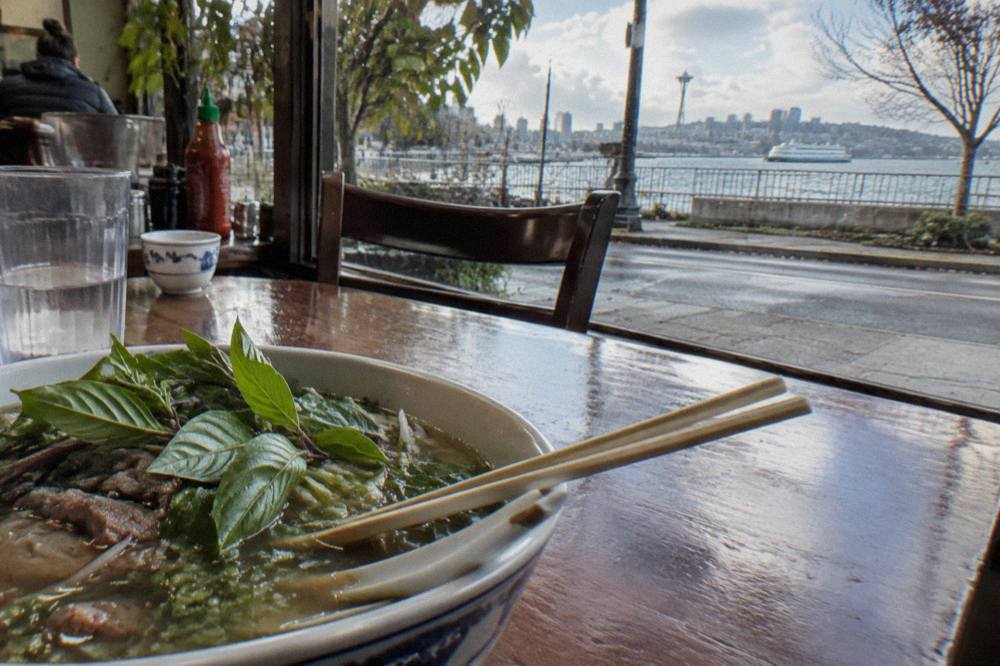
Noodles in the district split into Cantonese and Vietnamese traditions: hand-pulled and egg-noodle shops in Chinatown proper, and a dense strip of pho houses in Little Saigon along and south of South Jackson Street, where a bowl of beef pho is the neighborhood's most reliable mid-afternoon meal. The Cantonese side favors won ton noodle soup and roast meats over noodles, often in narrow rooms with menus on the wall. The Vietnamese side favors pho, the clear beef broth with rice noodles and herbs, plus banh mi and rice plates in the same blocks. A serious walker can do both in one afternoon, one as lunch, one as a later bowl, though most people pick a lane.
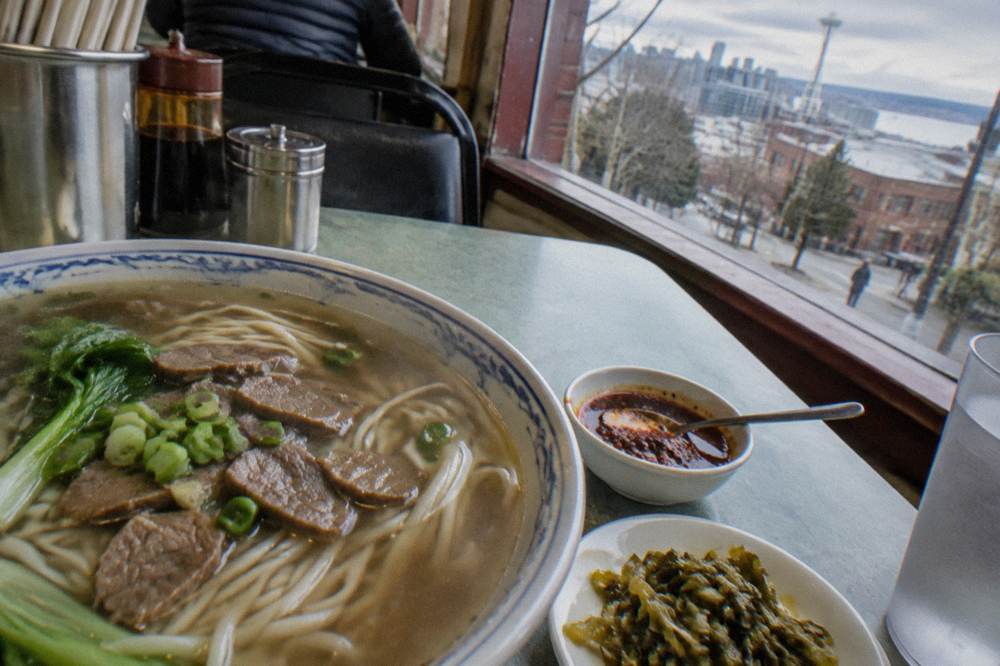
The pho houses of Little Saigon are the district's most casual eating, counter service, fast turnover, and menus short enough to decide in a minute. Broth styles vary by shop, and regulars argue about them the way Seattle argues about coffee, but a first visit does not need a verdict, just a bowl. For a fuller map of the Vietnamese side of the neighborhood, including where to start if pho is new to you, the pho and Vietnamese food in Seattle guide walks through the dishes in order of friendliness to newcomers.
| Noodle tradition | Neighborhood pocket | Signature bowl | Style of room |
|---|---|---|---|
| Cantonese egg noodles | Chinatown, S King St | Won ton noodle soup, roast duck over noodles | Small, older, fast |
| Vietnamese pho | Little Saigon, S Jackson St | Beef or chicken pho with herbs | Casual counters, large tables |
| Banh mi and rice plates | Little Saigon | Sandwiches, grilled pork plates | Takeaway-friendly |
Which Bakeries And Sweet Shops Should You Stop At In The International District?
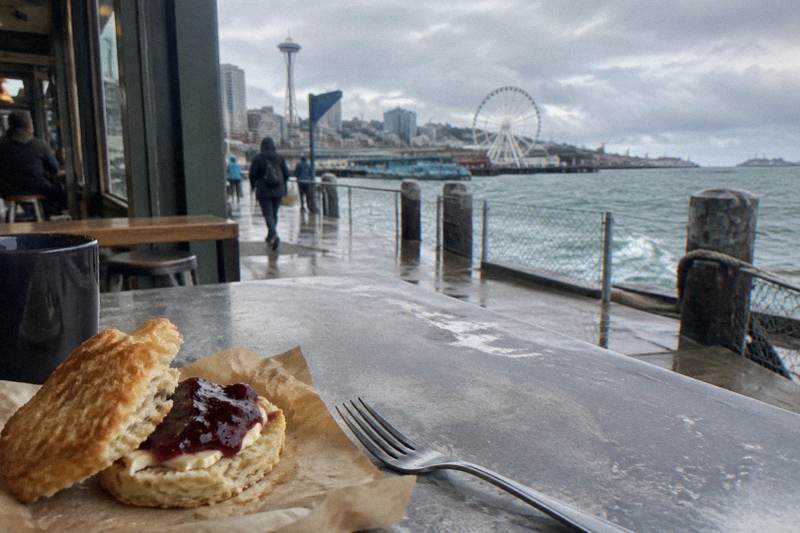
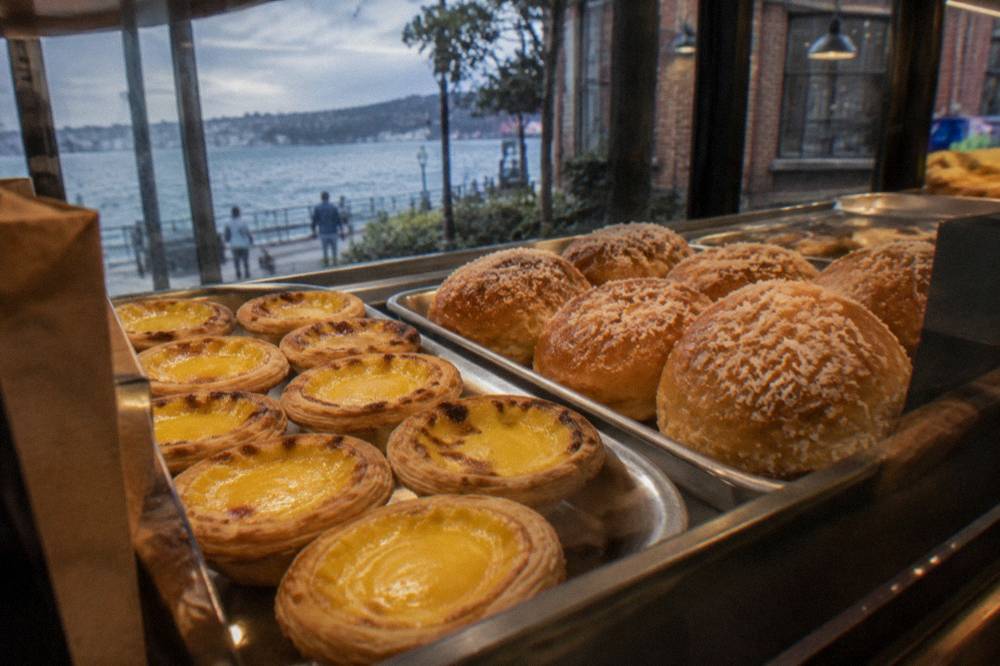
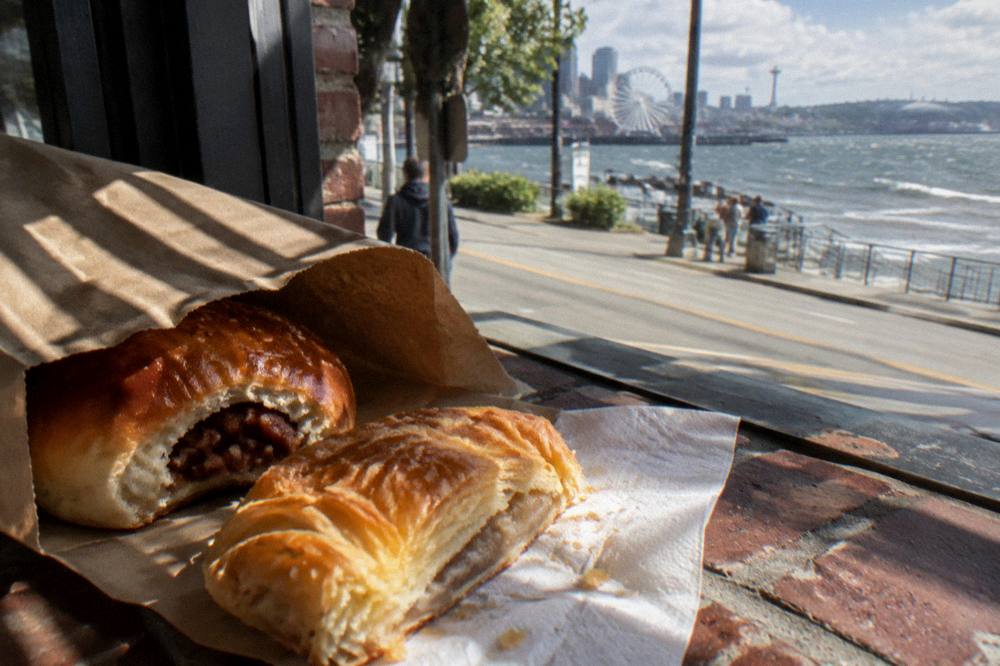
The district's bakeries are built for walking: Chinese bakeries selling egg tarts and pork buns from glass cases, Japanese sweet shops near Japantown, and the ready-to-eat counters inside Uwajimaya, so plan two or three small stops rather than one dessert sitting. Chinese bakery counters work on a tray-and-tongs system, you take a tray, a pair of tongs and a paper sleeve, and assemble your own selection, paying by the piece at the register. Egg tarts come out in batches and are best warm. Pork and barbecue buns travel well, which makes them the ideal walking food between dim sum and pho stops. Japanese confections around Japantown lean toward mochi, dorayaki and seasonal items tied to the shop's own calendar.
Uwajimaya deserves its own stop regardless of the bakery plan. The store's ready-to-eat sections, from its food court counters to shelves of Japanese and Chinese snacks, function as a self-guided tasting menu where everything costs a few dollars and nothing needs a table. It is also the practical end point of a walk: pantry gifts, mochi for the train ride, and a bag of snacks for later. The Uwajimaya and International District markets guide covers the store aisle by aisle for first-timers.
How Does The History Of The International District Shape Its Food?
The district's food scene grew after the Jackson Street Regrade around 1910, and restaurants like Tai Tung, established in 1935, and Kau Kau BBQ, which says since 1974, have fed the neighborhood through every cycle since. The Seattle Chinatown Historic District entered the National Register in 1986, a formal acknowledgment of what the blocks had been for decades. That continuity is why the food here feels different from a strip mall food court: the restaurants are institutions with multigenerational customers, not concepts testing a market. Hing Hay Park at 423 Maynard Ave S, its name translating to a phrase about celebrating happiness, hosts the festivals that pull the whole district outdoors.
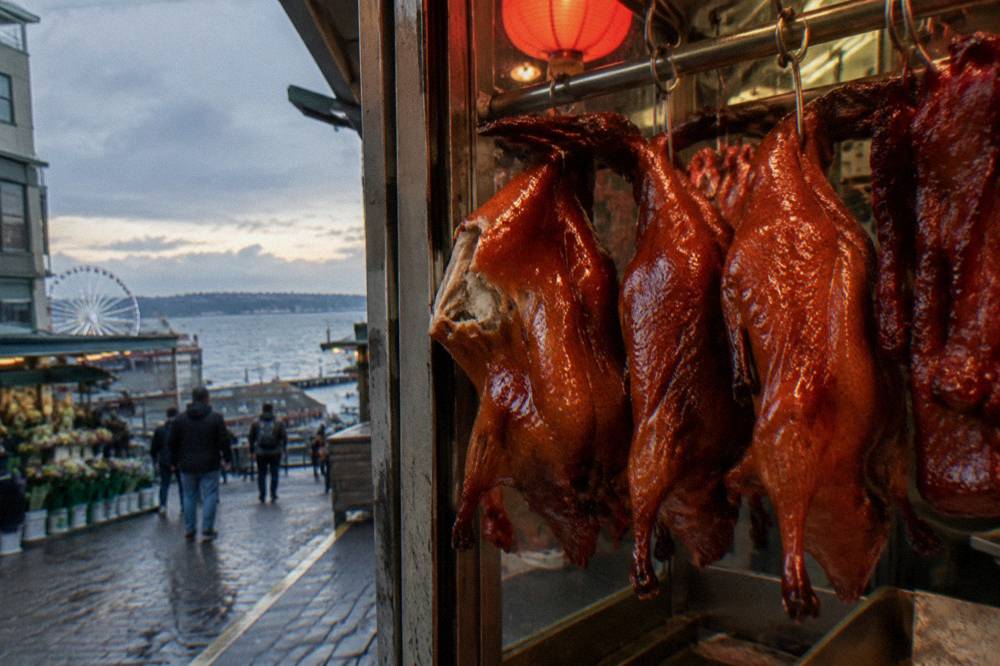
For eaters, the history is not background noise, it is the reason a self-guided walk beats a checklist. Tai Tung at 655 S King St has been run by the same family lineage since its 1935 founding and is the district's oldest surviving Chinese restaurant. Kau Kau BBQ, next door at 656 S King St, hangs Cantonese roast ducks in its window the way it has since 1974. These are not museum pieces; they are working restaurants where the history is on the plate.
When Is The Best Time To Walk The International District In Seattle?
Mid-morning through mid-afternoon is the district's natural window, dim sum kitchens at full speed before noon, bakeries stocked through the afternoon, and pho houses open into the evening, while Sundays bring the added draw of neighborhood markets elsewhere in the city if you are building a full food weekend. The district itself does not run on a market calendar, but weekend days bring the festivals and the fullest dining rooms, and Sunday walkers can pair the neighborhood with one of the city's farmers markets, Capitol Hill runs Sundays 11 a.m. to 3 p.m. year-round, per Seattle Farmers Markets. Weekday mornings are the quietest version of the district, easiest for photography and unhurried bakery counters.
Weather matters less here than in most of Seattle's food neighborhoods, and that is a real advantage from November through February. November is the wettest month in the city at 6.31 inches of rain per the NOAA 1991 to 2020 normals at Sea-Tac, and December adds 5.72 more. Much of the district's eating happens indoors, and the walks between stops are short, two or three blocks at a time. A rainy January afternoon is arguably the best dim sum weather Seattle offers. Summer walkers get the festivals and the park life instead, trading dry sidewalks for bigger crowds.
| Season | District character | Trade-off |
|---|---|---|
| Summer, July and August | Festivals, park events, high 70s average | Most crowded, longest waits |
| Fall, October and November | Quieter rooms, rainy-day eating | Wettest months, carry a layer |
| Winter, December to February | Steaming bowls, empty tables | Short days, cold evenings |
| Spring, March to May | Blossoms, mild afternoons | Variable weather hour to hour |
How Do You Get To The International District And What Does A Day Cost?
Link light rail serves the district directly at the International District/Chinatown station for a $3.00 adult one-way fare, buses cost the same on King County Metro, and a realistic self-guided food day budget is dominated by what you choose to eat, since the walking itself is free. From Pike Place Market the ride is a few minutes; from the stadium district or Pioneer Square it is a short walk. Drivers will find paid lots around South Jackson Street, but transit is the simpler answer on weekends when events at the nearby stadiums fill the blocks. The King County Metro fare page has the current fare details, including the $6.00 regional day pass that caps a day of riding.
The cost picture deserves honesty. This page does not quote restaurant, bakery or dish prices, they change too often and vary by shop, and the district spans a wide range. What can be stated precisely are the fixed costs around the walk: transit at $3.00 per ride, sales tax of 10.55 percent added at the register, and no admission to anything, the neighborhood, Hing Hay Park and the district's street life are all free. A guided alternative in the same day, if you add one, starts at the tour prices listed earlier, from $75 for the chef-guided market walk upward.
Guided Tour Prices Near The International District
Starting per-person prices for the three guided walks that pair with a district visit
One more pairing thought for weekend planners: the Pike Place Market Original Food Tour, 2 hours 15 minutes from $112 per person with gratuity included and 14-plus tastings from 8 vendors, makes a fuller morning alternative if you want a guide before going solo in the district in the afternoon.
What Should A First-Timer Know Before An International District Food Walk?
Go hungry, expect to order by pointing at what looks good, and treat the district as a neighborhood rather than an attraction: the restaurants are working businesses serving residents, and the walking pace that respects that is the pace that gets you fed best. Language is rarely a barrier, menus have pictures or English translations, and pointing plus a smile has carried travelers through these blocks for a century. Bring a bag for Uwajimaya purchases, wear shoes for cobbles and sidewalk grates, and do not over-schedule: two sit-down stops plus bakeries is a full day.
A note on scope, because it affects planning: this district rewards the self-guided walker, and the guided tours bookable in Seattle run in other neighborhoods, the Market, downtown restaurants, Ballard breweries, Woodinville wineries. If a guide matters to you, book one of those and give the International District its own unhurried half-day. The full set of options, and how each fits different travelers, is laid out in which food walk in Seattle you should book, with prices and durations for every guided option on this site.
Common Questions About The International District Food Walk
Is There A Guided Food Tour Of Seattle's Chinatown-International District?
No guided food tour operates inside the Chinatown-International District or Little Saigon. The bookable guided walks start at Pike Place Market or downtown: a chef-guided market walk from $75 per person, a downtown restaurant tour with drinks from $135, and a seafood lunch tour from $119. The International District itself is best explored on foot, on your own schedule.
How Do I Get To The International District From Pike Place Market?
Link light rail connects downtown to the International District/Chinatown station for a $3.00 adult one-way fare, with youth 18 and under riding free. King County Metro buses cost $3.00 per adult ride, and a regional day pass costs $6.00. The ride from downtown is a few minutes.
What Should I Eat On An International District Food Walk?
Build the walk around dim sum at lunch, a bowl of noodles or pho in Little Saigon, and stops at Chinese bakeries for egg tarts and pork buns. Dim Sum King at 617 S Jackson St serves a la carte Hong Kong-style dim sum, and Uwajimaya's ready-to-eat counters work as a self-guided tasting stop.
When Is The Best Time Of Day For Dim Sum In The International District?
Dim sum is a morning-to-early-afternoon meal, and the dining rooms are at their liveliest before noon. Arriving near opening gives the fullest menu and calmest service; arriving around 11:30 a.m. gives carts, steam and atmosphere. Rooms quiet down after 2 p.m.
Is The International District Walkable For A First-Time Visitor?
Yes. The district is a compact grid crossable on foot in about fifteen minutes, centered on S King St, 6th Ave S and S Jackson St. Hing Hay Park at 423 Maynard Ave S sits at its heart, and the walk between any two food stops is rarely more than two or three blocks.
Can I Combine The International District With A Guided Food Tour On The Same Day?
Yes, and it is a common pairing. A morning chef-guided Pike Place Market walk, 2 hours from $75 per person, leaves the afternoon free for the district, while the Downtown Seattle Restaurant Tour with Drinks and Food, 2 hours 30 minutes from $135, works as an evening finish after a day of walking the neighborhood.