Pho And Vietnamese Food In Seattle: Where To Start
Seattle's Vietnamese food scene centers on the Chinatown-International District and its Little Saigon stretch, where a century of Asian immigration and the resettlement wave that followed the Vietnam War built one of the strongest pho corridors in the country.
Short answer
Start in the Chinatown-International District, roughly 4th Avenue South to Rainier Avenue and Yesler Way to Charles Street, where pho shops sit alongside dim sum halls and the 1928-rooted Uwajimaya market. Arrive hungry, order broth by style, and pair the bowl with banh mi or imperial rolls. The tours listed here include no guided food walk inside the district, so bookable alternatives run at Pike Place Market and downtown.
Pho arrived in Seattle in the years after the Vietnam War, when Vietnamese families resettled in the Pacific Northwest in large numbers and began opening restaurants within walking distance of the Chinatown-International District's existing Chinese and Japanese businesses. The result is a compact, walkable corridor where a bowl of noodle soup can be had morning, noon and night, often a few doors from a dim sum hall, a Cantonese barbecue window and a Japanese grocer that has been trading since the years just after World War II. This page lays out where to start, how the districts differ, how to order with confidence, and what a visitor can realistically book as a guided experience, because the honest answer to that last question is narrower than many expect.
Where Do You Find The Best Pho In Seattle?
The strongest concentration of pho shops sits in the Chinatown-International District, especially the Little Saigon stretch along South Jackson Street east of Interstate 5, with a second cluster of Vietnamese restaurants scattered through Rainier Valley and, farther south, White Center. For a first-time visitor staying downtown, the International District is the obvious starting point: it is one light rail stop or a fifteen minute walk from Pioneer Square, it holds a dense mix of Vietnamese, Chinese and Japanese food, and it can be combined with a market stop or a waterfront stroll in a single afternoon. The district's boundaries run roughly from 4th Avenue South on the west to Rainier Avenue on the east, and from Yesler Way down to Charles Street, with Little Saigon occupying the blocks around South Jackson where the Vietnamese signage thickens.
The district rewards slow walking. Hing Hay Park, at 423 Maynard Avenue South, sits at the heart of Chinatown proper and hosts festivals through the year; its name translates as a celebration of happiness, and its pavilion was a gift from Taipei. Wing Luke Museum, established in 1967 and housed since 2008 in the 1910 East Kong Yick Building, preserves the pan-Asian Pacific American story of the neighborhood and makes a good first stop for anyone who wants the food to make sense historically. The museum's block alone explains why the district feels like several neighborhoods stitched together: Chinatown, Japantown and Little Saigon share the same few square blocks, each with its own restaurants, grocers and bakeries.
Getting there is simple and cheap. Link light rail serves the district with an adult one-way fare of $3.00, and riders 18 and under travel free; a King County Metro bus ride is also $3.00 for adults, with a regional day pass at $6.00 covering fares up to that amount. Both accept the ORCA card or a contactless bank card tap. Anyone driving should know that parking in the district is a mix of street meters and small lots, and that the busiest weekend hours fill them early; transit is the less stressful choice. Remember too that sales tax of 10.55 percent is added at the register on restaurant meals, so the number on the menu is never the number on the bill.
For orientation before you go, the International District food walk primer covers the dim sum and bakery side of the district in detail, and the guide to Uwajimaya and the International District food markets explains what to buy inside the neighborhood's defining grocery store. If pho leads you toward dumplings instead, the dim sum ordering guide is the natural next read.
What Is Pho And How Do Seattle Shops Serve It?
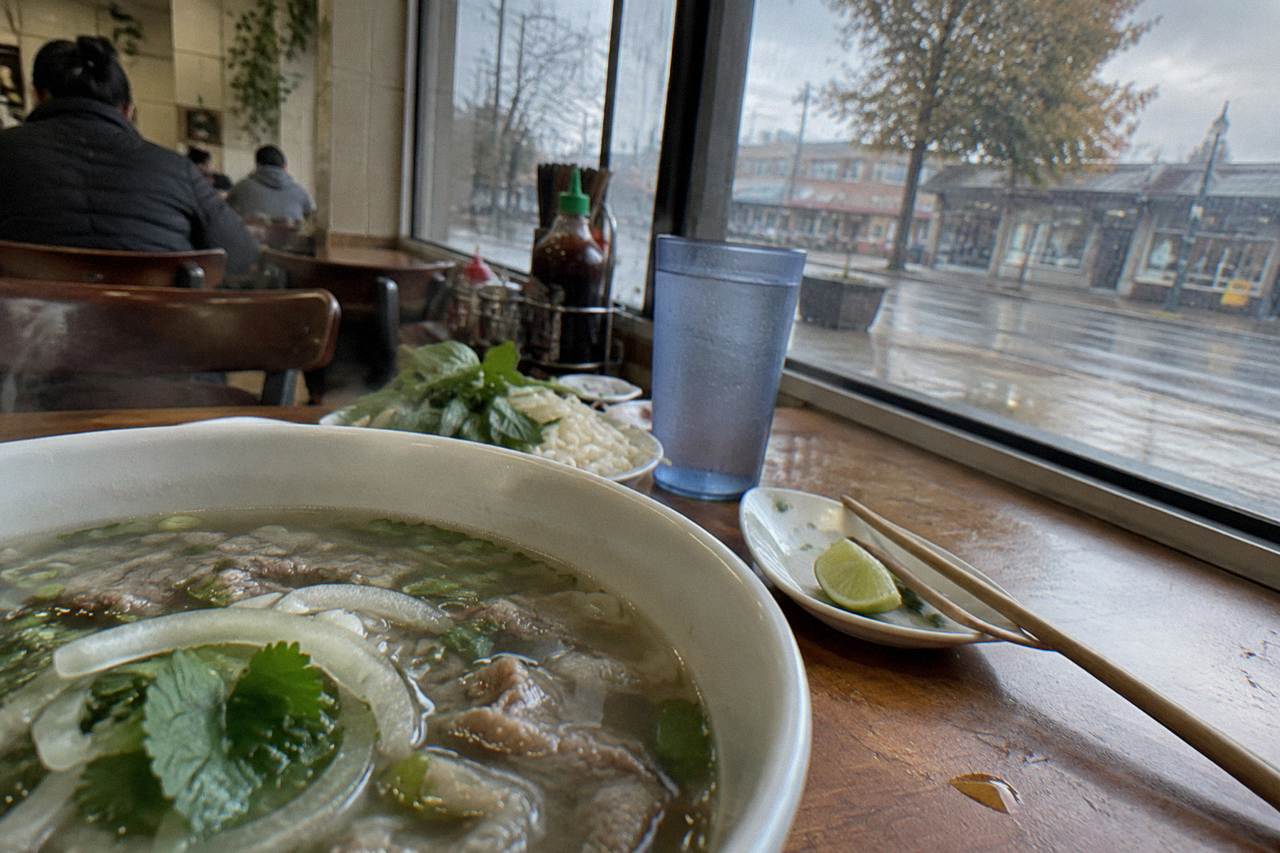
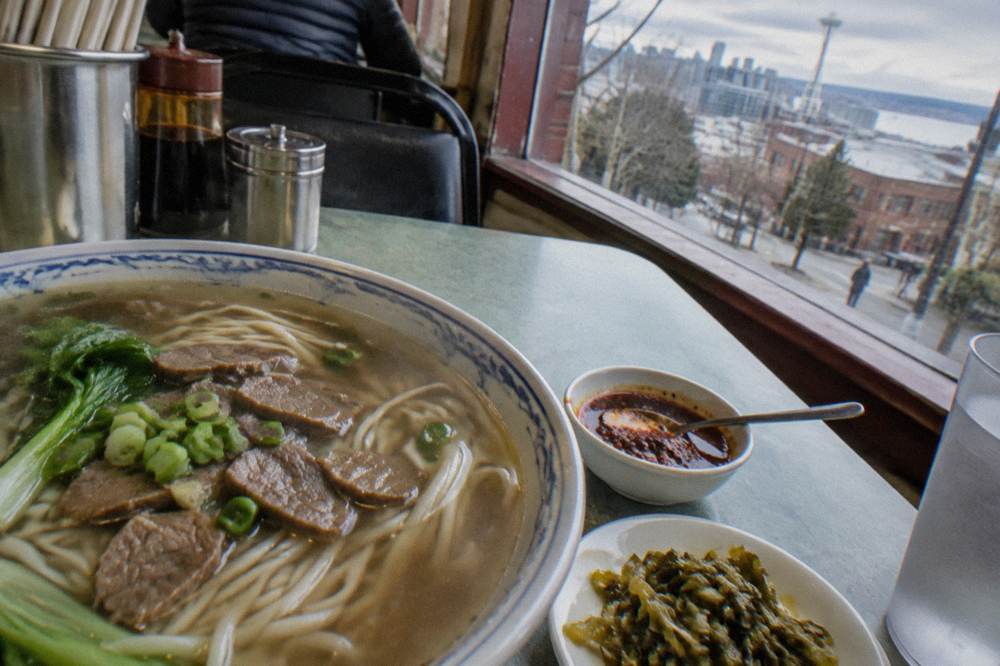
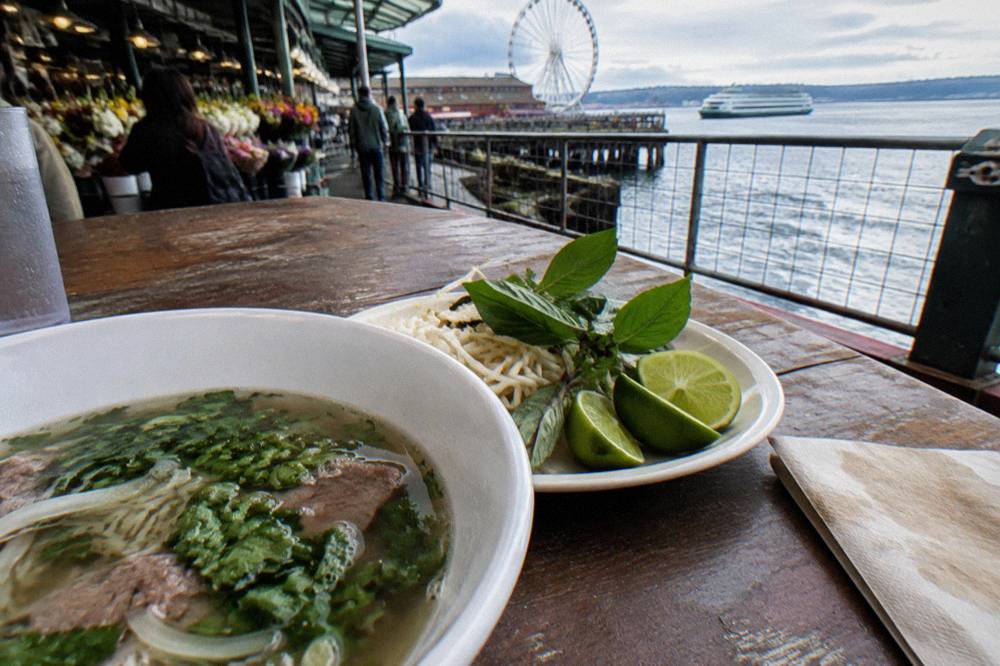
Pho is a Vietnamese noodle soup built on a slow-simmered broth of beef or chicken bones with charred ginger, onion and warm spices, poured over flat rice noodles and thin slices of raw beef that cook in the bowl, then finished at the table with herbs, bean sprouts, lime and chili. Two broad traditions shape the menus you will meet in Seattle. Northern style, associated with Hanoi, tends toward a clearer broth, wider noodles, minimal garnish and often just scallion; Southern style, from Saigon, arrives with a plate of Thai basil, bean sprouts, sawtooth herb, lime wedges and sliced chilies so each diner seasons the bowl personally.
| Broth style | Typical character | Noodles | Garnish approach |
|---|---|---|---|
| Northern (Hanoi) style | Clearer, restrained, more savory-sweet balance | Wider, flatter rice noodles | Minimal, often scallion only |
| Southern (Saigon) style | Richer, more aromatic, sometimes slightly sweet | Narrower rice noodles | Full herb plate, sprouts, lime, chili |
| Chicken pho (pho ga) | Lighter, cleaner, poultry driven | Same rice noodle | Light herbs, lime, sometimes ginger sauce |
Ordering follows a simple grammar. Pho bo is beef, and the menu usually asks which cuts: rare beef that cooks in the hot broth, well-done brisket, tendon for gelatinous chew, tripe for the adventurous, or a combination bowl that includes several. Pho ga is chicken and suits anyone wanting something lighter. Size choices run small to large, and in a district built for repeat customers the small is often genuinely generous. The rituals matter as much as the order: taste the broth before adding anything, then adjust with lime, basil torn from the stem, a few sprouts, and fish sauce or chili from the table caddies. Regulars treat the first untasted splash of condiments as a small insult to the cook.
Timing shapes the experience too. Pho is a breakfast-and-lunch dish in Vietnam, and several district shops do their best business before noon, which conveniently matches the hours when the neighborhood is calmest. An early bowl leaves the afternoon free for Uwajimaya, the museum, or a walk toward Pioneer Square and the waterfront, where Waterfront Park is open daily from 7 a.m. to 10 p.m. An evening bowl is equally legitimate, since alcohol service citywide runs until 2 a.m., but the herb plates thin out late and some shops close earlier than their signage suggests. Whenever you go, expect the bill to carry that 10.55 percent tax at the register.
If a guided morning of eating appeals more than exploring the district on your own, the most reviewed option among the tours listed here is the chef guided food tour of Pike Place Market, a two hour walk from the corner of 1st Avenue and Pine Street, rated 4.9 across 4,806 reviews, from $75 per person, with nine standing vendor stops rather than a sit-down meal. It is a different cuisine and a different neighborhood, but it teaches the same skill this page is about: how to read a market and order with confidence.
Is Little Saigon Or Chinatown The Right Place To Start?
For pho specifically, Little Saigon, the South Jackson Street blocks east of Interstate 5, holds the deepest bench of Vietnamese restaurants; for a fuller food day mixing pho with dim sum, bakeries and a landmark grocery, Chinatown proper between Yesler Way and South King Street is the richer start. The two sit five to ten minutes apart on foot, so the choice is less either-or than a question of sequencing. Start in Chinatown if you want history and variety around your bowl; start in Little Saigon if the bowl itself is the mission and you plan to compare two or three shops in one visit.
| District block | Character | Best for | Anchor stops |
|---|---|---|---|
| Chinatown core, King Street | Historic buildings, dim sum halls, banquet rooms | A varied food day, first visits | Hing Hay Park, Wing Luke Museum, Tai Tung, Kau Kau BBQ |
| Japantown, around 6th Avenue South | Japanese heritage, small eateries | Uwajimaya, bakery stops | Uwajimaya, historic storefronts |
| Little Saigon, South Jackson east of I-5 | Vietnamese signage, pho corridors, banh mi | Dedicated pho runs, comparison bowls | Dim Sum King at 617 South Jackson, pho shops along the corridor |
One honest planning note belongs here, because it surprises people: the tours listed here include no guided food walk inside the Chinatown-International District or Little Saigon. The neighborhood is best explored independently, and this page, together with the sibling guides linked above, exists to make that easy. The bookable guided experiences that pair naturally with a district visit all start elsewhere: at Pike Place Market about a mile northwest, or among the downtown restaurants between the Market and the financial core. Treating the district as your self-guided morning and a guided tour as your afternoon or next-day plan is the combination that works best.
For that second half, the downtown Seattle restaurant tour with drinks and food is the closest match in spirit: two and a half hours, from $135 per person, rated 4.7 across 89 reviews, starting at the Pike Place Market north end and moving through downtown restaurants and bars including The Rabbit Box, MARKET Seafood Eatery, Zig Zag Cafe and SELEUŠS Chocolates, with cocktails and appetizers rather than market stalls. It is a grown-up restaurant crawl, not a pho hunt, and it is priced accordingly.
A middle path is worth naming. If your heart is set on seafood rather than Vietnamese food after the district, the long-lunch seafood tour below covers market and downtown seafood counters, while the sweet-toothed reader can jump to the Seattle chocolate tour guide for the city's cocoa side.
How Do You Order Pho Like A Regular?
Order by cut and by broth, taste before seasoning, and treat the garnish plate as a seasoning kit rather than a salad: rare beef for tenderness, brisket for depth, tendon for texture, and a squeeze of lime plus torn basil added a little at a time is the standard rhythm. The vocabulary is small and the shops have seen every level of familiarity, so the barrier is lower than it looks from the doorway. A combination bowl, usually listed as pho dac biet, samples several cuts at once and is the single best first order for a newcomer, because it teaches the differences in one sitting.
| Menu term | What it means | Why order it |
|---|---|---|
| Pho dac biet | Combination bowl with several cuts | Best first bowl, samples everything |
| Tai | Rare beef, sliced thin, cooks in the broth | Tender, classic |
| Chin, nam | Brisket and flank, fully cooked | Deeper, meatier broth notes |
| Gan, sach | Tendon and tripe | Gelatinous and crisp-chewy textures |
| Pho ga | Chicken pho | Lighter, cleaner alternative |
A few habits mark a regular without requiring fluency. Slide the whole herb plate aside for the first three spoonfuls, because the broth is the dish and the cook expects it to be tasted. Add sprouts for crunch and basil for perfume, a few leaves at a time. Use the provided chopsticks for noodles and the deep spoon for broth, alternating rather than dumping; pho is built to be eaten in cycles, not assembled into a stew. Chili paste and fish sauce go in last and sparingly, since both overwhelm a delicate broth fast. None of this is enforced, and nobody will judge a tourist, but the rhythm makes the bowl better, which is its own reward.
Drinks deserve a sentence. Vietnamese iced coffee, drip-strength coffee over condensed milk and ice, is the traditional partner to a bowl of pho and appears on nearly every district menu; ordering it with your pho rather than after is normal. Seattle's sweetened beverage tax is 1.75 cents per ounce, paid by distributors on sweetened drinks, and milk-primary lattes are generally excluded. If you are curious how deep the city's coffee culture runs beyond the district, the Seattle coffee walk guide traces it from the 1971 Pike Place origin onward.
What Vietnamese Dishes Should You Try Beyond Pho?
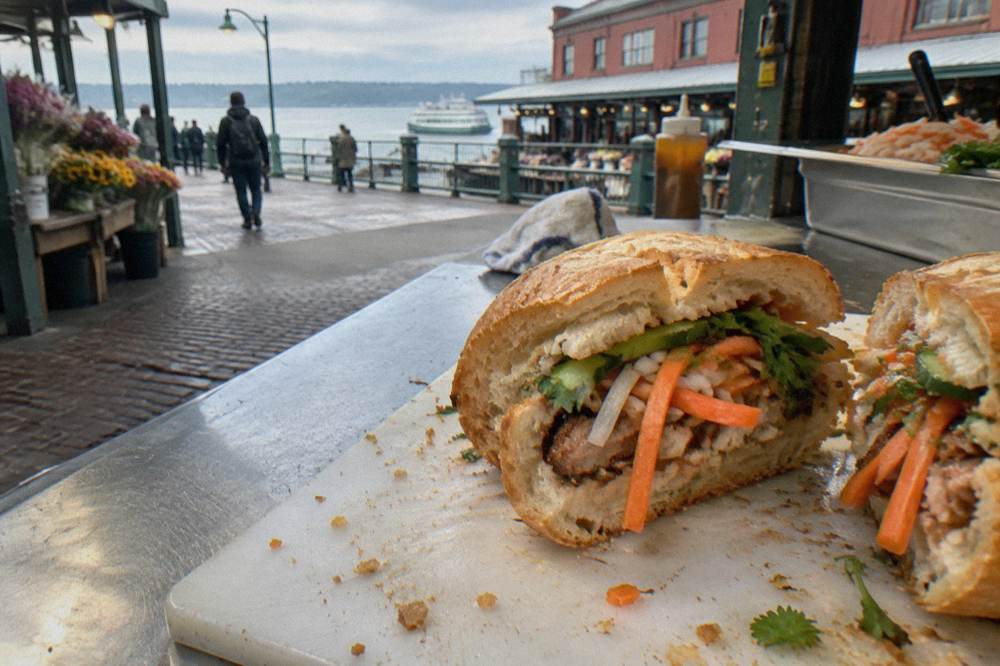
Beyond pho, the dishes worth crossing the district for are banh mi sandwiches, imperial or spring rolls, bun noodle bowls with grilled pork, vermicelli-and-grilled-meat plates, com tam broken rice plates, and Vietnamese iced coffee, most of which appear on the same menus as the pho. Little Saigon restaurants tend to carry the full spread, so one lunch stop can cover several of these if you order to share. The logic is simple: the broths take all day, so a shop that does pho well usually invests equally in its grill and its sandwich counter.
| Dish | What it is | When it fits |
|---|---|---|
| Banh mi | Baguette sandwich with pate, cold cuts or grilled meat, pickled carrot and daikon, cilantro, chili | Walking lunch, second stop |
| Goi cuon | Fresh spring rolls, rice paper around herbs, vermicelli, shrimp or pork, with peanut sauce | Light starter, sharing |
| Cha gio | Fried imperial rolls, crisp wrapper, dipped in lettuce and nuoc cham | The crisp counterpart to pho |
| Bun (bun thit nuong) | Cold vermicelli bowl with grilled pork, herbs, nuoc cham, crushed peanuts | Warm day main |
| Com tam | Broken rice plate with grilled pork chop, egg, meatloaf | Hearty midday meal |
Sequence matters on a food day. A sensible order is pho first while the broth is at its morning best, then a walk to Uwajimaya or the Wing Luke Museum to make room, then banh mi or a bakery stop as the day's second act rather than its first. Dim Sum King in the Bush Hotel, opened in 2009, adds a dim sum option to the mix if your group splits between noodle soup and dumplings. Pairing all of this with the neighborhood's Chinese anchors is easy: Kau Kau BBQ's Cantonese barbecue has been drawing lines since 1974, and Tai Tung has been serving since 1935, so a district crawl can hop cuisines within a single block of South King Street.
For visitors who want a guided version of this kind of multi-stop eating, the closest thing among the tours listed here runs at Pike Place Market rather than the International District. The Pike Place Market Original Food Tour, two hours and fifteen minutes from $112 per person with tips included, rated 5.0 across 670 reviews, describes fourteen or more tastings from eight vendors on its booking page, starting at 1st Avenue between Virginia and Lenora. It is a market tasting walk, not a restaurant crawl, but the structure, many small stops with a guide explaining each, is the same idea a pho enthusiast will appreciate.
What Is The History Of Vietnamese Food In Seattle?
Vietnamese food in Seattle grew from the resettlement wave after the Vietnam War, when families arriving from Vietnam opened restaurants in and around the Chinatown-International District, joining a neighborhood whose food businesses already stretched back to the Jackson Street Regrade era around 1910. The district they joined was itself a layered creation: Chinese merchants had established the Kong Yick buildings, Japanese families built a Japantown around what became Uwajimaya, and the whole area was shaped when the regrade filled the tideflats and made the lowlands buildable. The Chinatown Historic District's National Register listing in 1986 recognized that accumulated history.
The Vietnamese chapter added Little Saigon. The blocks along South Jackson Street east of the freeway became a commercial anchor for the new community, with restaurants and grocers, and the pho shops that opened there in the early years of the resettlement formed the nucleus of the corridor visitors walk today. The district can feel simultaneously historic and current: a 1935 Chinese restaurant, a 1974 barbecue house and a 2009 dim sum shop sit within a few hundred yards of each other. Wing Luke Museum, in the 1910 East Kong Yick Building since 2008, tells this pan-Asian story with the food history woven through it.
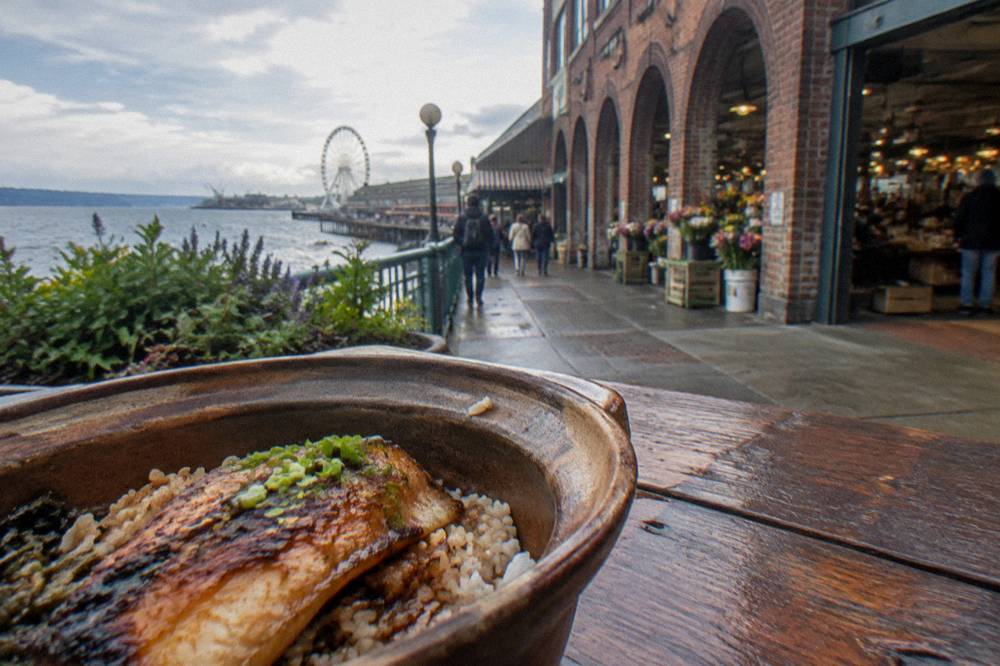
That history explains a practical point: the district was built by and for its communities first, tourists second. Menus are often bilingual with Vietnamese first, hours follow family rhythms rather than visitor schedules, and the best bowls are frequently in rooms with no design budget whatsoever. Approaching the neighborhood with that understanding, hungry, unhurried and willing to point at what the next table is having, is both better manners and better eating.
Two Guided Food Tours Compared
| Tour | Price Per Person | Length | Rating | Reviews |
|---|---|---|---|---|
| Chef-Guided Market Tasting | from $75 | two hour walk | 4.9 | 4,806 reviews |
| Downtown Happy Hour, Drinks In | from $135 | two and a half hours | 4.7 | 89 reviews |
Can You Book A Guided Food Walk In The International District?
No, you cannot book a guided food walk inside the Chinatown-International District or Little Saigon, since none of the tours listed here runs a guided food walk there, which makes the district a self-guided destination. Bookable guided alternatives do exist, but they start at Pike Place Market or among the downtown restaurants instead, outside the neighborhood itself. This is worth stating plainly because search results and travel forums often blur the line between neighborhoods. A visitor who wants a guide's commentary, curated stops and the safety of a fixed itinerary can still get all of that in Seattle, just not on South Jackson Street, and the workable plan is a self-guided district morning followed by a booked tour elsewhere in the city.
| Guided alternative | Duration, price, rating | What it actually covers |
|---|---|---|
| Downtown Seattle Restaurant Tour with Drinks and Food | 2 hours 30 minutes, from $135, 4.7 across 89 reviews | Cocktails and appetizers at downtown restaurants and bars, Pike Place north start |
| Chef Guided Food Tour of Pike Place Market | 2 hours, from $75, 4.9 across 4,806 reviews | Nine standing vendor stops in the Market, corner of 1st and Pine |
| Seattle Seafood Tour: A Long Lunch of Market-Fresh Tastings | 2 hours 15 minutes, from $119, 4.7 across 40 reviews | Eight seafood tastings across six market and downtown spots |
Each fits a different mood. The downtown restaurant tour suits evening appetites and groups who want a drink with their food. The chef guided Market walk stops at nine vendors over two hours. The seafood long lunch, the only seafood-themed tour of its kind among the options here, suits anyone whose district visit awakened a fish craving: eight seafood tastings across six restaurants per its booking page, starting at the Market's north end on 1st Avenue. None of them requires a car; all three start within a mile and a half of the International District, reachable on foot or by a $3.00 light rail or bus ride.
Official planning resources help with the independent half of the day. The Market's own pages answer practical questions if Pike Place is on your itinerary too: the Pike Place Market visitor FAQ covers hours, closures and the fish throwing schedule, and Visit Seattle maintains neighborhood guides for the International District. For transit planning, Sound Transit's trip planner handles the light rail connections that make a car unnecessary.
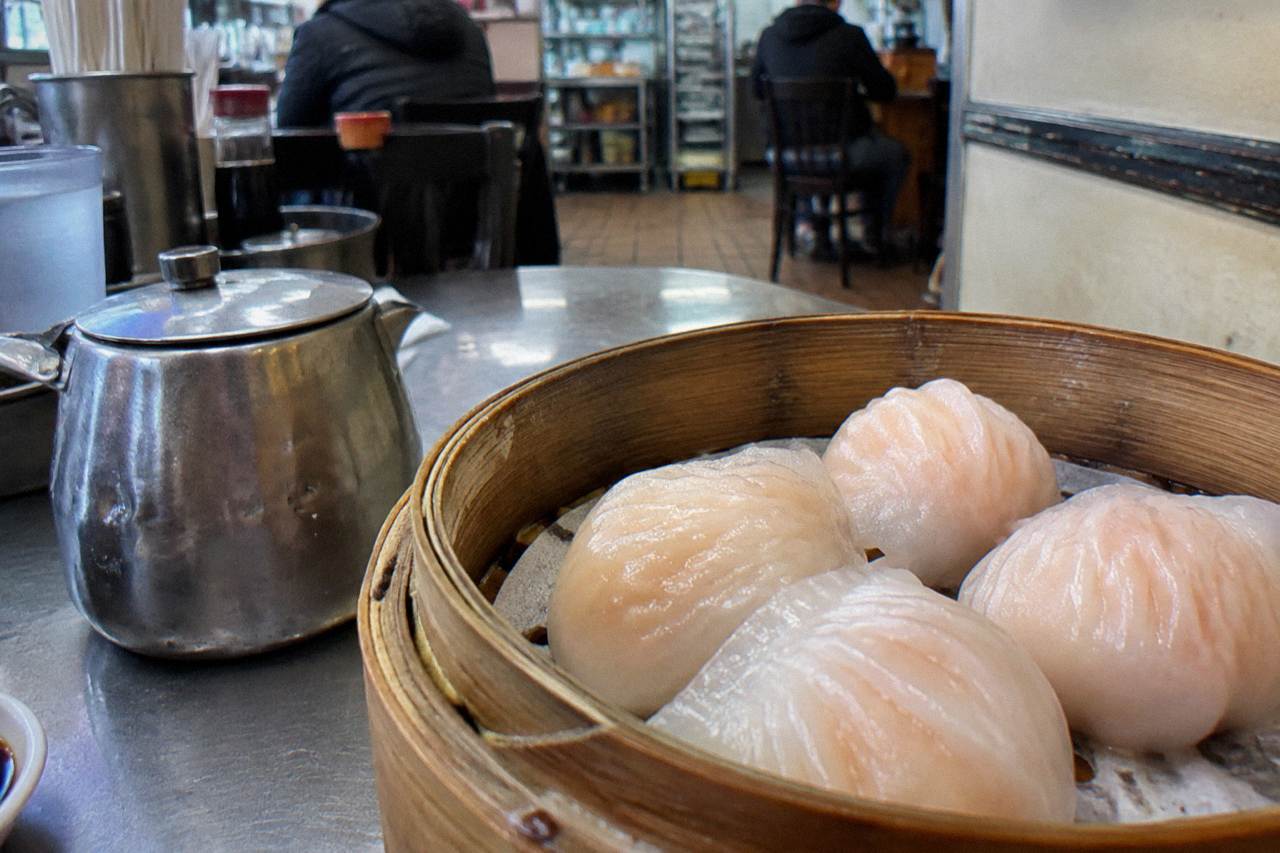
How Do You Plan A Vietnamese Food Day In Seattle?
A strong plan is pho at opening in Little Saigon or Chinatown, an hour at Wing Luke Museum or Uwajimaya mid-morning, banh mi or dim sum as a second stop before noon, then transit or a walk to Pike Place Market or downtown for the afternoon and, if booked, a guided tour as the day's finale. November visitors should pack for rain rather than count on dry pavement: November averages 6.31 inches of rain at Sea-Tac per the NOAA 1991 to 2020 normals, the wettest month of the year, though daily highs around 52 degrees make walking entirely comfortable with a shell layer. Summer visitors get the opposite bargain, with July and August highs near 77 to 78 degrees and under an inch of rain.
| Time block | Activity | Notes |
|---|---|---|
| Morning, before 10 a.m. | Pho in Little Saigon or Chinatown | Calmest streets, broth at its best |
| Mid-morning | Wing Luke Museum or Uwajimaya | Museum in the 1910 East Kong Yick Building |
| Before noon | Banh mi, bakery or dim sum second stop | Many shops do best business before noon |
| Afternoon | Walk or rail to Pike Place, downtown or the waterfront | $3.00 adult Link or Metro fare |
| Evening | Booked guided tour or a sit-down dinner | Alcohol service citywide ends at 2 a.m. |
A few practical closers. Budget for the 10.55 percent sales tax on every restaurant meal; it appears at the register, not on the menu. Tipping in Seattle is not mandated and practice varies, so decide on service rather than a fixed number. If you are extending the food day across the week, note that Pike Place Market operates 363 days a year, closing only Thanksgiving and Christmas, with most stalls active from about 10 a.m. to 5 p.m. and produce and seafood sellers starting at 7 a.m., which pairs neatly with an early pho breakfast elsewhere. And if a rainy afternoon needs an indoor anchor, the chef guided Market walk above runs rain or shine in a largely covered market, a fact that matters more in November than any brochure admits.
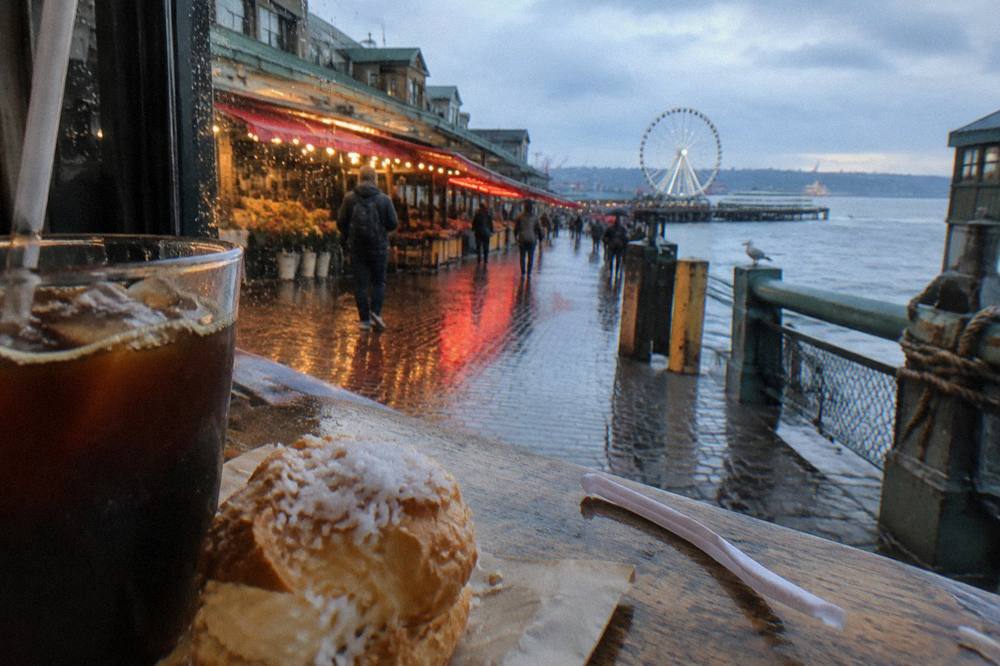
The through-line of this page bears repeating because it is the single most useful thing to know: the International District rewards independence, and the city's guided food experiences reward planning. Do both and you leave Seattle having eaten its deepest bowl and learned its market's story, which is more than most visitors manage in a week. Start with the broth, and let the rest of the day follow.
Common Questions About Pho In Seattle
Where Do You Find The Best Pho In Seattle?
The densest selection is in the Chinatown-International District, especially Little Saigon along South Jackson Street east of Interstate 5, with further Vietnamese restaurants scattered through Rainier Valley and, farther south, White Center. For a first visit, the International District's walkable blocks hold the most options per mile.
What Is The Difference Between Northern And Southern Pho?
Northern style, from Hanoi, leans toward a clearer broth, wider noodles and minimal garnish. Southern style, from Saigon, brings a richer broth with an herb plate of basil, bean sprouts, lime and chili added at the table.
Is There A Guided Food Tour Of The International District Or Little Saigon?
No. None of the tours listed here runs a guided food walk inside the Chinatown-International District or Little Saigon, so explore the district independently. The bookable guided alternatives start at Pike Place Market or among downtown restaurants, all within a short walk or a $3.00 transit ride.
What Should A First-Timer Order At A Pho Shop?
A combination bowl, usually pho dac biet, which samples rare beef, brisket, tendon and sometimes tripe in one broth. Taste the soup before adding anything, then season gradually with lime, basil, sprouts and chili. Pair it with Vietnamese iced coffee if you want the traditional counterpoint.
How Do You Get To The Chinatown-International District From Downtown Seattle?
It is one light rail stop or roughly a fifteen minute walk from Pioneer Square. Adult Link and King County Metro fares are $3.00 per ride, riders 18 and under are free, and both accept an ORCA card or a contactless bank card tap.
What Else Should You Eat In The District Besides Pho?
Banh mi sandwiches, fresh and fried spring rolls, bun vermicelli bowls with grilled pork, and com tam broken rice plates all appear on Vietnamese menus alongside the soup. Chinese anchors include Kau Kau BBQ's Cantonese barbecue, trading since 1974, and Tai Tung, established 1935.