Seattle Oysters: Where To Slurp And What To Order
Washington waters grow some of the most consistent oysters on the West Coast, and Seattle has the shucking counters, market stalls and guided walks to prove it.
Short answer
Farmed oysters are available in Seattle year-round, with the traditional flavor peak in the cold-water months of roughly September to April. Taylor Shellfish farms Puget Sound, Hood Canal and Willapa Bay and runs oyster bars and farm stores in the city, and oyster counters sit inside Pike Place Market and along the downtown restaurant walks.
Oysters are one of the few foods where geography is printed on the shell. An oyster takes its brine, its sweetness and its finish from the water it grew in, and around Seattle that water is close, cold and famously productive. Puget Sound, Hood Canal and Willapa Bay all sit within a short drive or ferry ride of the city, and the shellfish industry built on them has been feeding Seattle markets for more than a century. The result is a city where raw bars are treated seriously, where market stalls shuck to order, and where a visitor can taste three or four distinct growing regions in a single afternoon.
This page covers the practical side of eating oysters in Seattle: where the shells come from, when the flavor peaks, how to read a raw bar list, and which parts of the city concentrate the best counters. It also flags the guided food walks whose routes pass seafood stops, with prices and durations taken from each tour's booking page, so a reader who wants oysters with context can book something the same day.
Where Do You Find The Best Oysters In Seattle?
The best oysters in Seattle cluster in three kinds of places: dedicated oyster bars run by shellfish growers, seafood counters inside Pike Place Market, and the sit-down seafood restaurants scattered along the downtown and waterfront restaurant walks. Taylor Shellfish, which farms Puget Sound, Hood Canal and Willapa Bay, operates its own oyster bars and farm stores in the city, which is the closest thing to buying at the source without leaving town.
Start with the grower-backed counters. Taylor Shellfish farms Puget Sound, Hood Canal and Willapa Bay and runs Seattle oyster bars and farm stores, so the shells going across the counter often came out of the company's own beds. A grower-operated bar is also the easiest place to compare varieties side by side, because the staff can tell you which inlet each oyster came from.
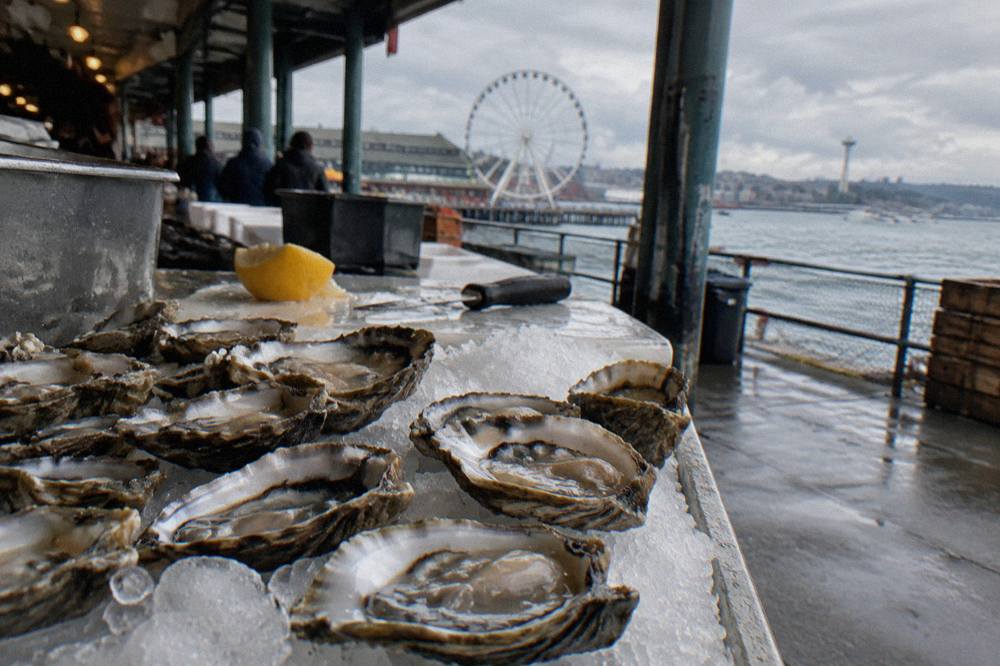
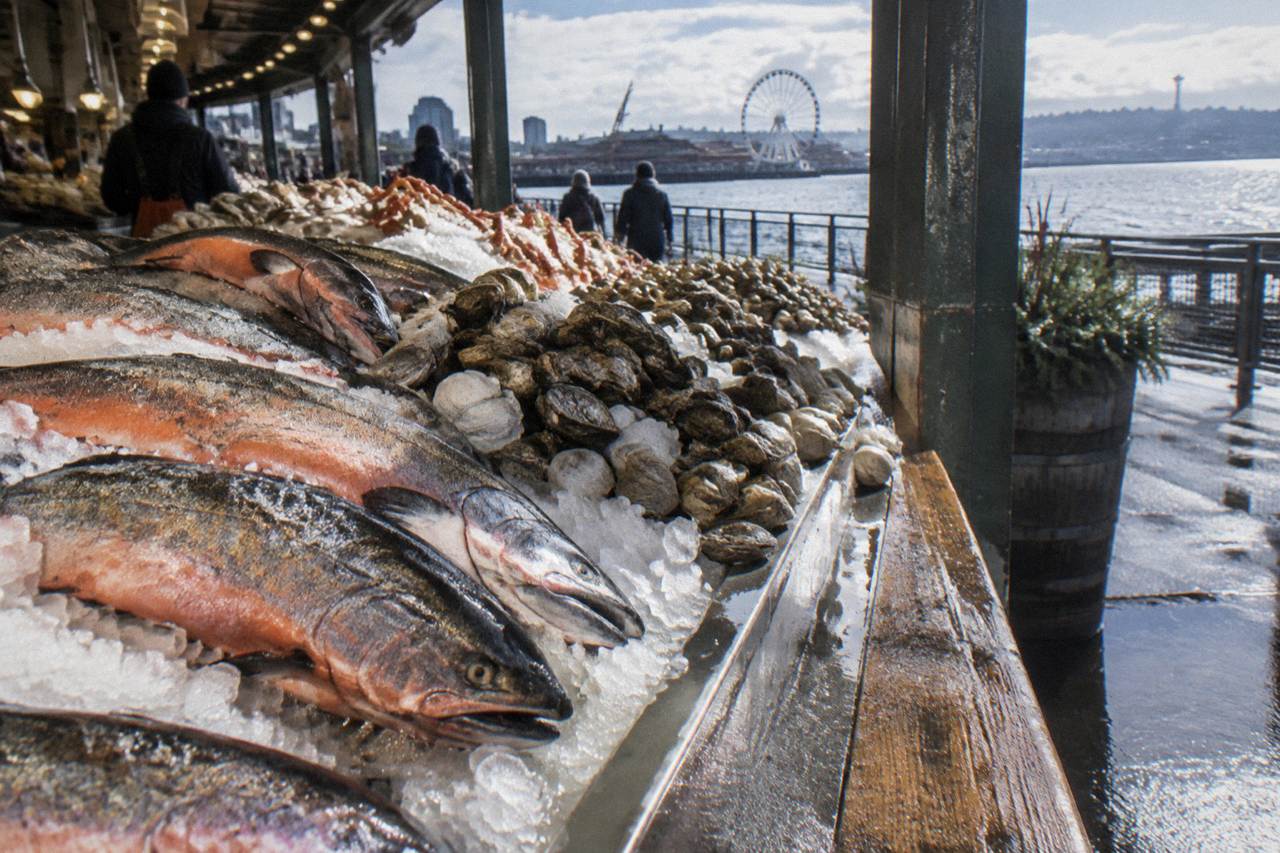
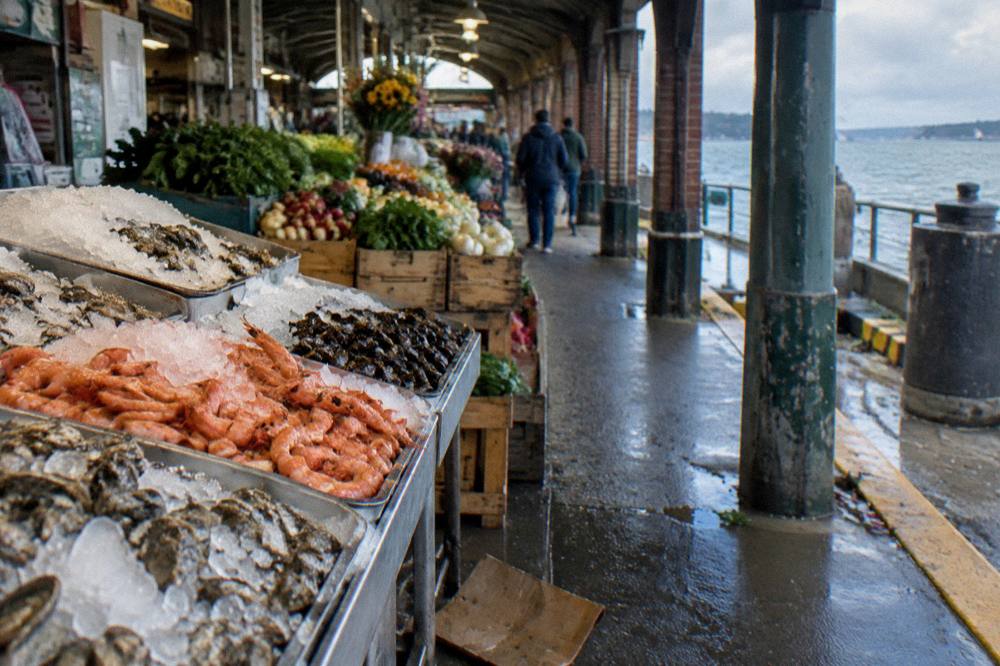
Pike Place Market is the second concentration. The Market has traded fresh seafood since it opened on August 17, 1907, when six to twelve farmers first brought produce wagons to Pike Place, and seafood stalls still start selling at 7 a.m., hours before the crafts tables open. The Market's own visitor FAQ covers current stall hours and the sections worth knowing, and the Pike Place Market visitor FAQ is the place to check before an early visit. Seafood vendors named on local walking routes include City Fish Co, Pike Place Fish Market and the Taylor Shellfish Oyster Bar near Seattle Center, alongside sit-down spots like Matt's in the Market inside the Market itself.
The third cluster is the downtown and Belltown restaurant strip, where the guided restaurant walks run. Tours in this district list venues like MARKET Seafood Eatery and The Athenian Seafood Restaurant and Bar on their routes. For a deeper rundown of counters and markets across the city, the companion page on the best seafood counters in Seattle goes neighborhood by neighborhood.
Which Oyster Varieties Grow In Washington Waters?
Washington oysters come from three main growing regions, Puget Sound, Hood Canal and Willapa Bay, and where an oyster grew shapes how it tastes. Raw bar lists describe those differences with general vocabulary like brine, sweetness, mineral and cucumber, not a fixed profile for any one bay.
The useful thing to understand is that most named oysters on a Seattle raw bar list are the same species, the Pacific oyster, differentiated almost entirely by where and how they grew. A bartender can describe a Hama Hama-style Hood Canal oyster and a Puget Sound oyster from the same week's harvest as completely different eating, and they are, because the tide, the algae and the water temperature did the seasoning. Asking what came in most recently is a fair question at any counter and usually gets an honest answer.
Wild and farmed native Olympia oysters, the small, coppery species that predates the industry, appear on some menus when available, but supply is limited and no counter should be expected to carry them. Farming dominates the Washington industry, which is why availability stays steady through the calendar rather than swinging with a wild season. That reliability is exactly why the region's raw bars can list half a dozen local options on any given day.
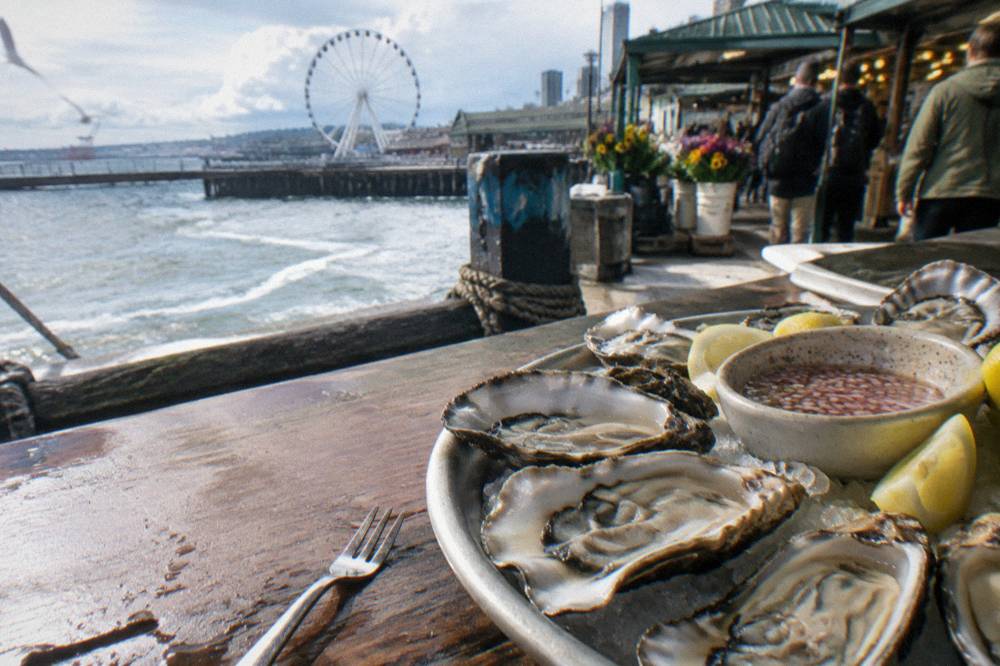
| Tasting term | What it describes |
|---|---|
| Brine | The salt intensity of the liquor inside the shell |
| Sweetness or cream | The meat itself |
| Finish | What lingers after the swallow, sometimes cucumber, melon or mineral |
A practical ordering trick for a group is to ask for one oyster from each region on a single tray, which turns a dozen shells into a side-by-side tasting of Washington geography. Some counters will arrange the tray from mildest to briniest if you ask. None of this requires expertise; it requires only that you tell the shucker what you like, salt-forward or sweet, and let them pick.
For readers who want the tasting experience with a guide doing the explaining, the seafood-focused walks below are the closest fit.
When Is Oyster Season In Seattle?
Farmed oysters are available in Seattle every month of the year, but the traditional flavor peak runs roughly September to April, when cold water firms the meat and concentrates the brine. Summer oysters are perfectly safe and widely served; they are simply softer and milder, and spawning can make some shells thinner and watery in the warmest weeks.
The old rule about only eating oysters in months with an R in them came from wild harvest and from eras before refrigeration, and it does not really apply to a modern farmed supply chain. What the calendar still controls is texture and intensity. Cold water slows the oyster's metabolism, and the meat builds glycogen, which reads on the tongue as sweetness and density. By late fall and through winter, Washington oysters are at their firmest.
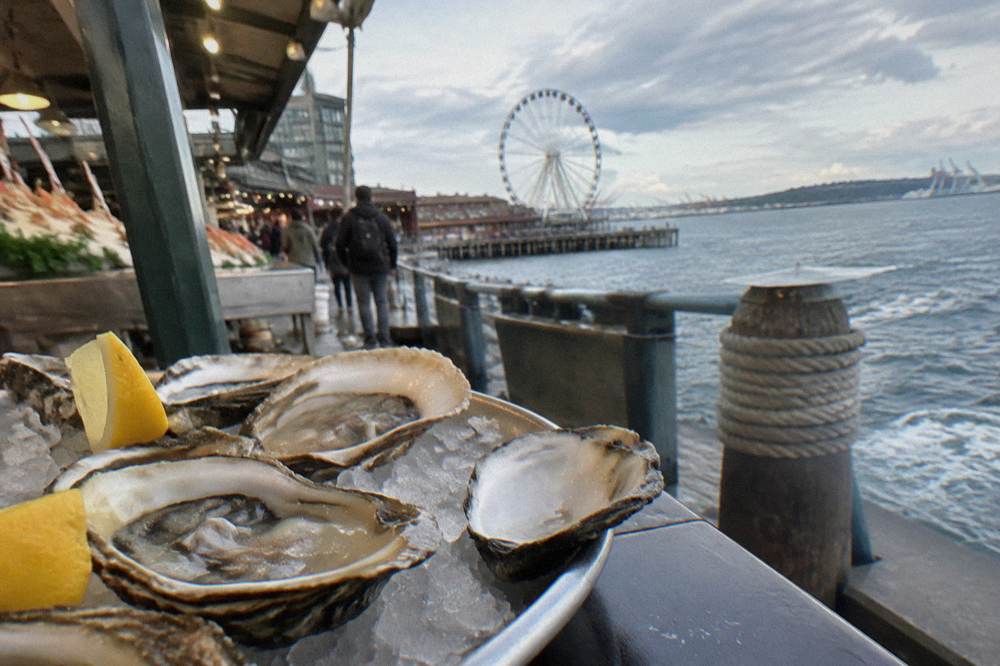
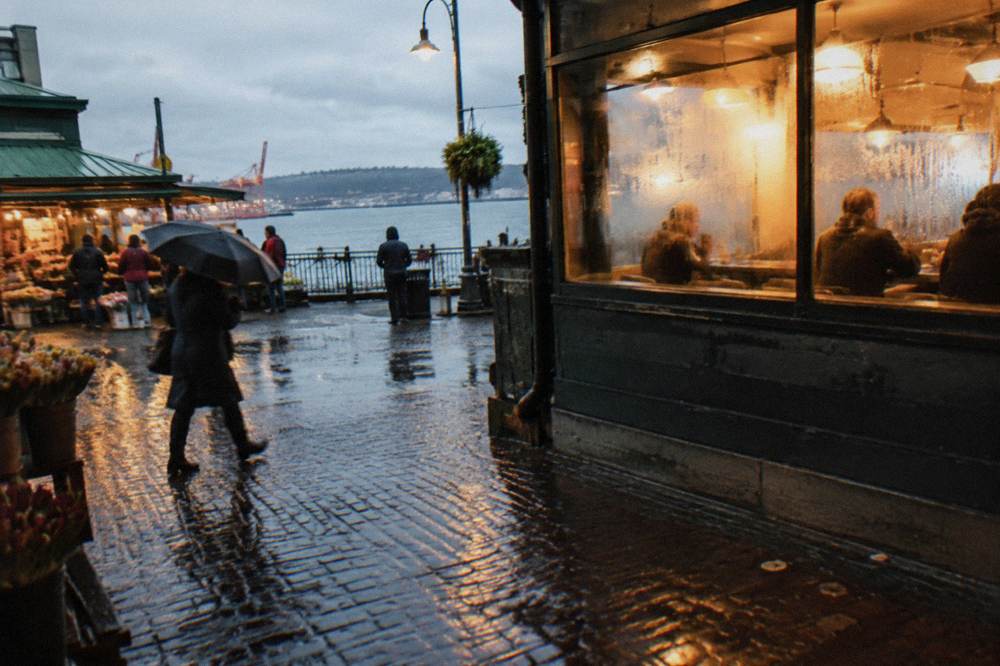
The weather side of the equation matters for planning a trip around them. Seattle's rain peaks in November at 6.31 inches on average, with December at 5.72 and January at 5.78, while July and August average highs of about 77 to 78 degrees with under an inch of rain, per the NOAA 1991 to 2020 climate normals at Sea-Tac. An oyster pilgrimage in January means rain gear and a warm barstool; the same trip in August pairs naturally with the waterfront. Both work, they just feel different.
One seasonal overlap worth knowing: the Copper River salmon arrival in late May draws most of the seafood attention in early summer, with the 2026 fishery opening May 22 and first fresh Seattle arrivals around May 27. Oysters get less press in those weeks. The fuller salmon picture is in the guide to wild salmon in Seattle and where to buy it.
| Period | Oyster character | Seattle conditions |
|---|---|---|
| September to November | Brine and firmness building as water cools | Rain rising toward the November peak |
| December to February | Peak firmness, dense meat, sharp finish | Wettest months, warm bar seating |
| March to April | Still cold-water quality, slowly softening | Showers easing |
| May to August | Softer, milder meat, some summer spawning | Driest months |
What Do Oysters Taste Like And How Do You Order Them?
A Washington oyster usually opens with a hit of salt, moves into a sweet or melon-like middle, and finishes clean, sometimes with a mineral or cucumber note depending on the region. Order by telling the counter what you like, salty or sweet, small or large, and let the shucker build the tray; the standard condiments are lemon, mignonette and cocktail sauce, and purists take them naked.
The vocabulary that helps is short. Brine is the salt intensity of the first sip of liquor, the seawater inside the shell. Sweetness or cream describes the meat itself. Finish is what lingers after the swallow, and words like cucumber, melon, metal and seaweed all show up on regional tasting notes. None of it is pretension when the differences are this real; two oysters from opposite ends of Puget Sound can taste like different species.
Ordering is simpler than the menu makes it look. A half dozen is a tasting for one or a snack for two; a dozen or eighteen makes a light meal alongside something cooked. Ask for the tray to run mildest to briniest and eat it in that order, so each oyster has somewhere to go. Chew a few times rather than shooting the shell back whole, since the flavor lives in the meat, not the swallow.
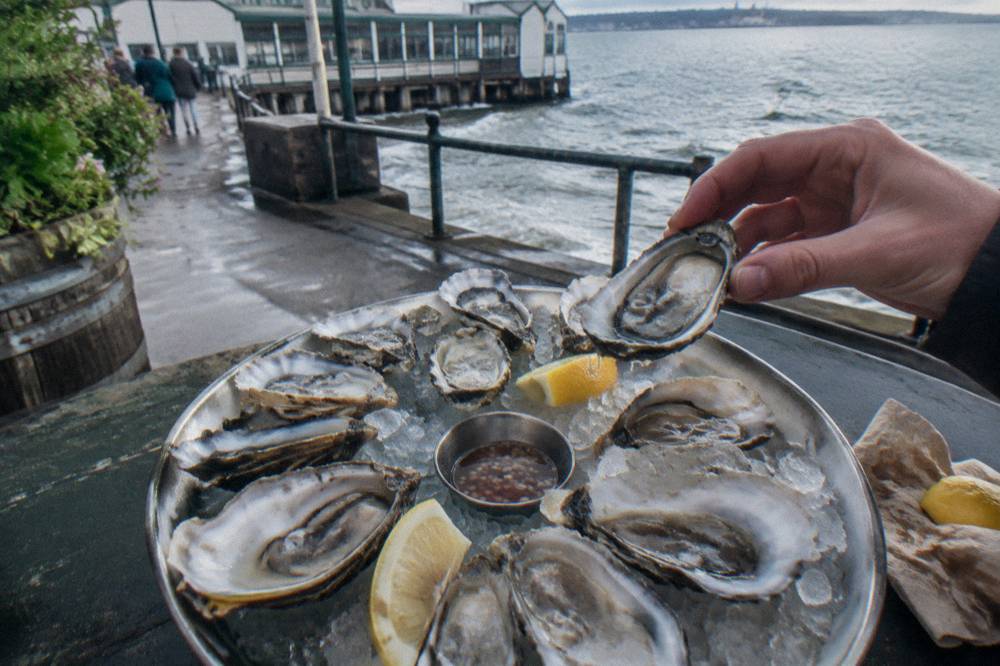
Pairings in Seattle lean local. Dry cider and crisp Washington whites are the standard matches, and the state's wine industry, with about 985 licensed wineries and 22 AVAs, gives raw bars plenty of domestic options; the Washington State Wine Commission tracks the state's regions and producers. A cold pint of pale ale does the same job. If you are ordering at a bar rather than a guided walk, note that Washington checks identification strictly and the drinking age is 21.
For travelers who want a guide to translate all of this at the counter, the Downtown Seattle Restaurant Tour with Drinks and Food walks 2 hours 30 minutes from $135 per person, rated 4.7 across 89 reviews, through restaurants and bars including MARKET Seafood Eatery, with appetizers and drinks included. The booking page lists the current route stops.
Where Can You Eat Oysters Near Pike Place Market?
Around Pike Place Market you can eat oysters at sit-down restaurants inside and beside the Market, at the Market's seafood counters, and at the downtown seafood spots a short walk down the hill. The Market is open 363 days a year, closed only Thanksgiving and Christmas, and fresh seafood counters start at 7 a.m.
Matt's in the Market sits inside the Market itself and appears on two of the guided tasting routes covered here. City Fish Co sells shellfish across the counter. The fish throwing at Pike Place Fish happens when a customer buys a fish, during business hours from 7 a.m. to 5 p.m. daily, so a mid-morning oyster stop often comes with free theater.
Timing the crowd matters more than timing the season. The Market itself says mornings before noon are generally less crowded. There is a current wrinkle for anyone driving: the Street Access Pilot Phase 3 runs October 1, 2026 to March 31, 2027, with Pike Place shared by vehicles and pedestrians Monday to Thursday, and access limited to deliveries, accessibility and pre-arranged pickups Friday to Sunday between 11 a.m. and 4 p.m. at 1st Ave and Pike St. The parking garage remains available, and transit is the easier answer: a King County Metro adult ride is $3.00, the regional day pass $6.00, and King County Metro's fare page has the current details.
| Way to reach the Market | Adult cost | Notes |
|---|---|---|
| King County Metro bus | $3.00 single ride | Day pass $6.00 covers rides up to $3.00 |
| Link light rail | $3.00 one-way | Youth 18 and under ride free |
| Market parking garage | Rate varies | Access pilot limits vehicle entry Fri to Sun, 11 a.m. to 4 p.m. |
| On foot from downtown | Free | Downhill from the retail core, uphill back |
The Market's guided walks are worth a look even for confident self-guided eaters, because the Market caps permitted tour groups at 16 people per guide and requires Market-issued operator permits, so the walks stay small by rule. The page on sit-down spots in Pike Place Market worth the wait covers the table-service side, and the featured seafood walk below builds a long lunch around exactly this district.
The Seattle Seafood Tour: A Long Lunch of Market-Fresh Tastings is the closest thing in the city to an oyster-adjacent guided meal: 2 hours 15 minutes, from $119 per person, rated 4.7 across 40 reviews, running from the Market's north end through market and downtown seafood stops including Matt's in the Market and City Fish Co, with eight seafood tastings across six restaurants. It is not an oyster-specific tour, no tour listed here specializes in oysters, but its route is the densest seafood corridor in Seattle. The long lunch seafood walk page has the full stop list.
How Do Happy Hour Oyster Deals Work In Seattle?
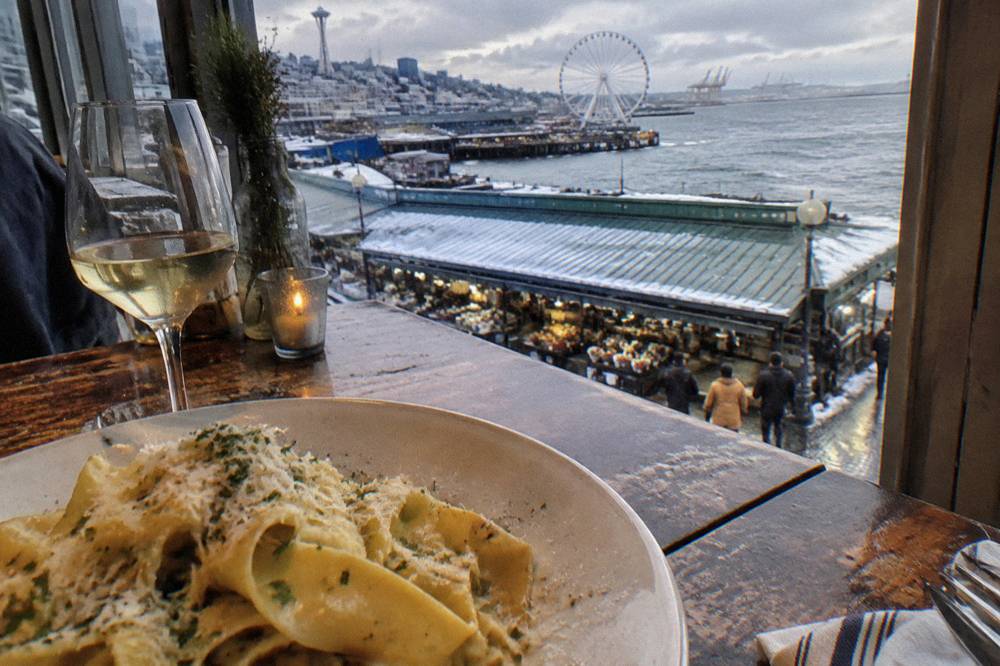
Many Seattle raw bars run happy hour windows in the late afternoon and early evening, and oysters are a classic happy hour item because kitchens use the deals to move fresh shell before close. The specifics vary by venue and change often, so no figure is printed here; the reliable pattern is a weekday window and a per-shell discount off the regular list.
The mechanics are simple. A restaurant posts a reduced price on a specific oyster, usually one variety rather than the whole raw list, for a set window, commonly mid-afternoon to early evening on weekdays. The deal price applies only during the window, and the oyster on offer rotates with supply. Drinks sometimes carry parallel discounts. Because Washington alcohol service must stop between 2 a.m. and 6 a.m., and last call effectively precedes that, late-night oyster service is rare; happy hour and dinner are the real sessions.
Two honest cautions. First, sales tax of 10.55 percent is added at the register on meals in Seattle, so the check lands above the menu math. Second, tipping is not mandated in Washington and practice varies; no percentage is standard and you should decide on service. For a fuller map of where oysters and small plates cost less across the city, the guide to Seattle happy hour eats and oyster deals collects the neighborhoods and the timing patterns.
| Happy hour feature | Typical pattern in Seattle | What to check |
|---|---|---|
| Window | Late afternoon to early evening, weekdays | Day-of with the venue |
| Oyster offered | One rotating variety at a deal price | Which region it is from |
| Tax and tip | 10.55 percent tax added at register; tip not mandated | Final check math |
Can You Buy Oysters To Shuck At Home?
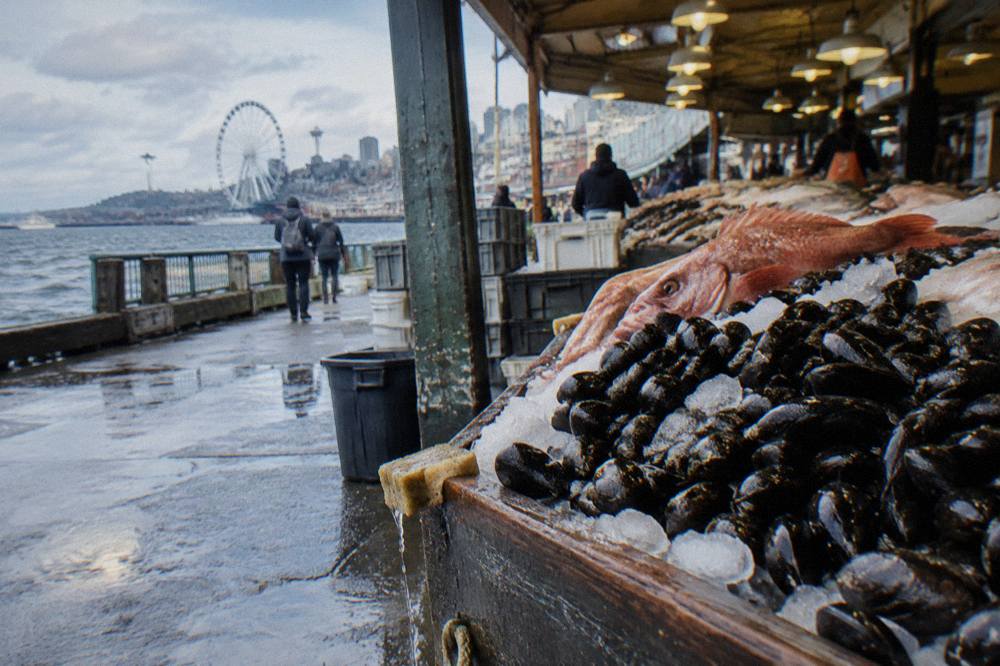
Yes, you can buy live oysters to go from market seafood stalls and from grower farm stores in Seattle, and they keep for days if handled correctly: keep them cold, closed and damp, never frozen or sealed in airtight containers, and shuck them only when you are ready to eat. Ask for a count of unopened, cup-deep shells and check that each closes when tapped.
The buying logic favors the same counters as the raw bars. Market stalls sell by the dozen or half dozen, and grower stores can tell you the harvest date, which matters more than any other number on the transaction. Storage is the part home shuckers get wrong: oysters are alive and need to breathe, so a damp cloth over the shells in the coldest part of the refrigerator, cup side down, is the standard method. Discard any shell that stays open after a tap or smells off when opened.
Shucking itself takes a stiff short knife, a folded towel and patience, and the learning curve is a few dozen shells long. If the appeal is the tasting rather than the craft, a guided counter does the work for you, and the Chef Food Tour of Seattle Space Needle and Seattle Center, 2 hours from $85 per person with 9 reviews so far, lists Taylor Shellfish Oyster Bar among its route stops alongside lunch items and drinks, though it does not include a Space Needle visit. Its booking page shows the current route.
| Step | What to do | Why it matters |
|---|---|---|
| Buying | Choose closed, heavy shells, ask harvest date | Freshness is dated, not guessed |
| Storing | Cold, damp cloth, cup down, unsealed | Live oysters need to breathe |
| Checking | Tap open shells; discard any that stay open | An open shell can be dead |
| Shucking | Short knife, hinge entry, cut the muscle | Keeps liquor in the shell |
Which Guided Walks Pair Well With A Seafood Day?
The guided walks that pair best with an oyster day are the seafood and market tours built around substantial food: the long lunch seafood walk from $119, the chef-guided Pike Place walk from $75 with 4.9 across 4,806 reviews, and the by-the-course lunch tour from $119. None is oyster-specific, and the only tour listed here with an oyster bar on its route is the Seattle Center chef tour.
The comparison below uses each tour's own figures for duration, price basis and review counts, so the tradeoffs are visible at a glance. The chef-guided Pike Place walk is the most reviewed option in the city's catalog, with nine standing vendor stops over 2 hours. The by-the-course tour trades stall-hopping for a seated structure, 2 hours 15 minutes with four gourmet tastings across market and downtown restaurants, drinks not included. The long lunch tour, described in full above, is the seafood specialist of the three.
| Tour | Duration | Price | Rating and reviews |
|---|---|---|---|
| Seattle Seafood Tour: A Long Lunch | 2 hours 15 minutes | From $119 per person | 4.7 across 40 reviews |
| Chef Guided Food Tour of Pike Place Market | 2 hours | From $75 per person | 4.9 across 4,806 reviews |
| Pike Place By-the-Course Tour | 2 hours 15 minutes | From $119 per person | 4.5 across 51 reviews |
| Downtown Seattle Restaurant Tour | 2 hours 30 minutes | From $135 per person | 4.7 across 89 reviews |
Booking mechanics are friendly for visitors making same-day plans. Each tour's booking page shows live dates, and free-cancellation terms appear on the featured seafood walk's page before payment, so a rainy November morning can turn into a long seafood lunch without penalty risk. Meeting points are public and central, mostly at the Market's north end or downtown corners, and the guide to meeting points and what to bring on a food walk covers the logistics in detail.
Common Questions About Oysters In Seattle
When Is The Best Time Of Year To Eat Oysters In Seattle?
Farmed oysters are available year-round, but the traditional flavor peak runs roughly September to April, when cold water firms the meat and concentrates the brine. Summer oysters are safe and widely served, just softer and milder.
Can You Take A Guided Oyster Tour In Seattle?
None of the tours listed here is oyster-specific. The closest fit is the Seattle Seafood Tour: A Long Lunch of Market-Fresh Tastings, which runs 2 hours 15 minutes from $119 per person through market and downtown seafood restaurants, and the Seattle Center chef tour lists a Taylor Shellfish oyster bar among its stops.
Where Do Seattle Oysters Come From?
Most come from Washington growing regions: Puget Sound, Hood Canal and Willapa Bay. Taylor Shellfish farms all three and runs oyster bars and farm stores in Seattle, making its counters the easiest place to compare regions side by side.
Are There Months When You Should Not Eat Oysters?
No. The old R-months rule reflected wild harvest before modern refrigeration. Farmed Washington oysters are sold and eaten every month; only texture and intensity change with water temperature.
How Do You Order Oysters If You Have Never Had Them?
Tell the shucker what you like, salty or sweet, and ask for a small tray running mild to briny. Chew a few times rather than swallowing whole, and taste the first one plain before reaching for lemon or mignonette.
Can You Buy Oysters At Pike Place Market To Take Home?
Yes. Seafood stalls at the Market sell live oysters by the dozen, and the Market is open 363 days a year with seafood counters starting at 7 a.m. Keep the shells cold, damp and unsealed, and shuck just before eating.