Seattle Street Food And Food Trucks: What To Grab On The Move
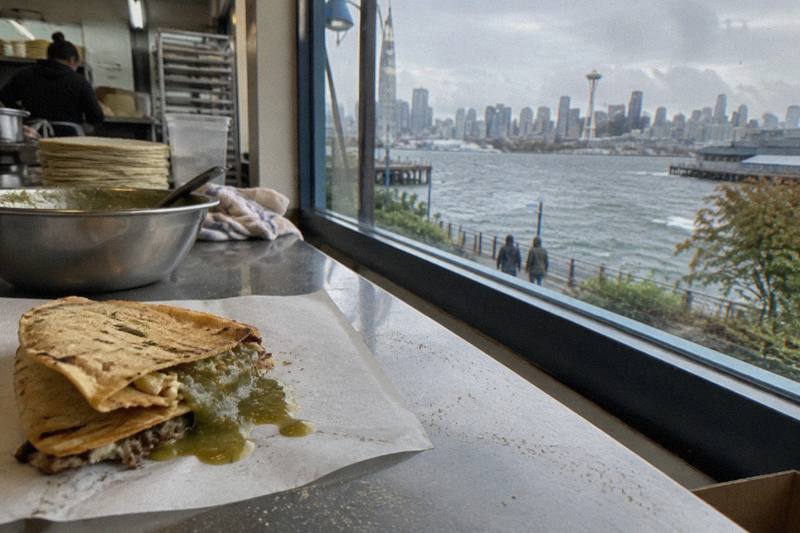
Seattle eats well standing up. Pike Place Market counters, year-round farmers markets, a compact food truck scene and one guided street food walk through South Lake Union cover most of what a hungry visitor needs between sit-down meals.
Short answer
Seattle street food centers on Pike Place Market counters, ready-to-eat stalls at year-round farmers markets, and lunchtime food trucks clustered in South Lake Union and Denny Triangle. The one guided option among the tours listed here is the Street Food Tour of South Lake Union, from $80 per person, 2 hours, rated 5.0 across 65 reviews.
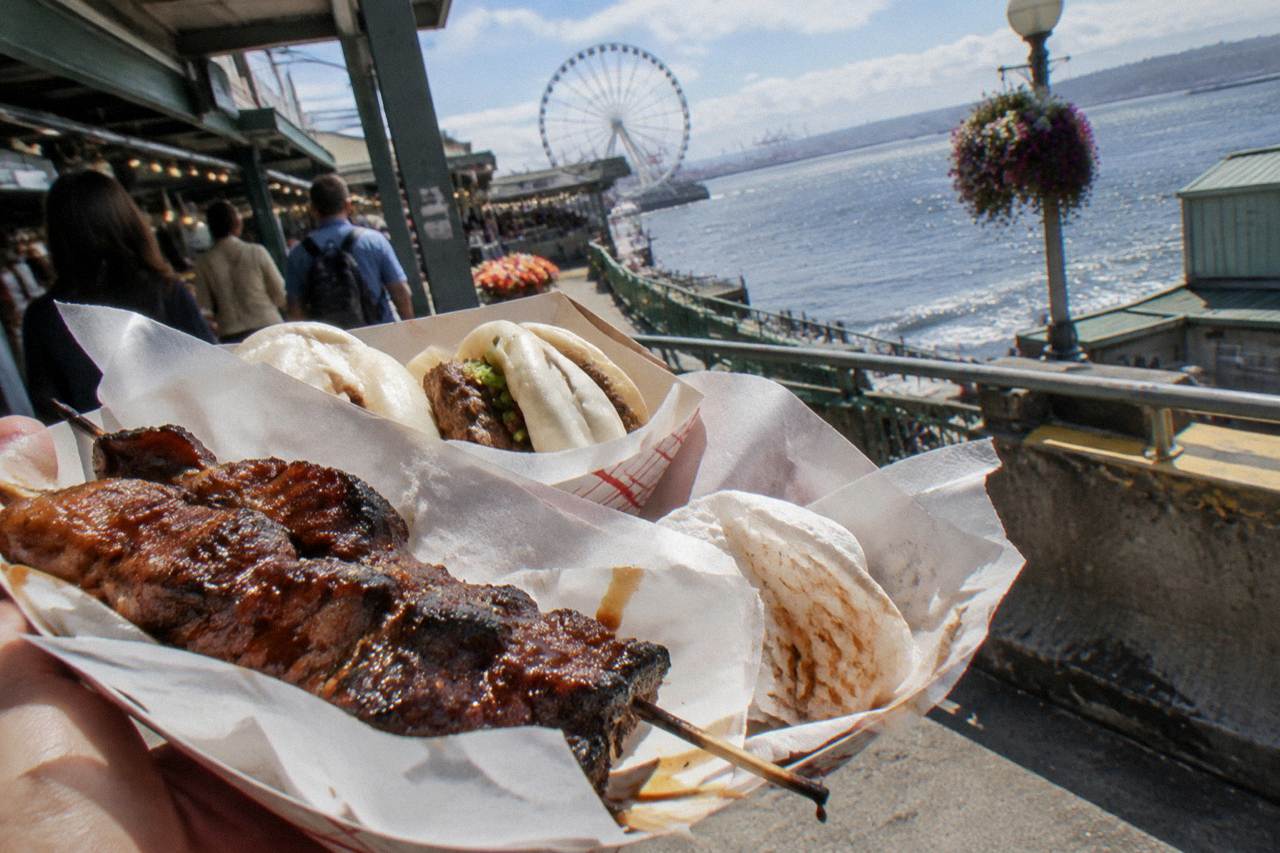
Walk-up eating is not a compromise in Seattle, it is a genuine category. Pike Place Market has sold food over the counter since it opened on August 17, 1907, when somewhere between six and twelve farmers rolled produce wagons down Pike Place, and that same stretch now holds more than 220 independently owned shops and restaurants. Add year-round neighborhood farmers markets, a lunchtime food truck scene concentrated around the tech offices of South Lake Union, and walkable snack corridors in Capitol Hill and the Chinatown-International District, and you can eat well for three days without ever sitting down at a table. For a sit-down counterpoint to all that eating on foot, the guide to Anthony Bourdain's documented Seattle meals traces his broadcast stops from Pike Place Market to Pioneer Square and explains how to walk them today.
This page lays out where the grab-and-go food actually is, what each kind of stop offers, what it costs to let a guide handle it instead, and how the practical pieces fit together: hours, transit, weather and the tax that gets added at the register.
What Counts As Street Food In Seattle?
Seattle street food falls into four working categories: Pike Place Market counters where you buy and walk, year-round farmers markets with ready-to-eat vendors, food trucks clustered around South Lake Union and Denny Triangle at lunch, and walk-around snack stretches like the Chinatown-International District and Capitol Hill. Each has its own rhythm and hours, and mixing two or three in a day is the way most locals do it. Mornings work the same way, and the breakfast and brunch guide shows which market counters and brunch lines to hit before the food trucks even open.
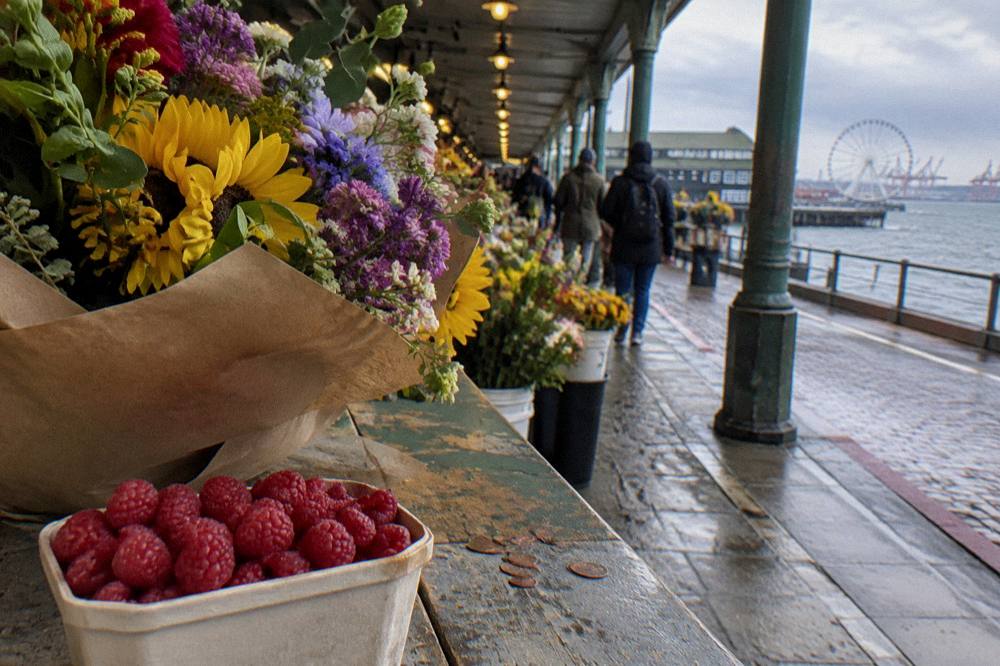
The Market is the anchor. It operates seven days a week, 363 days a year, closed only on Thanksgiving Day and Christmas Day, and most of it is active from about 10 a.m. to 5 p.m., with breakfast, fresh produce and seafood counters starting as early as 7 a.m. That early window matters: the Market's own visitor guidance says mornings before noon are generally less crowded, which makes a 7:30 a.m. pastry run a very different experience from a 1 p.m. one.
Farmers markets are the second pillar, and Seattle runs them year-round, rain or shine, in Ballard, the University District, West Seattle, Capitol Hill and Fremont. These are not just produce stands: bakers, prepared-food vendors and coffee sellers set up alongside the farmers, and the cobblestone stretch of Ballard Ave NW on a Sunday morning functions as an open-air food hall.
Food trucks are the third piece, and most trucks rotate through private lots and office-adjacent plazas on weekday schedules aimed at the lunch crowd, with South Lake Union and Denny Triangle as the densest cluster. Specific truck names, lots and hours shift week to week, so treat any single truck sighting as a lead to verify rather than a promise.
The fourth category is the walkable snack corridor: blocks where bakery, bubble tea, dumpling and sandwich counters sit shoulder to shoulder, most visibly in the Chinatown-International District along South King Street and South Jackson Street, and on Capitol Hill along Broadway and Pine. None of this requires a plan so rigid it stops being fun, but knowing which category suits the moment saves a lot of aimless wandering.
Where Do You Find The Best Street Food In Seattle?
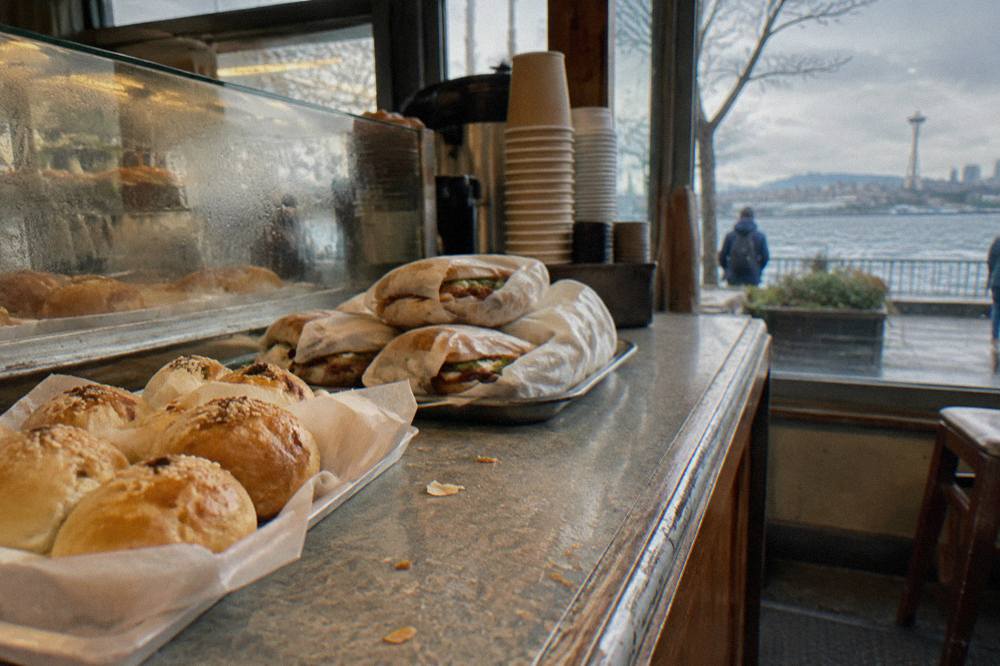
The highest concentration of walk-up food in Seattle sits in three places: Pike Place Market downtown, the South Lake Union and Denny Triangle lunch corridor around the Amazon Spheres, and the Chinatown-International District, with Ballard a strong fourth on a Sunday for its farmers market and adjacent bakery and brewery blocks. Each area rewards a different kind of appetite.
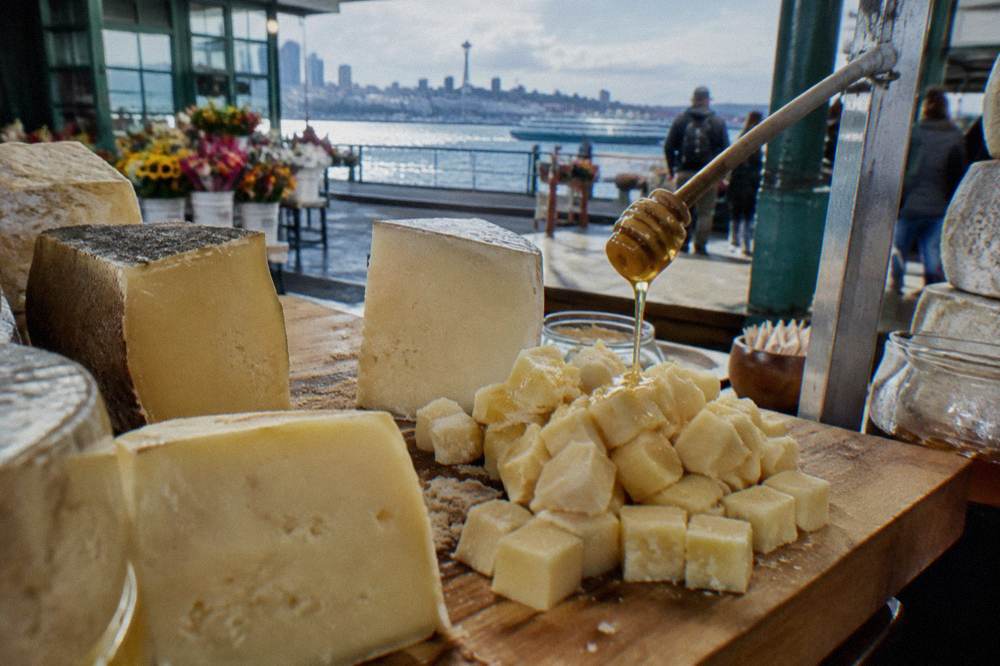
Pike Place Market is the obvious first stop and deserves the reputation. Inside its nine acres you can move from a doughnut counter to a chowder bar to a cheese shop to a chocolate stand without crossing a street, and the Market's rules keep it locally run: the businesses are independently owned. The practical detail most visitors miss is timing. The crafts market runs 11 a.m. to 4 p.m., farm tables 9 a.m. to 4 p.m., and the artisanal food program operates 11 a.m. to 4 p.m. Friday to Sunday, so the full spread only exists on weekend afternoons.
South Lake Union flips the schedule. The neighborhood is built around office lunch, so it peaks on weekdays around noon. Marination, Rubinstein Bagels, Great State Burger and Maiz Molino all sit in this area, and a guide-led walk through them exists, covered in the next section.
The Chinatown-International District rewards the slow grazer. Its historic core grew after the Jackson Street Regrade finished around 1910, and some institutions have been feeding people on foot for decades: Tai Tung says it was established in 1935, Kau Kau BBQ has been doing Cantonese barbecue at 656 S King St since 1974, and Uwajimaya's grocery aisles anchor the whole district. For a deeper route through the neighborhood, the International District food walk guide covers dim sum, noodles and bakeries street by street.
Ballard is the weekend option. Its Sunday farmers market runs 9 a.m. to 2 p.m. year-round along Ballard Ave NW between 20th and 22nd Ave NW, and the surrounding blocks hold bakeries, seafood counters and more than a dozen breweries and cideries within about a mile. The Ballard farmers market Sunday guide maps what to eat there in detail.
If you would rather have someone assemble the stops, three tours fit a grab-and-go mood:
Details and prices for each follow in the sections below.
Is There A Guided Street Food Walk In Seattle?
Yes, one tour on the options list is genuinely street-food-led: the Street Food Tour of South Lake Union, a 2-hour walk from $80 per person, rated 5.0 across 65 reviews, which visits Maiz Molino, Marination, Rubinstein Bagels, Great State Burger and Lady Yum in the Amazon Spheres area. It starts at Maiz Molino on 6th Ave and runs as a lunch-format tasting walk.
What makes it distinct from the Pike Place tours is the setting. South Lake Union is where Seattle's tech workforce actually eats on weekdays, so the walk shows you the counter-service and truck-adjacent food the neighborhood runs on, not the Market's tourist-facing stalls. Lunch is included, drawn from street food at 5 different locations, 4 savory and 1 sweet.
It is also the right tour for anyone who has already done Pike Place. The Market walks, good as they are, cover overlapping vendors, and a second Market tasting tour tends to repeat stops like Beecher's Handmade Cheese and Daily Dozen. The South Lake Union route shares almost nothing with them. For a fuller comparison of the Market-side options, the which Pike Place Market food walk fits you guide breaks down routes, durations and what each includes.
Read the details on the Street Food Tour of South Lake Union page, and check availability if the lunch slots fit your dates.
What Can You Eat At Pike Place Market Counters?
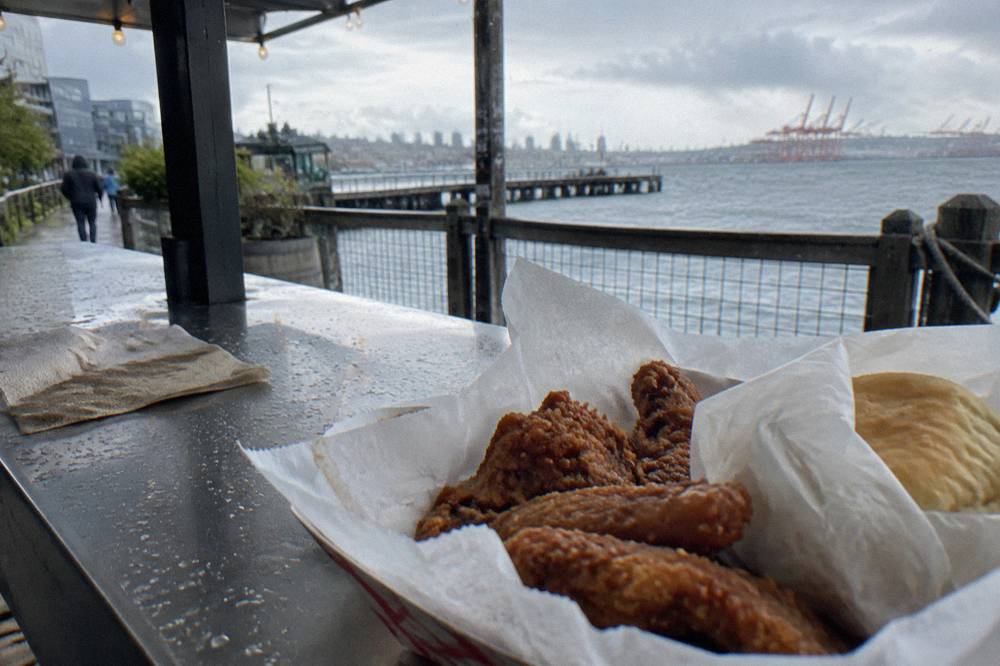
Pike Place Market counter food runs from chowder and fish and chips to cultured cream, doughnuts by the dozen, chocolate, crumpets and biscuits, spread across dozens of walk-up stalls, with most counters active from about 10 a.m. to 5 p.m. and produce and seafood starting at 7 a.m. You buy standing, you eat walking, and no reservation is involved.
The names repeat across tours for a reason. Pike Place Chowder appears on both the chef-guided food tour and the Original Food Tour itineraries, Beecher's Handmade Cheese shows up on both as well, and Daily Dozen Doughnut appears on the sweetest-tour route and a breakfast tour alike. Those overlaps make a decent shortlist. The Pike Place Market food guide goes deeper on what to order where.
Two timing notes shape a counter crawl. First, the Market says mornings before noon are generally less crowded, and its own FAQ notes the fish throwing at Pike Place Fish happens when a customer buys a fish during business hours, 7 a.m. to 5 p.m. daily, so early arrivals catch it with room to breathe. Second, a street access pilot is changing vehicle flow: Phase 3 runs October 1, 2026 to March 31, 2027, with Pike Place shared by cars and pedestrians Monday to Thursday, and limited access Friday to Sunday from 11 a.m. to 4 p.m. at 1st Ave and Pike St. The Market's plan-your-visit page is worth a look before you set out.
If you want the counters decoded for you, the Meet the Market food and fun tour starts outside The Crumpet Shop on 1st Ave, runs 2 hours from $58 per person, and is rated 4.7 across 457 reviews, taking in The Crumpet Shop, Honest Biscuits, City Fish and DeLaurenti. The longer Seattle Pike Market Food Tour with 8 Authentic and Local Tastings stretches to 3 hours, from $60 per person, rated 4.8 across 129 reviews, and is the longest Pike Place walk among the tasting options.
Which Farmers Markets Sell Ready-To-Eat Food In Seattle?
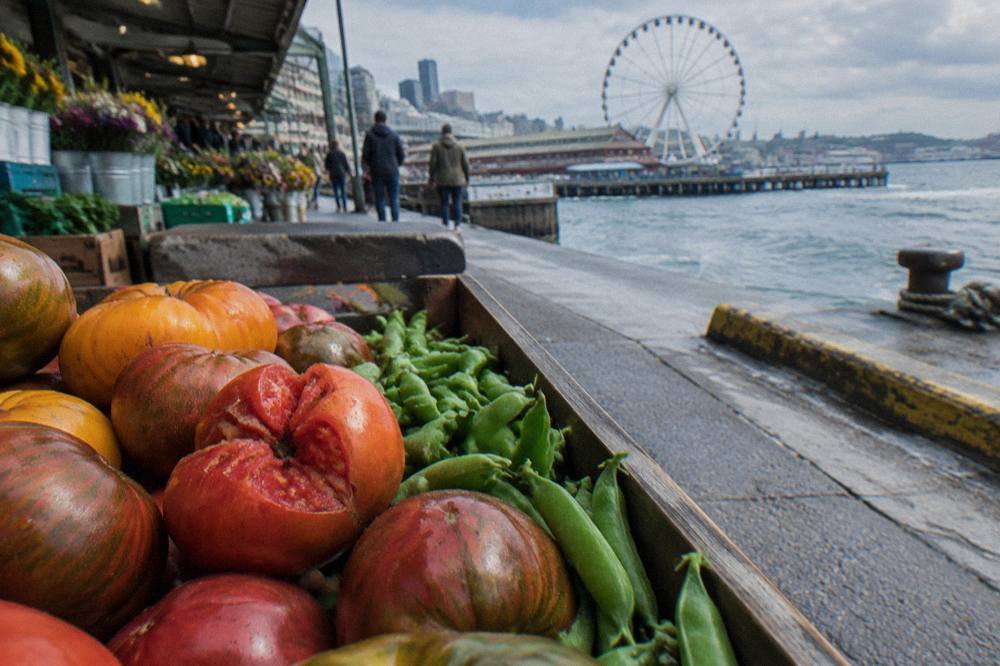
All five of Seattle's year-round neighborhood farmers markets sell ready-to-eat food alongside produce: Ballard on Sundays, University District on Saturdays, West Seattle on Sundays, Capitol Hill on Sundays and the Fremont Sunday Market on Sundays, every one of them rain or shine. Bakers, prepared-food vendors and coffee sellers set up with the farmers at each.
The schedules matter more than the addresses, because a Sunday gives you four simultaneous options and a Monday gives you none. The Seattle Farmers Markets organizer site lists current vendor lineups, and the details below come from the organizer schedules.
| Market | Day | Hours | Location |
|---|---|---|---|
| Ballard Farmers Market | Sunday | 9 a.m. to 2 p.m. | Ballard Ave NW between 20th and 22nd Ave NW |
| University District Farmers Market | Saturday | 9 a.m. to 2 p.m. | University Way NE between NE 50th and NE 52nd |
| West Seattle Farmers Market | Sunday | 10 a.m. to 2 p.m. | California Ave SW and SW Alaska |
| Capitol Hill Farmers Market | Sunday | 11 a.m. to 3 p.m. | E Barbara Bailey Way, Broadway to 10th Ave E |
| Fremont Sunday Market | Sunday | 10 a.m. to 4 p.m. | Fremont Bridge area |
Two of these double as food destinations in their own right. Ballard's market sits inside a bakery-and-brewery district, so a Sunday visit can chain into a counter lunch and a taproom stop, and the Fremont Sunday Market lists more than 200 artisans in season.
How Do Food Trucks Work In Seattle?
Seattle food trucks mostly rotate through private lots and office plazas on weekday lunch schedules rather than sitting in permanent pods, with South Lake Union and Denny Triangle the densest hunting ground. No single truck's schedule is fixed enough to print here, and none should be treated as guaranteed.
That rotation is the honest answer to the question every visitor asks. In cities with established truck pods you can plot a route; in Seattle you work the odds. The reliable plays are three. First, go where the offices are on a weekday: the blocks around the Amazon Spheres and 6th Ave in South Lake Union are the densest truck cluster. Second, hit a farmers market on the weekend, where prepared-food vendors fill the same grab-and-go role. Third, use the Fremont Sunday Market, which runs 10 a.m. to 4 p.m. year-round with more than 200 artisans in season and a steady food component.
What you should not do is build an itinerary around one named truck appearing at one address at one hour. Truck locations and hours are set privately and change week to week, and printing a name and a lot would be a guess dressed up as a fact. The guided option exists partly to solve this exact problem: the Street Food Tour of South Lake Union locks in its counter stops in advance, so the rotating-truck uncertainty drops out of your day.
What Neighborhoods Are Best For Eating On The Move?
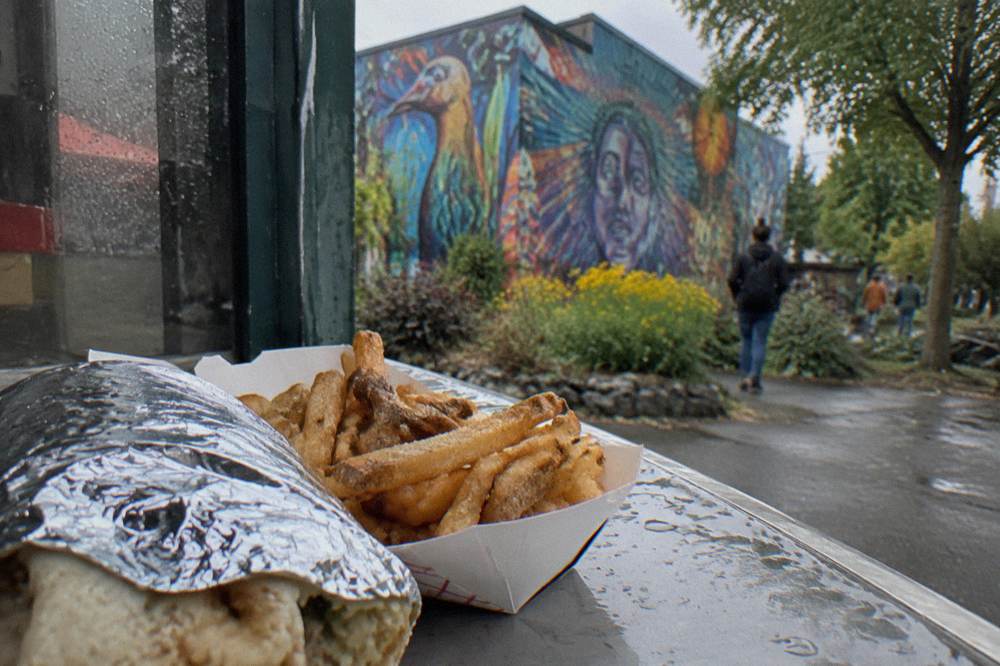
Beyond the Market and South Lake Union, the strongest walk-and-eat neighborhoods are the Chinatown-International District for bakery and dumpling counters, Capitol Hill for coffee, sweets and late snacks, and Ballard for a Sunday market plus bakery-and-brewery blocks. Each works as a half-day graze on foot.
Capitol Hill deserves particular attention for the coffee alone. The neighborhood carries a claim to Seattle's roasting history, with Espresso Vivace founded in 1988, Caffe Vita operating since 1995 and Victrola roasting since 2000, and two guided coffee walks work Capitol Hill: the Seattle Coffee Tour from the Jimi Hendrix statue, 2 hours from $49.30 per person, rated 5.0 across 833 reviews, and the Seattle Coffee Walking Tour from the Oddfellows Building, 2 hours from $39.99 per person, rated 5.0 across 78 reviews. The latter is the cheapest coffee walk.
The Chinatown-International District pairs its counters with actual history. The district's Chinatown Historic District was listed on the National Register in 1986, the Wing Luke Museum has occupied the 1910 East Kong Yick Building since 2008, and Hing Hay Park at 423 Maynard Ave S gives the walk a central square to eat in. Between markets, dim sum and bakeries, it is the closest thing Seattle has to a classic street-food district.
For sweet-toothed walkers, the downtown-to-Denny Triangle corridor holds its own: the Seattle's Sweetest Food Tour starts at Top Pot Doughnuts and works toward the Amazon Spheres area via Dahlia Bakery and Pike Place, 2 hours from $65 per person, rated 4.9 across 1,018 reviews. It is the sugar-focused counterpart to the savory South Lake Union walk.
The broader Seattle food by neighborhood guide covers Pioneer Square, Fremont and West Seattle for anyone building a multi-day plan.
How Much Does A Street Food Walk Cost Versus Going Solo?
Guided street-food-style walks in Seattle run from $39.99 to $160 per person depending on format, with the true street food tour at $80, Market tasting walks between $58 and $112, and breakfast and happy-hour formats at the top of the range. Going solo means paying per item at each counter, so plan by tour price where a number exists.
The honest comparison is not dollars alone, it is what the ticket removes. A ticketed walk covers the standing in line decisions, the what-to-order-here choices and the route between stops, and inside Pike Place the permitted tours also cap at 16 people per guide, which keeps a group moving through crowded arcades. Against that, solo grazing lets you spend only on what you want and stop when full, and the Market's counters happily serve walk-ups all day.
| Tour | Duration | From price per person | Rating and reviews |
|---|---|---|---|
| Street Food Tour of South Lake Union | 2 hours | $80 | 5.0, 65 reviews |
| Chef Guided Food Tour of Pike Place Market | 2 hours | $75 | 4.9, 4,806 reviews |
| Meet the Market Food and Fun tour | 2 hours | $58 | 4.7, 457 reviews |
| Pike Place Market Original Food Tour, tips included | 2 hours 15 minutes | $112 | 5.0, 670 reviews |
| Seattle Pike Market Food Tour, 8 tastings | 3 hours | $60 | 4.8, 129 reviews |
| Pike Place Insider's Breakfast Tour | 2 hours 30 minutes | $160 | 5.0, 90 reviews |
One cost that catches visitors: sales tax of 10.55 percent is added at the register on restaurant and prepared-food purchases in Seattle. It is not baked into menu prices the way VAT is in Europe, so a receipt runs higher than the board suggested. Tour prices quoted above are ticket prices; check the booking page for what each includes, since some, like the wine day trips, exclude tasting fees while the Market walks include their tastings in the ticket.
When Is The Best Time Of Day For Street Food In Seattle?
Mornings are the quietest window at Pike Place Market, with breakfast, produce and seafood counters opening at 7 a.m. and the Market itself saying crowds thicken after noon, while weekday lunch is peak for South Lake Union trucks and weekends carry the farmers markets and the full crafts and artisan stalls. Match the clock to the neighborhood.
The Market's layered schedule rewards precision. Breakfast and fresh counters start at 7 a.m., most of the Market is active about 10 a.m. to 5 p.m., farm tables run 9 a.m. to 4 p.m., crafts 11 a.m. to 4 p.m., and the artisanal food program runs 11 a.m. to 4 p.m. Friday to Sunday only. An 8 a.m. visit feels like a local's market; a 2 p.m. Saturday visit is a crowd with food inside it.
Weather should shape the calendar too. July and August average highs around 77 to 78 F with under an inch of rain each month, while November is the wettest at 6.31 inches on average, per the NOAA 1991 to 2020 climate normals at Sea-Tac. Winter street eating still works, because the covered arcades of Pike Place exist for exactly this reason, but an umbrella-free July lunch on the waterfront is a different sport. Visit Seattle tracks seasonal events if you want to align a trip with something bigger.
How Do You Get Between Street Food Stops Without A Car?
You do not need a car: a King County Metro adult ride is $3.00, a regional day pass is $6.00, Link light rail is $3.00 one-way for adults with youth 18 and under free, and the walkable pairs, downtown to Pike Place, Pike Place to South Lake Union, need no transit at all. Contactless bank cards and ORCA taps both work.
The geography favors walkers. Pike Place Market, the downtown core, Denny Triangle and South Lake Union form a chain of roughly walkable zones heading north, and the Chinatown-International District sits one Link stop from downtown at the other end. Capitol Hill and Ballard each need a short transit hop. The King County Metro fare page has the current details.
| Option | Adult fare | Notes |
|---|---|---|
| King County Metro bus | $3.00 single ride | Regional day pass $6.00 |
| Link light rail | $3.00 one-way | Youth 18 and under free |
| Seattle Center Monorail | about $4 one-way | Westlake Center to Seattle Center |
| Washington State Ferries to Bainbridge | $11.35 walk-on | Round trip collected from Seattle, return free |
Two footnotes. The Monorail is the quick link if you pair a downtown graze with the Seattle Center area, where a chef-led food tour of the Space Needle neighborhood runs 2 hours from $85 per person. And Sound Transit news coverage reports that the Crosslake 2 Line opened March 28, 2026, which shortens Eastside trips if your street food day starts in Bellevue.
Can You Build A Whole Day Around Eating On The Move?
Yes: a realistic grab-and-go day chains a 7:30 a.m. Pike Place breakfast counter, a mid-morning Market crawl before the noon crowds, a weekday lunch in South Lake Union, and an afternoon farmers market or Chinatown-International District graze, with coffee walks filling any gap.
A sample skeleton. Start at the Market's 7 a.m. breakfast counters, before the 10 a.m. full opening and well before the after-noon peak. Walk east into downtown, then north into Denny Triangle for a mid-morning doughnut or bakery stop on the sweetest-tour corridor. If it is a weekday, take lunch in South Lake Union around the Amazon Spheres, either independently or on the guided walk. Weekend afternoons belong to a farmers market: Ballard or Fremont on Sunday, University District on Saturday. Finish in the Chinatown-International District, where counters run into the evening and the district's history, from the 1910 regrade to Tai Tung's 1935 founding, gives the walk a spine.
Families can run the same shape. The Market counters suit kids precisely because nothing requires sitting still, and the Seattle food walk with kids guide covers strollers, picky eaters and which guided walks suit younger children. For the underlying question of what the city's food identity actually is, the what food is Seattle known for history guide is the companion read.
If a guided day appeals, these three walks cover the street-food spectrum from office-corridor savory to Market classics.
Common Questions About Street Food In Seattle
Where Do You Find The Best Street Food In Seattle?
Pike Place Market has the densest counter food, South Lake Union and Denny Triangle carry the weekday lunch truck scene, and the Chinatown-International District, Capitol Hill and Ballard each offer walkable snack corridors, with Ballard strongest on Sunday mornings during its farmers market.
Is There A Guided Street Food Walk In Seattle?
Yes. The Street Food Tour of South Lake Union is the street-food-led option: 2 hours, from $80 per person, rated 5.0 across 65 reviews, visiting Maiz Molino, Marination, Rubinstein Bagels, Great State Burger and Lady Yum near the Amazon Spheres.
How Do Food Trucks Work In Seattle?
Most trucks rotate through private lots and office plazas on weekday lunch schedules rather than sitting in permanent pods. The reliable approach is to head to South Lake Union or Denny Triangle on a weekday, or rely on a farmers market or a guided walk on weekends.
When Is Pike Place Market Least Crowded?
The Market's own guidance says mornings before noon are generally less crowded. Breakfast, produce and seafood counters open at 7 a.m., most of the Market is active from about 10 a.m. to 5 p.m., and it is closed only on Thanksgiving Day and Christmas Day.
Which Seattle Farmers Markets Sell Ready-To-Eat Food?
All five year-round markets do: Ballard on Sundays 9 to 2, University District on Saturdays 9 to 2, West Seattle on Sundays 10 to 2, Capitol Hill on Sundays 11 to 3, and the Fremont Sunday Market on Sundays 10 to 4, every one running rain or shine.
How Much Do Seattle Food Walks Cost?
Ticketed walking food tours run from $39.99 for a Capitol Hill coffee walk up to $160 for a Pike Place breakfast tour, with the street food tour at $80, Market tasting walks between $58 and $112, and the longest Market walk, a 3-hour, 8-tasting route, at $60 per person.