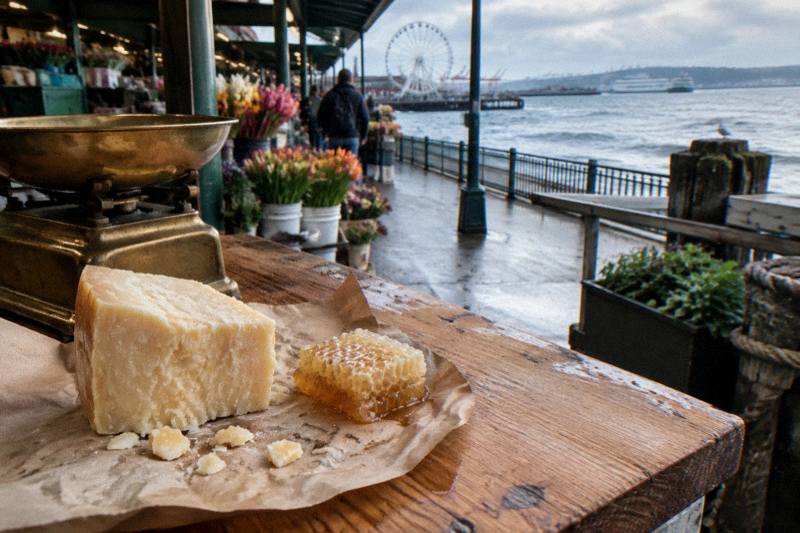
What Food Is Seattle Known For: A Short Food History
Seattle's food identity was built on salmon, coffee and waves of immigration, all funneled through a 1907 public market on the waterfront bluff.
Short answer
Seattle is known for wild Pacific salmon, its coffee culture that grew from a 1971 Pike Place store, Seattle-style teriyaki, Dungeness crab and oysters, and the Pike Place Market itself, open since August 17, 1907. A 2-hour chef-guided market tasting from $75 per person covers nine vendor stops and touches most of that story in one walk.
Seattle's food reputation rests on a narrow foundation that turned out to be unusually durable: one fish, one bean, one public market and a long sequence of immigrant kitchens. The City Council passed the ordinance creating Pike Place Market on August 5, 1907, and farmers rolled their wagons in twelve days later, on August 17. Everything that followed, the coffee empire that started at the Market in 1971, the teriyaki shops, the oyster bars, built outward from that trading floor on the bluff above Elliott Bay.
This page walks through the foods the city is actually known for, in roughly the order the identity formed: salmon first, because it predates the city itself, then the Market, then coffee, then the Asian-influenced dishes that give Seattle its everyday eating character. Each section ends with where to taste that thread today, including the guided options that cover it on foot. When the craving runs smaller, the guide to Seattle's classic snacks, from market chowder to donuts picks up the same threads in bite-sized form.
What Food Is Seattle Known For Above All Else?
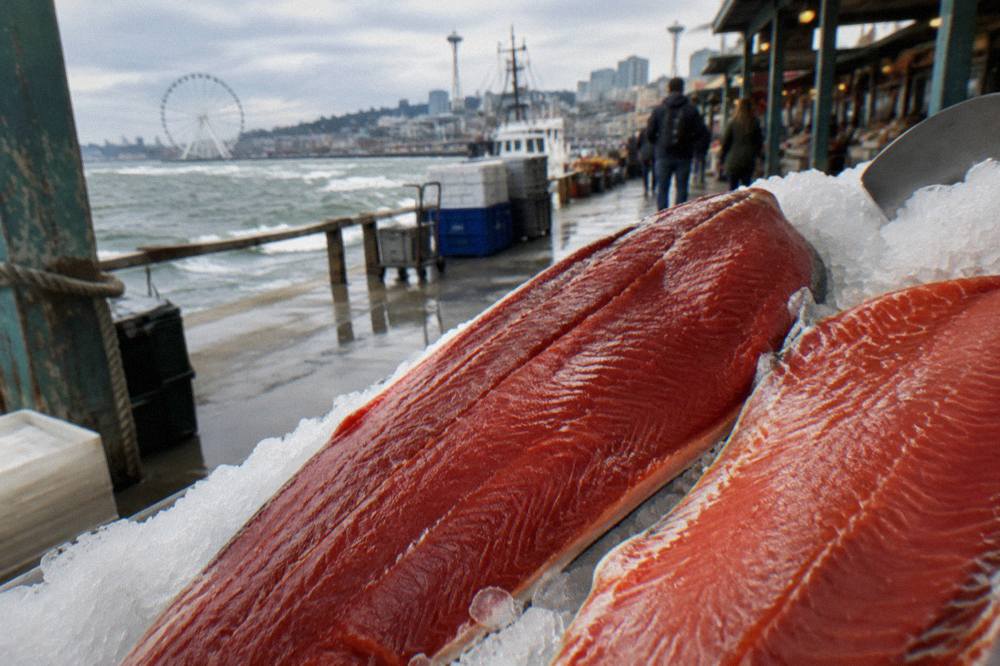
Wild Pacific salmon is the single food most tied to Seattle, and five species swim behind that reputation: Chinook (king), sockeye, coho, pink and chum. Behind salmon sit four more pillars: a coffee culture dating to 1971, Seattle-style teriyaki, Dungeness crab and Pacific oysters, and the Pike Place Market, which has anchored the whole food economy since 1907. For a fuller answer on whether Seattle really earns its reputation as an eating city, the closer look at Seattle's food scene makes the case from Pike Place to the oyster bars.
Salmon is not a Seattle invention; it is a Pacific inheritance. What Seattle added was the trading hub. When the Market opened in 1907 with somewhere between six and a dozen farmers, it created a fixed place where the region's catch, produce and craft could meet city buyers.
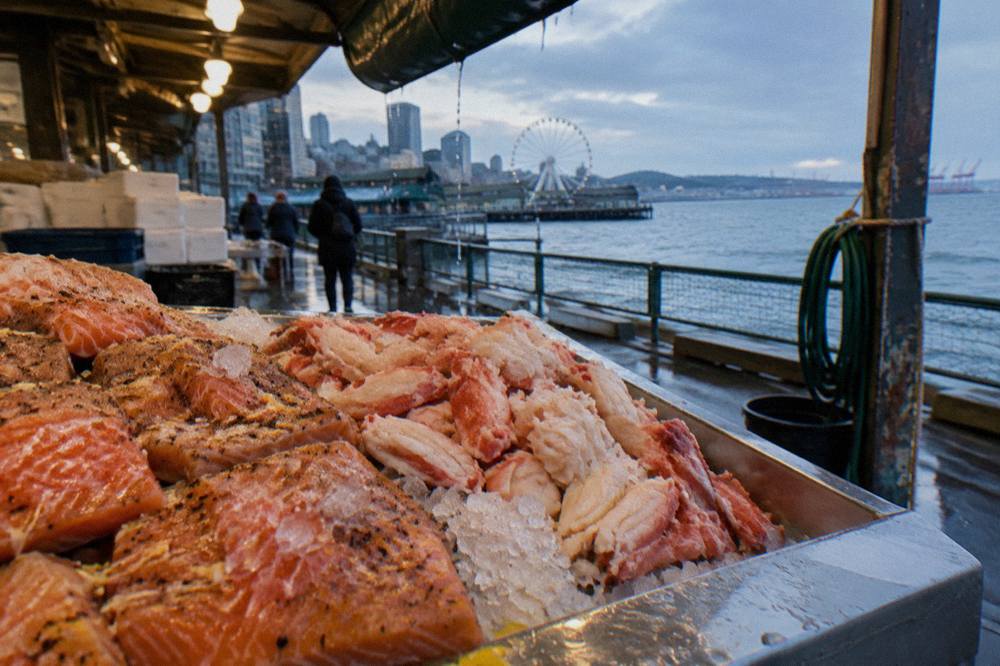
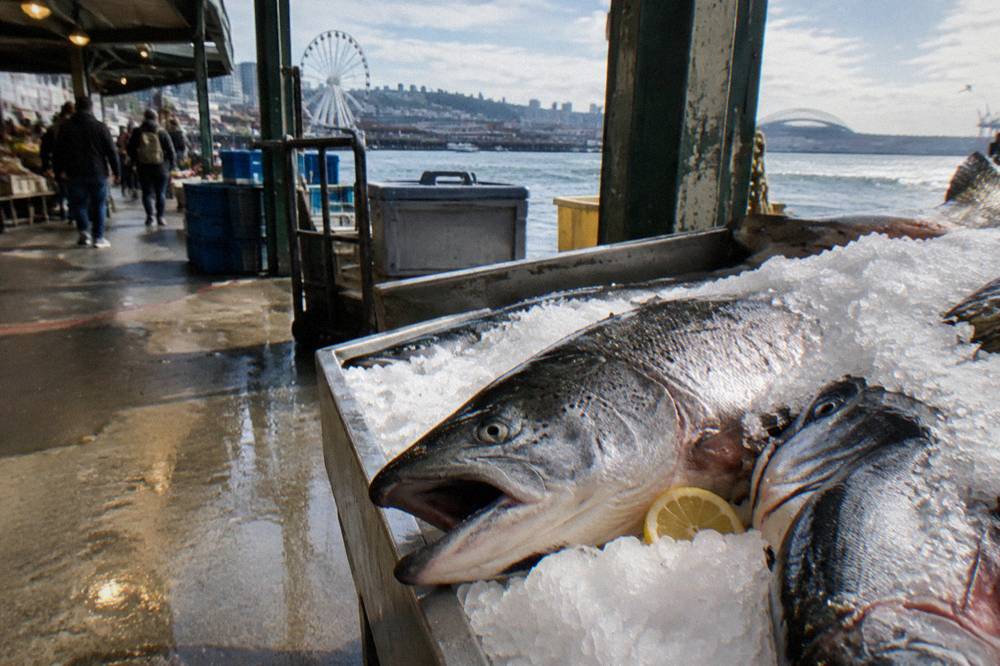
The modern expression of that inheritance is seasonal and specific. The 2026 Copper River commercial drift gillnet fishery opened May 22, with the first fresh fish reaching Pike Place pre-orders around May 27 and the first restaurant plates appearing around June 1. That arrival is treated locally as an event, and the run continues, quota-managed, into early fall. Nothing about a given day's availability is promised, but the calendar pattern is consistent: fresh wild Alaska salmon is a late-spring-through-summer story, and smoked and canned versions carry the rest of the year.
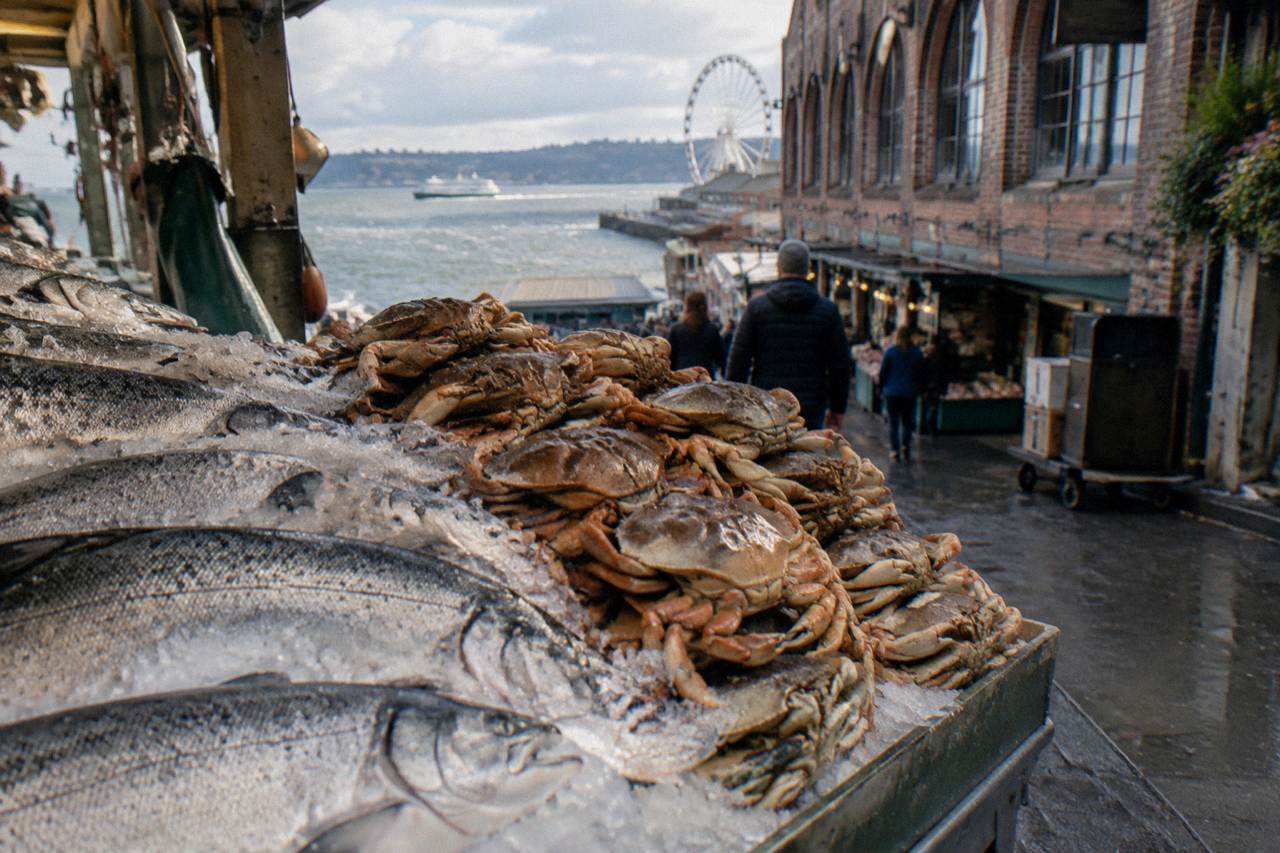
Shellfish hold the second seat. Farmed Pacific oysters are available year-round, though the cold-water months from roughly September to April are the traditional peak for firm, briny flavor. Taylor Shellfish and other growers farm Puget Sound, Hood Canal and Willapa Bay tidelands, and geoduck, the outsized clam that takes five to seven years to reach harvest size on a farm, remains the region's most distinctive shellfish curiosity.
| Pillar of Seattle food identity | What it is | When it peaks |
|---|---|---|
| Wild Pacific salmon | Five species; king, sockeye, coho, pink, chum | Fresh late spring to early fall; smoked and canned year-round |
| Oysters | Farmed Pacific oysters from Puget Sound, Hood Canal, Willapa Bay | Year-round, traditional peak September to April |
| Dungeness crab | Quota-managed recreational and commercial seasons | Summer and winter seasons vary by marine area |
| Coffee | Roaster culture from the 1971 Pike Place store onward | Year-round |
| Teriyaki | Seattle-style chicken teriyaki plate with rice and salad | Year-round, lunch staple |
The practical way to sample several of these in one sitting is a guided tasting. The seafood-focused option is the Seattle Seafood Tour: A Long Lunch of Market-Fresh Tastings, a 2-hour-15-minute walk from $119 per person, rated 4.7 across 40 reviews, built around eight seafood tastings across six restaurants in the Market and downtown. It is the only seafood-themed walk among the options covered here, and it is not an oyster-specific or Pioneer Square route, which matters if you arrive with a particular craving.
Details and current availability are on the operator's booking page.
Why Is Salmon So Central To Eating In Seattle?
Salmon is central because geography put five Pacific species in local water and the 1907 Market gave them a permanent public counter. Ivar's Acres of Clams had opened on Pier 54 by 1946, the fish-throwing at Pike Place Fish became a civic emblem, and the annual Copper River arrival each May still functions as the city's unofficial opening of summer eating.
The fish-throwing at Pike Place Fish Market is the visible ritual: when a customer buys a fish during business hours, roughly 7 a.m. to 5 p.m. per the Market FAQ, the crew sends it across the counter hand to hand. It is commerce, not theater for its own sake, which is part of why it has lasted. The Market's own scale explains the rest of the ecosystem: more than 220 independently owned shops and restaurants, more than 70 farmers and 150 to 180 craftspeople, plus 450 residents in affordable housing upstairs.
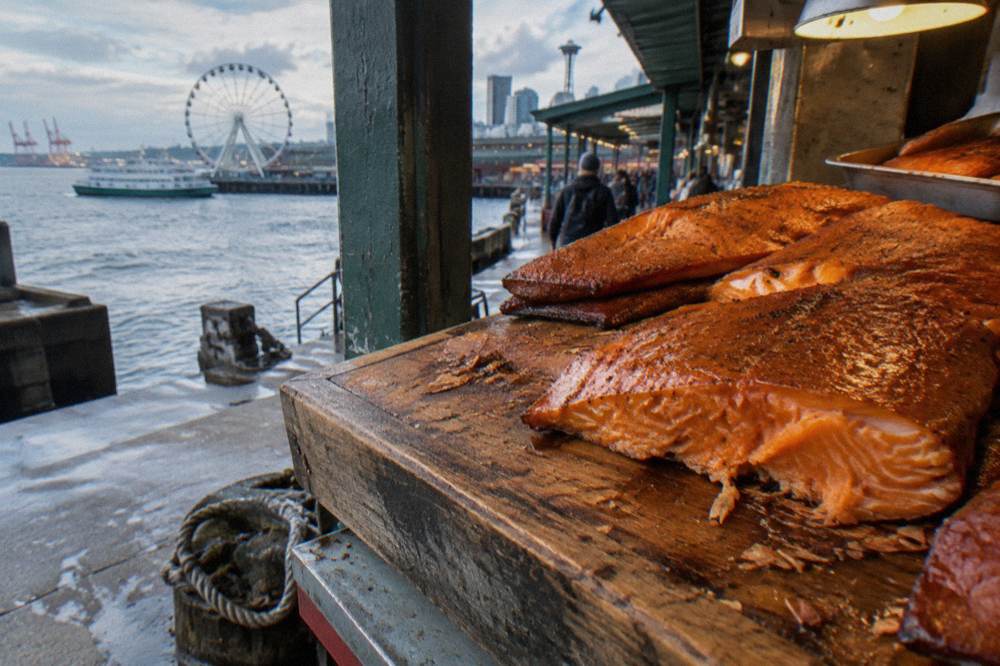
If you want to understand salmon as a buyer rather than a spectator, three distinctions do most of the work. Species matters: king is the richest and priciest, sockeye the deep-red standard, coho milder, pink and chum more often canned or smoked. Source matters: wild Alaska fish carries the seasonal calendar described above. Preparation matters: cold-smoked (lox-style), hot-smoked over alder, or fresh-grilled are three different experiences, and the Market's counters carry all three. More detail on choosing is in the guide to wild salmon in Seattle, and the shellfish side of the counter is covered in Dungeness crab and geoduck in Seattle.
For tasting salmon as a meal rather than buying it by the pound, the Market-focused walks that serve Pike Place Chowder are the efficient route. The Original Food Tour, 2 hours 15 minutes from $112 per person with tips included, lists Pike Place Chowder among 14-plus tastings from 8 vendors and is rated 5.0 across 670 reviews. The chef-guided walk covers the same chowder counter with a trained cook leading.
One planning note for salmon seekers: the fresh window and the visitor high season overlap neatly. July and August bring the warmest and driest weather of the year, and the fresh wild runs are still coming through the counters, so a summer visit lands the best of both. By November, the fresh local story has largely shifted to shellfish, which is exactly when the oyster calendar is at its traditional peak. A fall or winter visitor is not eating second-best; they are eating the correct season.
How Did Coffee Become Half Of Seattle's Food Identity?
Coffee became Seattle's second food identity because the city's first Starbucks opened at Pike Place in 1971 selling whole beans, and a homegrown roaster scene, Espresso Vivace in 1988, Caffe Vita in 1995, Victrola in 2000, turned a retail success into a local tasting culture. The bean side and the salmon side of the city's reputation grew from the same Market.
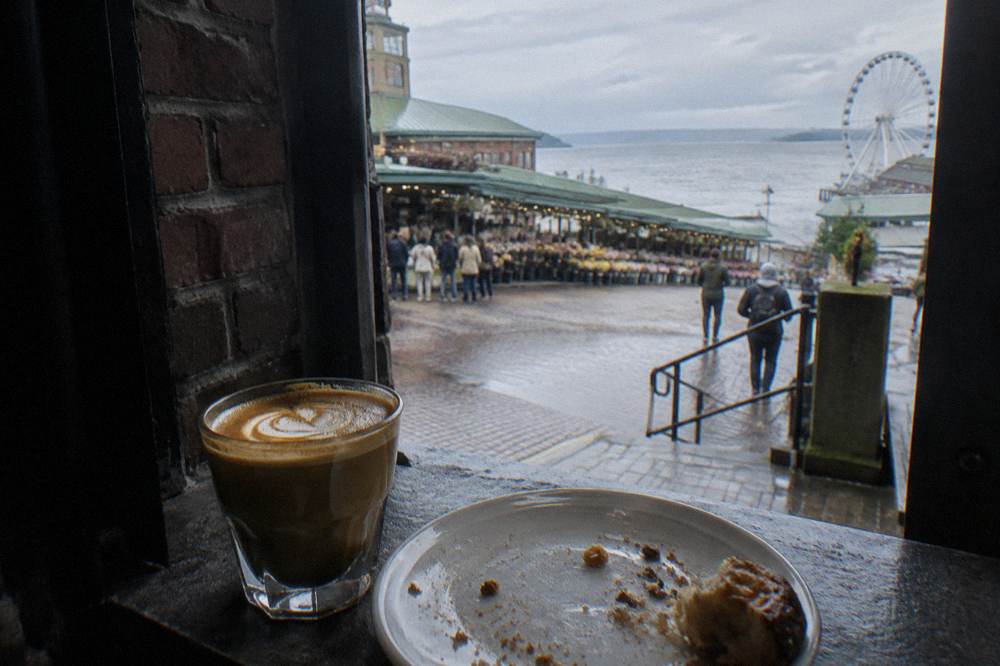
The company history is documented plainly: the first store opened in 1971, and the location at 1912 Pike Place is the oldest still operating. It began as a whole-bean, tea and spice shop, not a cafe, which is why the store still reads more like a shrine than an espresso bar. The line question, and whether it is worth it, gets its own treatment in first Starbucks and Pike Place coffee.
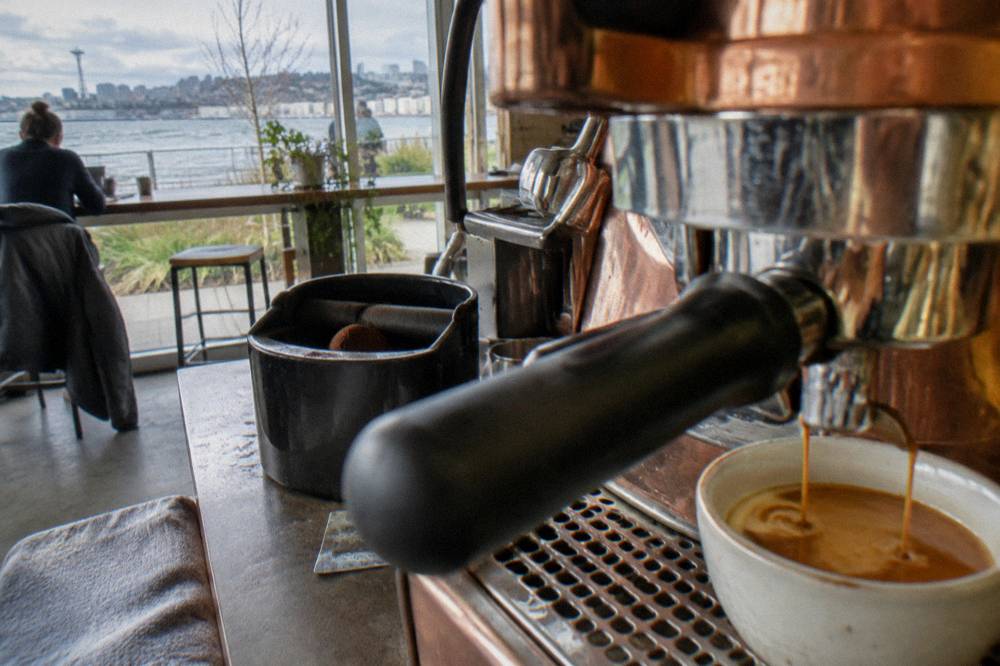
The independent roasters are the more interesting half of the story for visitors who already know what a global coffee chain tastes like. Espresso Vivace was founded in 1988 by David Schomer and Geneva Sullivan. Caffe Vita followed in 1995, Cherry Street Coffee House in 1997, Victrola in 2000 and Elm Coffee Roasters in December 2014 in Pioneer Square. The Seattle Coffee Festival, held October 24 and 25, 2026 at Magnuson Park for its second year, is the annual proof that this is a tasting culture rather than a to-go habit.
| Seattle coffee institution | Founded | Neighborhood root |
|---|---|---|
| Starbucks original store | 1971 | Pike Place Market |
| Espresso Vivace | 1988 | Not stated |
| Caffe Vita | 1995 | Not stated |
| Cherry Street Coffee House | 1997 | Not stated |
| Victrola Coffee Roasters | 2000 | Not stated |
| Elm Coffee Roasters | 2014 | Pioneer Square |
Two guided coffee walks trace this side of the identity on foot, both on Capitol Hill, where much of the roaster scene lives. The Seattle Coffee Tour: Capitol Hill Coffee Culture & Tastings runs 2 hours from $49.30 per person, rated 5.0 across 833 reviews, starting at the Jimi Hendrix statue on Broadway. The Seattle Coffee Walking Tour, from $39.99 per person and rated 5.0 across 78 reviews, starts in the Oddfellows Building lobby on E Pine St. Both are coffee-only: food is not part of either ticket.
If you are choosing between the coffee side and the food side of the identity for a single paid walk, the honest split is this: the Market walk feeds you lunch-adjacent standing tastings and the origin-story vendors, while the Capitol Hill coffee walk teaches you how the city actually drinks.
What Is Seattle-Style Teriyaki?
Seattle-style teriyaki is a fast, generous chicken teriyaki plate, grilled and glazed rather than stir-fried, served with rice and salad, and its exact origin in the city cannot be verified. It is Seattle's true everyday dish, more common in locals' weekly routines than salmon or oysters ever are.
The format is consistent: skewered or sliced chicken, a sweet-soy glaze, a mound of rice, an iceberg salad with creamy dressing, all served quickly and cheaply. It spread across the city as a lunch economy The full background, plus where to try it, is laid out in the Seattle teriyaki guide.
What surprises most visitors is that no guided tour here is built around teriyaki, and none should be promised: the walks covered on this site concentrate on the Market, coffee, chocolate, seafood and the brewery districts. Teriyaki is a self-guided lunch between tours, not a ticketed experience. That division says something about how the city's food identity splits: the ticketed story is the trading-floor story, salmon and Market vendors, while the immigrant-kitchen story, teriyaki, dim sum, pho, mostly lives in the neighborhoods and is explored on foot with a map rather than a guide.
The neighborhood guides carry that half of the identity: International District food walk for the dim sum and noodle rooms, and Capitol Hill food walk for the brunch-and-bakery side.
It is worth being precise about what "Seattle-style" adds to the word teriyaki, because the difference is real. In Japan, teriyaki is a cooking technique, a glaze applied to fish or meat, often as a single course. The Seattle version is a full lunch plate built for speed and volume. Ordering one is straightforward: most shops sell a chicken plate with rice and salad, and the glaze skews sweeter than what a visitor may expect from the technique's name.
How Did Asian Foodways Shape Eating In Seattle?
Asian foodways shaped Seattle through the Chinatown-International District, which grew after the Jackson Street Regrade around 1910 and holds the city's oldest surviving eating institutions: Tai Tung since 1935, Kau Kau BBQ since 1974, Uwajimaya with roots in 1928, and Dim Sum King from 2009, alongside the 1967 Wing Luke Museum that documents the whole story.
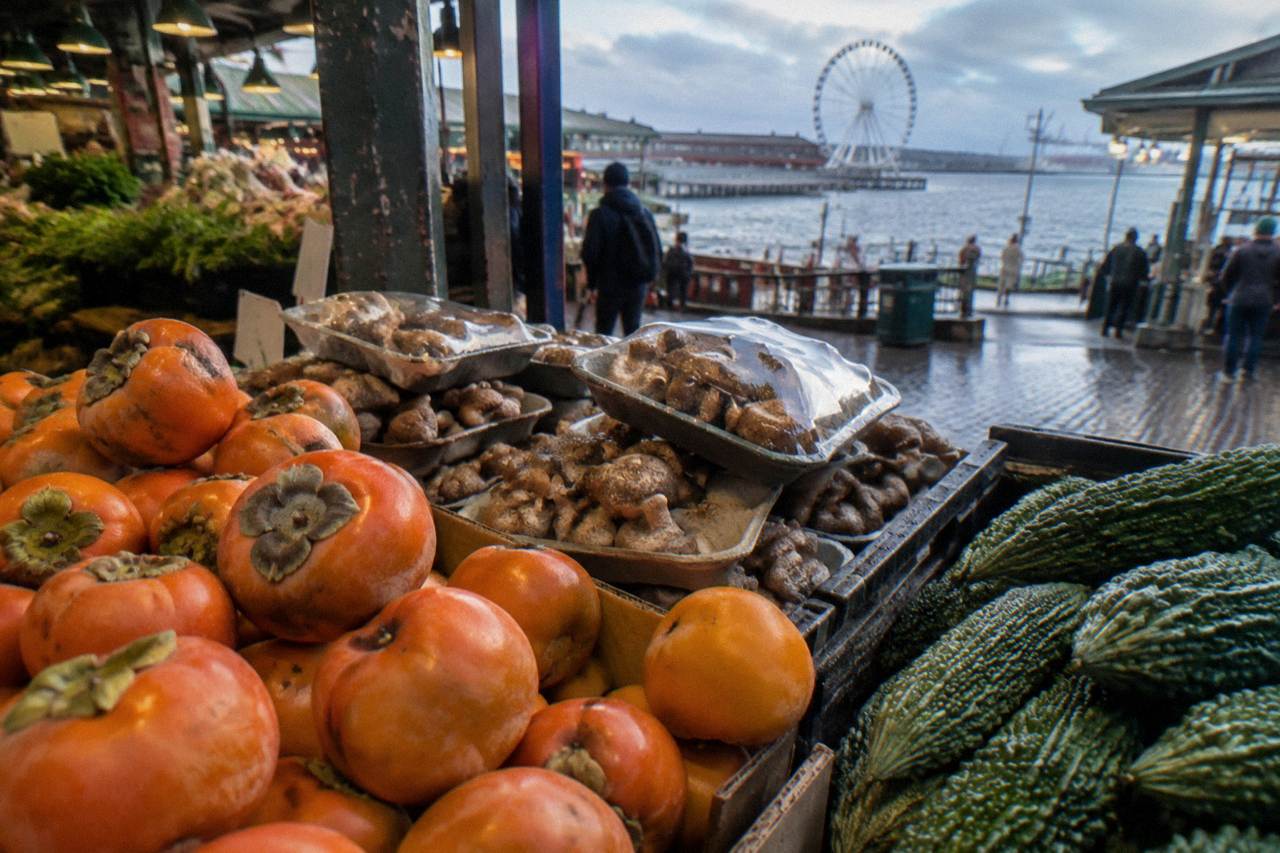
The district's food history is unusually legible on the street. The Seattle Chinatown Historic District was listed on the National Register in 1986. Tai Tung at 655 S King St states it was established in 1935 and is the district's oldest surviving Chinese restaurant. Kau Kau BBQ, next door at 656 S King St, has been doing Cantonese barbecue since 1974. Uwajimaya started as a Tacoma truck business in 1928 and opened its Seattle store after World War II, becoming the region's defining Asian grocery. Hing Hay Park, at 423 Maynard Ave S, is the district's gathering square.
No guided food walk of the district is sold among the options covered here, so the honest advice is to go self-guided. The neighborhood pattern extends across the city: Ballard's Sunday farmers market, 9 a.m. to 2 p.m. year-round on Ballard Ave NW, anchors a Nordic-heritage neighborhood that now also holds more than a dozen breweries and cideries within about a mile. The Ballard farmers market Sunday guide covers that circuit.
| Historic Seattle food institution | Established | Neighborhood |
|---|---|---|
| Pike Place Market | 1907 | Downtown waterfront |
| Uwajimaya (roots) | 1928 | International District |
| Ivar's Acres of Clams | 1946 | Waterfront, Pier 54 |
| Tai Tung | 1935 | International District |
| Kau Kau BBQ | 1974 | International District |
| First Starbucks store | 1971 | Pike Place Market |
Reading that table chronologically is the shortest version of this whole article. A public market in 1907, a family grocery trade with 1928 roots, a Chinese restaurant surviving from 1935, a waterfront clam house from 1946 and a coffee store from 1971: none of these were conceived as "Seattle food identity," they were simply businesses that lasted, and durability is what the city's reputation is made of.
Where Does The Pike Place Market Fit In The Food Story?
The Market is the story's stage: open 363 days a year, closed only Thanksgiving and Christmas, with most activity from about 10 a.m. to 5 p.m., breakfast and produce counters from 7 a.m., and a permit system that caps guided groups at 16 people per guide, which is why every legitimate market tour feels small.
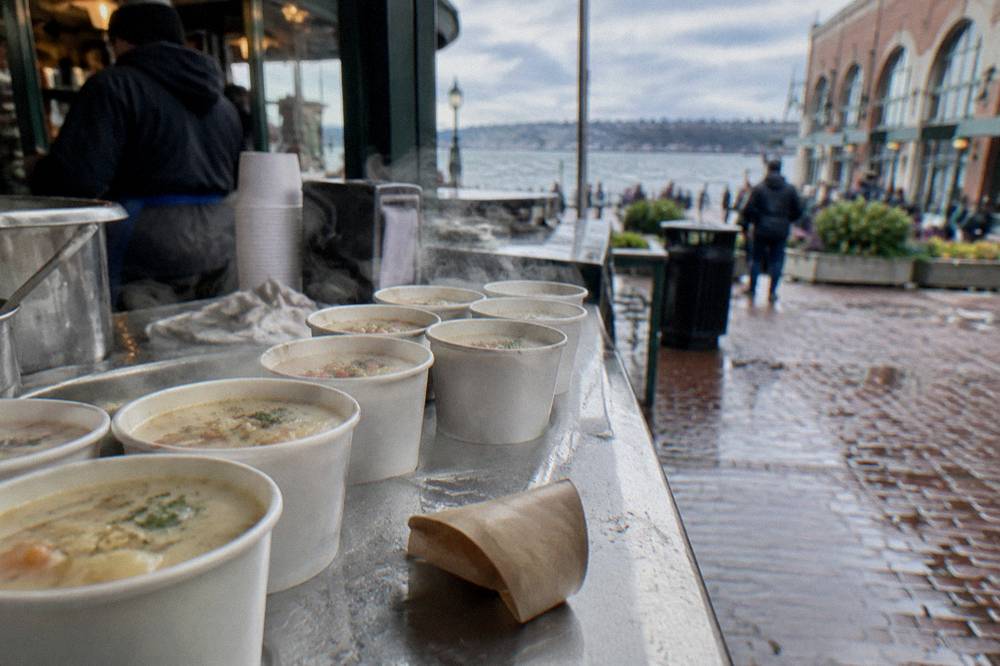
The visitor mechanics matter because they shape any tasting plan. Mornings before noon are generally less crowded, per the Market's own guidance. Fish throwing happens when a customer buys a fish, between roughly 7 a.m. and 5 p.m. One current wrinkle: the Street Access Project Phase 3 runs October 1, 2026 to March 31, 2027, with Pike Place shared by vehicles and pedestrians Monday to Thursday and limited vehicle access Friday to Sunday, 11 a.m. to 4 p.m., at 1st Ave and Pike St. None of this closes the Market, but it can slow the approach on weekend afternoons. The Market's visitor FAQ carries the current detail, and the plan-your-visit page maps the sections.
Because tours inside the Market operate under that 16-per-guide cap with no amplified sound, guided walks here are necessarily conversational rather than lecture-style. The vendors on the standard routes are the vendors in the identity story: Beecher's cheese, the chowder counter, Daily Dozen doughnuts, Indi Chocolate, DeLaurenti. A longer treatment of the routes is in Pike Place Market food walk: what the route covers.
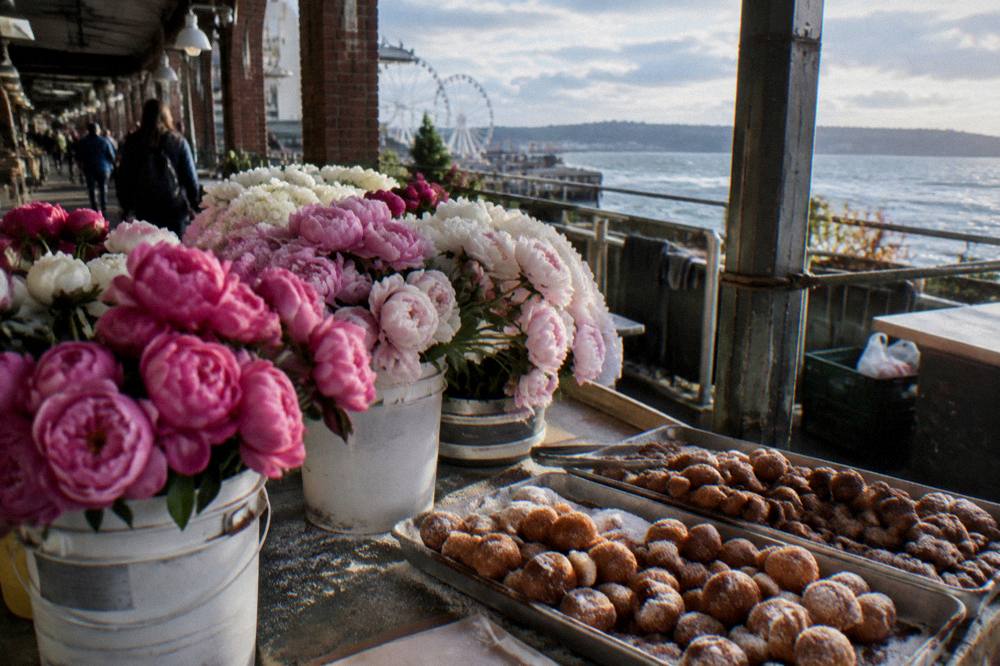
For a compact, budget-priced introduction, Meet the Market, Food and Fun Tour in Pike Place Market runs 2 hours from $58 per person, rated 4.7 across 457 reviews, starting outside The Crumpet Shop on 1st Ave, and pairs crumpets and biscuits with City Fish and DeLaurenti stops.
A longer walk with more tastings is the Seattle Pike Market Food Tour with 8 Authentic & Local Tastings, 3 hours from $60 per person, rated 4.8 across 129 reviews, which is the longest Pike Place walk among the options here and starts outside Sur La Table on Pine St.
How Do You Taste The Whole Story In One Or Two Days?
Taste the story in layers: one Market walk for salmon, chowder and cheese, one Capitol Hill coffee walk for the roaster side, and one neighborhood wander, Ballard or the International District, for teriyaki-adjacent and immigrant-kitchen eating. Two well-chosen walks plus one self-guided afternoon cover the identity; a single day should start at the Market at opening and finish on Capitol Hill.
Timing follows the Market clock. Breakfast counters open at 7 a.m., so a 9 or 10 a.m. Market walk lands before the peak crush, and the Coffee Crawl & VIP Morning in Pike Place Market, 2 hours from $84 per person, rated 5.0 across 93 reviews, is built exactly on that window, pairing breakfast and coffee from Anchorhead on Western Ave. The chef-guided tour, the featured option, covers the broadest vendor spread, nine stops including Beecher's, maíz and Pike Place Chowder, over 2 hours.
Afternoon belongs to sweets or neighborhoods. The Chocolate Tour in Seattle with Guided Tastings, 2 hours 15 minutes from $76 per person, rated 4.8 across 244 reviews, starts at Dahlia Bakery downtown and threads through Woodring, DeLaurenti and SELEUŠS in the Market district, which conveniently connects the downtown and Market halves of the story in one walk.
Getting between these anchors is cheap and simple. Link light rail is $3.00 adult one-way with youth 18 and under free, per Sound Transit, and King County Metro rides are $3.00 with a $6.00 regional day pass, per King County Metro's fare page. Sales tax of 10.55 percent is added at the register on restaurant meals, so budget slightly above menu math. Seasonally, July and August average highs of about 77 to 78 F with under an inch of rain, while November, at 6.31 inches, is the wettest month, per NOAA 1991 to 2020 normals at Sea-Tac; a market walk is covered arcade for most of its length, which is why it survives the rainy season intact.
A reasonable two-day sketch: day one, morning Coffee Crawl or chef-guided Market walk, lunch from a Market counter, afternoon in the International District self-guided; day two, Ballard farmers market if it is Sunday, a brewery afternoon or the seafood long-lunch tour, evening happy hour downtown. The morning or evening food walk guide works through the timing tradeoffs in more depth.
Beer and wine belong in the plan too, because Washington's larger drinking identity grew from the same soil. Ballard's brewery cluster, with Fremont Brewing from 2009, Reuben's Brews from 2012 and Stoup from 2013, sits within about a mile in one walkable district, and a guided option exists there: the Craft Beer Tasting Tour in Ballard Brewery District with Food, 2 hours 30 minutes from $99 per person, rated 4.9 across 29 reviews. On the wine side, Woodinville sits about 19 miles and 25 to 30 minutes from downtown with more than 100 tasting rooms, and the Seattle Wine and Snoqualmie Falls Highlights Tour, 6 hours from $140 per person, rated 4.5 across 1,285 reviews, pairs two Woodinville stops with the falls, though tasting fees and lunch are extra.
Two Pike Place Food Tours Compared
| Tour | Price | Duration | Rating | Tastings |
|---|---|---|---|---|
| Seattle Seafood Tour | from $119 per person | 2-hour-15-minute walk | 4.7 across 40 reviews | eight seafood tastings |
| The Original Food Tour | from $112 per person | 2 hours 15 minutes | 5.0 across 670 reviews | 14-plus from 8 vendors |
The through-line is worth naming before the practicalities take over. Seattle did not invent a cuisine; it assembled a trading floor and let salmon, coffee beans and successive waves of immigrant kitchens pass across it. The foods the city is known for are the ones that crossed that floor first and never left.
Common Questions About Seattle Food
What Food Is Seattle Known For?
Wild Pacific salmon, coffee, Seattle-style teriyaki, Dungeness crab, oysters and the Pike Place Market itself. The identity formed around a 1907 public market, a 1971 coffee store and decades of immigrant kitchens, especially in the Chinatown-International District.
Is Seattle Known For Salmon?
Yes, more than any other single food. Five Pacific species, king, sockeye, coho, pink and chum, supply the counters, and the fresh wild season runs from late spring into early fall, with the Copper River arrival in late May treated as the year's opening event.
What Is Seattle-Style Teriyaki?
A fast chicken teriyaki plate, grilled and glazed, served with rice and salad. It is an everyday lunch dish across the city rather than a tourist food.
Where Did Seattle's Coffee Culture Start?
The first Starbucks store opened at Pike Place Market in 1971, selling whole beans rather than drinks. The independent roaster wave followed, Espresso Vivace in 1988, Caffe Vita in 1995, Victrola in 2000, and turned the city into a tasting culture.
Can You Taste Several Seattle Foods On One Tour?
Yes. The chef-guided Pike Place Market walk, 2 hours from $75 per person, stops at nine vendors including Beecher's, Pike Place Chowder and Indi Chocolate, and the seafood long-lunch tour covers eight seafood tastings across six restaurants. The chef-guided walk is standing tastings, not a sit-down meal.
When Is The Best Time To Visit Pike Place Market?
Mornings before noon are generally less crowded. It opens 363 days a year, closing only Thanksgiving and Christmas, with breakfast and produce counters from 7 a.m. and most activity from about 10 a.m. to 5 p.m.