What To Eat In Seattle: Local Dishes And Staples
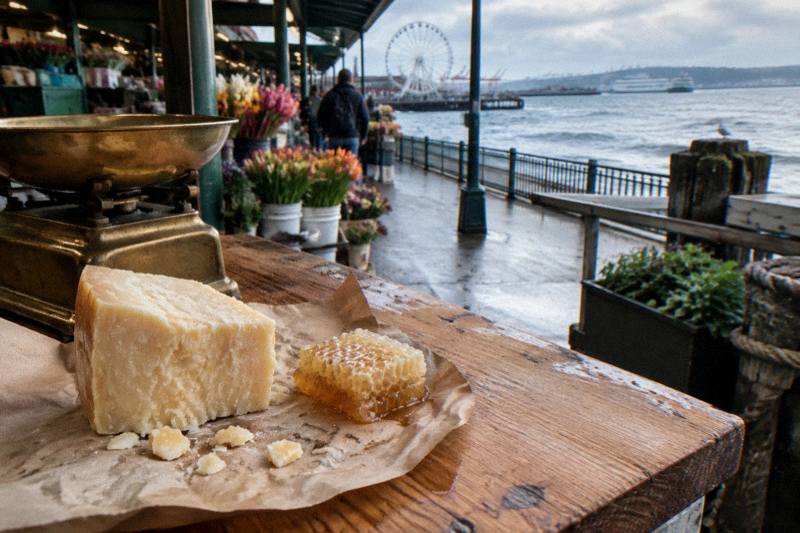
Seattle's food identity runs through its markets, its waterfront and its neighborhoods: wild salmon, Dungeness crab, oysters, chowder, teriyaki, coffee roasted in the city and a sweets scene that stretches from Pike Place to Capitol Hill.
Short answer
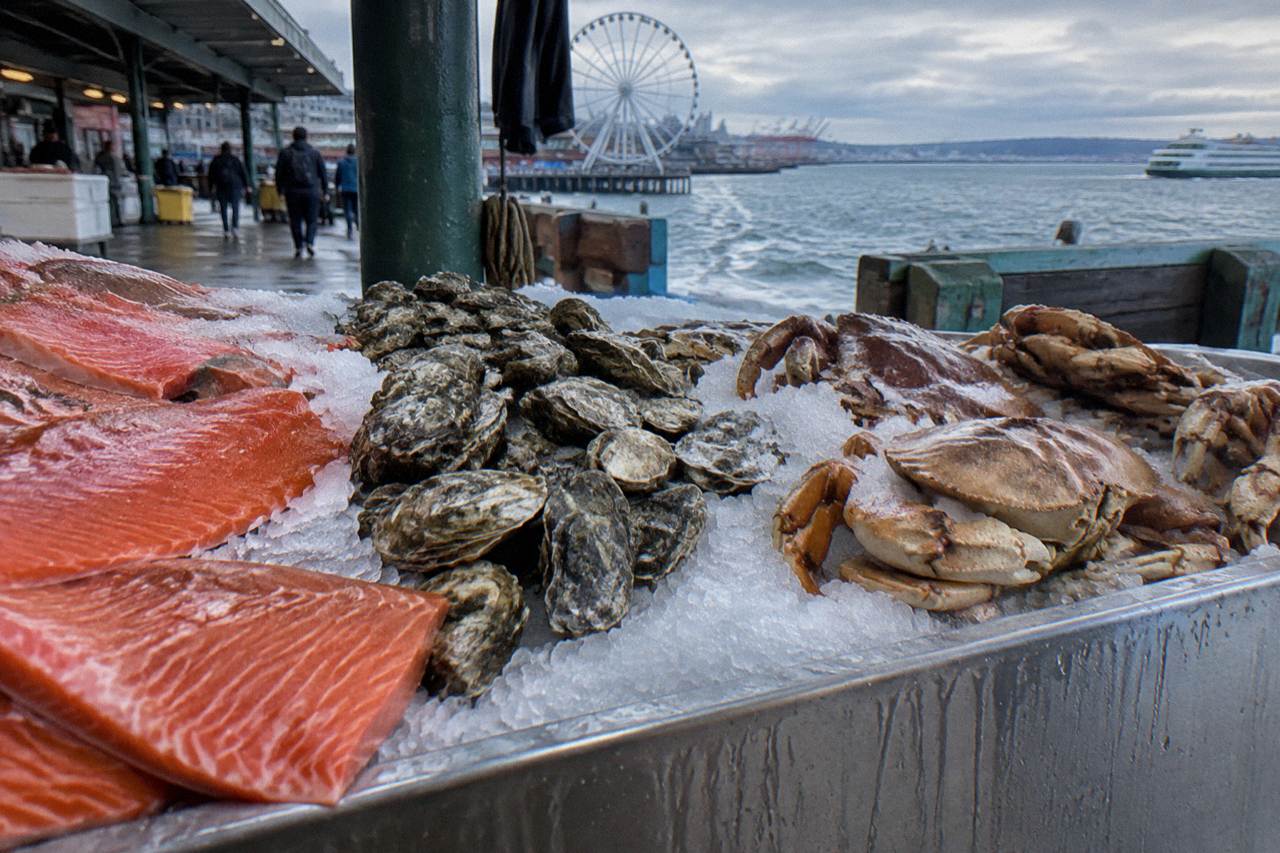
Eat wild Alaska salmon, Dungeness crab, Pacific oysters and clam chowder near the waterfront and Pike Place Market, teriyaki in the neighborhoods where it grew up, and coffee from roasters like Espresso Vivace or Caffe Vita. Pike Place Market alone holds 220+ independent shops, and a 2 hour chef guided tasting walk from $75 covers nine of them.
Seattle's table starts at the water. Wild salmon, Dungeness crab, Pacific oysters and geoduck all come out of the same cold Pacific and Puget Sound systems that shaped the city's economy, and the best versions still sit within a few blocks of the piers. Behind the seafood sits a second layer the guidebooks undersell: a teriyaki tradition that grew up in Seattle, an International District with restaurants older than most American food trends, a coffee culture that predates the chain everyone photographs, and a bakery scene heavy enough that a doughnut and beignet walk exists as its own product.
This page walks through the staples one dish at a time, says where each shines, and points to the guided walks that actually serve them. The deeper history is covered in what Seattle food is known for; this one is about what to put in your mouth this week.
What Should You Actually Eat In Seattle?
Build your eating around five things: wild salmon, Dungeness crab, Pacific oysters, clam chowder and Seattle style teriyaki, then fill the gaps with local coffee, market bakeries and fresh doughnuts. Wild Alaska runs five salmon species, Chinook, sockeye, coho, pink and chum, and the cold-water months of roughly September to April are the traditional peak for firm, briny oysters. Everything on the list is available somewhere in the city year round.
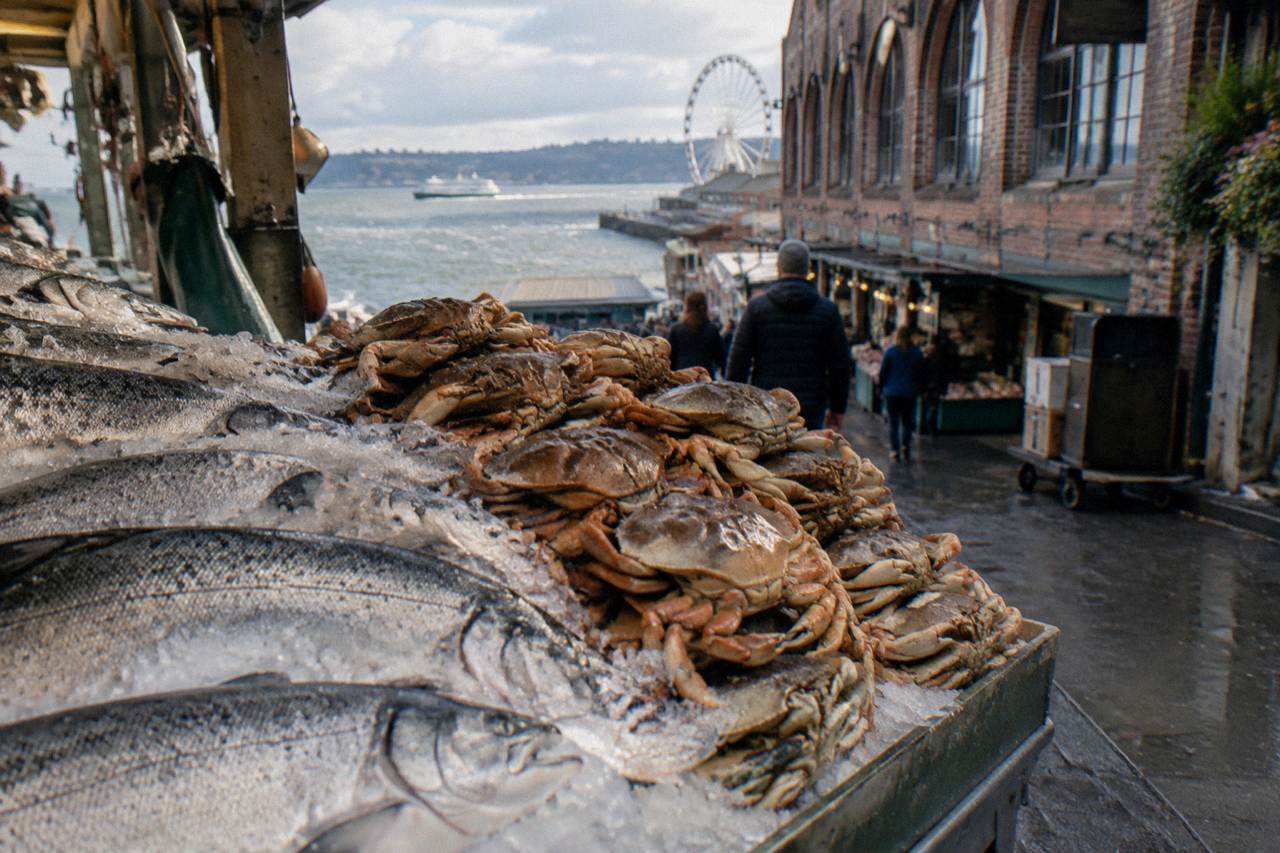
That short list is not a ranking, it is a map. The seafood cluster sits downtown: Pike Place Market holds fish counters, chowder shops and oyster bars within a few hundred feet of each other, and the Market's own pages count 220+ independently owned shops and restaurants, 70+ farmers and 150+ to 180+ craftspeople under one roof. The teriyaki and International District cluster sits southeast of the Market, anchored by restaurants that have been running since the 1930s. Coffee is everywhere, but the roasters with real history, Espresso Vivace since 1988, Caffe Vita since 1995, Victrola since 2000, cluster on Capitol Hill and in the neighborhoods.
Two timing facts do most of the planning work. Pike Place Market opens 363 days a year, closed only Thanksgiving and Christmas, with breakfast, produce and seafood counters starting at 7 a.m. and most of the Market active about 10 a.m. to 5 p.m.; the Market itself says mornings before noon are generally less crowded. And the single biggest seafood date on the calendar is the Copper River opening: in 2026 the commercial fishery opened May 22, first fresh fish reached Seattle pre-order counters around May 27, and first restaurant plates came around June 1.
| Dish or drink | Where it shines | Notes |
|---|---|---|
| Wild salmon (king, sockeye, coho) | Pike Place fish counters, waterfront restaurants | Copper River fish first plates about June 1 in 2026 |
| Dungeness crab | Seafood counters and oyster bars | Recreational Puget Sound seasons are quota-managed, never promised |
| Pacific oysters | Oyster bars, market seafood counters | Farmed year round; traditional peak September to April |
| Clam chowder | Pike Place chowder counters | A stop on more than one guided tasting walk |
| Teriyaki | Neighborhood shops citywide | A Seattle-developed style, covered in the teriyaki guide |
| Coffee | Capitol Hill roasters, Pike Place | Starbucks 1971, Espresso Vivace 1988, Caffe Vita 1995 |
| Doughnuts and beignets | Downtown and Denny Triangle bakeries | A dedicated 2 hour sweets walk runs from $65 |
Where Does Each Seattle Dish Shine The Most?
Salmon and crab shine at Pike Place fish counters and the downtown seafood rooms, oysters at dedicated oyster bars such as Taylor Shellfish's Seattle locations, chowder inside the Market, teriyaki in the neighborhoods, and coffee on Capitol Hill, where two of the walking tours covered here run separate tasting routes. The Market alone is dense enough that one chef guided walk covers nine vendor stops in 2 hours.
Start with the Market because density wins on a short trip. A fish counter that throws fish when a customer buys one, operating 7 a.m. to 5 p.m. per the Market FAQ, sits minutes from chowder, cultured creamery, chocolate and cheese stops. The Pike Place Market visitor FAQ is the source for the hours and the throwing tradition, and it is worth a read before any first visit because the Market's layout confuses people: it steps down the hill in levels.
Then match the dish to its district rather than chasing one list. Oysters want an oyster bar, and Taylor Shellfish, which farms Puget Sound, Hood Canal and Willapa Bay tidelands, runs oyster bars and farm stores in Seattle. Chowder wants the Market counters. Teriyaki wants the neighborhoods, because it is a fast-casual style that developed in Seattle rather than an imported institution. Coffee wants Capitol Hill, where the Jimi Hendrix statue on Broadway is literally the meeting point of one of the city's best reviewed tasting walks.
Three guided options cover most of this list in a single booking:
| Tour | Length | Price | Rating and reviews | What it actually serves |
|---|---|---|---|---|
| Chef Guided Food Tour of Pike Place Market | 2 hours | From $75 | 4.9 across 4,806 reviews | Nine vendor stops: chowder, cheese, chocolate, market staples, standing tastings |
| Seattle Seafood Tour: A Long Lunch | 2 hours 15 minutes | From $119 | 4.7 across 40 reviews | 8 seafood tastings across 6 market and downtown restaurants |
| Seattle Coffee Tour: Capitol Hill | 2 hours | From $49.30 | 5.0 across 833 reviews | Coffee and tastings only, Capitol Hill route |
If the question is simply what to eat first, the answer on this evidence is the chef guided Market walk: it is the most reviewed option by a wide margin and it samples across the whole staple list rather than one category.
Can One Walking Tour Cover Several Staples At Once?
Yes, and that is the efficient play on a short visit. The chef guided Pike Place Market walk covers nine vendor stops in 2 hours from $75, including chowder, Beecher's cheese and chocolate, all as standing tastings rather than a sit-down meal. It starts at the corner of 1st Ave and Pine St, and pickup is not included, so you walk there.
The chef guided walk is the widest net on the list. Its vendor list runs through Pike Place Chowder, Beecher's Handmade Cheese, a pizza and pasta bar, maíz, an Indi Chocolate stop and a Made in Washington store, which means one ticket samples chowder, cheese, chocolate and market staples in a single loop. It is a meal in practice, nine standing stops add up, but it is not a sit-down tour and not seafood-only.
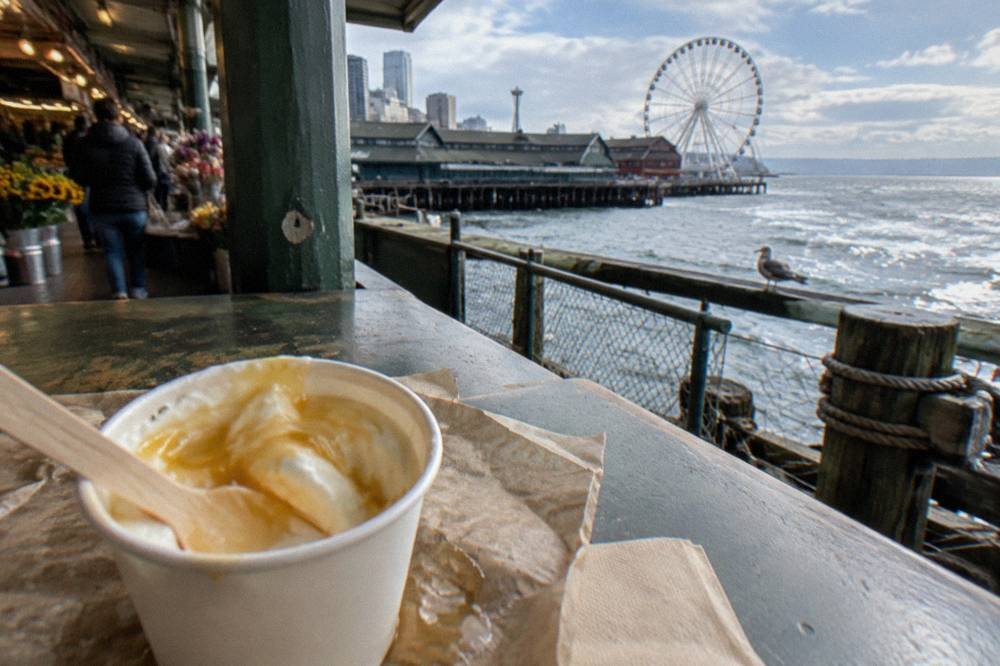
It is also the best reviewed thing on the page, 4.9 across 4,806 reviews, which after several thousand guests is a real signal rather than a small-sample fluke. For readers weighing guided versus independent, the self-guided or guided food walk comparison works through the tradeoffs; the short version is that the Market's permit rules cap any guided group at 16 people per guide, so these walks stay smallish by regulation, not just by marketing.
One rule worth knowing: every guided tour inside the Market operates under a Market-issued permit with participant stickers, no amplified sound and a $1 per customer participant fee. If a walk you are considering does not describe any of that, ask.
The tour page for the chef guided Pike Place walk carries the current times, and check availability shows live dates.
What Is Seattle Seafood And When Is Each Season Best?
Five wild Alaska salmon species reach the city, Chinook, sockeye, coho, pink and chum, with Copper River sockeye and king arriving around late May; Dungeness crab seasons are quota-managed and vary by area; farmed oysters run year round with a traditional peak from September to April. Geoduck, the giant burrowing clam, takes five to seven years to grow on a farm and appears at sushi and seafood counters.
The salmon calendar is the one to plan around if fish is the point of the trip. The 2026 Copper River commercial opening on May 22 pushed first fresh fish to Seattle pre-order counters around May 27 and first restaurant plates around June 1, so late May through summer is the window for the fish people fly in for. After that the season tapers into fall coho periods. Nothing here is guaranteed on a date: openings shift with run sizes, and the 2026 harvest ran below the prior year.
Crab is the opposite: never promise it. Puget Sound recreational Dungeness seasons are quota-managed, and Seattle's own Marine Area 10 ran only Sundays and Mondays from July 5 to September 7 in 2026, with winter openings in many areas but not everywhere. What you eat at a counter reflects commercial landings, not the recreational calendar, but the same management logic applies: availability moves.
Oysters are the reliable one. Farmed Pacific oysters are available year round, and the cold-water stretch from roughly September to April is the traditional peak for firm, briny flavor, which makes fall and winter a genuinely good time to eat raw shellfish in Seattle, a sentence that surprises visitors booked for July. The fuller seafood picture, counters and oyster bars neighborhood by neighborhood, is in the Seattle seafood walk guide.
| Seafood | Peak or season | Where to eat it |
|---|---|---|
| Copper River sockeye and king | First arrival late May, early June | Pike Place counters, downtown seafood restaurants |
| Coho and later salmon | Summer into fall | Waterfront restaurants |
| Dungeness crab | Quota-managed, varies; never promised | Seafood counters, oyster bars |
| Farmed Pacific oysters | Year round, traditional peak September to April | Taylor Shellfish oyster bars, market counters |
| Geoduck | Year round, farmed | Sushi and seafood counters |
If you want the seafood staples served to you rather than hunted down, one tour does exactly that. The Seattle Seafood Tour runs as a long lunch, 2 hours 15 minutes from $119, rated 4.7 across 40 reviews, covering 8 seafood tastings across 6 market and downtown restaurants. It is the only seafood-themed walking tour on this site, and it is not oyster-specific, not a Pioneer Square or International District route.
Why Does Coffee Count As Seattle Food?
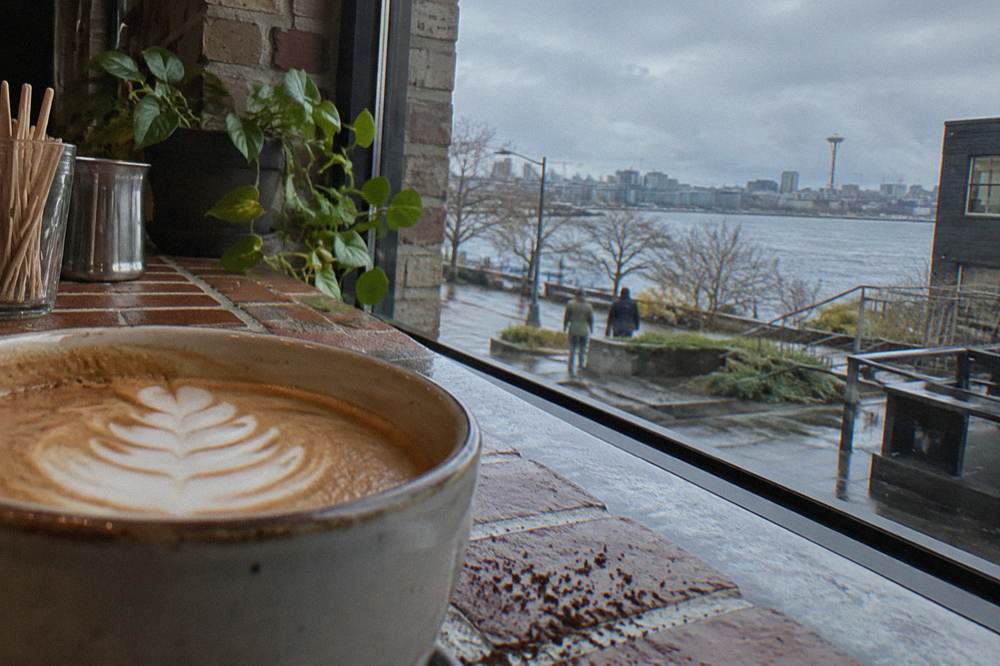
Coffee counts because it is the city's most consistent daily ritual and its roasters carry real history: Starbucks opened at Pike Place in 1971, Espresso Vivace in 1988, Caffe Vita in 1995, Cherry Street in 1997, Victrola in 2000 and Elm in 2014. A dedicated tasting walk on Capitol Hill, rated 5.0 across 833 reviews, treats coffee as the meal.
The historic anchor is 1912 Pike Place, the oldest still-operating Starbucks store, a company that opened its first Seattle location in 1971. But the line there is its own attraction and a separate question, covered in the first Starbucks and Pike Place coffee guide. The eating question is better answered on Capitol Hill, where the roasters that built the city's independent coffee culture still run cafes within walking distance of each other.
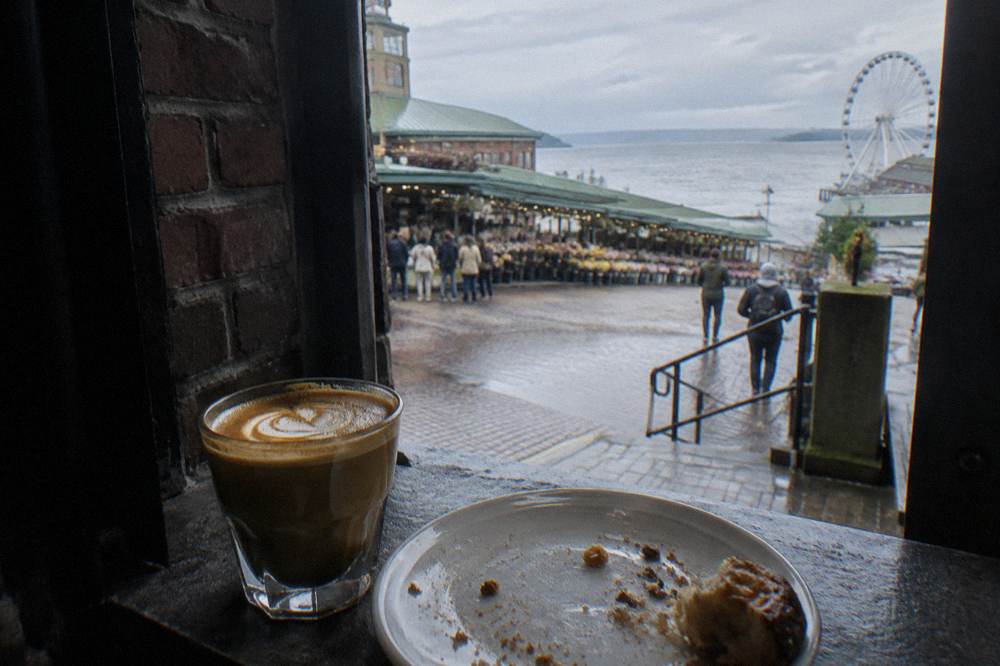
One small policy fact explains a quirk on receipts: Seattle taxes sweetened beverages at 1.75 cents per ounce, paid by distributors, and presweetened coffee drinks fall under it, while a milk-primary latte is generally excluded. It is a distributor tax, not a cafe surcharge.
For tasting rather than sightseeing, the Capitol Hill coffee tour is the strongest option: 2 hours from $49.30, rated a perfect 5.0 across 833 reviews, meeting at the Jimi Hendrix statue on Broadway. It is coffee only, no food, which matters if you are planning it as a meal. A Pike Place alternative, Roasted in Seattle: Bean to Cup, 2 hours from $55 and rated 4.9 across 26 reviews, starts at Anchorhead Coffee on Western Ave and walks the Market's coffee layer including Storyville, Ghost Alley Espresso and Fonté.
Where Do Sweets And Bakeries Fit In Seattle?
Sweets are a full category here, not an afterthought: a dedicated donut and beignet walk runs 2 hours from $65, rated 4.9 across 1,018 reviews, and a chocolate tasting tour covers seven stops from $76. Pike Place itself holds Daily Dozen, a bakery famous for mini doughnuts, plus Le Panier, Freya and Dahlia Bakery downtown.
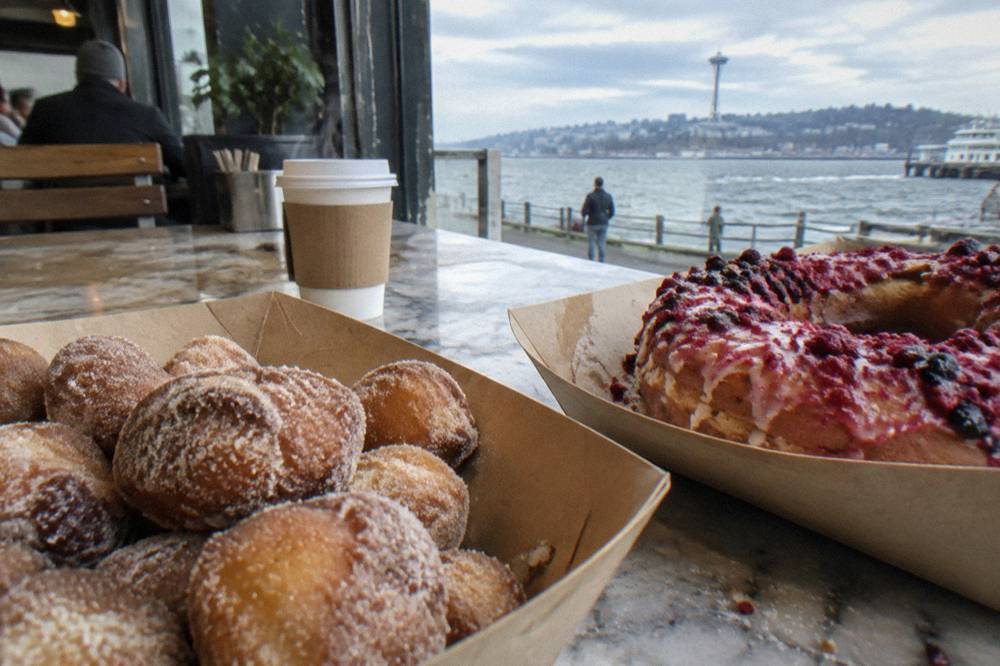
The sweets walk is the clearest evidence the category stands on its own. Seattle's Sweetest Food Tour starts at Top Pot Doughnuts in the Denny Triangle and Belltown edge, then routes past the Amazon Spheres area to Dahlia Bakery, with stops at Doce Donut Co, Daily Dozen in the Market and Pike Place itself. It is rated 4.9 across 1,018 reviews, from $65 per person,
Chocolate has its own geography too. The Chocolate Tour in Seattle with Guided Tastings, 2 hours 15 minutes from $76 and rated 4.8 across 244 reviews, starts at Dahlia Bakery on 4th Ave and moves through downtown and Market stops including maíz, Freya, Woodring, Truffle Queen and DeLaurenti. Theo Chocolate, the city's best known bean-to-bar maker, is a Fremont story covered separately in where Theo Chocolate is made. For a bakery-first plan, Seattle donuts and bakeries worth a detour lists the stops in order.
The pattern worth noticing: Seattle's sweet scene clusters around working bakeries rather than dessert boutiques, which is why the tours read like bakery crawls. Expect standing tastings and walking distances rather than plated courses.
What About Teriyaki And International District Eats?
Seattle style teriyaki is a fast-casual chicken thigh plate, a style widely credited to the city, and it belongs on any what-to-eat list alongside the International District's old guard: Tai Tung since 1935, Kau Kau BBQ since 1974, Uwajimaya's Seattle store since just after WWII, and Dim Sum King since 2009. No walking tour on this site covers the district, so this is the self-guided section.
Teriyaki first, because visitors consistently get this wrong: it is not Japanese import unchanged. The thick, sweet-sauce chicken plate served over rice is a Seattle-developed style, and the teriyaki guide traces where it came from and where to eat it. Treat it as a local staple in the same tier as chowder.
The International District, reached in about ten minutes on foot from Pioneer Square, holds the city's oldest continuous food businesses. Tai Tung at 655 S King St says it was established in 1935 and is the district's oldest surviving Chinese restaurant. Kau Kau BBQ, next door at 656 S King St, has done Cantonese barbecue since 1974. Uwajimaya, the giant Asian grocery that started in Tacoma in 1928, opened its Seattle store after WWII and anchors the district's market layer. Dim Sum King, in the Bush Hotel on S Jackson St since 2009, handles the a la carte dim sum question. The International District food walk guide maps a full route, and the dim sum ordering mechanics are in how to order dim sum in Seattle.
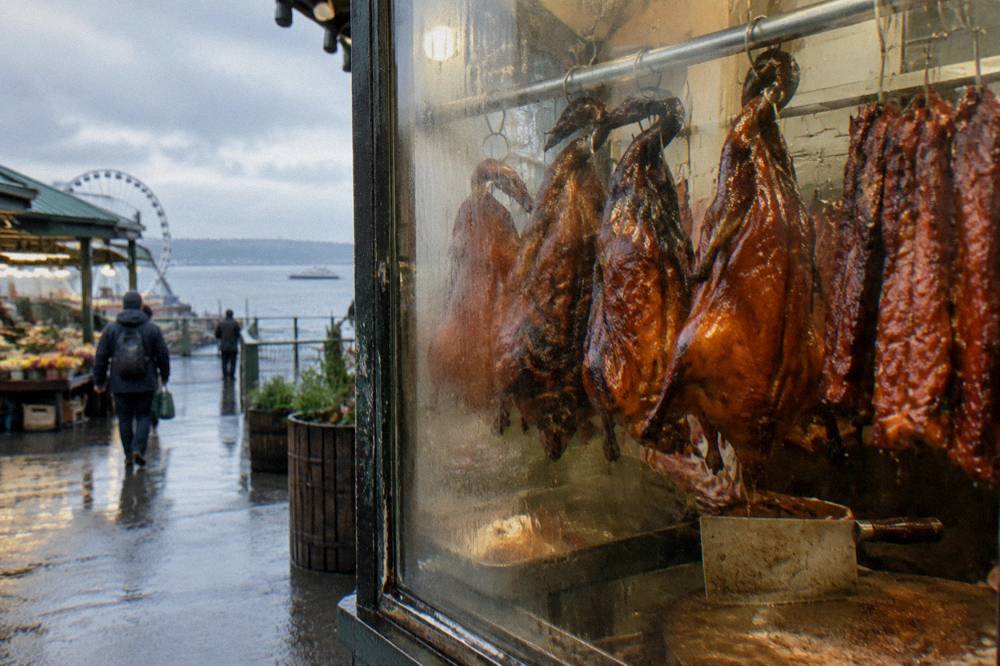
The district's history explains its density. The area grew after the Jackson Street Regrade around 1910, the Chinatown Historic District was listed on the National Register in 1986, and the Wing Luke Museum, open since 1967 in the 1910 East Kong Yick Building, tells the pan-Asian Pacific American story in the middle of it. Eat first, museum after, or the reverse; both work on foot.
How Do You Build A Full Seattle Eating Day?
Anchor the morning at Pike Place from 7 a.m., when breakfast, produce and seafood counters open and crowds are generally thinner, take a guided tasting walk at midday, move to the International District or Capitol Hill in the afternoon, and finish near the waterfront. A King County Metro ride costs $3.00, a regional day pass $6.00, and Link light rail is $3.00 one-way with youth 18 and under free.
The skeleton below assumes downtown lodging and walking legs, which is how most visitors actually do it. Note the Market's own timing advice: mornings before noon are generally less crowded. The Market's plan your visit page tracks current conditions, including the street access pilot running October 1, 2026 to March 31, 2027, when Pike Place is shared by cars and pedestrians Monday to Thursday and access is limited Friday to Sunday between 11 a.m. and 4 p.m.
| Time | Move | What you are eating |
|---|---|---|
| 7 to 9 a.m. | Pike Place Market, north end | Breakfast counters, first-of-day doughnuts, coffee |
| 9 a.m. to noon | Guided tasting walk, or self-guided Market levels | Chowder, cheese, chocolate, fish counter |
| Noon to 2 p.m. | Walk to the International District | Dim sum, Cantonese barbecue |
| 2 to 5 p.m. | Capitol Hill via a short Link ride | Roaster coffee, bakery stops |
| Evening | Waterfront | Salmon or oysters at a counter or restaurant |
Weather shapes the day more than visitors expect. Per the NOAA 1991 to 2020 climate normals at Sea-Tac, July and August average highs of about 77 to 78 F with under an inch of rain, while November is the wettest month at 6.31 inches, with December at 5.72 and January at 5.78. A November eating day is an indoor arc, Market levels, dim sum halls, roaster cafes, and honestly a fine one; the oyster peak overlaps it. Getting around is cheap either way: King County Metro's fare page lists the $3.00 adult ride and $6.00 day pass, and an ORCA or contactless bank card tap covers both bus and rail.
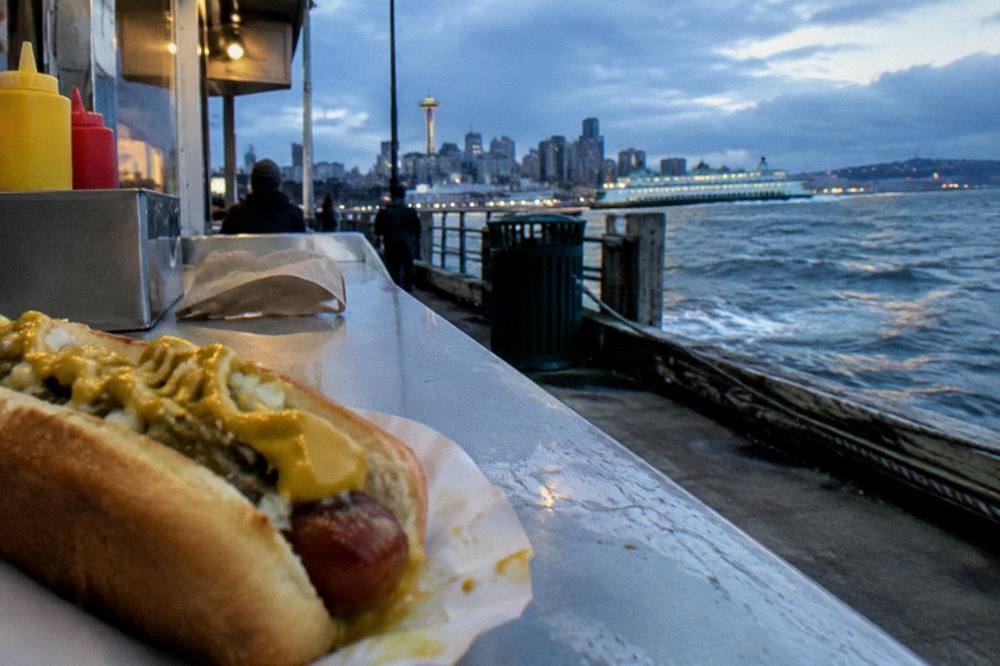
One budgeting note: sales tax in Seattle is 10.55 percent, added at the register on meals, so menu math runs slightly high. Tipping is not mandated and practice varies, so budget by preference rather than by rule.
Which Walking Tour Matches The Dish You Came For?
Match the tour to the dish: the chef guided Pike Place walk covers the broad market list, the seafood long lunch covers salmon and chowder, the Capitol Hill and Roasted in Seattle walks cover coffee, and the sweets and chocolate walks cover desserts. Prices run from $39.99 for a coffee walk to $160 for a small-group insider breakfast.
The table pairs each craving with its walk. Duration matters more than price here: the 90-minute options are snacks, not meals, while the by-the-course and long-lunch formats are genuine meals.
| If you came for | Book this | Length | From | Rating |
|---|---|---|---|---|
| A bit of everything | Chef Guided Food Tour of Pike Place Market | 2 hours | $75 | 4.9, 4,806 reviews |
| Salmon and chowder | Seattle Seafood Tour: A Long Lunch | 2 h 15 m | $119 | 4.7, 40 reviews |
| Coffee culture | Seattle Coffee Tour: Capitol Hill | 2 hours | $49.30 | 5.0, 833 reviews |
| Market coffee route | Roasted in Seattle: Bean to Cup | 2 hours | $55 | 4.9, 26 reviews |
| Doughnuts and beignets | Seattle's Sweetest Food Tour | 2 hours | $65 | 4.9, 1,018 reviews |
| Chocolate | Chocolate Tour with Guided Tastings | 2 h 15 m | $76 | 4.8, 244 reviews |
| A full sit-down style meal | Pike Place By-the-Course Tour | 2 h 15 m | $119 | 4.5, 51 reviews |
Beyond these, the site's full set spans 30 tours across 5 categories, and the choosing logic, price tiers, group sizes and who each format suits, is laid out in which Seattle food walk to book with the cost breakdown in what a Seattle food walk costs. If you are traveling with children, the kids on a food walk guide flags which formats tolerate short attention spans. And if you would rather skip the booking entirely, the Pike Place Market food guide does the same ground self-guided.
Common Questions About Eating In Seattle
What Is The One Dish You Must Eat In Seattle?
Wild salmon, with Copper River sockeye and king as the headline version when it arrives in late May or early June. If fish is not your thing, Seattle style chicken teriyaki is a style widely credited to Seattle, and clam chowder from a Pike Place counter is the most accessible classic.
When Is Oyster Season In Seattle?
Farmed Pacific oysters are available year round. The traditional peak for firm, briny flavor runs roughly September to April, so fall and winter are arguably the best raw-bar months in Seattle despite the rain.
Is Pike Place Market Worth It Just For Eating?
Yes. The Market holds 220+ independent shops and restaurants, opens at 7 a.m. for breakfast, produce and seafood, and runs 363 days a year, closed only Thanksgiving and Christmas. Go before noon, when the Market itself says crowds are generally thinner.
What Food Tour Covers The Most Seattle Staples In One Booking?
The Chef Guided Food Tour of Pike Place Market: 2 hours, from $75 per person, rated 4.9 across 4,806 reviews, with nine vendor stops spanning chowder, cheese, chocolate and market staples as standing tastings.
Can You Eat Well In Seattle On A Rainy November Day?
Yes, and it is peak oyster season. Build an indoor arc: Market levels in the morning, dim sum in the International District at midday, roaster cafes on Capitol Hill in the afternoon. November averages 6.31 inches of rain per the NOAA 1991 to 2020 normals at Sea-Tac, so plan for covered routes.
Is Seattle Coffee Actually Different?
The city's independent roasting scene is old and deep: Espresso Vivace since 1988, Caffe Vita since 1995, Cherry Street since 1997, Victrola since 2000. A Capitol Hill tasting walk rated 5.0 across 833 reviews covers that layer in 2 hours, coffee only, no food.