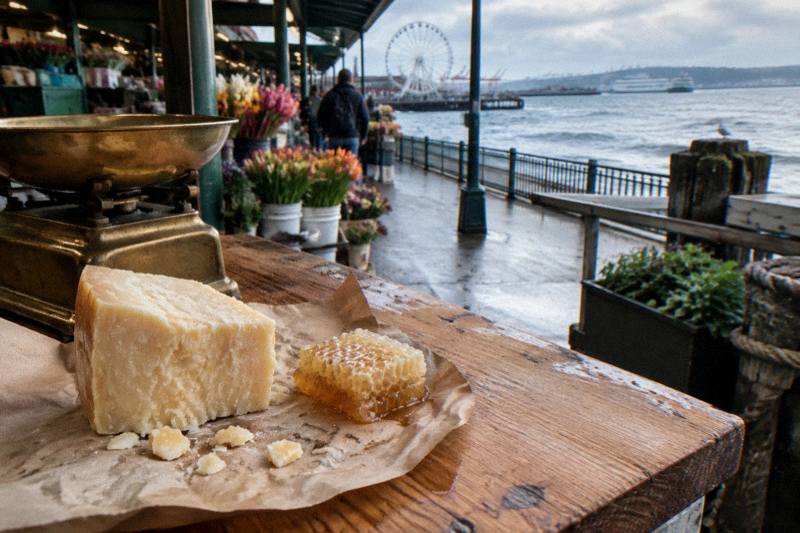
Is Seattle Known For Their Food?
Yes, Seattle is known for its food: Pike Place Market, coffee roasters, wild salmon, oysters and teriyaki anchor a food city worth a full day of eating.
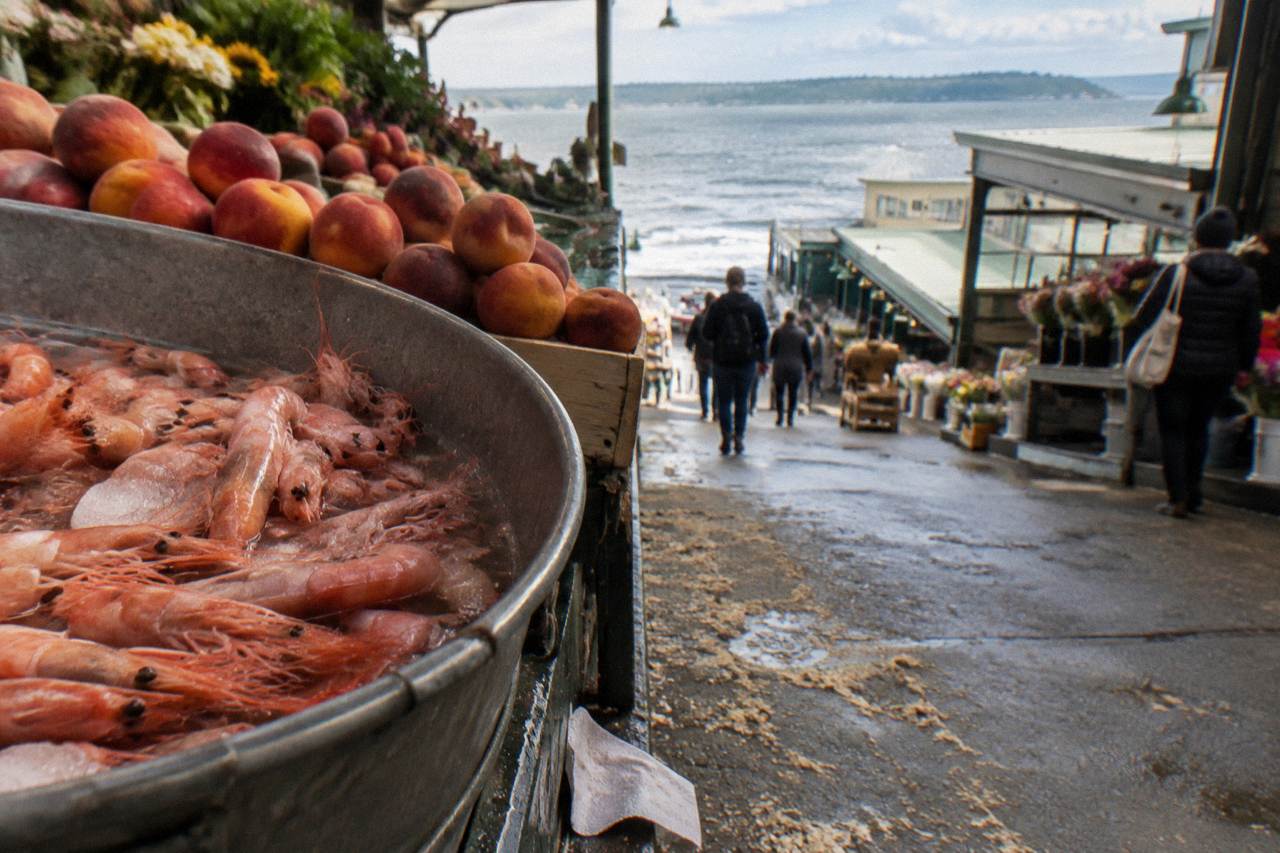
Yes. Seattle is genuinely known for its food, and for specific things: wild Pacific salmon and Dungeness crab pulled from nearby waters, farmed oysters from Puget Sound, a coffee roasting culture dating to 1971, Pike Place Market itself, and a local teriyaki style you cannot order quite the same way anywhere else. Visit Seattle counted 39.7 million visitors to the city and county in 2025, and a large share of them came hungry.
That answer surprises people who still think of the city as gray and caffeinated. The food reputation rests on a few load-bearing pillars, and each one is checkable rather than hype. Pike Place Market opened on August 17, 1907, when somewhere between six and twelve farmers rolled produce wagons down to Pike Place, and it has operated continuously since, 363 days a year. It now holds more than 220 independently owned shops and restaurants, more than 70 farmers and 450 residents in affordable housing, which makes it a neighborhood that happens to sell food rather than an attraction that sells souvenirs.
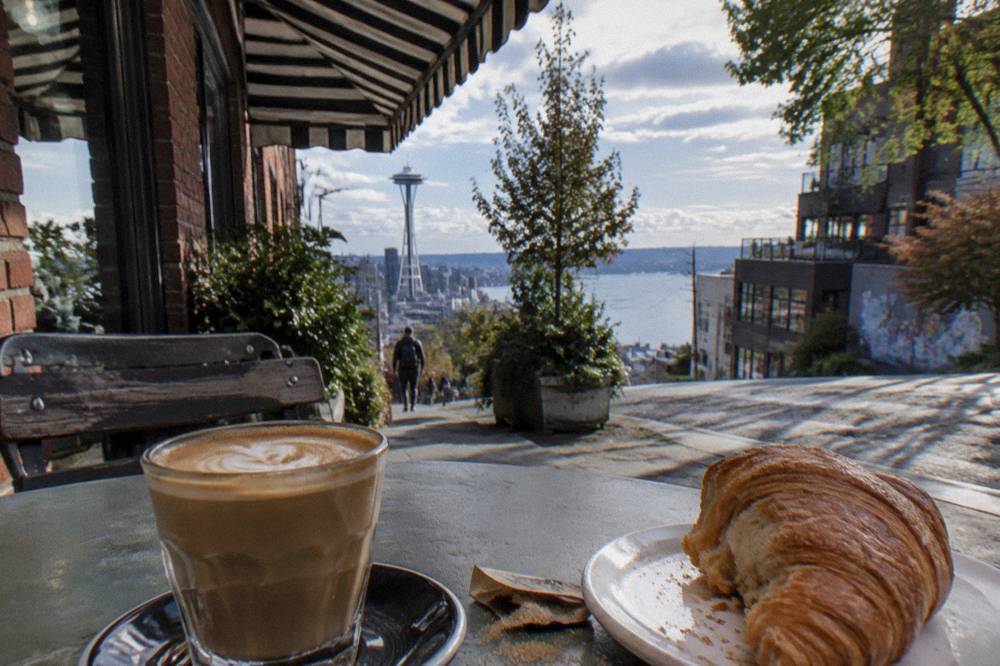
The coffee claim is just as factual. Starbucks opened in 1971, and the Pike Place store remains the company's oldest still operating store. But the deeper story is the independent layer beneath it: Espresso Vivace since 1988, Caffe Vita since 1995, Cherry Street Coffee House since 1997, Victrola since 2000, Elm Coffee Roasters since December 2014 in Pioneer Square.
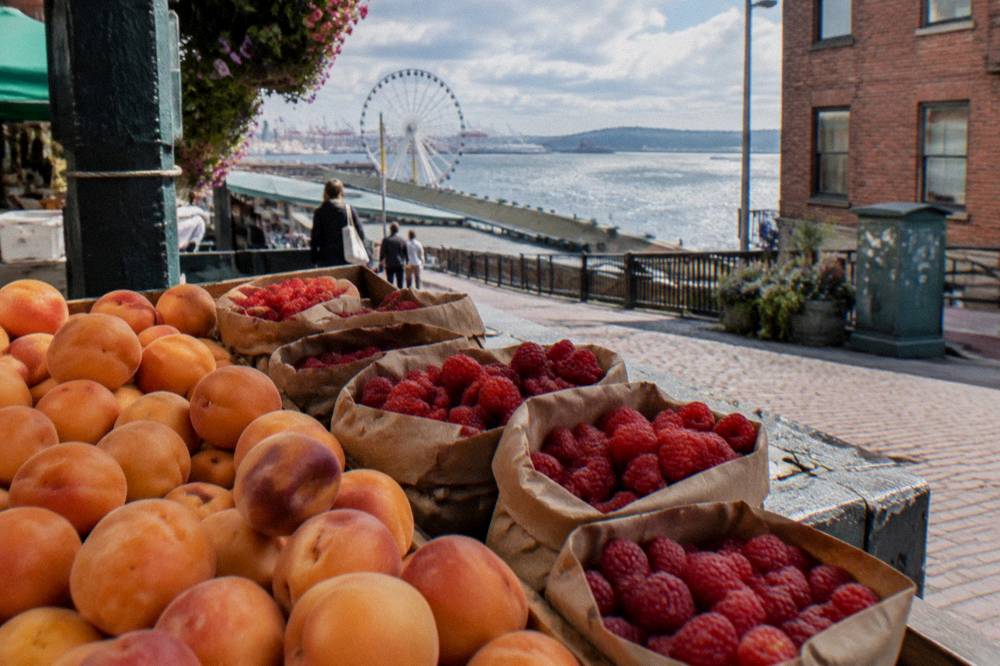
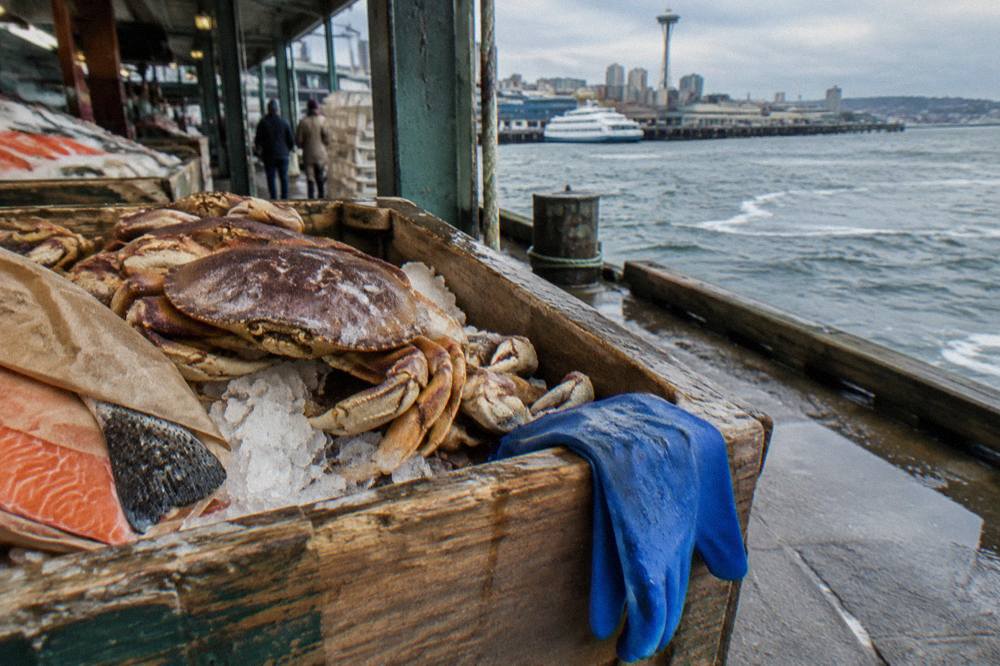
The seafood claim holds because of geography. Puget Sound, Hood Canal and Willapa Bay grow oysters and clams a short drive from the city, all five wild Pacific salmon species move through Seattle markets, and Dungeness crab is quota-managed in the Sound itself. The full picture of how the city's food identity developed, decade by decade, is laid out in the short food history guide.
What Food Is Seattle Most Famous For?
The foods Seattle is most famous for are wild salmon (especially Copper River sockeye and king when the season opens), Dungeness crab, farmed oysters from Puget Sound, clam chowder in a bread bowl at the Market, coffee from roasters that shaped American specialty culture, and Seattle-style teriyaki, a fast-food chicken plate with local roots no other city claims. Each one has a season, a source and a specific place to eat it.
Start with salmon, because it is the clearest case. The 2026 Copper River commercial fishery opened on May 22, first fresh fish reached Pike Place pre-orders around May 27, and the first restaurant plates appeared around June 1. That rhythm repeats every year with different dates, so a visitor asking in July eats better Copper River salmon than one asking in March. The five Pacific species, Chinook, sockeye, coho, pink and chum, all move through Seattle markets, and the wild salmon guide maps where to eat and buy each.
Oysters run the opposite calendar. Farmed oysters are available year-round, but the cold-water stretch from roughly September to April is the traditional peak for firm, briny flavor, which makes a winter visit a legitimate oyster trip rather than a consolation prize. Taylor Shellfish farms Puget Sound, Hood Canal and Willapa Bay tidelands and runs oyster bars and farm stores in the city. Geoduck, the giant burrowing clam that takes five to seven years to grow on a farm, belongs to the same story and divides first-time visitors neatly into two camps.
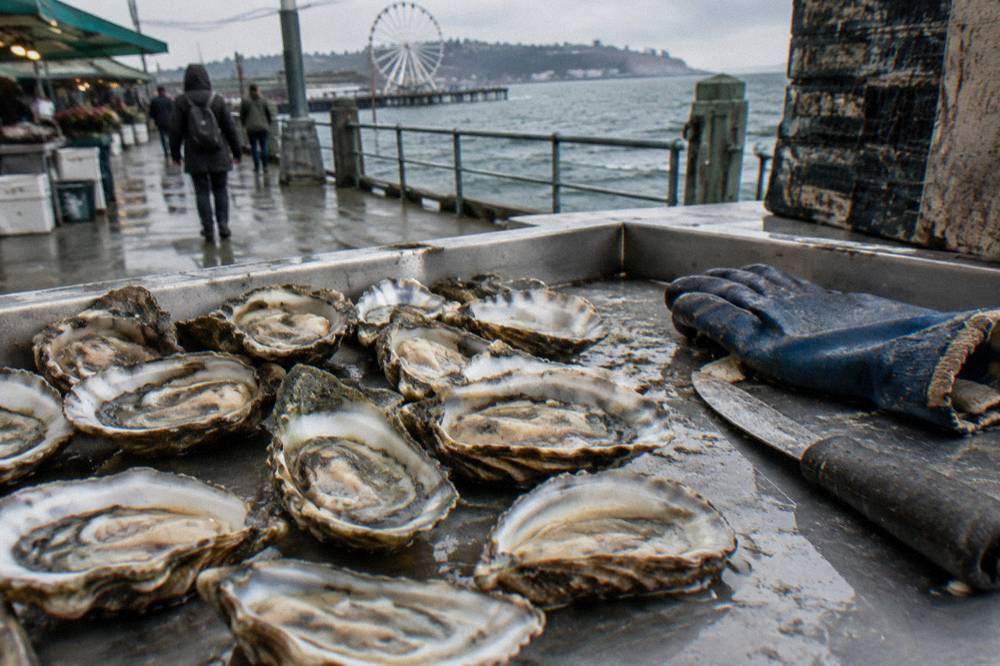
Teriyaki is the outsider in this list and the most local. Seattle-style teriyaki is a grilled chicken plate over rice with a sweet-savory sauce, served fast and cheap, and it grew up in the city rather than arriving fully formed from Japan. Asking a local where to get it is a reliable way to start an argument. The teriyaki guide covers the style and where to try it.
The visitor-friendly summary looks like this:
| Food | Why Seattle is known for it | Best time to plan around it |
|---|---|---|
| Wild salmon | All five Pacific species move through Seattle markets; Copper River openings followed closely each May | Late May through summer |
| Dungeness crab | Quota-managed Puget Sound fishery at the city's edge | Summer and winter seasons vary by area |
| Oysters | Puget Sound, Hood Canal and Willapa Bay farms; Taylor Shellfish bars in the city | Roughly September to April |
| Coffee | Roasting culture dating to 1971 and earlier | Year-round |
| Teriyaki | A local fast-food style with city-specific roots | Year-round |
| Chowder | Market counters serve it all day; national reputation | Year-round |
The one warning worth printing: do not plan the whole trip around one item. The city's strength is the spread, salmon in summer, oysters in winter, coffee and teriyaki always. A single well-chosen walk can cover several of these in two hours, which is exactly what the chef-guided Market tour does, moving through nine vendor stops from Beecher's Handmade Cheese to Pike Place Chowder with a guide who explains what each stall is doing.
Where Does Seattle's Coffee Reputation Come From?
Seattle's coffee reputation comes from an independent roasting scene with decades of history: Espresso Vivace opened in 1988, Caffe Vita in 1995, Cherry Street in 1997 and Victrola in 2000, before Starbucks globalized the city's espresso habit. The result is a place where a neighborhood cafe is a local institution rather than a novelty, and where coffee tours exist as a category.
The order matters less than the density. Starbucks opened in 1971 selling whole beans, tea and spices, and its store at 1912 Pike Place, its home since the mid-1970s, still operates as the oldest in the company. Seattle's Best Coffee traces its roots to Stewart Brothers around 1970 on Pier 70. Beneath the two big names sits the independent layer, roasters with decades of history within walking distance of each other, which is why Capitol Hill alone can support a two-hour tasting walk past several of them.
The Seattle Coffee Festival, held October 24 and 25, 2026 at Magnuson Park in its second year, is the newest evidence that the culture is still compounding rather than coasting. A festival of regional roasters a half-century after the first store opened suggests the scene has both history and a pipeline.
There is even coffee-specific policy: the city taxes sweetened beverages at 1.75 cents per ounce, paid by distributors, while milk-primary drinks like a standard latte are generally excluded, a detail that shapes what cafes sell and how. The practical side of tasting the culture, which roasters to visit and what a tasting flight involves, is covered in the coffee walk guide.
For visitors who want the story told rather than researched, the Capitol Hill coffee tour is the direct route: two hours, from $49.30 per person, rated 5.0 across 833 reviews, starting at the Jimi Hendrix statue on Broadway. Coffee is included and food is not, which keeps the focus where it belongs.
How Does Pike Place Market Anchor The Food Scene?
Pike Place Market anchors Seattle's food scene by being a real working market rather than a food hall: it opened in 1907, operates 363 days a year, closes only on Thanksgiving and Christmas, and hosts more than 220 independent shops and restaurants plus 70 farmers. Fish gets thrown when someone buys it, breakfast starts at 7 a.m., and most of the Market runs until about 5 p.m.
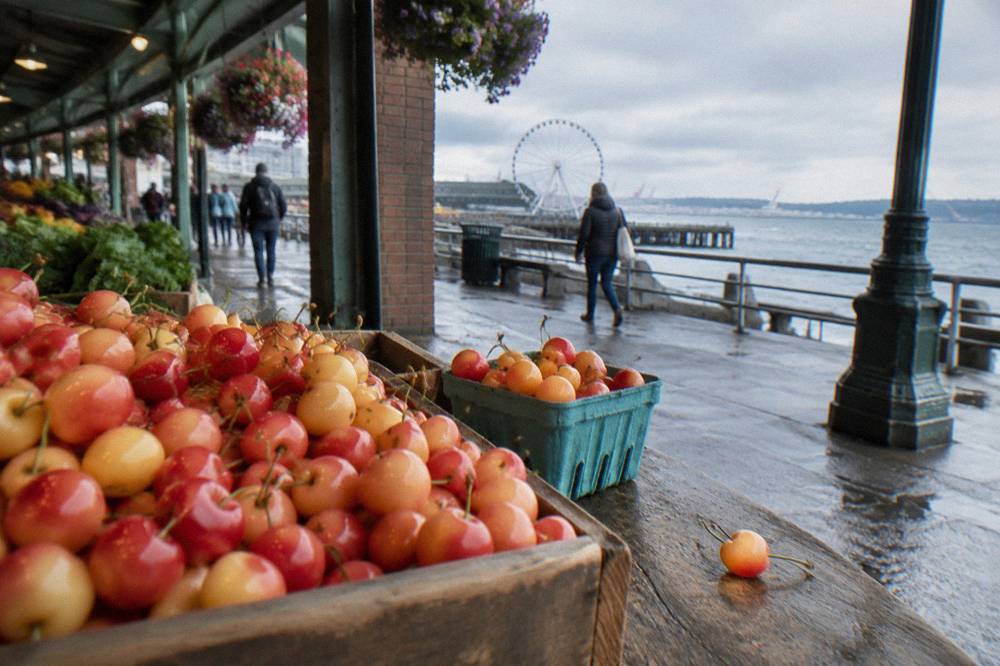
The Market is the single best answer to the question this page asks, because it is simultaneously a tourist landmark and the place where the city's food identity was built. Rachel the Piggy Bank, the bronze pig installed in 1986 by sculptor Georgia Gerber, sits under the Market clock and collects donations for Market Foundation social services. The original Starbucks draws a permanent line a few stalls away. Fishmongers at Pike Place Fish have made fish throwing a spectator event, though it happens when a customer buys a fish, not on a schedule.
The Market even regulates its food tours in a way that signals seriousness. Operators need a Market-issued permit, groups are capped at 16 people per guide, amplified sound is banned, and operators pay a $1 fee per participant, and participants wear Market stickers. Any guided walk inside the arcade operates inside those rules, which keeps the experience closer to a local's market run than a stadium tour.
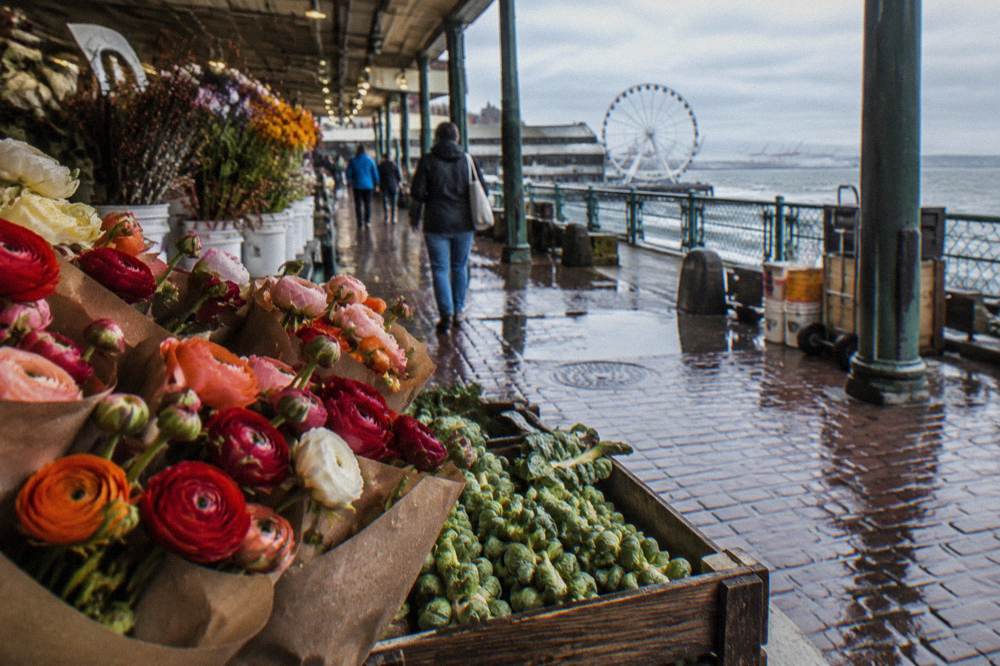
Timing matters more than most guides admit. The Market itself says mornings before noon are generally less crowded, and the Market is fullest Thursday through Monday. There is also a live logistics change to know about: the street access pilot's Phase 3 runs October 1, 2026 to March 31, 2027, with Pike Place shared by cars and pedestrians Monday to Thursday, and access limited to deliveries and permitted uses Friday to Sunday from 11 a.m. to 4 p.m. at 1st Ave and Pike St. Current details are on the Market's plan-your-visit page.
What each section serves, hour by hour:
| Market section | Typical hours | What you find |
|---|---|---|
| Fresh produce and seafood | From 7 a.m. | Farm tables, fish counters, breakfast stalls |
| Main arcade shops | About 10 a.m. to 5 p.m. | The 220+ independent vendors |
| Crafts market | 11 a.m. to 4 p.m. | 150+ to 180+ craftspeople |
| Farm tables | 9 a.m. to 4 p.m. | 70+ regional farmers |
| Restaurants | Vary, some past midnight | Full meals, chowder counters |
The practical way to eat the Market without researching it is a guided walk, and the volume leader is the chef-guided tour: two hours, from $75 per person, rated 4.9 across 4,806 reviews, starting at the corner of 1st Ave and Pine St and covering nine vendor stops with standing tastings.
Is Seattle A Good Food City Beyond The Market?
Yes. Seattle holds up outside Pike Place because its neighborhoods each carry a distinct food identity: Ballard runs a walkable brewery district with more than a dozen breweries and cideries within about a mile plus a year-round Sunday farmers market, Capitol Hill stacks brunch and late-night options, the Chinatown-International District has been an Asian food hub since the Jackson Street Regrade around 1910, and Woodinville concentrates 100+ wine tasting rooms 25 to 30 minutes from downtown.
The Chinatown-International District is the clearest example of depth over novelty. Its Chinatown Historic District was listed on the National Register in 1986, the Wing Luke Museum has preserved the area's pan-Asian Pacific American history since 1967, and specific restaurants carry verifiable lineage: Tai Tung says it was established in 1935 and is the district's oldest surviving Chinese restaurant, Kau Kau BBQ has served Cantonese barbecue since 1974, and Uwajimaya grew from a 1928 Tacoma fishcake truck into the neighborhood's defining market. The International District food walk guide maps a full route.
Ballard tells a different story, one of a fishing neighborhood that became a brewing one. Reuben's Brews (2012) and Stoup (2013) sit in Ballard's walkable brewery district; Fremont Brewing (2009) is one neighborhood east, in Fremont. The Ballard Farmers Market runs Sundays 9 a.m. to 2 p.m. year-round on the cobblestones of Ballard Ave NW, rain or shine, which in Seattle is not a figure of speech.
Wine belongs in the same answer even though grapes do not grow downtown. Washington State holds about 985 licensed wineries across 22 growing regions, according to the Washington State Wine Commission, and Woodinville concentrates more than 100 tasting rooms a short drive from the city; the commission's own overview is the source for those numbers. Seafood, meanwhile, gets its own deep dive in the best seafood counters guide.
The honest limitation is geography: this is a city of distinct food villages rather than one continuous dining strip, so a visitor who never leaves downtown sees maybe a third of it. A day trip or a neighborhood walk is not optional padding, it is where half the food identity lives. Visit Seattle's own site is the right place to check events and seasonal openings when planning.
Which Food Walk In Seattle Proves The Case?
The walk that proves Seattle's food reputation fastest is a Pike Place Market tasting tour, because it delivers chowder, cheese and chocolate inside two hours in the place where the city's food identity started. If the goal is to test one claim deeply instead, the coffee walk on Capitol Hill and the long seafood lunch tour each isolate a single pillar and do it properly.
Choosing between them is a matter of what a visitor is actually deciding. Someone with one free morning should take the Market walk: the chef-guided tour covers nine vendors, from Simply Seattle and Pike Place Chowder to Beecher's Handmade Cheese and Indi Chocolate, and the 4.9 rating across 4,806 reviews reflects the largest review pool of any food walk listed here. Someone deciding whether the coffee reputation is earned should walk Capitol Hill with a guide instead of guessing at cafe doors. Once the walking tour is settled, the guide to the foods Seattle is famous for pinpoints which dishes to order first.
The seafood case deserves its own half day. The long lunch tour is the only seafood-themed walk of its kind covered here: two hours and fifteen minutes, from $119 per person, rated 4.7 across 40 reviews, built around eight seafood tastings across six market and downtown restaurants, ending on the waterfront. It is not an oyster-specific tour and not a Pioneer Square or Chinatown-ID route, which helps set expectations correctly.
A quick comparison for the decision:
| Walk | Duration | From price | Rating | What it proves |
|---|---|---|---|---|
| Chef Guided Food Tour of Pike Place Market | 2 hours | $75 | 4.9 from 4,806 reviews | The Market's full range |
| Capitol Hill Coffee Tour | 2 hours | $49.30 | 5.0 from 833 reviews | The coffee culture |
| Seafood Long Lunch Tour | 2 hours 15 minutes | $119 | 4.7 from 40 reviews | The water is genuinely close |
After the seafood tour's discussion above, it earns its solo placement: this is the walk that answers the food-reputation question with a fork rather than a brochure, and it is rated 4.7 across 40 reviews.
One planning note ties it together: sales tax of 10.55 percent is added at the register on restaurant meals, separate from any tour price, so a food budget should carry a little slack. Tipping is not mandated and practice varies, which is worth knowing in a city with a $21.30 minimum wage in 2026.
So, is the reputation earned? The evidence says yes, with specifics: a 119-year-old working market, a coffee culture dating to 1971, shellfish farms within a short drive, and a lunch style the city invented. The three walks below are the fastest way to test all of it in a single visit.
Common Questions About Seattle's Food Reputation
Is Seattle Known For Their Food?
Yes. Seattle is known for wild salmon, Dungeness crab, farmed Puget Sound oysters, clam chowder, a coffee roasting culture dating to 1971, Pike Place Market itself, and a local teriyaki style. The reputation is specific and seasonal rather than generic.
What Single Food Is Most Identified With Seattle?
Wild Pacific salmon is the strongest single answer, with Copper River sockeye and king arriving in late spring each year and five species moving through city markets. Coffee and oysters are close behind, and each has a better season than salmon for part of the year.
When Is The Best Time To Visit Seattle For Food?
Summer for fresh salmon and the full Market schedule, roughly September to April for peak oyster flavor. November is the wettest month at 6.31 inches of rain per NOAA 1991 to 2020 normals, but the Market and most food walks run year-round regardless.
Can You Taste Seattle's Food Identity In One Day?
Largely, yes. A two-hour Pike Place Market walk covers chowder, cheese and chocolate in one route, and a coffee walk or seafood lunch tour on the same day or the next tests the two remaining pillars. The neighborhoods outside downtown need a second day.
Is Pike Place Market Worth It For Food, Or Just For Photos?
It is worth it for food. The Market operates 363 days a year with 220+ independent vendors, breakfast from 7 a.m., and tours capped at 16 people per guide. Arriving before noon means smaller crowds, per the Market's own guidance.
Does Seattle Have Its Own Local Dish?
Seattle-style teriyaki, a grilled chicken plate over rice with a sweet-savory sauce served fast, is the closest thing to a dish the city owns outright. Geoduck and Dungeness crab are the local ingredients with the strongest claims after that.